

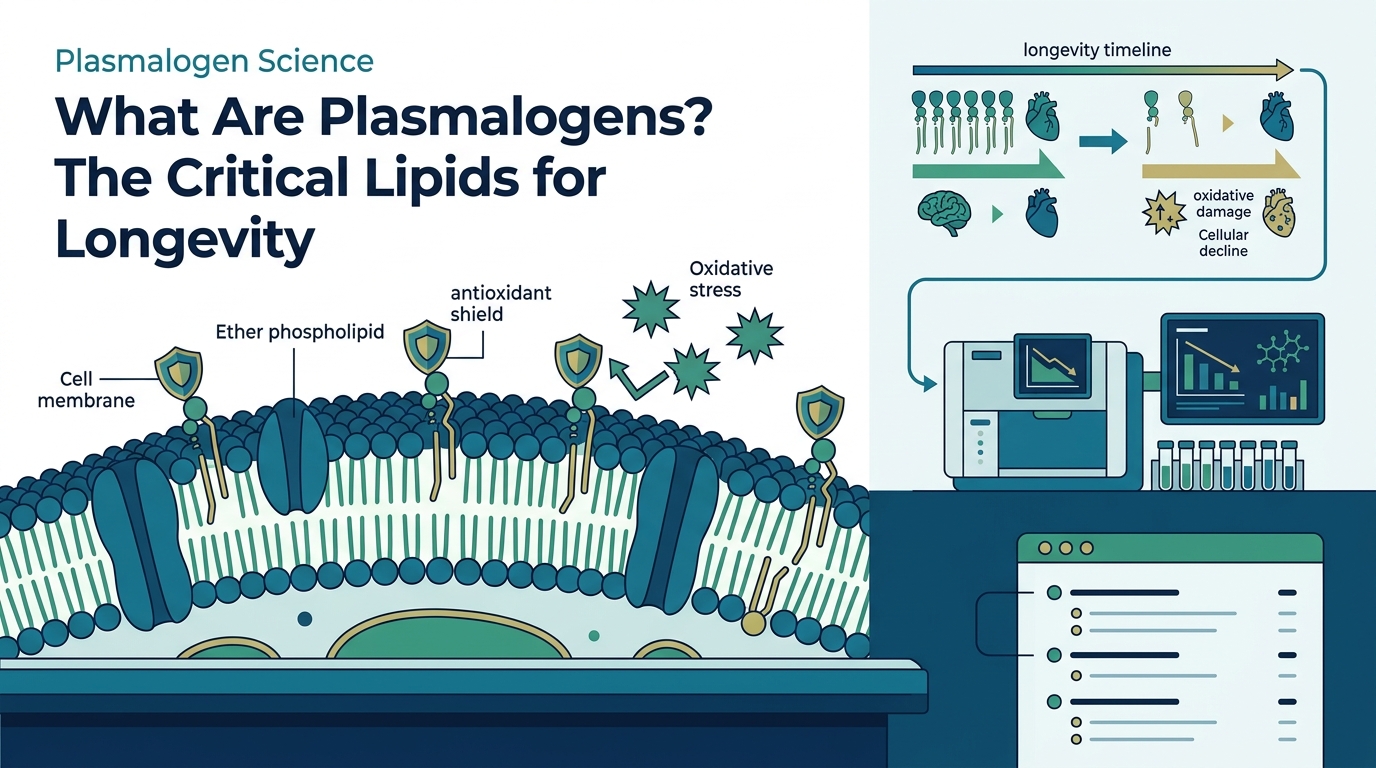
Plasmalogens are specialized ether phospholipids that serve as the primary antioxidant defense in cell membranes, particularly within the brain and heart. Research indicates that plasmalogen levels naturally decline with age, a process closely linked to neurodegenerative conditions and metabolic dysfunction. Understanding these unique lipids is essential for anyone interested in advanced health measurement and longevity strategies.
What Are Plasmalogens?
Plasmalogens are a unique class of phospholipids found in high concentrations in the myelin sheath of nerve cells, the heart, and skeletal muscle. Unlike standard phospholipids, plasmalogens contain a vinyl ether linkage at the sn-1 position of the glycerol backbone. This chemical structure is rare in nature and provides distinct biological advantages.
Plasmalogens are essential for maintaining the structural integrity of cell membranes. They help regulate membrane fluidity, which is crucial for the proper functioning of membrane-bound proteins and receptors. Without adequate plasmalogens, cells become more rigid and less responsive to environmental signals.
Furthermore, plasmalogens are critical for cellular signaling. They participate in the regulation of inflammation, apoptosis (programmed cell death), and immune responses. The body produces plasmalogens through a complex biosynthetic pathway that occurs in the peroxisomes and mitochondria. This process requires specific enzymes and cofactors, making it vulnerable to genetic defects and metabolic stress.
For a deeper understanding of the biosynthetic pathway, you can explore how the body produces plasmalogens through detailed scientific breakdowns.
How Plasmalogens Work in Cell Membranes
The primary function of plasmalogens is to protect cells from oxidative damage. The vinyl ether linkage in plasmalogens is highly susceptible to oxidation. When reactive oxygen species (ROS) attack the cell, plasmalogens sacrifice themselves by oxidizing first. This "sacrificial antioxidant" mechanism prevents more critical cellular components, such as DNA and other lipids, from being damaged.
Plasmalogens are also involved in the formation of lipid rafts. These are specialized microdomains within the cell membrane that concentrate signaling proteins. Lipid rafts are essential for efficient signal transduction, allowing cells to communicate rapidly with their environment. Disruption of lipid rafts can lead to impaired signaling and cellular dysfunction.
Additionally, plasmalogens play a role in the repair of cell membranes. They help maintain the balance between membrane stability and flexibility. This balance is particularly important in tissues that undergo constant mechanical stress, such as the heart and muscles. For more details on membrane biology, review cell membranes explained to understand the lipid environment.
The nervous system relies heavily on plasmalogens for the maintenance of the myelin sheath. Myelin is the insulating layer around nerves that allows for rapid transmission of electrical impulses. Plasmalogens are abundant in myelin, where they help protect nerve fibers from oxidative stress and maintain their structural integrity. Damage to myelin can lead to neurological disorders and cognitive decline.
Health Implications of Low Plasmalogen Levels
As we age, the body's ability to produce plasmalogens declines. This decline is not just a passive process but is actively linked to various age-related diseases. Low plasmalogen levels have been observed in individuals with Alzheimer's disease, Parkinson's disease, and other neurodegenerative conditions.
In Alzheimer's disease, the brain shows a significant reduction in plasmalogen levels. This deficiency is thought to contribute to the accumulation of amyloid-beta plaques and tau tangles, which are hallmarks of the disease. The lack of antioxidant protection makes neurons more vulnerable to oxidative stress, accelerating cell death.
Cardiovascular health is also impacted by plasmalogen levels. The heart has one of the highest concentrations of plasmalogens in the body. Low plasmalogen levels are associated with increased risk of heart failure and ischemic heart disease. The heart's high energy demand makes it particularly sensitive to oxidative damage, which plasmalogens help mitigate.
Bone and muscle health are similarly affected. In plasmalogen deficient diseases, skeletal growth abnormalities and muscle tone issues can occur. These conditions highlight the importance of plasmalogens in tissue development and repair. For more on this, see how bones and muscle are affected in plasmalogen deficient contexts.
Furthermore, plasmalogens influence cognitive function. The synapse, the communication site between nerve cells, relies on plasmalogens for proper function. Disruption in synaptic plasticity can lead to memory loss and cognitive impairment. Understanding how the synapse works reveals the critical role of lipids in neural communication.
Measurement and Testing
Traditional healthcare often focuses on symptoms after they become obvious. Advanced health measurement looks deeper, examining patterns in metabolism, inflammation, and lipid biology. Plasmalogen measurement belongs in advanced health testing because it reveals early biological stress before disease manifests.
Measuring plasmalogen levels involves analyzing blood plasma or red blood cells. The most common method is liquid chromatography-mass spectrometry (LC-MS). This technique allows for the precise quantification of different plasmalogen species, such as PE-P and PC-P plasmalogens.
Understanding plasmalogen levels helps in assessing overall healthspan. Healthspan refers to the years of life lived with strong function, mobility, and cognition. A longer lifespan matters more when the body and brain remain capable. Advanced testing supports a more precise view of healthspan by tracking these lipid biomarkers over time.
For those interested in the broader context of health metrics, advanced health measurements provide a comprehensive guide to longevity biomarkers.
Insights from Animal Research
Animal research has provided valuable insights into the role of plasmalogens in disease biology. Studies in mice and other models have shown that plasmalogen deficiency can lead to accelerated aging and increased susceptibility to neurodegenerative diseases.
Research in horses and active animals also highlights the role of plasmalogens in mobility and recovery. Plasmalogens support healthy aging and cellular resilience in pets, suggesting that these lipids are important across species. For more on this, see plasmalogens in animals.
Key Takeaways
- Plasmalogens are specialized ether phospholipids that act as primary antioxidants in cell membranes.
- They are crucial for the integrity of the myelin sheath and proper nerve function.
- Levels naturally decline with age, contributing to neurodegenerative and cardiovascular diseases.
- Advanced health measurement can track plasmalogen levels to assess biological aging.
- Animal research confirms the role of plasmalogens in mobility, recovery, and cellular resilience.
- Low plasmalogen levels are linked to bone, muscle, and cognitive decline.
- Understanding plasmalogen biology is key to developing longevity interventions.
Frequently Asked Questions
What is the primary function of plasmalogens?
Plasmalogens serve as the primary antioxidant defense in cell membranes, protecting cells from oxidative damage and maintaining membrane integrity.
Why do plasmalogen levels decline with age?
Plasmalogen levels decline due to reduced biosynthetic efficiency, increased oxidative stress, and genetic factors that affect peroxisomal function over time.
How are plasmalogen levels measured?
Plasmalogen levels are measured using liquid chromatography-mass spectrometry (LC-MS) on blood plasma or red blood cell samples.
Are plasmalogens important for brain health?
Yes, plasmalogens are abundant in the brain and are essential for myelin sheath integrity and synaptic function.
Can plasmalogen deficiency cause neurological issues?
Yes, severe plasmalogen deficiency can lead to neurological disorders, including cognitive impairment and motor dysfunction.
What is the difference between plasmalogens and other phospholipids?
Plasmalogens contain a vinyl ether linkage at the sn-1 position, which provides unique antioxidant properties not found in standard phospholipids.
How does plasmalogen health relate to longevity?
Higher plasmalogen levels are associated with better healthspan, reduced inflammation, and lower risk of age-related diseases.
Next Steps
Understanding plasmalogens is the first step toward optimizing your healthspan. If you are interested in learning more about how these critical lipids influence your body, explore our comprehensive resources on plasmalogen science. For personalized insights into your health metrics, contact us to discuss advanced health measurement options.