

Plasmalogen deficiency is increasingly recognized as a critical factor in neurodegenerative and metabolic decline. According to recent lipidomics research, plasmalogens constitute a significant portion of the ether phospholipids in the human brain, with levels dropping precipitously during the early stages of cognitive decline. This decline is not merely a symptom but a driver of cellular vulnerability, making accurate measurement essential for early intervention and longevity strategies.
What Are Plasmalogens?
To understand how plasmalogen levels are measured, one must first understand the unique structure of these molecules. Plasmalogens are specialized ether phospholipids found in high concentrations in cell membranes, particularly in the brain, heart, and immune cells. Unlike standard phospholipids, they possess a vinyl-ether bond at the sn-1 position, which provides unique antioxidant and anti-inflammatory properties.
These molecules are not just structural components; they are dynamic regulators of cellular function. They influence membrane fluidity, protein function, and signal transduction. When plasmalogen levels drop, the integrity of cell membranes is compromised, leading to increased oxidative stress and impaired cellular communication. This is why measuring them provides a window into the fundamental health of your cellular infrastructure.
For a deeper dive into the biological role of these lipids, explore our guide on What Are Plasmalogens? to understand their foundational role in human biology.
Measurement Methodologies
Measuring plasmalogens is not as straightforward as a standard cholesterol test. It requires advanced lipidomics techniques capable of distinguishing between different lipid classes and identifying the specific vinyl-ether bond that defines a plasmalogen.
Mass Spectrometry and Lipidomics
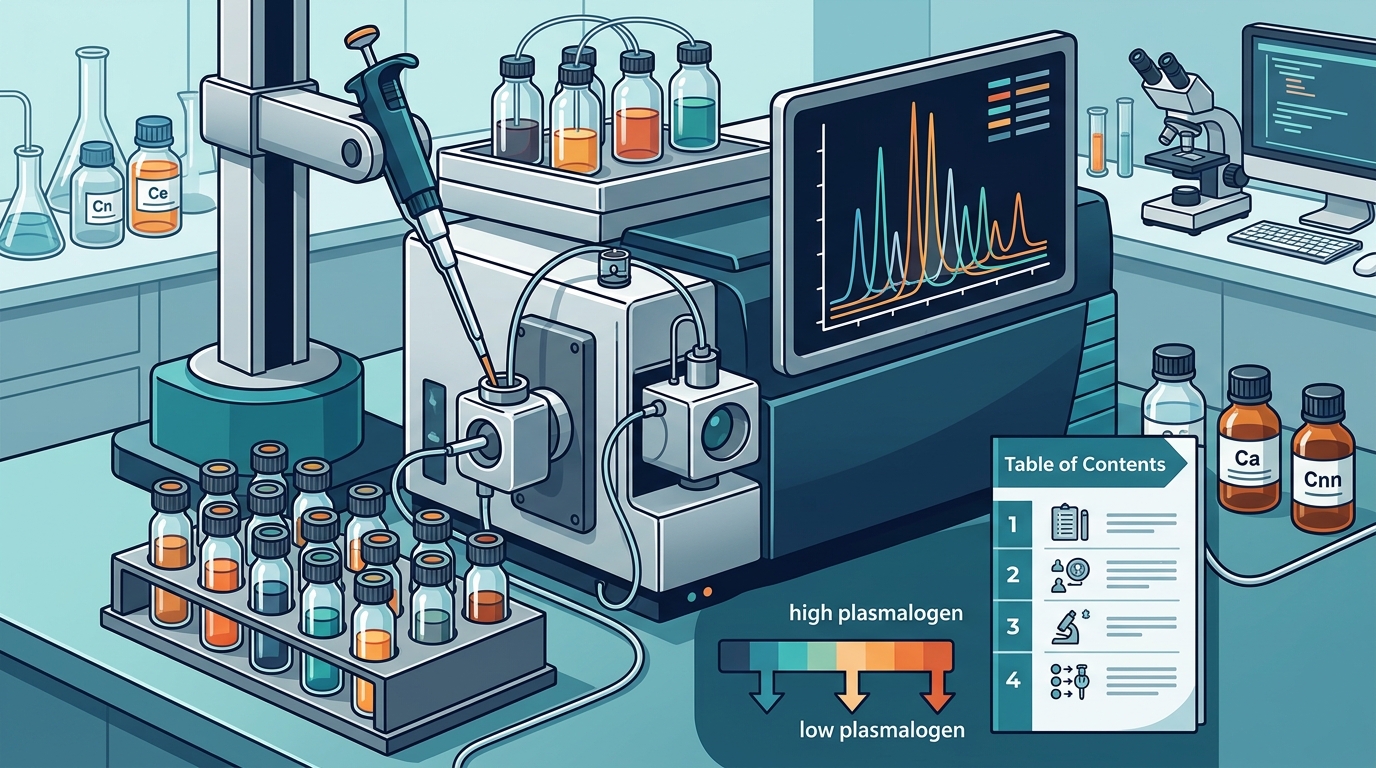
The gold standard for plasmalogen measurement is mass spectrometry, often coupled with liquid chromatography. This technology allows for the precise quantification of specific lipid species, such as PE-P (ethanolamine plasmalogen) and PC-P (choline plasmalogen). These methods can detect subtle changes in lipid composition that standard blood panels miss entirely.
Advanced health measurement is changing how health and longevity are understood by moving beyond basic markers to these deeper lipid profiles. For more on this shift, read The Importance of Advanced Health Measurements in Health and Longevity.
Why Standard Panels Fall Short
Standard metabolic panels and lipid profiles do not include plasmalogen levels. A person can have "normal" cholesterol and triglycerides while suffering from severe plasmalogen deficiency. This gap in standard testing is why specialized biomarker analysis is critical for anyone focused on brain health and aging.
Key Biomarkers of Plasmalogen Health
When you undergo advanced plasmalogen testing, you are not just looking at a single number. You are evaluating a network of related biomarkers that indicate the status of your ether lipid metabolism.
PE-P and PC-P Levels
The two primary biomarkers are phosphatidylethanolamine plasmalogen (PE-P) and phosphatidylcholine plasmalogen (PC-P). PE-P is particularly abundant in the brain and is often the first to decline in neurodegenerative conditions. Low levels of PE-P are strongly correlated with cognitive impairment and reduced membrane resilience.
Plasmalogen Precursors
Testing may also include precursors such as lysophosphatidylethanolamine (LPE) and lysophosphatidylcholine (LPC). The ratio of plasmalogens to their precursors provides insight into the efficiency of your body's biosynthesis pathway. If precursors are high but plasmalogens are low, it suggests a bottleneck in the production process, often linked to peroxisomal function.
Inflammatory and Oxidative Markers
Because plasmalogens act as sacrificial antioxidants, their levels are often inversely related to oxidative stress markers. Elevated levels of lipid peroxidation products can indicate that plasmalogens are being depleted faster than they can be replenished. Understanding this balance is key to interpreting your results.
For a comprehensive overview of these biomarkers, visit our Plasmalogen Measurement & Biomarkers Overview.
Interpreting Test Results
Interpreting plasmalogen levels requires context. There is no single "normal" value that applies to everyone, as levels naturally decline with age. However, significant deviations from age-matched norms can indicate underlying metabolic or neurological issues.
Age-Related Decline
Plasmalogen levels naturally decrease as we age. This decline is part of the broader process of biological aging. However, a rapid or severe drop below expected levels for your age group may signal accelerated aging or increased risk for age-related diseases.
Genetic Factors
Certain genetic variants, particularly those affecting peroxisomal function, can significantly impact plasmalogen synthesis. Individuals with these variants may have chronically low levels regardless of diet or lifestyle, requiring more aggressive monitoring and intervention strategies.
Learn more about the genetic and metabolic roots of these levels in our article on How the Body Produces Plasmalogens: The Complete Science of Biosynthesis.
Clinical Significance & Disease Links
Low plasmalogen levels are not just a marker; they are a mechanism of disease. Research has linked plasmalogen deficiency to a wide range of conditions, from cognitive decline to metabolic disorders.
Neurodegenerative Diseases
Alzheimer's disease and other dementias are strongly associated with reduced plasmalogen levels in the brain. The loss of these lipids compromises neuronal membrane integrity and increases susceptibility to oxidative damage. Early detection through blood biomarkers may offer a window for preventative intervention.
Metabolic and Inflammatory Conditions
Plasmalogens also play a role in immune regulation and metabolic health. Low levels have been observed in conditions involving chronic inflammation and metabolic syndrome. This suggests that plasmalogen status is a systemic indicator of overall health resilience.
Explore the connection between these lipids and physical health in our guide on Understanding Plasmalogen Levels.
Key Takeaways
- Plasmalogens are specialized ether phospholipids that provide critical antioxidant protection and membrane stability in the brain and body.
- Standard blood tests do not measure plasmalogens. Advanced lipidomics and mass spectrometry are required for accurate assessment.
- PE-P and PC-P are the primary biomarkers. PE-P is particularly important for brain health and cognitive function.
- Levels decline with age. However, accelerated decline may indicate increased risk for neurodegenerative or metabolic diseases.
- Measurement reveals biosynthesis efficiency. Analyzing precursors alongside plasmalogens helps identify metabolic bottlenecks.
- Early detection is key. Identifying low levels before symptoms appear allows for proactive healthspan extension strategies.
Frequently Asked Questions
How are plasmalogen levels measured in a clinical setting?
Plasmalogen levels are measured using advanced lipidomics techniques, primarily mass spectrometry. This allows for the precise quantification of specific ether phospholipid species in blood or tissue samples, distinguishing them from other lipids.
What is the difference between PE-P and PC-P?
PE-P (phosphatidylethanolamine plasmalogen) and PC-P (phosphatidylcholine plasmalogen) are the two main classes of plasmalogens. PE-P is more abundant in the brain and nervous system, while PC-P is more prevalent in the lungs and immune system.
Can diet increase plasmalogen levels?
While diet alone cannot directly supply plasmalogens, certain nutrients support the body's biosynthesis pathway. Choline, ethanolamine, and omega-3 fatty acids are essential precursors and cofactors for plasmalogen production.
Why do plasmalogen levels drop with age?
Plasmalogen levels drop with age due to a combination of reduced biosynthetic capacity, increased oxidative stress, and genetic factors. This decline is a key driver of age-related cellular dysfunction.
Is plasmalogen testing covered by insurance?
Currently, advanced plasmalogen testing is often considered specialized or experimental and may not be covered by standard insurance plans. It is typically available through specialized longevity or functional medicine providers.
What are the signs of low plasmalogen levels?
Signs may include cognitive fog, memory issues, fatigue, and increased susceptibility to oxidative stress. However, many individuals have low levels without obvious symptoms, making testing crucial for early detection.
How does plasmalogen deficiency affect the brain?
Plasmalogen deficiency in the brain leads to reduced membrane fluidity, increased oxidative damage, and impaired neuronal communication. This contributes to cognitive decline and neurodegenerative disease progression.
Can plasmalogen levels be restored?
While direct supplementation is complex, supporting the body's natural biosynthesis through targeted nutrition, lifestyle changes, and potentially precursor supplementation can help optimize levels over time.
Next Steps for Your Health
Understanding your plasmalogen status is a powerful step toward extending your healthspan. By identifying deficiencies early, you can take proactive measures to support your brain and body's resilience.
Ready to explore how plasmalogens can support your longevity goals? Visit Plasmalogen Science to learn more about our research, resources, and how to integrate this knowledge into your health strategy.