

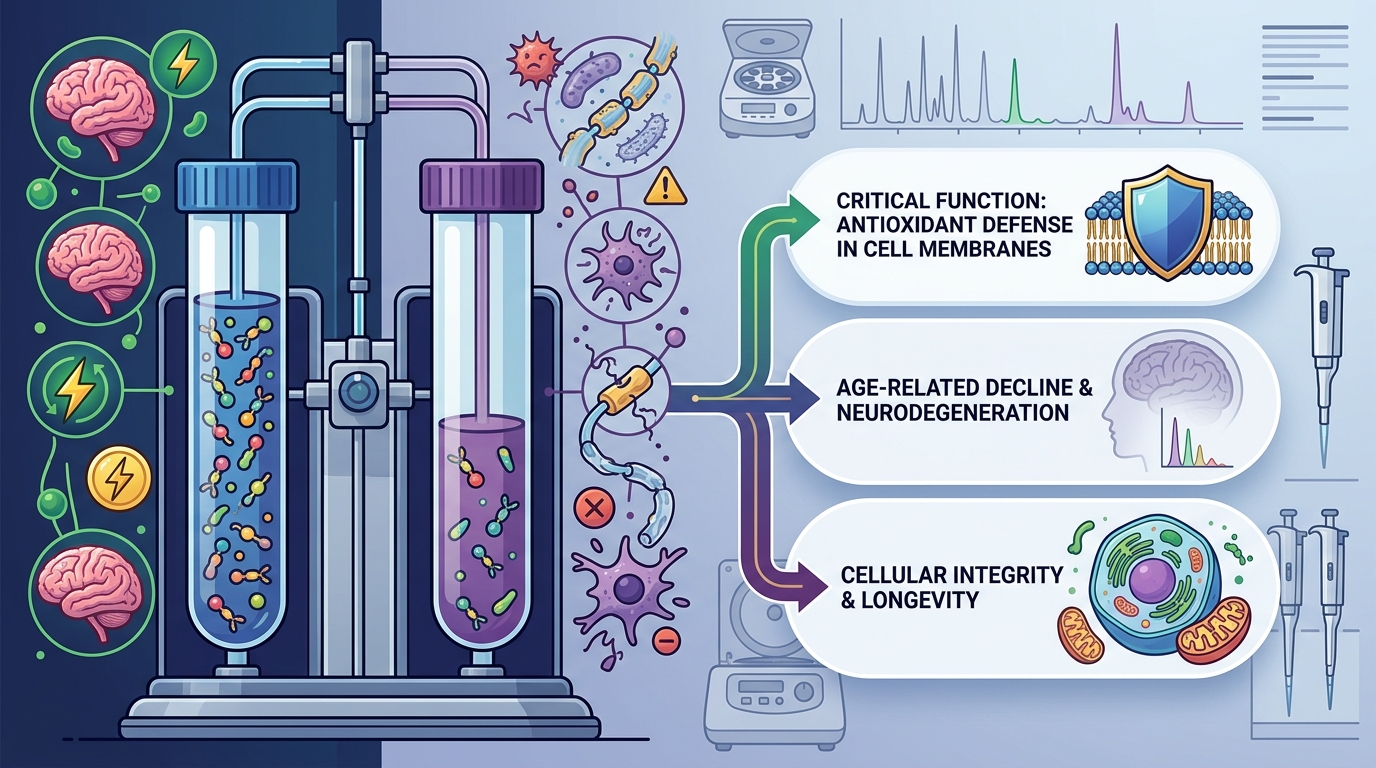
Plasmalogens are specialized ether phospholipids that serve as the primary antioxidant defense in cell membranes, particularly within the brain and heart. Recent research indicates that plasmalogen levels naturally decline with age, a process closely linked to neurodegenerative conditions and metabolic dysfunction. Understanding these unique lipids is essential for grasping how cellular integrity is maintained and why their depletion accelerates biological aging.
What Are Plasmalogens?
Plasmalogens are a distinct class of phospholipids found in the cell membranes of nearly all human tissues. Unlike standard phospholipids, they contain a vinyl ether linkage at the sn-1 position, which provides unique chemical stability and reactivity. This structure allows them to act as sacrificial antioxidants, absorbing oxidative damage to protect the rest of the cell membrane from degradation.
These molecules are synthesized in the peroxisomes, a cellular organelle responsible for breaking down fatty acids and synthesizing complex lipids. The process requires precise enzymatic activity and adequate nutrient availability. When peroxisomal function is compromised, plasmalogen production drops, leading to widespread cellular vulnerability.
Plasmalogens are not merely structural components. They play active roles in signal transduction, inflammation regulation, and mitochondrial function. Their presence is critical for maintaining the fluidity and integrity of cell membranes, ensuring that cells can communicate effectively and respond to environmental stressors.
How Plasmalogens Protect Cellular Structure
The primary function of plasmalogens is to shield cell membranes from oxidative stress. Oxidative stress occurs when there is an imbalance between free radicals and antioxidants in the body. Free radicals are unstable molecules that can damage cells, proteins, and DNA. Plasmalogens neutralize these radicals by undergoing oxidation themselves, thereby preserving the integrity of the cell membrane.
This protective mechanism is particularly vital in tissues with high metabolic rates, such as the brain and heart. The brain consumes approximately 20% of the body's energy, generating significant amounts of reactive oxygen species as a byproduct. Without adequate plasmalogen levels, neuronal membranes are susceptible to lipid peroxidation, a chain reaction that can lead to cell death and tissue damage.
Plasmalogens also influence membrane fluidity. Cell membranes must be flexible enough to allow for the movement of proteins and other molecules, yet stable enough to maintain cellular boundaries. Plasmalogens help regulate this balance, ensuring that membranes remain functional under varying physiological conditions.
Furthermore, plasmalogens are involved in the formation of lipid rafts, specialized microdomains within the cell membrane that facilitate protein sorting and signal transduction. These rafts are essential for immune response, neurotransmitter release, and cellular growth. Disruption of plasmalogen levels can impair these processes, leading to cellular dysfunction.
Plasmalogens and Brain Function
The brain is one of the most plasmalogen-rich organs in the body. These lipids are concentrated in the myelin sheath, the protective covering of nerve fibers that enables rapid signal transmission. Myelin is composed largely of lipids, and plasmalogens are a major component of this structure.
Plasmalogens support the health of the synapse, the junction where nerve cells communicate. Synaptic function is critical for memory, learning, and cognitive processing. When plasmalogen levels are adequate, synapses can maintain their structure and function, ensuring efficient neural communication. However, when plasmalogen levels decline, synaptic integrity may be compromised, leading to cognitive decline.
Research has shown a strong correlation between low plasmalogen levels and neurodegenerative diseases. In conditions such as Alzheimer's disease, plasmalogen levels in the brain are significantly reduced. This deficiency is not just a consequence of the disease but may also contribute to its progression by increasing oxidative stress and impairing neuronal function.
Additionally, plasmalogens play a role in neuroinflammation. Chronic inflammation in the brain is a key driver of neurodegeneration. Plasmalogens help regulate inflammatory responses by modulating the activity of immune cells in the brain, known as microglia. By controlling inflammation, plasmalogens help protect neurons from damage.
Measuring Plasmalogen Levels
Traditional health screenings often do not include plasmalogen testing. Standard lipid panels measure cholesterol and triglycerides but do not assess the specialized lipid composition of cell membranes. Advanced health measurements are required to evaluate plasmalogen status accurately.
Plasmalogen measurement involves analyzing blood samples for specific lipid biomarkers. These tests can detect early signs of plasmalogen deficiency before clinical symptoms appear. Early detection is crucial because it allows for interventions that may slow or prevent the progression of age-related diseases.
Longitudinal tracking of plasmalogen levels can provide valuable insights into an individual's health trajectory. By monitoring changes over time, healthcare providers can assess the effectiveness of lifestyle interventions or supplements aimed at boosting plasmalogen levels.
Understanding plasmalogen levels is part of a broader approach to advanced health measurement. This approach looks beyond standard markers to examine metabolic health, inflammation, and cellular resilience. It offers a more comprehensive view of healthspan, the period of life spent in good health.
Health Implications of Deficiency
Plasmalogen deficiency is associated with a wide range of health issues. In addition to neurodegenerative diseases, low plasmalogen levels have been linked to cardiovascular disease, diabetes, and musculoskeletal disorders. The skeletal and muscular systems are also affected, as plasmalogens are essential for bone formation and muscle repair.
In plasmalogen deficient diseases, such as certain inherited metabolic disorders, the impact on bones and muscle can be severe. These conditions may involve skeletal growth abnormalities, joint contractures, and reduced mobility. The underlying mechanism involves the disruption of lipid metabolism and cellular energy production.
For the general population, age-related decline in plasmalogens is a significant concern. As we age, our bodies become less efficient at producing plasmalogens. This decline contributes to the increased risk of chronic diseases and the loss of physical and cognitive function. Maintaining plasmalogen levels through diet, lifestyle, and potentially supplementation may help mitigate these effects.
It is important to note that plasmalogen levels are influenced by various factors, including genetics, diet, and environmental exposures. A diet rich in omega-3 fatty acids and antioxidants may support plasmalogen synthesis. Conversely, chronic stress and exposure to toxins can deplete plasmalogen stores.
Key Takeaways
- Plasmalogens are specialized ether phospholipids that serve as the primary antioxidant defense in cell membranes.
- They are synthesized in the peroxisomes and are critical for maintaining membrane integrity and fluidity.
- The brain and heart have the highest concentrations of plasmalogens due to their high metabolic demands.
- Plasmalogens protect the myelin sheath and synapses, supporting cognitive function and neural communication.
- Low plasmalogen levels are associated with Alzheimer's disease, cardiovascular disease, and musculoskeletal disorders.
- Advanced health measurements are required to detect plasmalogen deficiency, as standard tests do not capture this data.
- Age-related decline in plasmalogens contributes to biological aging and increased disease risk.
Frequently Asked Questions
What is the main function of plasmalogens?
Plasmalogens primarily function as antioxidants in cell membranes, protecting cells from oxidative damage and maintaining membrane integrity.
Where are plasmalogens synthesized in the body?
Plasmalogens are synthesized in the peroxisomes, specialized organelles within cells responsible for lipid metabolism.
Why are plasmalogens important for brain health?
Plasmalogens are crucial for the health of the myelin sheath and synapses, which are essential for neural communication and cognitive function.
Can plasmalogen levels be tested?
Yes, plasmalogen levels can be measured through advanced lipidomics testing, which analyzes specific biomarkers in blood samples.
What happens when plasmalogen levels are low?
Low plasmalogen levels are associated with increased oxidative stress, inflammation, and a higher risk of neurodegenerative and cardiovascular diseases.
How does aging affect plasmalogen levels?
Plasmalogen levels naturally decline with age due to reduced peroxisomal function and increased oxidative stress, contributing to biological aging.
Are there dietary sources of plasmalogens?
While plasmalogens are not directly obtained from food in significant amounts, nutrients like omega-3 fatty acids and antioxidants support their synthesis.
Explore Plasmalogen Science
Understanding plasmalogens is key to unlocking the secrets of cellular health and longevity. At Plasmalogen Science, we provide comprehensive resources on the biology, measurement, and health implications of these vital lipids. Explore our home page to learn more about how plasmalogens influence your health. Visit our Advanced Health Measurements section to discover how advanced testing can reveal early signs of decline. For detailed insights into cellular structure, read our guide on Cell Membranes Explained. Learn about the impact on specific tissues in our article on Bones & Muscle. Understand the neural mechanisms in Brain Synapse Function. For more information, contact us via our Contact page.