

Plasmalogens are specialized ether phospholipids that serve as critical structural and functional components of cell membranes, particularly in the brain and nervous system. These unique lipids are essential for maintaining membrane integrity, facilitating cellular signaling, and protecting neurons from oxidative stress. Research indicates that plasmalogen levels decline significantly with age, a process that is closely linked to the progression of neurodegenerative diseases. Understanding this decline is vital for developing new therapeutic strategies for conditions like Alzheimer's and Parkinson's disease.
What Are Plasmalogens?
Plasmalogens are a unique class of phospholipids found in high concentrations in the brain, heart, and other vital organs. Unlike common phospholipids, plasmalogens contain a vinyl ether linkage at the sn-1 position of the glycerol backbone. This chemical structure gives them distinct properties, including the ability to act as antioxidants and protect cell membranes from damage.
Plasmalogens are synthesized in the peroxisomes, specialized organelles within cells responsible for breaking down fatty acids and synthesizing complex lipids. This process involves a series of enzymatic reactions that are highly sensitive to genetic and environmental factors. When peroxisomal function is impaired, plasmalogen production decreases, leading to a cascade of cellular dysfunction.
The brain is particularly dependent on plasmalogens due to its high lipid content and constant need for membrane repair. Neurons rely on these lipids to maintain the fluidity and stability of their membranes, which is crucial for proper signal transmission. Without adequate plasmalogen levels, neurons become vulnerable to stress and damage, potentially leading to neurodegeneration.
Plasmalogens and Alzheimer's Disease
Alzheimer's disease is the most common form of dementia, characterized by the accumulation of amyloid-beta plaques and tau tangles in the brain. Recent research has highlighted a significant link between plasmalogen deficiency and the progression of Alzheimer's disease. Studies have shown that plasmalogen levels are markedly reduced in the brains of individuals with Alzheimer's compared to healthy controls.
This reduction is not merely a consequence of the disease but may play a causal role in its development. Plasmalogens are known to inhibit the aggregation of amyloid-beta, a key pathological feature of Alzheimer's. When plasmalogen levels drop, amyloid-beta is more likely to clump together, forming toxic plaques that disrupt neuronal communication and lead to cell death.
Furthermore, plasmalogens help protect neurons from oxidative stress, a major contributor to Alzheimer's pathology. By neutralizing free radicals, plasmalogens prevent damage to lipids, proteins, and DNA within neurons. This protective effect is crucial for maintaining cognitive function and slowing the progression of the disease. For more on the metabolic system's role in these deficiencies, see Cognitive Neurological insights.
Plasmalogens and Parkinson's Disease
Parkinson's disease is a progressive disorder of the nervous system that affects movement. It is characterized by the loss of dopamine-producing neurons in the substantia nigra, a region of the brain involved in motor control. Plasmalogens have also been implicated in the pathology of Parkinson's disease, although the mechanisms are somewhat different from those in Alzheimer's.
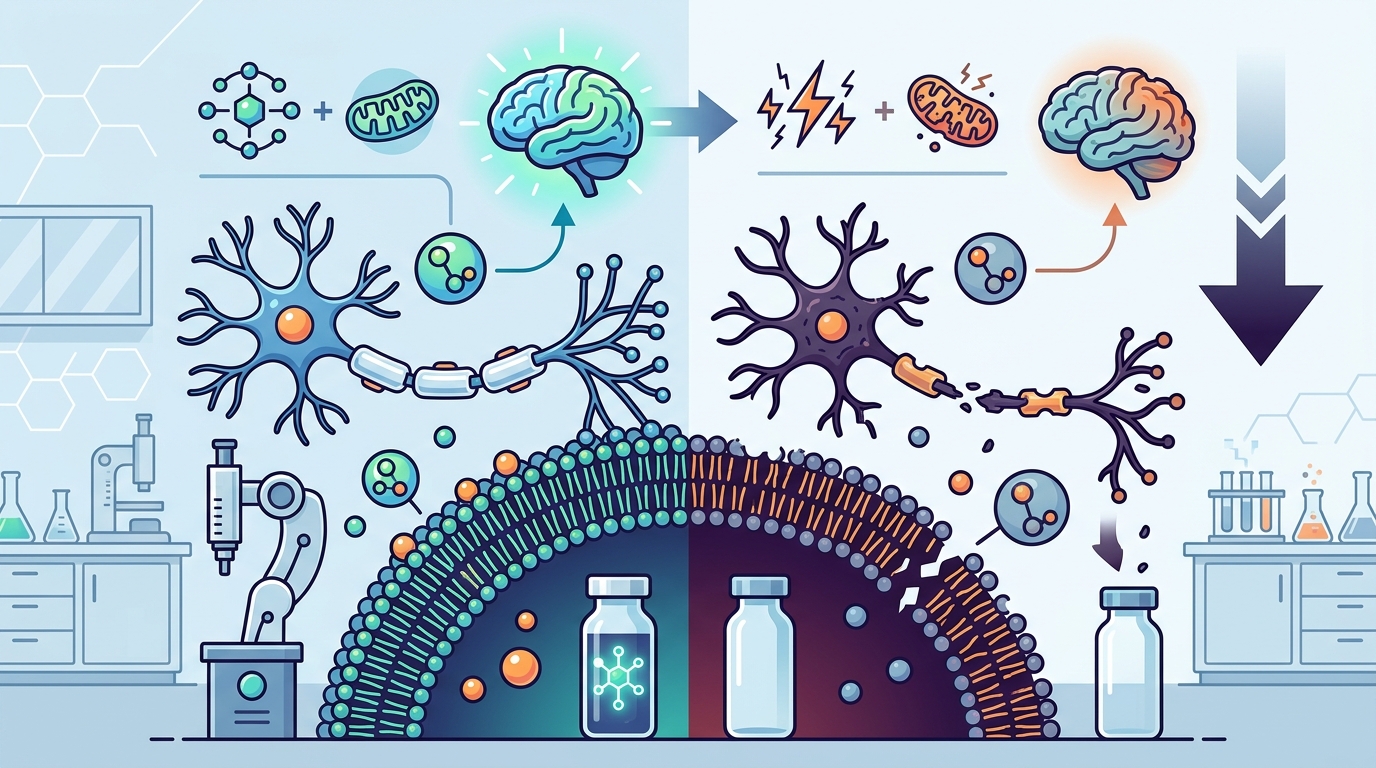
In Parkinson's, plasmalogen deficiency is linked to mitochondrial dysfunction and oxidative stress. Mitochondria are the powerhouses of the cell, responsible for producing energy. When plasmalogen levels are low, mitochondria become less efficient, leading to increased production of reactive oxygen species. This oxidative stress damages neurons and contributes to their degeneration.
Additionally, plasmalogens play a role in the regulation of inflammation, which is increasingly recognized as a key factor in Parkinson's disease. Chronic inflammation in the brain can accelerate neuronal loss and worsen symptoms. By modulating inflammatory responses, plasmalogens may help protect against the progression of Parkinson's. Learn more about Brain Synapse Function to understand how these lipids support neural communication.
Cellular Mechanisms of Decline
The decline of plasmalogens in neurodegenerative conditions is driven by several cellular mechanisms. One primary factor is the impairment of peroxisomal function. Peroxisomes are essential for the initial steps of plasmalogen synthesis. When peroxisomal activity is reduced, either due to genetic mutations or age-related decline, plasmalogen production drops.
Another mechanism involves the increased demand for plasmalogens during periods of cellular stress. When neurons are exposed to oxidative stress or inflammation, they require more plasmalogens to repair damaged membranes. If the supply cannot meet this demand, plasmalogen levels deplete, exacerbating the damage.
Furthermore, the breakdown of plasmalogens can be accelerated by enzymes called phospholipases. In neurodegenerative diseases, the activity of these enzymes is often upregulated, leading to increased degradation of plasmalogens. This creates a vicious cycle where low plasmalogen levels lead to more cellular damage, which in turn increases the demand for plasmalogens.
Understanding these mechanisms is crucial for developing targeted therapies. By addressing the root causes of plasmalogen deficiency, it may be possible to slow or even reverse the progression of neurodegenerative diseases. For a deeper dive into Cell Membranes Explained, explore how lipid composition affects cellular health.
Measurement and Testing
Accurate measurement of plasmalogen levels is essential for understanding their role in neurodegeneration and for monitoring potential treatments. Traditional blood tests may not provide a complete picture of plasmalogen status, as they often focus on standard lipid panels that do not include specialized phospholipids.
Advanced health measurements, such as lipidomics, offer a more comprehensive view of lipid biology. Lipidomics involves the large-scale study of lipids within cells, tissues, or organisms. This approach can identify specific plasmalogen species and their levels, providing valuable insights into cellular health.
| Testing Method | Focus | Relevance to Plasmalogens |
|---|---|---|
| Standard Lipid Panel | Cholesterol, Triglycerides | Low; does not measure plasmalogens |
| Lipidomics | Comprehensive lipid profile | High; identifies specific plasmalogen species |
| Peroxisomal Function Tests | Enzyme activity | Medium; indicates synthesis capacity |
| Neuroimaging | Brain structure and function | Indirect; shows effects of deficiency |
For more information on Advanced Health Measurements, discover how these tools can reveal early signs of biological aging and cellular stress.
Key Takeaways
- Plasmalogens are specialized ether phospholipids critical for brain health and neuronal function.
- Plasmalogen levels decline with age and are significantly reduced in Alzheimer's and Parkinson's disease.
- In Alzheimer's, plasmalogens help prevent amyloid-beta aggregation and protect against oxidative stress.
- In Parkinson's, plasmalogens support mitochondrial function and regulate inflammation.
- Peroxisomal dysfunction is a key driver of plasmalogen deficiency in neurodegenerative conditions.
- Advanced lipidomics testing can provide detailed insights into plasmalogen status and cellular health.
- Targeting plasmalogen synthesis or supplementation may offer therapeutic potential for neurodegeneration.
Frequently Asked Questions
What are plasmalogens and why are they important for the brain?
Plasmalogens are a unique class of phospholipids found in high concentrations in the brain. They are important because they maintain membrane integrity, protect against oxidative stress, and facilitate cellular signaling, all of which are crucial for healthy neuronal function.
How do plasmalogens relate to Alzheimer's disease?
Plasmalogen levels are significantly reduced in the brains of individuals with Alzheimer's disease. This deficiency is linked to increased amyloid-beta aggregation and oxidative stress, both of which contribute to neuronal damage and cognitive decline.
Can plasmalogen deficiency cause Parkinson's disease?
While plasmalogen deficiency does not directly cause Parkinson's disease, it is a significant contributing factor. Low plasmalogen levels lead to mitochondrial dysfunction and increased inflammation, which accelerate the loss of dopamine-producing neurons.
How are plasmalogens measured in the body?
Plasmalogens are measured using advanced lipidomics techniques that analyze the specific lipid species in blood or tissue samples. Standard lipid panels do not typically include plasmalogens, so specialized testing is required.
Is there a link between peroxisomes and plasmalogen levels?
Yes, peroxisomes are essential for the synthesis of plasmalogens. Impaired peroxisomal function leads to reduced plasmalogen production, which can contribute to various health issues, including neurodegeneration.
Can supplementing with plasmalogens help prevent neurodegeneration?
Research is ongoing, but preliminary studies suggest that plasmalogen supplementation may help protect neurons and slow the progression of neurodegenerative diseases by restoring membrane integrity and reducing oxidative stress.
What lifestyle factors affect plasmalogen levels?
Diet, exercise, and exposure to environmental toxins can all influence plasmalogen levels. A diet rich in healthy fats and antioxidants, along with regular physical activity, may support plasmalogen synthesis and maintenance.
Explore Plasmalogen Science
Understanding the role of plasmalogens in neurodegeneration is the first step toward developing effective treatments and preventive strategies. By supporting plasmalogen health, we can protect our brains and improve our quality of life as we age.
For more information on how plasmalogens influence cellular energy and aging, visit our Plasmalogen Science resource center. Contact us to learn more about advanced health measurements and how they can help you monitor your biological aging.