

Plasmalogens are specialized ether phospholipids that serve as critical structural components of cell membranes, particularly in the brain, heart, and immune cells. These unique molecules are distinguished by a vinyl-ether bond at the sn-1 position, which provides exceptional protection against oxidative stress and supports cellular signaling. Understanding how the body produces plasmalogens is essential for grasping the mechanisms of healthy aging, neurological function, and metabolic resilience. As research into advanced health measurements expands, the role of plasmalogens in longevity and cellular integrity has moved to the forefront of biomedical science. (About This Project Plasmalogen)
The Biosynthesis Pathway: Peroxisomes and Mitochondria
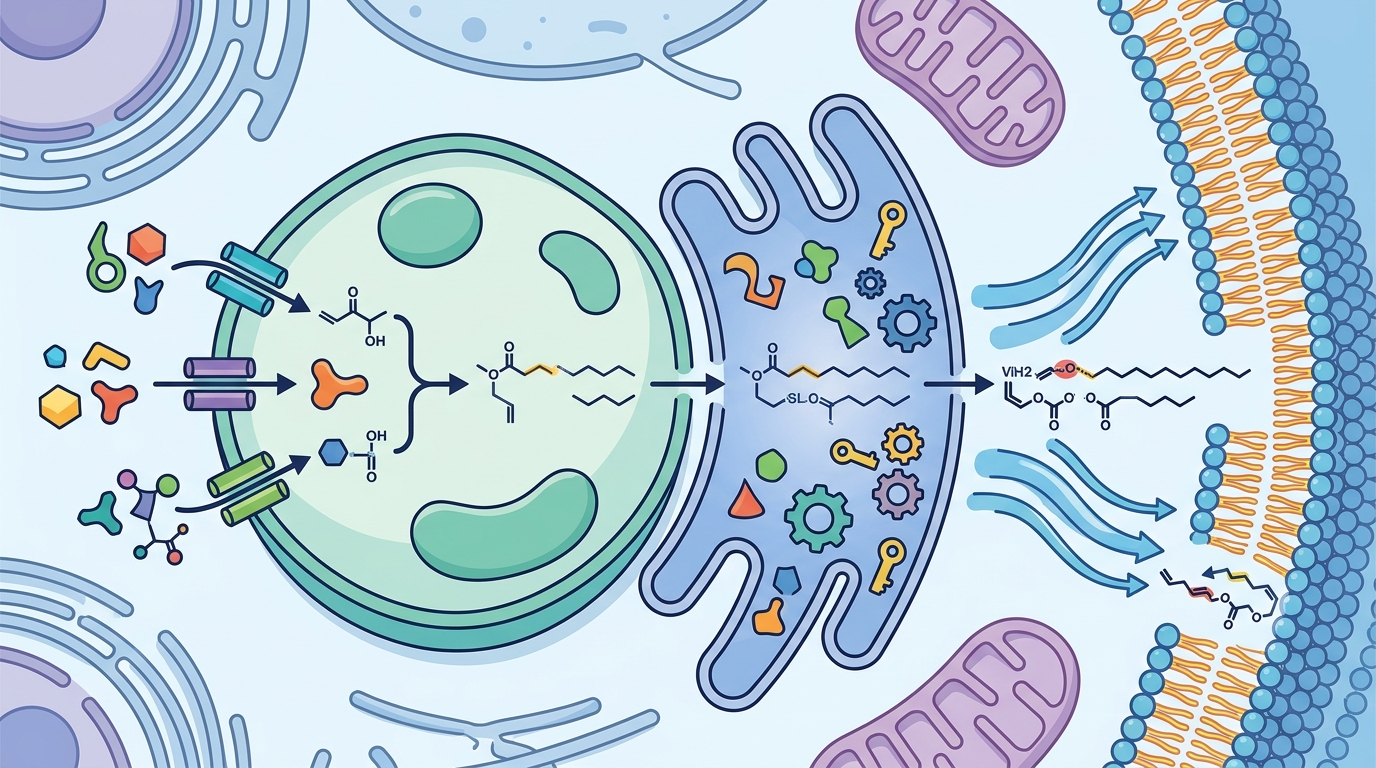
The production of plasmalogens is a complex, multi-step process that requires precise coordination between two distinct cellular organelles: the peroxisome and the mitochondrion. This collaborative effort ensures that the unique vinyl-ether bond is formed correctly, a feature that distinguishes plasmalogens from other phospholipids.Plasmalogen biosynthesis is a multi-organelle process involving peroxisomal initiation and mitochondrial completion.
The journey begins in the peroxisome, an organelle responsible for breaking down very long-chain fatty acids and synthesizing ether lipids. Here, the enzyme dihydroxyacetone phosphate acyltransferase (DHAPAT) catalyzes the first committed step. It attaches a fatty acid to dihydroxyacetone phosphate (DHAP), creating an alkyl-DHAP intermediate. This is followed by the action of alkyl-DHAP synthase, which introduces a second fatty acid chain, forming an alkyl-DHAP molecule.
Once the alkyl-DHAP is formed, it is transported to the mitochondria. In the mitochondrial membrane, the enzyme alkyl-DHAP synthase is not involved; instead, the molecule undergoes further modification. The alkyl chain is shortened, and the head group is added. The final critical step involves the removal of the phosphate group and the addition of a head group such as ethanolamine or choline. This results in the formation of plasmenyl-ethanolamine or plasmenyl-choline, which are then transported to various cellular membranes where they perform their protective and signaling functions.
This pathway is highly sensitive to genetic defects and environmental stressors. Disruptions in peroxisomal function can halt plasmalogen production entirely, leading to severe neurological and developmental disorders. Even in healthy individuals, the efficiency of this pathway can decline with age, contributing to the accumulation of oxidative damage and cellular dysfunction.
Essential Nutrients for Plasmalogen Synthesis
While the body has the machinery to produce plasmalogens, it requires specific raw materials and cofactors to drive the biosynthetic enzymes. Nutritional status plays a pivotal role in determining how efficiently these molecules are synthesized. Deficiencies in key nutrients can bottleneck the process, leading to lower plasmalogen levels even if the genetic machinery is intact.
Plasmalogen synthesis relies heavily on choline, methionine, and B-vitamins for methylation and lipid assembly.
Choline
Choline is a fundamental building block for plasmalogens. It serves as the precursor for the ethanolamine and choline head groups that cap the plasmalogen molecule. Adequate choline intake is essential for maintaining the structural integrity of cell membranes and supporting neurotransmitter synthesis. Without sufficient choline, the body cannot complete the final steps of plasmalogen assembly, potentially leading to membrane instability.
Methionine and the Methylation Cycle
Methionine is an essential amino acid that plays a critical role in the methylation cycle. This cycle is responsible for converting homocysteine back into methionine, a process that requires folate and vitamin B12. Methylation is crucial for the synthesis of phosphatidylethanolamine, which is then converted to phosphatidylcholine. This pathway is intimately linked to plasmalogen production, as the head groups required for plasmalogens are derived from these intermediates. Impaired methylation can therefore indirectly reduce plasmalogen levels.
B-Vitamins (B12, Folate, B6)
Vitamins B12, folate, and B6 are cofactors for enzymes involved in homocysteine metabolism. Elevated homocysteine levels are associated with oxidative stress and endothelial dysfunction, both of which can impair plasmalogen synthesis. Ensuring adequate intake of these vitamins supports the methylation cycle, thereby facilitating the production of the lipid precursors needed for plasmalogens.
Omega-3 Fatty Acids
While not direct precursors to the ether bond, omega-3 fatty acids, particularly DHA and EPA, are critical for membrane fluidity and function. They work synergistically with plasmalogens to maintain the physical properties of cell membranes. Omega-3s also possess anti-inflammatory properties that can reduce the oxidative burden on plasmalogens, preserving their protective capacity.
How Aging Disrupts Plasmalogen Production
One of the most significant factors affecting plasmalogen levels is age. Research indicates that plasmalogen concentrations decline steadily as individuals grow older. This decline is not merely a passive consequence of aging but an active contributor to the biological processes associated with aging and age-related diseases.
Plasmalogen levels naturally decline with age, contributing to increased oxidative stress and cellular vulnerability.
The decline in plasmalogen production is linked to several factors:
- Peroxisomal Dysfunction: As we age, peroxisomal function can become less efficient. This reduces the initial steps of plasmalogen synthesis, leading to a downstream shortage of these critical lipids.
- Oxidative Stress: Plasmalogens are sacrificial antioxidants. They protect other cellular components by absorbing oxidative damage. Over time, this constant exposure can deplete plasmalogen stores faster than they can be replenished, especially if biosynthesis is impaired.
- Inflammation: Chronic, low-grade inflammation, often seen in aging, can interfere with lipid metabolism and enzyme activity, further hindering plasmalogen production.
This age-related decline has profound implications for health. Lower plasmalogen levels have been associated with neurodegenerative conditions, cardiovascular disease, and impaired immune function. Understanding this link highlights the importance of supporting plasmalogen biosynthesis throughout life.
Dietary Strategies to Support Plasmalogen Levels
While the body produces plasmalogens endogenously, dietary interventions can support this process and help maintain healthy levels. Focus on foods that provide the necessary precursors and cofactors identified in the biosynthesis pathway.
| Nutrient | Role in Plasmalogen Support | Food Sources |
|---|---|---|
| Choline | Provides head groups for plasmalogen assembly | Egg yolks, liver, beef, chicken, soybeans |
| Methionine | Essential amino acid for methylation cycle | Fish, poultry, Brazil nuts, seeds, dairy |
| B-Vitamins | Cofactors for homocysteine metabolism | Leafy greens, legumes, nutritional yeast, meat |
| Omega-3s | Supports membrane fluidity and reduces inflammation | Salmon, mackerel, sardines, flaxseeds, walnuts |
| Antioxidants | Protects plasmalogens from oxidative depletion | Berries, dark chocolate, green tea, colorful vegetables |
In addition to specific nutrients, adopting a diet that minimizes oxidative stress is crucial. This includes reducing the intake of processed foods, trans fats, and excessive sugars, which can contribute to inflammation and cellular damage. A diet rich in whole, unprocessed foods provides the broad spectrum of micronutrients needed to support optimal cellular function.
Measurement and Testing of Plasmalogen Levels
As the field of advanced health measurements evolves, the ability to assess plasmalogen levels has become increasingly important for personalized health strategies. Traditional blood tests do not typically include plasmalogen analysis, making specialized testing necessary for those seeking to monitor their plasmalogen status.
Advanced lipidomics and specialized biomarker testing are required to accurately assess plasmalogen levels.
Specialized tests can measure the concentration of specific plasmalogen species in the blood. These tests provide insight into the body's current plasmalogen status and can help identify individuals who may be at risk for age-related decline. Longitudinal tracking of these levels can reveal trends over time, allowing for proactive adjustments in diet, lifestyle, and supplementation.
Understanding plasmalogen levels is part of a broader approach to healthspan. By monitoring these biomarkers, individuals can gain a deeper understanding of their cellular health and take informed steps to support their longevity.
Key Takeaways
- Plasmalogens are specialized ether phospholipids critical for cell membrane integrity and oxidative protection.
- Biosynthesis requires coordination between peroxisomes and mitochondria, involving specific enzymatic steps.
- Choline, methionine, and B-vitamins are essential nutrients that support the plasmalogen synthesis pathway.
- Plasmalogen levels naturally decline with age, contributing to increased oxidative stress and cellular vulnerability.
- Dietary strategies focusing on choline-rich foods, omega-3s, and antioxidants can help support plasmalogen production.
- Advanced lipidomics testing is available to measure plasmalogen levels and monitor changes over time.
- Supporting plasmalogen health is a key component of promoting longevity and healthy aging.
Frequently Asked Questions
What are plasmalogens and why are they important?
Plasmalogens are a type of phospholipid found in cell membranes, particularly in the brain and heart. They are important because they protect cells from oxidative damage and support cellular signaling and membrane fluidity.
Where does plasmalogen synthesis begin?
Plasmalogen synthesis begins in the peroxisome, where the initial steps of attaching fatty acids to dihydroxyacetone phosphate occur.
Can diet increase plasmalogen levels?
While diet cannot directly provide plasmalogens, it can provide the essential nutrients and cofactors needed for the body to produce them efficiently. Foods rich in choline, methionine, and omega-3s are particularly beneficial.
How does aging affect plasmalogen production?
Aging is associated with a decline in plasmalogen levels due to reduced peroxisomal function, increased oxidative stress, and chronic inflammation. This decline can contribute to age-related health issues.
Is there a test to measure plasmalogen levels?
Yes, specialized lipidomics tests can measure the concentration of plasmalogen species in the blood. These tests are not part of standard routine panels and require specific ordering.
What is the role of peroxisomes in plasmalogen production?
Peroxisomes are responsible for the initial steps of plasmalogen biosynthesis, including the formation of the alkyl chain. Defects in peroxisomal function can severely impair plasmalogen production.
How do plasmalogens protect against oxidative stress?
Plasmalogens act as sacrificial antioxidants. The vinyl-ether bond in plasmalogens is highly susceptible to oxidation, allowing them to neutralize free radicals and protect other critical cellular components from damage.
Take the Next Step in Your Healthspan
Understanding how the body produces plasmalogens and the nutrients that support this process is a powerful step toward optimizing your health and longevity. By focusing on the foundational biology of cellular protection, you can make informed decisions about your diet, lifestyle, and health monitoring.
Explore our comprehensive resources on advanced health measurements to learn more about monitoring your biomarkers. Discover the science behind cell membranes and their role in overall health. For more insights on plasmalogens and health, visit our learning hub.
Ready to take control of your cellular health? Contact us today to learn more about how we can support your journey to a healthier, more resilient life.