

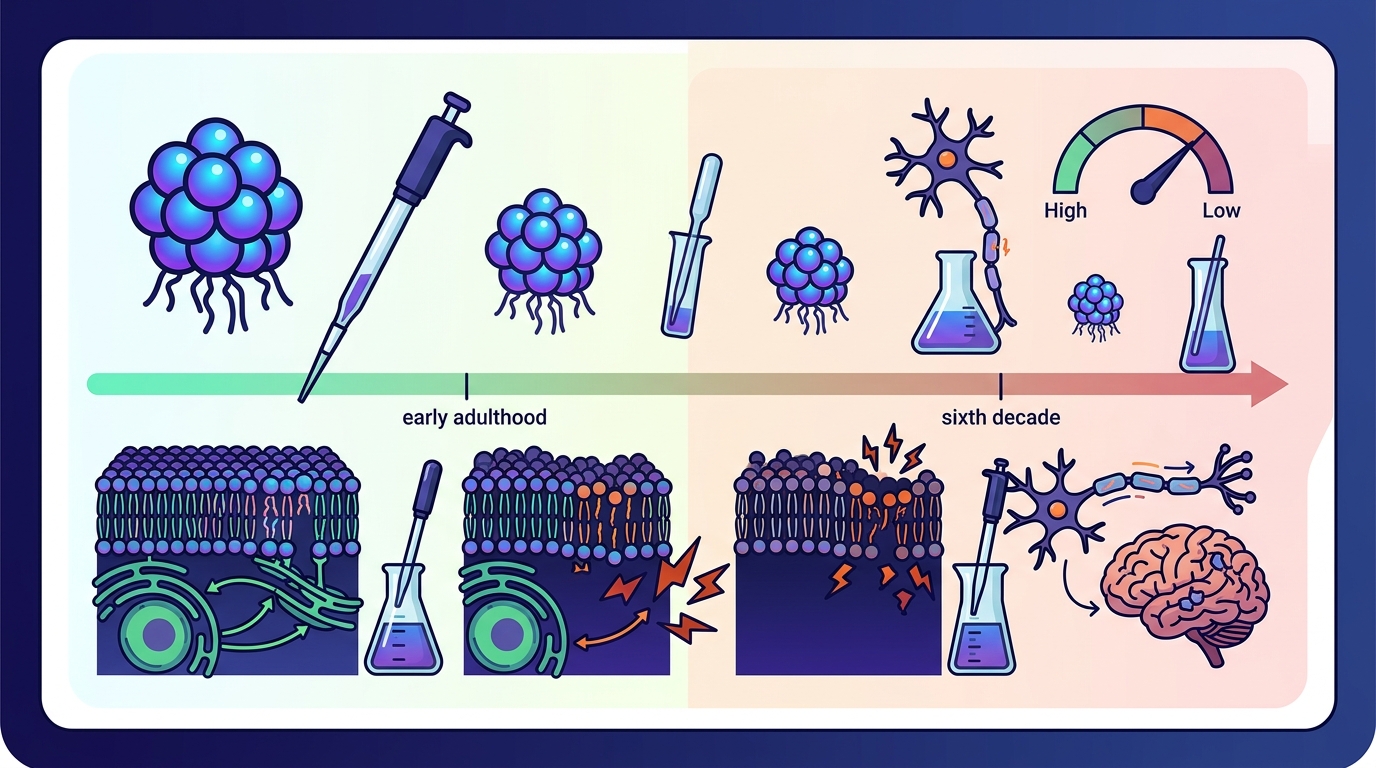
Plasmalogen levels change with age in a predictable and significant manner, serving as a critical biomarker for cellular health and longevity. Research indicates that these specialized ether phospholipids begin to decline steadily after early adulthood, with a marked acceleration in reduction during the sixth decade of life. This decline is not merely a side effect of aging but a primary driver of cellular vulnerability, affecting everything from brain function to immune response. Understanding this trajectory is essential for anyone looking to optimize long-term health and mitigate the risks associated with biological aging.
What Are Plasmalogens?
Before understanding how these levels change, it is vital to define what they are. Plasmalogens are a unique class of ether phospholipids found in high concentrations in cell membranes, particularly in the brain, heart, and immune cells. Unlike standard phospholipids, they possess a vinyl ether bond at the sn-1 position, which gives them distinct chemical properties.
Plasmalogens are specialized ether phospholipids that act as the first line of defense against oxidative stress in cell membranes. This structural uniqueness allows them to sacrifice themselves to protect the rest of the cell from damage. They are not just structural components; they are active participants in cellular signaling, mitochondrial function, and membrane fluidity. Without adequate plasmalogens, cells become rigid, vulnerable to inflammation, and less efficient at producing energy.
For a deeper dive into their structure, explore our comprehensive guide on what plasmalogens are. You can also learn how the body produces plasmalogens through complex peroxisomal pathways.
The Plasmalogen Aging Trajectory
The relationship between plasmalogen levels and age is inverse and progressive. While levels are generally high in infants and young adults to support rapid growth and development, they begin a slow decline in the 30s. However, the most critical period of depletion occurs between the ages of 50 and 70.
Studies in lipidomics have shown that plasma plasmalogen levels can drop by up to 50% in elderly individuals compared to young adults. This is not a uniform decline across all types. Ethanolamine plasmalogens, which are crucial for brain health, often decline faster than choline plasmalogens. This selective depletion explains why cognitive decline often precedes other age-related issues.
According to data from advanced lipid profiling studies, the rate of decline accelerates in individuals with poor metabolic health, chronic inflammation, or high oxidative stress. This suggests that lifestyle factors can modulate the speed of this biological clock. For more on the biological basis of this decline, read how plasmalogens influence aging.
Cellular Mechanisms of Decline
Why do plasmalogen levels drop as we age? The answer lies in the efficiency of our cellular machinery. The biosynthesis of plasmalogens occurs primarily in the peroxisomes, organelles responsible for breaking down fatty acids and synthesizing ether lipids.
As we age, peroxisomal function naturally declines. This reduction in enzymatic activity leads to a bottleneck in the production of the precursor molecules needed to create plasmalogens. Additionally, the increased oxidative stress associated with aging damages the existing plasmalogens faster than they can be replaced. Plasmalogens are consumed as antioxidants, meaning that in high-stress environments, they are used up more rapidly, depleting the body's reserves.
This creates a vicious cycle: lower plasmalogen levels lead to increased oxidative damage, which further impairs peroxisomal function, leading to even lower production. Understanding this cycle is key to breaking it. Learn more about cell membranes explained and their role in this process.
Health Implications of Low Levels
The decline in plasmalogen levels is not just a number on a lab report. It has profound implications for health. Low plasmalogen levels are strongly correlated with several age-related diseases.
Cognitive Decline and Neurodegeneration
The brain is rich in plasmalogens, particularly in the myelin sheaths that protect nerve fibers. When these levels drop, myelin integrity is compromised, leading to slower neural transmission and cognitive decline. Research links low plasmalogen levels to an increased risk of Alzheimer's disease and other dementias. Brain synapse function relies heavily on the presence of these lipids to maintain plasticity and communication.
Cardiovascular Health
Plasmalogens are also abundant in heart tissue. Their decline is associated with increased inflammation in blood vessels and reduced efficiency in cardiac energy production. This contributes to the stiffening of arteries and the increased risk of heart disease in older adults.
Immune System Function
Immune cells require plasmalogens to function properly. Low levels are linked to "inflammaging," a state of chronic, low-grade inflammation that characterizes aging. This weakens the immune response, making older adults more susceptible to infections and slower to recover.
For details on how these deficiencies affect specific tissues, see our article on how bones and muscle are affected in plasmalogen deficient diseases.
Measurement and Testing
How do you know if your plasmalogen levels are low? Traditional blood tests do not measure them. Advanced health measurements are required to assess these specific lipid profiles.
Advanced health measurement is changing how health and longevity are understood. It allows for the detection of these subtle lipid changes long before symptoms appear. Advanced health measurements can reveal patterns in lipid biology that standard cholesterol panels miss entirely.
| Measurement Type | What It Assesses | Relevance to Aging |
|---|---|---|
| Plasmalogen Levels Testing | Concentration of ethanolamine and choline plasmalogens in plasma | Direct indicator of cellular antioxidant capacity |
| Lipidomics Profiling | Broad analysis of all lipid species | Identifies imbalances in membrane composition |
| Advanced Health Measurements | Comprehensive biomarker panel | Contextualizes plasmalogen data with metabolic health |
If you are concerned about your levels, consult our plasmalogen levels guide to understand the signs of deficiency.
Key Takeaways
- Plasmalogen levels change with age by declining steadily, with a sharp drop after age 50.
- Peroxisomal decline is a primary cause of reduced plasmalogen production in older adults.
- Oxidative stress consumes plasmalogens faster than they can be replaced, accelerating depletion.
- Cognitive health is directly linked to ethanolamine plasmalogen levels in the brain.
- Advanced testing is required to measure plasmalogen levels accurately, as standard panels do not include them.
- Lifestyle factors such as diet and exercise can influence the rate of plasmalogen decline.
- Early intervention through measurement and potential supplementation may help mitigate age-related decline.
Frequently Asked Questions
At what age do plasmalogen levels start to decline?
Plasmalogen levels begin a gradual decline in early adulthood, typically starting in the 30s, but the rate of decline accelerates significantly after age 50.
Can plasmalogen levels be measured in a standard blood test?
No, standard blood tests do not measure plasmalogen levels. Specialized lipidomics or advanced health measurements are required to assess these specific ether phospholipids.
Why do plasmalogen levels drop as we age?
The decline is caused by reduced peroxisomal function, which impairs the body's ability to synthesize new plasmalogens, combined with increased oxidative stress that consumes existing levels.
Are plasmalogen levels linked to Alzheimer's disease?
Yes, low levels of ethanolamine plasmalogens are strongly associated with an increased risk of Alzheimer's disease and other forms of cognitive decline.
How can I support my plasmalogen levels?
Supporting plasmalogen levels involves reducing oxidative stress through diet and lifestyle, and potentially exploring supplementation strategies under medical guidance. Learn more about plasmalogens and health.
Do plasmalogen levels affect heart health?
Yes, plasmalogens are crucial for heart cell membrane integrity and energy production. Low levels are linked to increased cardiovascular inflammation and risk.
What is the difference between ethanolamine and choline plasmalogens?
They differ in their head groups. Ethanolamine plasmalogens are more abundant in the brain and nervous system, while choline plasmalogens are more prevalent in the liver and immune system.
Take Action for Your Health
Understanding how plasmalogen levels change with age is the first step toward proactive longevity. Don't wait for symptoms to appear. By monitoring your lipid health and understanding your body's unique biology, you can take informed steps to protect your brain, heart, and immune system.
Visit our contact page to learn more about how we can help you navigate your health journey. Explore our advanced health measurements to get a clearer picture of your biological age.