

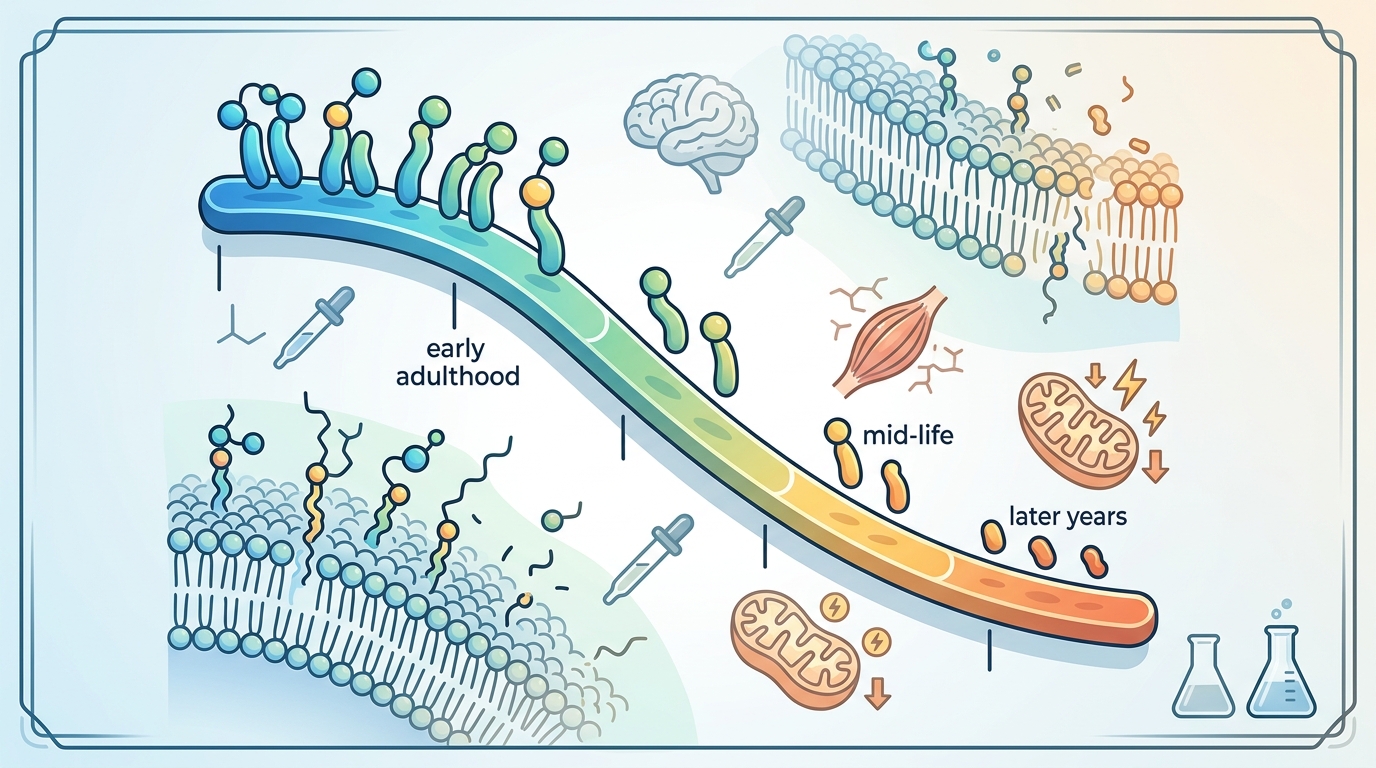
Plasmalogen levels change with age in a predictable and significant manner, serving as a critical biomarker for cellular health and longevity. Research indicates that these specialized ether phospholipids begin to decline steadily in early adulthood, accelerating sharply during mid-life and later years. This decline is not merely a passive side effect of aging but an active driver of cellular dysfunction, neurodegeneration, and metabolic decline. Understanding this trajectory is essential for anyone seeking to maintain cognitive sharpness, muscle integrity, and overall vitality as they age. (About This Project Plasmalogen)
What Are Plasmalogens?
To understand how plasmalogen levels change with age, we must first define what these molecules are. Plasmalogens are specialized ether phospholipids found in cell membranes throughout the body. They are especially important in tissues with high structural, metabolic, and signaling demands, such as the brain, heart, and immune system. (Home Plasmalogen Science)
Unlike standard phospholipids, plasmalogens possess a unique vinyl-ether bond at the sn-1 position. This chemical structure grants them exceptional antioxidant properties, allowing them to protect cell membranes from oxidative damage. They are not just structural components; they are dynamic regulators of cellular function. Plasmalogens are essential for maintaining membrane fluidity, facilitating signal transduction, and supporting mitochondrial energy production.
When plasmalogen levels are optimal, cells function efficiently. When they drop, the integrity of the cell membrane is compromised, leading to increased vulnerability to stress and disease. This is why tracking these levels is becoming a cornerstone of advanced health measurement.
The Plasmalogen Aging Trajectory
The relationship between plasmalogen levels and age is inverse and progressive. As we age, the body's ability to synthesize these critical lipids diminishes. This decline is not uniform across all tissues but is particularly pronounced in the brain and nervous system.
Early Adulthood to Mid-Life
In early adulthood, plasmalogen synthesis is robust. The body efficiently produces these lipids through complex biochemical pathways involving the liver and peroxisomes. However, subtle declines may begin in the third decade of life. This period is often overlooked because symptoms are rarely apparent. Yet, the foundation for later health is being laid here.
Mid-Life Acceleration
As individuals enter their 40s and 50s, the rate of plasmalogen decline often accelerates. This is the period where oxidative stress begins to outpace the body's natural repair mechanisms. The vinyl-ether bond in plasmalogens is sacrificial; it absorbs free radicals to protect the rest of the cell membrane. Over decades, this bond is consumed, and the body struggles to replace it fast enough.
Late Life and Neurodegeneration
In later life, particularly in individuals with neurodegenerative conditions, plasmalogen levels can be critically low. Studies have shown that brain tissue from individuals with Alzheimer's disease has significantly reduced plasmalogen content compared to healthy controls. This is not just a correlation; it is a causal factor in the progression of cognitive decline.
Cellular Mechanisms of Decline
Why do plasmalogen levels change with age? The answer lies in the biology of synthesis and the accumulation of damage.
Peroxisomal Dysfunction
Plasmalogen synthesis begins in the peroxisome, a cellular organelle responsible for breaking down fatty acids and synthesizing ether lipids. As we age, peroxisomal function can decline due to genetic factors, environmental toxins, or metabolic stress. If the peroxisome cannot efficiently initiate plasmalogen production, the entire downstream process is compromised.
Oxidative Stress and Consumption
Plasmalogens act as primary antioxidants in the cell membrane. They sacrifice themselves to neutralize reactive oxygen species (ROS). Over a lifetime, this constant battle depletes plasmalogen stores. The body must constantly replenish them, but the synthesis machinery becomes less efficient with age. This creates a vicious cycle: low plasmalogens lead to more oxidative damage, which further inhibits synthesis.
Nutrient Deficiencies
The synthesis of plasmalogens requires specific nutrients, including choline, ethanolamine, and methionine. As metabolic efficiency declines with age, the body may struggle to absorb or utilize these nutrients effectively. Additionally, chronic inflammation can divert resources away from lipid synthesis, further exacerbating the decline.
Health Implications of Low Levels
The decline in plasmalogen levels is not an isolated event. It is linked to a wide range of age-related health issues.
Cognitive Decline and Neurodegeneration
The brain is rich in plasmalogens, particularly in the myelin sheaths that insulate nerve fibers. When plasmalogen levels drop, myelin integrity is compromised, leading to slower nerve transmission and cognitive impairment. Plasmalogen deficiency is strongly associated with Alzheimer's disease, Parkinson's disease, and other neurodegenerative conditions.
Cardiovascular Health
Plasmalogens are also abundant in heart tissue. They protect cardiac cells from oxidative stress and support energy production. Low plasmalogen levels are linked to increased risk of heart disease, arrhythmias, and reduced cardiac resilience.
Bone and Muscle Integrity
Bones and muscles are deeply affected in certain plasmalogen deficient diseases because the skeletal and muscular systems depend on membrane biology, lipid metabolism, energy production, tissue development, and cellular repair. As plasmalogen levels drop, muscle recovery slows, and bone density may decrease, contributing to frailty in older adults.
Immune System Function
Plasmalogens play a role in immune signaling and inflammation control. Low levels can lead to chronic, low-grade inflammation, often referred to as "inflammaging." This state contributes to a wide array of age-related diseases, from arthritis to metabolic syndrome.
Measurement & Testing
Traditionally, plasmalogen levels were difficult to measure outside of specialized research settings. However, advances in lipidomics and advanced health measurements are making it possible to track these levels in clinical practice.
Lipidomics Profiling
Lipidomics is the large-scale study of lipids within cells, tissues, and organisms. By analyzing plasma or tissue samples, clinicians can quantify specific plasmalogen species, such as PE-P and PC-P plasmalogens. This provides a detailed picture of an individual's lipid health.
Biomarkers of Aging
Plasmalogen levels are increasingly viewed as a biomarker of biological age. Individuals with higher plasmalogen levels often exhibit slower biological aging and better health outcomes. Conversely, rapid declines in plasmalogen levels may signal accelerated aging and increased disease risk.
Monitoring Progress
For those taking steps to support plasmalogen health, regular monitoring can provide valuable feedback. Tracking changes in plasmalogen levels over time can help assess the effectiveness of dietary, lifestyle, or supplemental interventions.
Key Takeaways
- Plasmalogens are specialized ether phospholipids that protect cell membranes from oxidative damage and support cellular function.
- Plasmalogen levels change with age by declining steadily from early adulthood, with an accelerated drop in mid-life and later years.
- Peroxisomal dysfunction and increased oxidative stress are primary drivers of plasmalogen depletion as we age.
- Low plasmalogen levels are linked to cognitive decline, cardiovascular disease, muscle loss, and chronic inflammation.
- Advanced health measurements and lipidomics profiling allow for the monitoring of plasmalogen levels in clinical settings.
- Supporting plasmalogen health through diet, lifestyle, and targeted supplementation may help mitigate age-related decline.
- Early intervention is key, as preserving plasmalogen levels in mid-life may protect against neurodegeneration in later years.
Frequently Asked Questions
What exactly are plasmalogens?
Plasmalogens are specialized ether phospholipids found in cell membranes throughout the body. They are especially important in tissues with high structural, metabolic, and signaling demands, such as the brain and heart.
Why do plasmalogen levels drop as we age?
Plasmalogen levels drop due to a combination of decreased synthesis efficiency, peroxisomal dysfunction, and increased consumption from oxidative stress. The body's ability to repair and replace these lipids diminishes over time.
Can low plasmalogen levels cause Alzheimer's disease?
While low plasmalogen levels do not directly cause Alzheimer's, they are a significant risk factor and contribute to the progression of the disease by compromising neuronal membrane integrity and increasing oxidative stress.
How are plasmalogen levels measured?
Plasmalogen levels are measured through advanced lipidomics profiling, which analyzes specific lipid species in blood or tissue samples. This provides a detailed assessment of cellular lipid health.
Can I increase my plasmalogen levels?
While the body synthesizes plasmalogens naturally, supporting this process through adequate nutrient intake, reducing oxidative stress, and potentially using targeted supplements may help maintain or boost levels.
Are plasmalogens only important for the brain?
No, plasmalogens are vital for many organs, including the heart, liver, and immune system. They support membrane integrity, energy production, and signaling across all tissues.
What is the role of peroxisomes in plasmalogen synthesis?
Peroxisomes are cellular organelles where the initial steps of plasmalogen synthesis occur. They are responsible for creating the unique vinyl-ether bond that defines these lipids.
How does oxidative stress affect plasmalogens?
Oxidative stress consumes plasmalogens as they act as sacrificial antioxidants. High levels of oxidative stress deplete plasmalogen stores faster than the body can replace them.
Take Action for Your Longevity
Understanding how plasmalogen levels change with age is the first step toward protecting your cellular health. At Plasmalogen Science, we are dedicated to providing the latest research and insights on this critical biomarker. We invite you to explore our comprehensive resources on advanced health measurements and learn more about cognitive neurological health. To stay informed and take control of your longevity journey, contact us today for personalized guidance and support.