

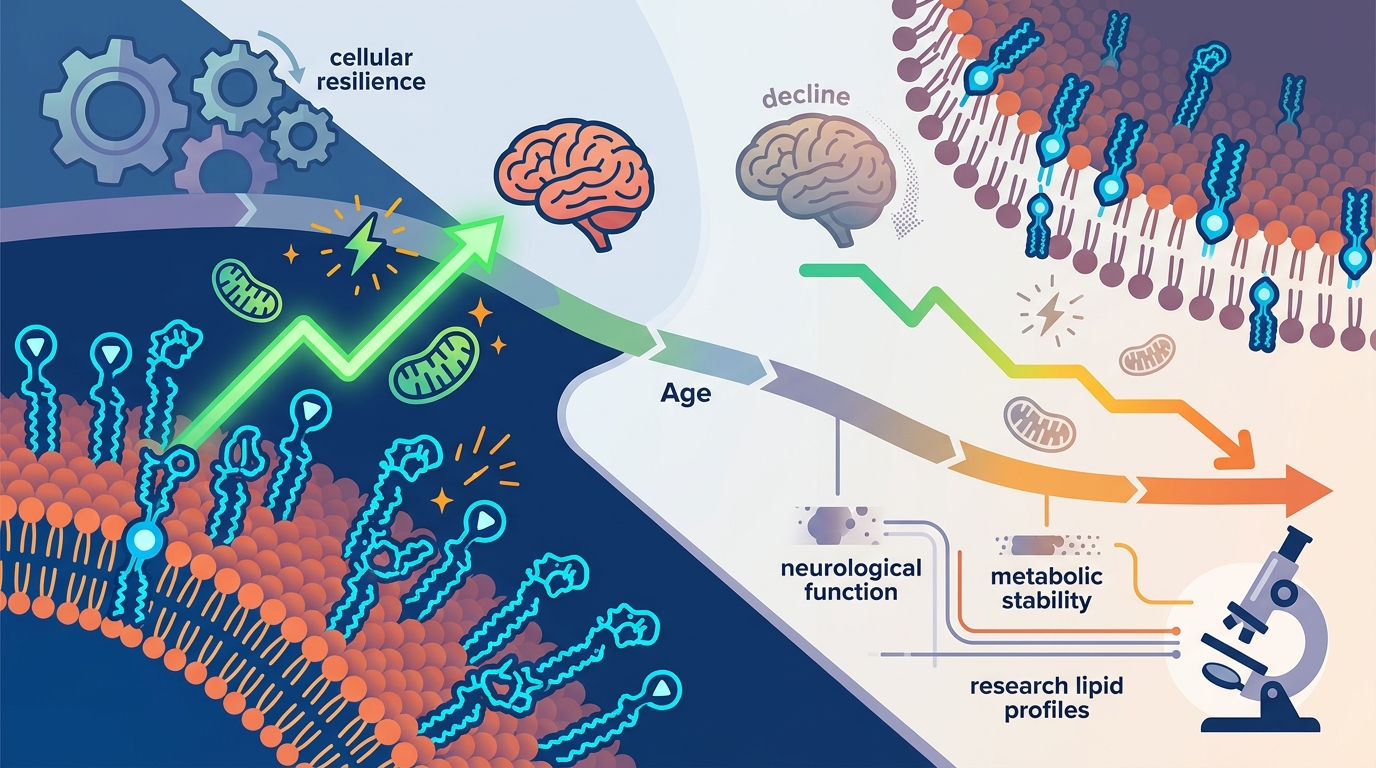
Plasmalogen levels naturally decline as the human body ages, a biological shift that significantly impacts cellular resilience and neurological function. Research indicates that this depletion begins in early adulthood and accelerates during later decades, creating a measurable gap between chronological age and biological health. Understanding this trajectory is critical for anyone interested in longevity, cognitive preservation, and metabolic stability. This guide explores the science behind this decline, its systemic effects, and how advanced measurement can reveal these hidden changes before they manifest as disease.
What Are Plasmalogens?
To understand how plasmalogen levels change with age, we must first define what these molecules are and why they are structurally unique. Plasmalogens are specialized ether phospholipids found in cell membranes throughout the body. Unlike standard phospholipids, they possess a vinyl ether bond at the sn-1 position, which provides exceptional resistance to oxidative stress and free radical damage.
These molecules are not merely structural components. They play active roles in cellular signaling, mitochondrial function, and inflammation regulation. They are particularly abundant in tissues with high metabolic demands, such as the brain, heart, and immune system. When plasmalogen levels are optimal, cell membranes remain fluid, flexible, and capable of efficient communication. As these levels drop, the structural integrity of these membranes begins to compromise, leading to the functional declines associated with aging.
For a deeper dive into the fundamental biology, explore our comprehensive overview of what plasmalogens are and their critical role in human health.
The Plasmalogen Aging Trajectory
The decline of plasmalogen levels is not a sudden event but a gradual, progressive process that mirrors the aging timeline. This trajectory is driven by changes in biosynthesis, increased oxidative burden, and altered lipid metabolism.
Early Adulthood: The Peak and Plateau
In early adulthood, plasmalogen synthesis is at its peak. The body efficiently produces these lipids through peroxisomal pathways, ensuring that cell membranes in the brain and other vital organs are fully protected. During this period, the balance between plasmalogen production and oxidative consumption is favorable, maintaining high cellular resilience.
Middle Age: The Onset of Decline
As individuals enter middle age, the efficiency of peroxisomal function begins to wane. Simultaneously, cumulative exposure to environmental stressors, metabolic byproducts, and lifestyle factors increases the oxidative load on the body. This creates a scenario where plasmalogen consumption outpaces production. Plasmalogen levels begin to drop noticeably, often before any clinical symptoms of aging become apparent. This silent depletion is a key driver of early metabolic dysfunction and reduced cellular repair capacity.
Late Adulthood: Accelerated Depletion
In later decades, the decline accelerates. Studies suggest that plasmalogen levels in the brains of older adults can be significantly lower than those of younger counterparts. This severe depletion is strongly correlated with age-related neurodegenerative conditions, cardiovascular stiffening, and immune senescence. The body’s ability to regenerate these critical lipids diminishes, making external support and precise monitoring increasingly important.
For more details on how this decline affects specific tissues, read our analysis on how plasmalogens influence aging.
Cellular Membrane Integrity and Aging
The primary mechanism by which plasmalogen levels change with age directly impacts the physical properties of cell membranes. As plasmalogen content decreases, membranes become less fluid and more rigid. This loss of fluidity impairs the function of membrane-bound proteins, including receptors and ion channels, which are essential for cellular communication.
Furthermore, plasmalogens act as sacrificial antioxidants. They absorb free radicals to protect other critical lipids, such as polyunsaturated fatty acids, from oxidation. When plasmalogen levels are low, this protective shield weakens. The result is increased lipid peroxidation, which damages cell structures and triggers chronic inflammation. This process is a fundamental driver of biological aging.
Understanding the role of membranes in this process is crucial. Cell membranes are the protective barriers that regulate what enters and exits cells. When plasmalogen levels drop, the membrane’s ability to maintain homeostasis is compromised, leading to cellular stress and eventual dysfunction.
Explore the detailed mechanics of cell membranes explained to see how lipid composition dictates cellular health.
Cognitive and Neurological Implications
The brain is one of the most plasmalogen-rich organs in the body. It relies heavily on these lipids for myelin sheath formation, synaptic function, and neuronal protection. Consequently, the age-related decline in plasmalogen levels has profound implications for cognitive health.
Synaptic Function and Plasticity
Synapses are the communication sites where nerve cells pass information. Plasmalogens are essential for maintaining the fluidity and stability of synaptic membranes. As levels drop with age, synaptic transmission becomes less efficient. This can lead to slower cognitive processing, memory lapses, and reduced neuroplasticity, which is the brain’s ability to adapt and learn.
Neuroinflammation and Neurodegeneration
Low plasmalogen levels are associated with increased neuroinflammation. Without adequate plasmalogens to neutralize oxidative stress, the brain becomes more vulnerable to inflammatory responses. This chronic inflammation is a key factor in the progression of age-related cognitive decline and neurodegenerative diseases. Research into cognitive and neurological systems highlights the direct link between lipid biology and brain health.
Myelin Sheath Integrity
Myelin is the fatty insulation around nerve fibers that allows for rapid signal transmission. Plasmalogens are a major component of myelin. As plasmalogen levels decline, myelin integrity can be compromised, leading to slower nerve conduction and impaired motor or sensory function. This is particularly relevant in conditions involving white matter degradation.
Learn more about how the myelin and white matter work in the brain and body to understand this critical protective layer.
Measurement and Biomarkers
Because plasmalogen decline is often silent, advanced measurement is essential for early detection. Traditional blood tests rarely include plasmalogen analysis, leaving a gap in our understanding of individual aging trajectories. Advanced health measurement looks deeper into lipidomics and cellular function.
Advanced Lipidomics
Lipidomics is the large-scale study of lipids within cells, tissues, and organisms. By analyzing specific plasmalogen species, such as PE-P and PC-P, clinicians can assess an individual’s plasmalogen status. This provides a precise snapshot of cellular health and oxidative burden.
Longitudinal Tracking
Single-time measurements are less informative than longitudinal tracking. Monitoring plasmalogen levels over time reveals trends and helps evaluate the effectiveness of interventions. This approach aligns with the principles of advanced health measurements for longevity.
Interpreting the Data
Understanding plasmalogen levels requires context. Factors such as diet, genetics, and environmental exposure all influence baseline levels. However, a consistent downward trend is a strong indicator of accelerating biological aging. Early intervention can help stabilize levels and support cellular resilience.
Key Takeaways
- Plasmalogen levels naturally decline with age, starting in early adulthood and accelerating in later decades.
- Plasmalogens are specialized ether phospholipids that provide critical protection against oxidative stress in cell membranes.
- Cell membranes are the protective barriers that regulate cellular entry and exit, relying on plasmalogens for fluidity.
- Cognitive decline is linked to low plasmalogen levels due to impaired synaptic function and myelin integrity.
- Advanced lipidomics testing is required to accurately measure plasmalogen status, as standard panels do not include them.
- Longitudinal tracking of plasmalogen levels provides more insight than single-time measurements for assessing aging.
- Early intervention through lifestyle and targeted support can help mitigate the effects of plasmalogen depletion.
Frequently Asked Questions
When do plasmalogen levels start to decline?
Plasmalogen levels begin to decline in early adulthood, with the rate of depletion accelerating as individuals age. This process is gradual and often silent until significant depletion occurs.
Why are plasmalogen levels important for brain health?
Plasmalogen levels are crucial for brain health because they support myelin sheath integrity, synaptic function, and protection against neuroinflammation. Low levels are associated with cognitive decline.
Can plasmalogen levels be measured in a standard blood test?
No, plasmalogen levels are not included in standard blood panels. Advanced lipidomics testing is required to measure specific plasmalogen species accurately.
How does oxidative stress affect plasmalogen levels?
Oxidative stress consumes plasmalogens as they act as sacrificial antioxidants. High oxidative burden depletes plasmalogen reserves faster than the body can replenish them, leading to lower levels.
What is the role of plasmalogens in cellular membranes?
Plasmalogens maintain membrane fluidity, protect against lipid peroxidation, and facilitate cellular signaling. They are essential for the structural integrity and function of cell membranes.
Are plasmalogen levels affected by genetics?
Yes, genetics play a role in plasmalogen biosynthesis. Variations in peroxisomal enzymes can influence an individual’s baseline levels and their rate of decline with age.
How can I support my plasmalogen levels?
Supporting plasmalogen levels involves reducing oxidative stress through diet and lifestyle, and potentially using targeted supplements. Monitoring levels through advanced testing helps guide these interventions.
Take Action for Your Longevity
Understanding how plasmalogen levels change with age is the first step toward proactive health management. By recognizing the signs of decline and utilizing advanced measurement tools, you can take control of your biological aging process. Don’t wait for symptoms to appear. Prioritize your cellular health today.
Contact Plasmalogen Science to learn more about advanced testing and personalized strategies for maintaining optimal plasmalogen levels throughout your life.