

Plasmalogens represent a specialized class of ether phospholipids that form the structural foundation of cellular membranes across vital organs. These unique molecules operate at the intersection of membrane integrity, oxidative stress management, and neurological signaling. Modern lipidomics research highlights their critical role in maintaining cellular resilience during metabolic shifts. Understanding how these lipids function provides a clearer picture of long-term biological aging and systemic health optimization. This guide explores their biosynthesis, structural roles, and clinical relevance for proactive wellness strategies.
Defining Plasmalogens and Their Biological Structure
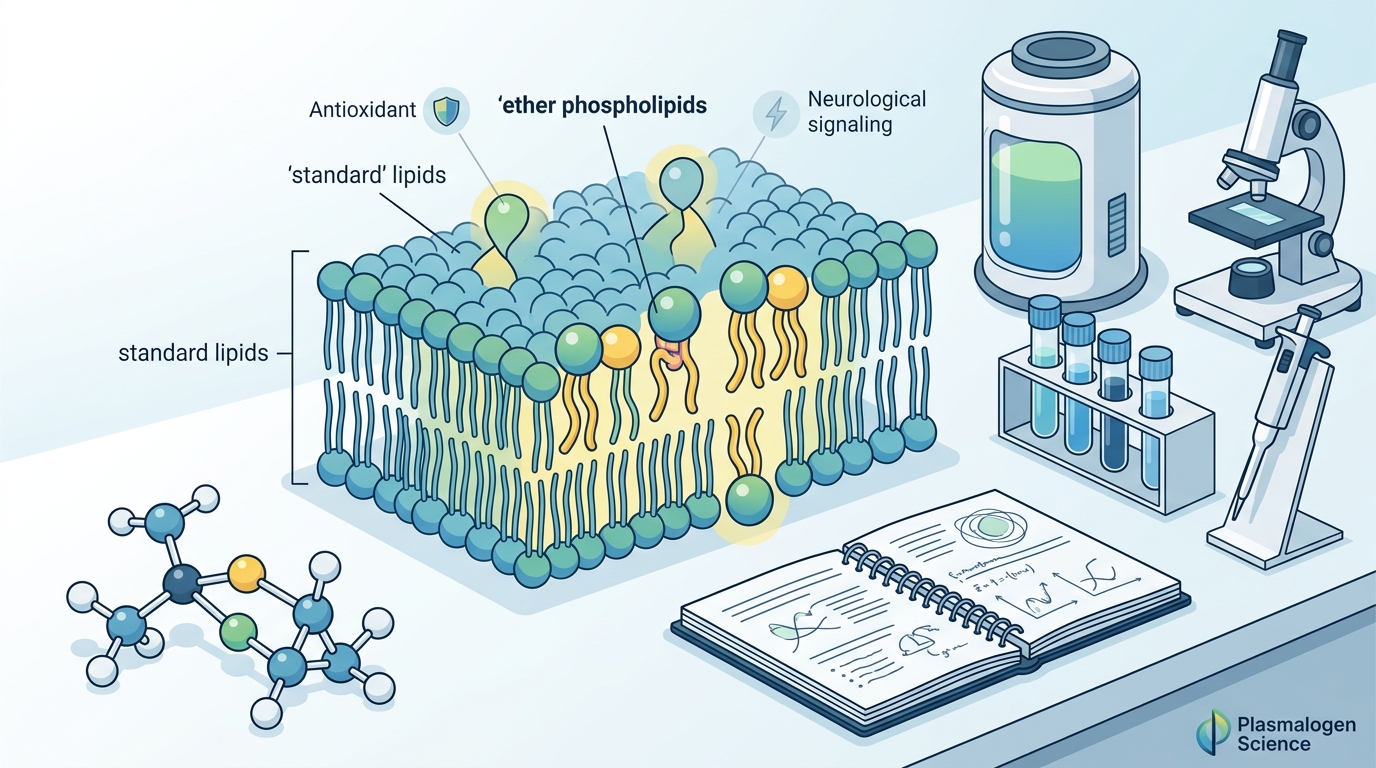
Plasmalogens are specialized ether phospholipids that contain a unique vinyl ether bond at the sn-1 position of the glycerol backbone. This chemical configuration distinguishes them from standard phospholipids found in most cellular membranes. The structural arrangement allows these molecules to interact differently with surrounding lipid environments. They concentrate heavily in tissues with high metabolic demand and rapid signaling requirements. Researchers classify them as essential components of membrane architecture because they directly influence fluidity and protein positioning.
The biosynthesis process occurs primarily within peroxisomes before final assembly in the endoplasmic reticulum. This multi-step pathway requires precise enzymatic coordination to establish the ether linkage. Disruptions at any stage can alter membrane stability and downstream signaling cascades. Clinicians monitor these pathways to identify early metabolic stress before clinical symptoms emerge. The body naturally produces these lipids throughout early development, though production rates shift significantly over time.
The Role of Plasmalogens in Cellular Membranes
Cell membranes are dynamic barriers that regulate nutrient transport, waste elimination, and intercellular communication. Plasmalogens integrate directly into these lipid bilayers to enhance structural resilience against oxidative damage. Their vinyl ether bond acts as a sacrificial target for reactive oxygen species, protecting critical membrane proteins from degradation. This antioxidant mechanism preserves membrane integrity during periods of physiological stress. Cell membrane health depends heavily on maintaining optimal plasmalogen concentrations across tissue types.
Membrane fluidity directly impacts receptor function and ion channel efficiency. When plasmalogen levels remain balanced, cellular signaling pathways operate with greater precision. Depleted concentrations often correlate with increased membrane rigidity and compromised transport mechanisms. Therapeutic approaches focus on supporting natural biosynthesis rather than bypassing established biological pathways. Advanced health measurements now track lipidomic profiles to detect subtle shifts before functional decline occurs.
Neurological Function and Synaptic Communication
The central nervous system relies on specialized lipid compositions to maintain rapid signal transmission. Plasmalogens concentrate heavily within myelin sheaths and synaptic vesicles to support electrical impulse propagation. These molecules stabilize membrane curvature during neurotransmitter release and reuptake cycles. Brain synapse function requires precise lipid environments to prevent signal degradation and maintain cognitive clarity. Neurological health directly correlates with sustained plasmalogen availability in white matter regions.
Myelin sheaths are protective insulating layers that wrap around nerve fibers to accelerate electrical conduction. Plasmalogens integrate into these layers to prevent lipid peroxidation and maintain structural continuity. Damage to myelin often begins with oxidative stress that overwhelms natural antioxidant defenses. Supporting membrane biology through targeted nutritional strategies helps preserve neural architecture over decades. About this project outlines the research framework guiding current lipidomics investigations.
Metabolic Regulation and Cellular Energy Production
Cellular energy production depends on mitochondrial efficiency and membrane lipid composition. Plasmalogens interact directly with mitochondrial membranes to optimize electron transport chain function. These lipids regulate calcium signaling and prevent excessive reactive oxygen species generation during ATP synthesis. Bones muscle tissue metabolism requires robust plasmalogen reserves to sustain contraction cycles and repair mechanisms. Skeletal and cardiac muscles contain some of the highest plasmalogen concentrations in the human body.
Metabolic flexibility allows tissues to switch between fuel sources without compromising energy output. Plasmalogens support this adaptability by maintaining membrane protein mobility and receptor accessibility. When lipid profiles shift toward saturated fatty acids, cellular signaling becomes less responsive to hormonal cues. Restoring ether phospholipid balance improves insulin sensitivity and nutrient partitioning. Clinicians increasingly view lipidomics as a primary diagnostic tool for metabolic syndrome prevention.
Advanced Health Measurements and Biomarker Tracking
Modern diagnostic frameworks prioritize early detection over reactive treatment protocols. Lipidomic profiling now identifies plasmalogen depletion patterns years before clinical symptoms manifest. These biomarkers reveal oxidative stress loads, membrane turnover rates, and peroxisomal efficiency. Advanced health measurements enable practitioners to design personalized intervention strategies based on individual metabolic baselines. Tracking these values provides actionable data for long-term wellness planning.
| Lipid Category | Primary Biological Function | Optimal Tissue Concentration | Monitoring Method |
|---|---|---|---|
| Plasmalogen PE | Membrane structural integrity and antioxidant defense | High in brain and cardiac tissue | Liquid chromatography-mass spectrometry |
| Plasmalogen PC | Cell signaling and lipid raft organization | Elevated in pulmonary and hepatic systems | Nuclear magnetic resonance spectroscopy |
| Standard Phospholipids | Basic membrane formation and energy storage | Uniform across all tissue types | Standard lipid panel screening |
| Ether Lipid Precursors | Peroxisomal biosynthesis and pathway regulation | Variable based on genetic expression | Targeted metabolomic profiling |
Key Takeaways
- Plasmalogens are specialized ether phospholipids that form the structural foundation of cellular membranes across vital organs.
- These molecules operate at the intersection of membrane integrity, oxidative stress management, and neurological signaling.
- Modern lipidomics research highlights their critical role in maintaining cellular resilience during metabolic shifts.
- Understanding how these lipids function provides a clearer picture of long-term biological aging and systemic health optimization.
- Myelin sheaths are protective insulating layers that wrap around nerve fibers to accelerate electrical conduction.
- Cellular energy production depends on mitochondrial efficiency and membrane lipid composition.
- Modern diagnostic frameworks prioritize early detection over reactive treatment protocols.
Frequently Asked Questions
What exactly are plasmalogens and how do they differ from other lipids?
Plasmalogens are specialized ether phospholipids that contain a unique vinyl ether bond at the sn-1 position of the glycerol backbone. This chemical configuration distinguishes them from standard phospholipids found in most cellular membranes. The structural arrangement allows these molecules to interact differently with surrounding lipid environments.
Why do plasmalogens concentrate heavily in brain and heart tissue?
The central nervous system relies on specialized lipid compositions to maintain rapid signal transmission. Plasmalogens concentrate heavily within myelin sheaths and synaptic vesicles to support electrical impulse propagation. These molecules stabilize membrane curvature during neurotransmitter release and reuptake cycles.
Can plasmalogen levels decline with age and what are the consequences?
The body naturally produces these lipids throughout early development, though production rates shift significantly over time. Depleted concentrations often correlate with increased membrane rigidity and compromised transport mechanisms. Therapeutic approaches focus on supporting natural biosynthesis rather than bypassing established biological pathways.
How do advanced health measurements track plasmalogen status?
Lipidomic profiling now identifies plasmalogen depletion patterns years before clinical symptoms manifest. These biomarkers reveal oxidative stress loads, membrane turnover rates, and peroxisomal efficiency. Tracking these values provides actionable data for long-term wellness planning.
What dietary or lifestyle factors support natural plasmalogen biosynthesis?
Metabolic flexibility allows tissues to switch between fuel sources without compromising energy output. Plasmalogens support this adaptability by maintaining membrane protein mobility and receptor accessibility. When lipid profiles shift toward saturated fatty acids, cellular signaling becomes less responsive to hormonal cues.
Are there specific medical conditions linked to plasmalogen deficiency?
Disruptions at any stage can alter membrane stability and downstream signaling cascades. Clinicians monitor these pathways to identify early metabolic stress before clinical symptoms emerge. The body naturally produces these lipids throughout early development, though production rates shift significantly over time.
How does lipidomics compare to standard cholesterol testing?
Standard lipid panel screening focuses on triglycerides and cholesterol fractions without examining ether lipid architecture. Targeted metabolomic profiling isolates specific phospholipid subclasses to reveal membrane-specific stress patterns. This precision enables practitioners to design personalized intervention strategies based on individual metabolic baselines.
Next Steps for Health Optimization
Understanding your lipidomic profile provides a roadmap for targeted wellness interventions. Contact the research team to schedule a comprehensive lipid analysis and discuss personalized membrane support strategies. Proactive monitoring of ether phospholipid levels empowers individuals to address biological aging before functional decline occurs. Visit the main portal to explore ongoing research and access educational resources. https://plasmalogenscience.com/