

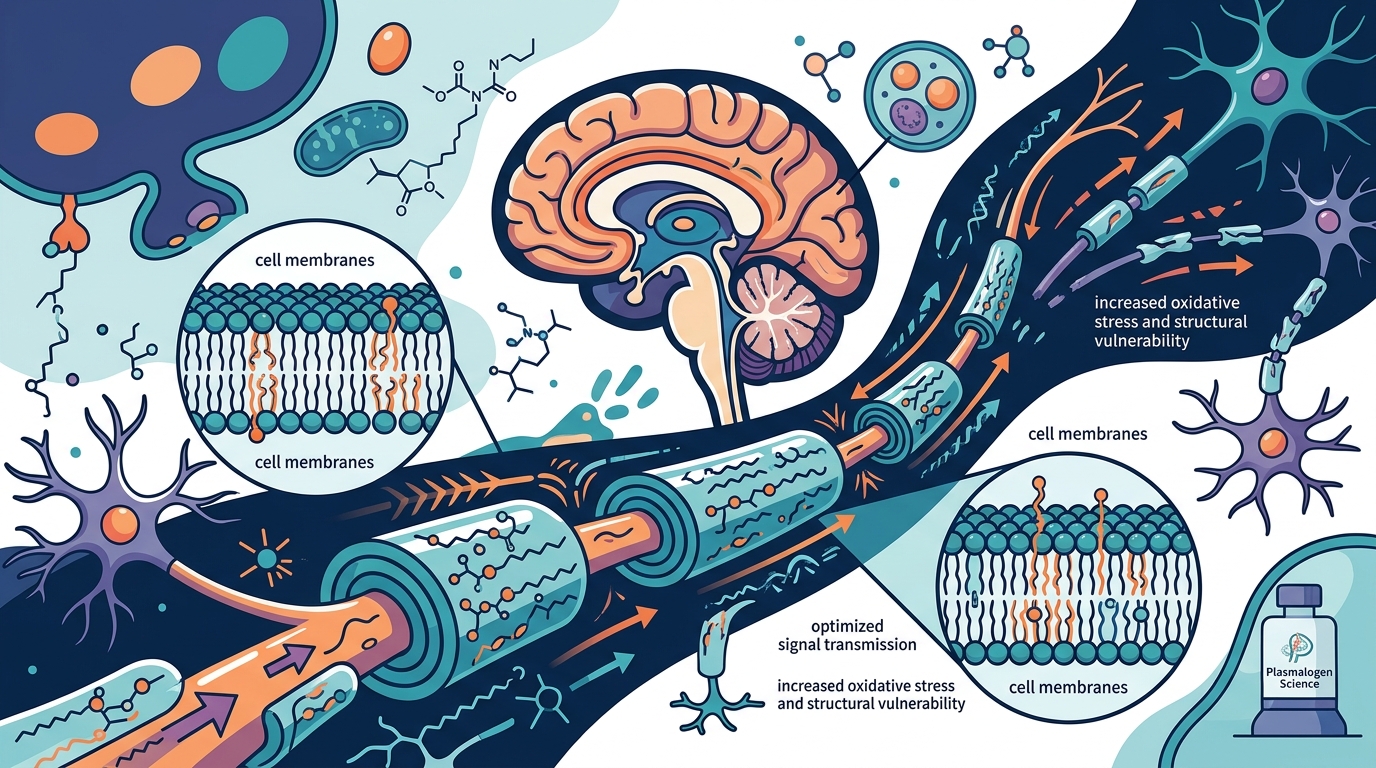
Plasmalogens are specialized ether phosphelipids that form the structural foundation of cellular membranes and neurological tissue. According to recent lipidomics research, these unique molecules account for approximately thirty percent of all phospholipids in the human brain. This high concentration directly correlates with optimized signal transmission and sustained cognitive resilience. When cellular synthesis declines, neurological pathways face increased oxidative stress and structural vulnerability. Understanding how these lipids operate reveals why targeted membrane support matters for long-term neurological health and cellular repair.
Cell Membrane Architecture
Structural Lipid Composition
Plasmalogens are specialized ether phospholipids that integrate directly into the outer leaflet of cellular membranes. This unique chemical structure provides exceptional resistance to oxidative damage and mechanical stress. The vinyl ether bond at the sn-1 position acts as a sacrificial target for free radicals, protecting the core phosphodiester bond from degradation. When membrane integrity remains intact, cellular communication pathways operate without unnecessary friction.
Cell membrane biology demonstrates how these lipids maintain fluidity across varying temperatures and metabolic states. Healthy membranes require balanced lipid ratios to support receptor mobility and ion channel function. Disrupted lipid ordering directly impacts nutrient transport and waste elimination. Clinicians now track membrane fluidity indices to assess early cellular stress markers before clinical symptoms emerge.
Myelin Sheath Preservation
Insulation and Signal Velocity
Myelin sheaths rely heavily on plasmalogen concentration to maintain electrical insulation around axonal networks. These ether lipids cluster densely within oligodendrocyte and Schwann cell membranes to prevent signal leakage. The high density of plasmalogens reduces capacitance and accelerates action potential propagation across neural pathways. Consistent lipid packing ensures that electrical impulses travel at maximum velocity without energy loss.
Synaptic transmission efficiency depends on consistent myelin thickness and proper lipid packing. When plasmalogen levels drop, demyelination processes accelerate, leading to delayed cognitive processing and motor coordination deficits. Maintaining optimal ether lipid concentrations supports long-term neurological resilience. Physicians now correlate myelin integrity scores with age-related cognitive decline to predict neurological risk accurately.
Synaptic Transmission Efficiency
Neurotransmitter Release and Reuptake
Synaptic vesicles require precise membrane curvature to release neurotransmitters into the cleft. Plasmalogens facilitate this curvature by adopting cone-shaped molecular geometries that promote vesicle fusion. This structural advantage ensures rapid neurotransmitter release and efficient receptor binding. The precise alignment of lipid molecules directly influences how quickly signals cross the synaptic gap.
Cognitive neurological function relies on consistent synaptic turnover and receptor recycling. Reduced plasmalogen availability directly correlates with slower memory consolidation and impaired executive processing. Targeted membrane support preserves synaptic density and supports long-term learning capacity. Modern diagnostic protocols now track synaptic turnover rates to evaluate cognitive processing speed and memory retention.
Metabolic and Oxidative Defense
Antioxidant Buffering Systems
Plasmalogens function as primary antioxidants within the central nervous system. They actively neutralize reactive oxygen species before those molecules can damage DNA or mitochondrial networks. This scavenging mechanism preserves cellular energy production and prevents inflammatory cascades. The sacrificial nature of the vinyl ether bond ensures that critical cellular structures remain intact during metabolic stress.
Advanced health measurements track plasmalogen ratios to identify early oxidative stress markers. Clinicians use these biomarkers to predict neurological decline before clinical symptoms emerge. Proactive lipid management remains the most effective strategy for preserving cognitive longevity. Researchers now document oxidative stress markers to establish baseline neurological health across diverse patient populations.
Clinical Measurement Standards
Biomarker Tracking and Diagnostics
Modern lipidomics platforms now quantify specific plasmalogen subtypes through mass spectrometry and nuclear magnetic resonance. These diagnostic tools provide precise concentration data across blood plasma and cerebrospinal fluid samples. Clinicians interpret these values alongside standard metabolic panels to assess neurological risk. Standardized testing protocols continue to evolve as research validates new diagnostic thresholds.
Bones muscle and neurological systems share overlapping lipid dependencies, making comprehensive testing essential. Physicians correlate plasmalogen deficits with age-related cognitive decline and metabolic syndrome markers. Standardized testing protocols continue to evolve as research validates new diagnostic thresholds. Healthcare providers now utilize advanced lipidomics profiling to establish personalized membrane support strategies.
| Measurement Category | Primary Biomarker | Clinical Application |
|---|---|---|
| Lipidomics Profiling | Plasmalogen Ratios | Early oxidative stress detection |
| Neurological Imaging | Myelin Integrity Scores | Signal velocity assessment |
| Metabolic Panels | Membrane Fluidity Indices | Cellular transport optimization |
| Functional Testing | Synaptic Turnover Rates | Cognitive processing speed |
Key Takeaways
- Plasmalogens constitute approximately thirty percent of all brain phospholipids.
- The vinyl ether bond provides primary antioxidant protection for neural tissue.
- Myelin sheaths require dense ether lipid packing for optimal signal velocity.
- Modern lipidomics platforms now track specific plasmalogen subtypes accurately.
- Clinical biomarker tracking identifies neurological decline before symptom onset.
- Membrane fluidity directly influences neurotransmitter release and receptor binding.
- Proactive lipid management remains the standard for cognitive longevity.
Frequently Asked Questions
What exactly are plasmalogens?
Plasmalogens are specialized ether phospholipids that form the structural foundation of cellular membranes and neurological tissue.
How do plasmalogens protect myelin sheaths?
These lipids cluster densely within oligodendrocyte membranes to prevent electrical signal leakage and maintain consistent insulation.
Can standard blood tests detect plasmalogen levels?
Standard metabolic panels rarely measure ether lipids, but modern lipidomics platforms now quantify specific subtypes through mass spectrometry.
Why do plasmalogen levels decline with age?
Natural biosynthesis pathways slow down over time, leaving neural tissue more vulnerable to oxidative stress and structural wear.
How do plasmalogens influence synaptic transmission?
These molecules adopt cone-shaped geometries that promote vesicle fusion, ensuring rapid neurotransmitter release and efficient receptor binding.
What clinical markers indicate low plasmalogen concentrations?
Clinicians track oxidative stress markers, myelin integrity scores, and membrane fluidity indices to assess neurological risk.
Is targeted membrane support safe for long-term use?
Proactive lipid management remains the standard for cognitive longevity, with clinical protocols focusing on balanced ether lipid ratios.
Next Steps for Neurological Optimization
Understanding ether lipid biology provides a clear pathway toward sustained cognitive resilience. Our clinical team specializes in advanced lipidomics profiling and personalized membrane support strategies. Schedule your consultation today to explore how targeted plasmalogen optimization can support your long-term neurological health.