

The vinyl ether bond in plasmalogens is chemically distinct from the ester bonds found in standard phospholipids, creating a unique lipid class with specific membrane structural roles. This single molecular difference allows plasmalogens to act as sacrificial antioxidants and maintain membrane fluidity in ways that regular lipids cannot. Plasmalogen Science explores how this specific bond influences cellular health, brain function, and aging biology.
The Chemical Structure of Ether Lipids
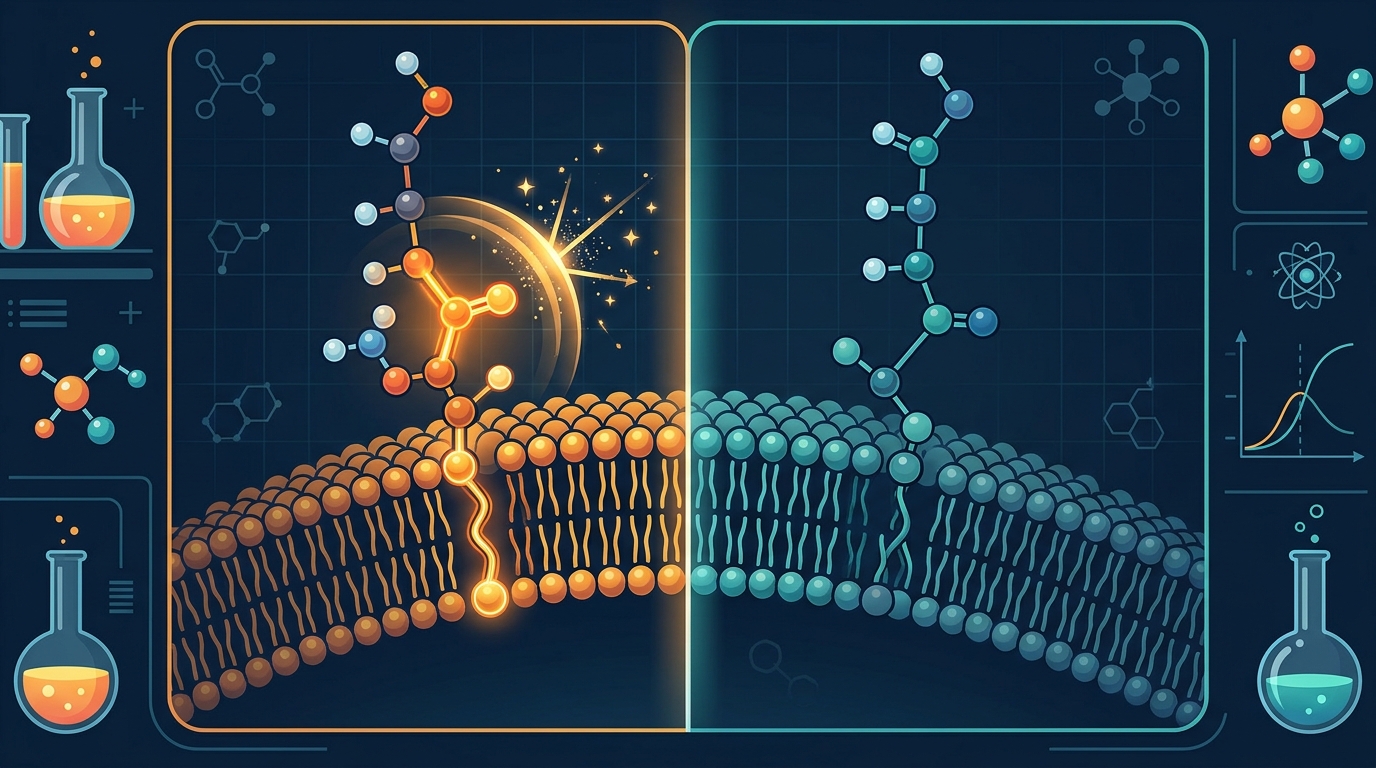
Plasmalogens are specialized ether phospholipids found in cell membranes throughout the body. Unlike standard phospholipids, which use ester bonds to attach fatty acid chains to the glycerol backbone, plasmalogens contain a vinyl ether bond at the sn-1 position. This structural difference is the defining feature that separates the ether lipid family from the more common ester lipid family. The vinyl ether bond creates a distinct biochemical identity that places plasmalogens within a unique category of membrane lipids.
The glycerol backbone of a plasmalogen has two fatty acid chains. The chain at the sn-2 position is typically attached via a standard ester bond, similar to regular phospholipids. However, the chain at the sn-1 position is attached via the vinyl ether bond. This specific arrangement is what gives plasmalogens their name and their unique physical properties. Understanding this structure is essential for grasping why plasmalogens behave differently in biological systems.
At What Are Plasmalogens?, we detail how this molecular architecture distinguishes them from ordinary fats. The presence of the vinyl ether bond means that plasmalogens are not just another category of dietary fat. They are structural ether phospholipids that are naturally present and critical to the body's cellular architecture.
Antioxidant Protection and Oxidative Stress
The most significant functional difference between the vinyl ether bond and ester bonds is their response to oxidative stress. The vinyl ether bond acts as a sacrificial antioxidant, helping to protect cells from oxidative damage and lipid peroxidation. When reactive oxygen species attack the membrane, the vinyl ether bond is often the first target. By absorbing this oxidative hit, the bond protects the rest of the lipid molecule and the surrounding membrane structure.
Standard ester bonds do not offer this same level of sacrificial protection. When ester lipids are exposed to high levels of oxidative stress, they are more likely to undergo peroxidation, which can lead to membrane damage and cellular dysfunction. Plasmalogens, with their vinyl ether bonds, help maintain membrane integrity under stress. This antioxidant role is particularly important in tissues with high metabolic activity, such as the brain and heart, where oxidative stress is a constant challenge.
This mechanism is a key reason why plasmalogens are studied in the context of aging and neurodegeneration. As the body ages, oxidative stress increases, and the demand for antioxidant protection rises. The ability of the vinyl ether bond to mitigate this stress makes plasmalogens a critical component of cellular resilience. For more on this, see Why Plasmalogens Matter.
Membrane Fluidity and Structural Integrity
Beyond antioxidant protection, the vinyl ether bond influences the physical properties of the cell membrane. Plasmalogens help maintain membrane fluidity, flexibility, and integrity. The unique shape and chemical nature of the vinyl ether bond affect how plasmalogens pack together within the lipid bilayer. This packing behavior is crucial for the proper function of membrane proteins and receptors.
If a membrane is too rigid, proteins and receptors may not move properly, leading to inefficient signaling. If it is too disorganized, signaling may become less efficient. Cells require a specific balance of fluidity and stability. Plasmalogens contribute to this balance by influencing lipid packing and membrane curvature. This is especially important in neurons, where membrane signaling must remain highly efficient for rapid communication.
The structural role of plasmalogens is detailed in What Do Plasmalogens Do?. The vinyl ether bond allows plasmalogens to occupy specific positions within the membrane, creating local environments that support various cellular processes. This includes vesicle formation, membrane fusion, and local signaling domains. The structural contribution of the vinyl ether bond is a fundamental aspect of plasmalogen biology.
Biosynthesis and Peroxisomal Function
The production of plasmalogens is a complex process that involves specialized organelles called peroxisomes. The first steps of plasmalogen biosynthesis occur inside peroxisomes, where the vinyl ether bond is formed. This is a critical distinction from standard phospholipids, which are synthesized primarily in the endoplasmic reticulum. The involvement of peroxisomes in plasmalogen production highlights the unique metabolic pathway required to create the vinyl ether bond.
Peroxisomes are small organelles that play a key role in lipid metabolism and oxidative stress management. They are responsible for the initial steps in ether lipid biosynthesis. After the vinyl ether bond is formed in the peroxisome, the intermediate molecules are transported to the endoplasmic reticulum for further processing into mature plasmalogens. This multi-step process involving both peroxisomes and the endoplasmic reticulum is tightly regulated and essential for maintaining healthy plasmalogen levels.
Understanding this biosynthetic pathway is crucial for interpreting plasmalogen levels in health and disease. Defects in peroxisomal function can lead to plasmalogen deficiency, which has significant neurological and metabolic consequences. The How the Body Produces Plasmalogens guide provides a comprehensive overview of this process. The unique requirement for peroxisomal activity to form the vinyl ether bond makes plasmalogens a sensitive indicator of peroxisomal health.
Clinical Relevance and Biomarker Potential
The distinct properties of the vinyl ether bond make plasmalogens valuable biomarkers for various health conditions. Because plasmalogens are involved in oxidative stress, membrane integrity, and peroxisomal function, their levels can provide insight into broader biological processes. Measuring plasmalogens is different from measuring standard cholesterol markers. It offers a deeper view into membrane lipid biology and ether lipid metabolism.
Plasmalogen measurement can help evaluate oxidative stress biology, peroxisomal function, and lipid remodeling. These are areas that standard lipid panels do not capture. By analyzing plasmalogen levels, researchers and clinicians can gain a more nuanced understanding of cellular health. This is particularly relevant in the context of aging, where plasmalogen levels often decline, and in neurological conditions where membrane integrity is compromised.
The Plasmalogen Measurement & Biomarkers Overview explains how these measurements are performed and interpreted. The vinyl ether bond is the key feature that allows plasmalogens to be distinguished from other lipids in testing. This distinction is essential for accurate interpretation of results. As research continues, the role of the vinyl ether bond in health and disease will likely become even more apparent.
Key Takeaways
- The vinyl ether bond is the defining structural feature of plasmalogens, distinguishing them from standard ester lipids.
- This bond acts as a sacrificial antioxidant, protecting membranes from oxidative stress and lipid peroxidation.
- Plasmalogens influence membrane fluidity and flexibility, which is critical for proper cellular signaling and protein function.
- Biosynthesis of the vinyl ether bond requires peroxisomal activity, linking plasmalogen levels to peroxisomal health.
- Plasmalogens serve as biomarkers for oxidative stress, membrane integrity, and peroxisomal function, offering insights beyond standard lipid panels.
- The unique properties of the vinyl ether bond make plasmalogens essential for brain health, aging resilience, and cellular communication.
Frequently Asked Questions
What is the main difference between a vinyl ether bond and an ester bond?
The main difference is chemical stability and antioxidant capacity. The vinyl ether bond is more susceptible to oxidation but acts as a sacrificial antioxidant, protecting the rest of the membrane. Ester bonds are more stable but do not offer this specific protective mechanism.
Why are plasmalogens important for brain health?
Plasmalogens are highly concentrated in brain tissue. Their antioxidant properties and role in membrane fluidity support synaptic communication, myelin integrity, and overall neural function. The vinyl ether bond is crucial for these protective and structural roles.
How does the vinyl ether bond affect aging?
As the body ages, oxidative stress increases. The vinyl ether bond helps mitigate this stress by acting as an antioxidant. Declining plasmalogen levels, and thus reduced vinyl ether bond protection, are associated with aging-related cellular decline and neurological changes.
Can plasmalogen levels be measured?
Yes, plasmalogen levels can be measured through advanced lipidomics testing. These tests can evaluate total plasmalogens, specific species, and ratios, providing insight into ether lipid metabolism and membrane health.
What role do peroxisomes play in plasmalogen production?
Peroxisomes are responsible for the initial steps of plasmalogen biosynthesis, including the formation of the vinyl ether bond. This makes plasmalogen levels a potential indicator of peroxisomal function and health.
Conclusion
The vinyl ether bond is the defining feature that makes plasmalogens unique among lipids. Its role in antioxidant protection, membrane structure, and peroxisomal metabolism makes it a critical component of cellular health. Plasmalogen Science continues to explore the implications of this molecular difference for aging, brain health, and disease. For more in-depth resources on plasmalogen biology, visit Plasmalogen Science. Learn more: Contact Plasmalogen Science.