

Plasmalogens, Brain Function, and Myelin: The Science of Membrane Integrity
Plasmalogens are specialized ether phospholipids that serve as critical structural components of cell membranes, particularly in the brain and nervous system. Recent research indicates that these unique lipids are essential for maintaining the integrity of myelin sheaths, which protect nerve fibers and ensure rapid signal transmission. Without adequate plasmalogen levels, the brain faces increased oxidative stress and impaired cellular communication, leading to potential cognitive decline and neurological dysfunction. Understanding this biological foundation is key to grasping how cellular health influences overall brain function. (About This Project Plasmalogen)
What Are Plasmalogens?
To understand how plasmalogens support brain function, we must first define what they are. Plasmalogens are a specific class of ether phospholipids found in high concentrations in cell membranes. Unlike common fatty acids, plasmalogens contain a vinyl-ether bond at the sn-1 position of the glycerol backbone. This chemical structure is rare in nature and provides unique stability and reactivity properties that standard phospholipids cannot offer.
These molecules are not merely passive structural elements. They are dynamic participants in cellular signaling, membrane fluidity, and protein function. The brain is one of the most plasmalogen-rich organs in the body. This high concentration is not accidental. It reflects the critical need for membrane integrity in an organ that consumes vast amounts of energy and generates significant oxidative byproducts.
Plasmalogens are synthesized in the peroxisomes, specialized organelles responsible for breaking down very long-chain fatty acids. This biosynthetic pathway is complex and tightly regulated. Disruptions in this process can lead to severe developmental disorders, highlighting the non-negotiable role of plasmalogens in human biology. For a deeper look at the biosynthesis process, you can explore how the body produces plasmalogens through detailed scientific resources.
The Role of Plasmalogens in Myelin and White Matter
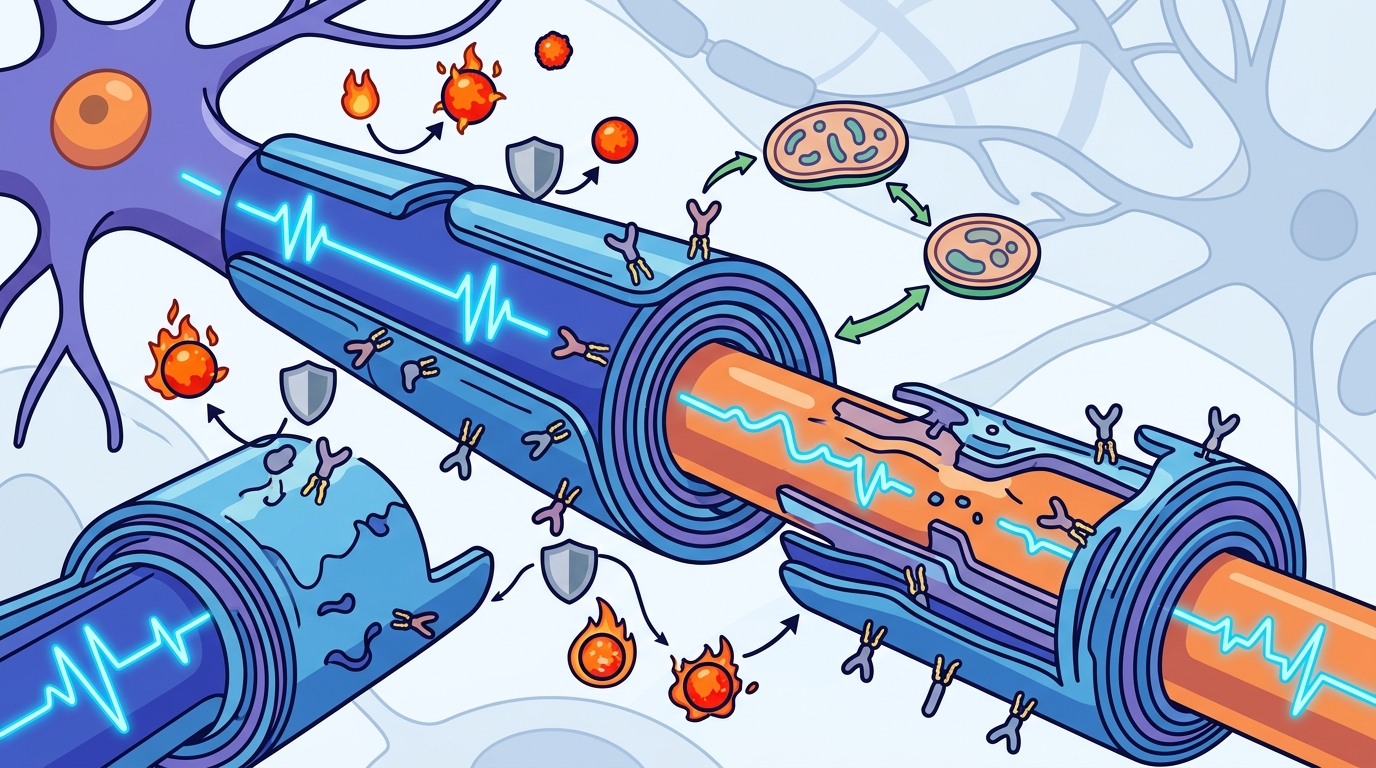
The nervous system relies on speed. Nerve impulses must travel rapidly from the brain to the extremities and back. This speed is achieved through myelin, a fatty sheath that wraps around nerve axons. Myelin acts as an insulator, allowing electrical signals to jump between gaps in the sheath, a process known as saltatory conduction.
Myelin is essentially a highly organized lipid membrane. It requires specific lipid compositions to maintain its structure and function. Plasmalogens are abundant in myelin. They contribute to the compactness and stability of the myelin sheath. Without sufficient plasmalogens, the myelin structure can become compromised, leading to slower signal transmission and potential nerve damage.
Research into plasmalogen deficient diseases reveals the severe consequences of myelin disruption. In conditions where plasmalogen synthesis is impaired, patients often exhibit white matter abnormalities. These abnormalities manifest as cognitive deficits, motor delays, and structural bone and muscle issues. The connection between lipid biology and neurological health is direct and profound.
Understanding the relationship between plasmalogens and white matter is crucial for longevity. As we age, plasmalogen levels naturally decline. This decline may contribute to the gradual loss of cognitive sharpness and neural connectivity. Maintaining plasmalogen integrity is therefore a key factor in preserving brain health over time. For more details on how myelin works, refer to how the myelin and white matter work in the brain and body.
Plasmalogens and Synaptic Communication
Brain function is ultimately about communication. Neurons talk to each other through synapses. A synapse is the junction where a nerve cell passes information to another cell. This process involves the release of neurotransmitters, which bind to receptors on the receiving cell. The efficiency of this communication depends heavily on the health of the synaptic membrane.
Plasmalogens are critical components of synaptic membranes. They influence the fluidity and curvature of the membrane, which affects how neurotransmitter receptors function. If the membrane is too rigid or too disordered, signal transmission suffers. Plasmalogens help maintain the optimal physical state for these receptors to operate effectively.
Furthermore, plasmalogens are involved in the signaling pathways that regulate synaptic plasticity. Plasticity is the brain's ability to adapt and form new connections. This is the basis of learning and memory. By supporting the structural integrity of synapses, plasmalogens indirectly support cognitive processes like memory formation and learning. Disruptions in plasmalogen levels can impair these processes, leading to cognitive decline.
The synapse is not just a passive gap. It is a dynamic interface requiring precise lipid environments. Plasmalogens provide this environment. They ensure that the machinery of synaptic transmission operates with precision and speed. For a detailed explanation of synaptic mechanics, see how the synapse works in the brain and body.
Cellular Defense and Oxidative Stress
The brain is highly susceptible to oxidative stress. It consumes large amounts of oxygen and generates reactive oxygen species (ROS) as a byproduct of metabolism. These ROS can damage cell membranes, proteins, and DNA. This damage is a primary driver of aging and neurodegenerative diseases.
Plasmalogens act as a sacrificial antioxidant. The vinyl-ether bond in plasmalogens is highly reactive to ROS. When ROS attack, they preferentially target the plasmalogen bond rather than other critical cellular components. This sacrificial action protects the rest of the cell from oxidative damage. It is a first line of defense for the cell membrane.
This antioxidant capacity is unique to plasmalogens. Standard phospholipids do not offer the same level of protection. The presence of plasmalogens in high concentrations in the brain suggests that oxidative defense is a primary evolutionary function of these lipids. Without this protection, the brain would be far more vulnerable to age-related damage.
As plasmalogen levels decline with age, the brain's ability to defend against oxidative stress diminishes. This loss of defense contributes to the accumulation of cellular damage over time. Supporting plasmalogen levels may therefore be a strategy for enhancing cellular resilience and protecting the brain from oxidative injury.
Measuring Plasmalogen Levels
Understanding plasmalogen health requires measurement. Traditional blood tests do not typically include plasmalogen levels. Advanced health measurements are needed to assess plasmalogen status accurately. These tests often involve lipidomics, a comprehensive analysis of lipids in biological samples.
Lipidomics allows for the precise quantification of plasmalogen species. It can reveal not just total plasmalogen levels, but the specific types present. This detail is important because different plasmalogens may have different roles in health and disease. Monitoring these levels can provide insights into cellular health and oxidative stress status.
Advanced measurement is changing how health and longevity are understood. It moves beyond symptom management to early detection of biological changes. Plasmalogen measurement is a key part of this shift. It offers a window into the structural health of cell membranes and the nervous system. For more on this topic, read the importance of advanced health measurements in health and longevity.
Key Takeaways
- Structural Integrity: Plasmalogens are essential for maintaining the stability and fluidity of cell membranes, particularly in the brain.
- Myelin Support: High concentrations of plasmalogens in myelin sheaths are critical for rapid nerve signal transmission.
- Synaptic Health: Plasmalogens support synaptic plasticity, which is vital for learning and memory.
- Oxidative Defense: The vinyl-ether bond in plasmalogens acts as a sacrificial antioxidant, protecting cells from oxidative stress.
- Aging and Decline: Plasmalogen levels naturally decrease with age, contributing to increased vulnerability to neurodegeneration.
- Advanced Testing: Lipidomics is required to accurately measure plasmalogen levels, as standard tests do not capture this data.
- Biosynthesis: Plasmalogens are synthesized in peroxisomes, making peroxisomal health critical for their production.
Frequently Asked Questions
What exactly is a plasmalogen?
A plasmalogen is a specialized ether phospholipid found in cell membranes. It is characterized by a unique vinyl-ether bond at the sn-1 position, which provides antioxidant properties and structural stability.
Why are plasmalogens important for the brain?
The brain has one of the highest concentrations of plasmalogens in the body. They are crucial for maintaining myelin sheaths, supporting synaptic function, and protecting neurons from oxidative stress.
How do plasmalogens support myelin?
Plasmalogens are abundant in myelin. They help maintain the compact structure of the myelin sheath, ensuring efficient insulation of nerve fibers and rapid signal transmission.
Can plasmalogen levels be measured?
Yes, but not through standard blood tests. Advanced lipidomics testing is required to accurately quantify plasmalogen levels and specific species in the body.
What happens when plasmalogen levels are low?
Low plasmalogen levels are associated with increased oxidative stress, impaired myelin function, and potential cognitive decline. Severe deficiencies can lead to developmental disorders.
How does aging affect plasmalogens?
Plasmalogen levels naturally decline with age. This decline reduces the brain's antioxidant capacity and may contribute to age-related neurodegenerative diseases.
Where are plasmalogens synthesized?
Plasmalogens are synthesized in the peroxisomes. This process requires specific enzymes and nutrients, making peroxisomal health essential for plasmalogen production.
Take the Next Step
Understanding the role of plasmalogens in brain function and myelin integrity is the first step toward protecting your cognitive health. As research continues to uncover the depth of their importance, staying informed is crucial. Explore our comprehensive resources on plasmalogens and health to learn more about how these vital lipids support your well-being. For personalized insights into your health metrics, consider consulting with experts who specialize in advanced biomarker analysis. Visit our contact page to start a conversation about your health journey.