

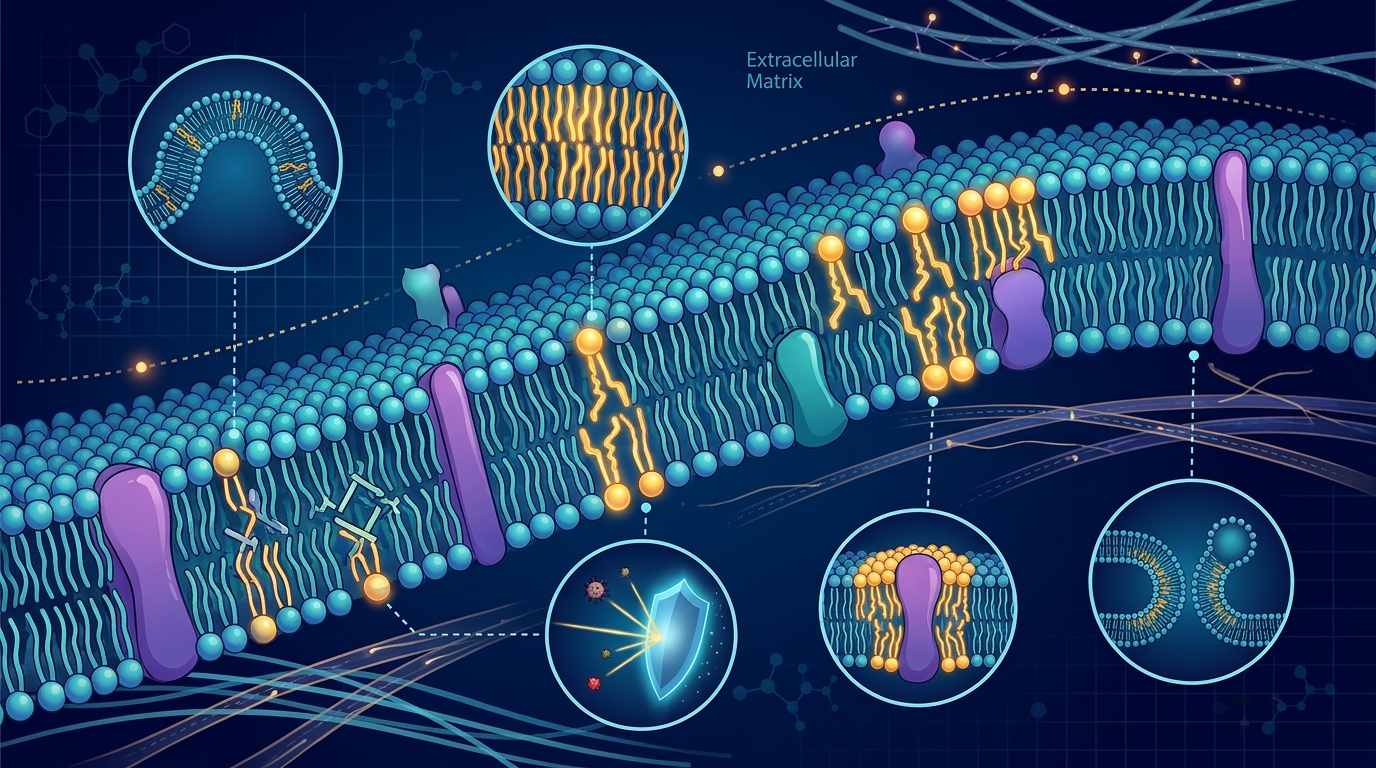
Plasmalogens are specialized ether phospholipids that act as structural architects within cell membranes. They are not merely passive components but active regulators of membrane fluidity, curvature, and stability. Plasmalogen Science provides detailed educational resources on how these unique lipids influence cellular architecture and function.
1. They Regulate Membrane Fluidity and Flexibility
Plasmalogens prevent membranes from becoming too rigid or too loose. The unique vinyl ether bond in plasmalogens creates a distinct molecular shape that influences how lipids pack together. This structural feature allows membranes to maintain optimal fluidity, which is essential for protein movement and receptor signaling. Without this balance, cellular communication can become inefficient or disrupted.
2. They Influence Membrane Curvature and Vesicle Formation
Plasmalogens help membranes bend and fuse during cellular processes. Many cellular activities, such as endocytosis and exocytosis, require membranes to change shape. The conical shape of certain plasmalogen species promotes positive curvature, facilitating the formation of vesicles. This is particularly important in synaptic vesicle release, where precise membrane dynamics are required for neurotransmission.
3. They Act as Sacrificial Antioxidants
The vinyl ether bond protects the rest of the membrane from oxidative damage. Plasmalogens are highly susceptible to oxidation, but this vulnerability serves a protective purpose. When reactive oxygen species attack the membrane, plasmalogens are often the first to be oxidized. This sacrificial mechanism prevents more critical lipid and protein components from being damaged, preserving overall membrane integrity.
They Organize Lipid Rafts and Signaling Domains
Plasmalogens cluster with cholesterol and sphingolipids to form functional microdomains. These lipid rafts serve as platforms for signal transduction and protein sorting. By organizing specific proteins and lipids into these domains, plasmalogens ensure that signaling events are localized and efficient. This organization is critical for immune cell activation and receptor-mediated signaling pathways.
They Support Myelin Sheath Integrity
Plasmalogens are abundant in myelin, the insulating layer around nerve fibers. Myelin is a highly specialized membrane structure that requires specific lipid composition for stability. Plasmalogens contribute to the physical properties of myelin, supporting rapid nerve signal conduction. Deficiencies in plasmalogens have been linked to myelin instability and neurological dysfunction, highlighting their structural importance in the nervous system.
They Modulate Membrane Permeability
Plasmalogens help maintain the selective barrier function of the cell membrane. The arrangement of plasmalogens within the lipid bilayer influences how ions and small molecules cross the membrane. By maintaining proper packing and fluidity, plasmalogens help prevent uncontrolled leakage of cellular contents. This barrier function is essential for maintaining the electrochemical gradients that power cellular activity.
They Facilitate Membrane Repair and Remodeling
Plasmalogens are involved in the dynamic turnover and repair of membrane lipids. Cell membranes are constantly being remodeled to respond to stress and damage. Plasmalogens participate in lipid exchange and remodeling pathways that allow the membrane to recover from injury. This dynamic aspect of membrane biology ensures that cells can adapt to changing environmental conditions and maintain long-term structural integrity.
Choosing the Right Focus for Your Research
When studying plasmalogen membrane structure, prioritize the specific biological context of your tissue. Brain and nerve tissues rely heavily on myelin and synaptic dynamics, while immune cells depend on lipid rafts and signaling domains. Understanding which structural role is most relevant to your specific cell type will guide your experimental design and interpretation of results.
Frequently Asked Questions
What is the primary structural difference between plasmalogens and standard phospholipids?
The primary difference is the presence of a vinyl ether bond at the sn-1 position of the glycerol backbone in plasmalogens. Standard phospholipids typically have an ester bond at this position. This single chemical difference significantly alters the molecular shape and physical properties of the lipid, influencing how it behaves within the membrane.
Why are plasmalogens important for membrane fluidity?
Plasmalogens influence how tightly lipids pack together within the bilayer. Their unique shape and chemical properties help maintain a balance between rigidity and flexibility. This optimal fluidity is necessary for membrane proteins to move and function correctly, ensuring efficient cellular signaling and transport.
How do plasmalogens protect membranes from oxidative stress?
Plasmalogens act as sacrificial antioxidants because their vinyl ether bond is easily oxidized. When reactive oxygen species attack the membrane, plasmalogens are often damaged first. This protects other critical membrane components, such as proteins and essential signaling lipids, from oxidative damage.
Where are plasmalogens most concentrated in the body?
Plasmalogens are found in all cell membranes but are especially concentrated in tissues with high metabolic and membrane demands. These include the brain, heart, skeletal muscle, immune cells, and red blood cells. The high concentration in these tissues reflects their critical role in maintaining membrane integrity and function in active cells.
Can plasmalogen levels be measured in blood?
Yes, plasmalogen levels can be measured in blood samples, including red blood cells, plasma, and serum. These measurements provide insights into ether lipid metabolism and membrane health. However, interpretation requires context, as blood levels may not always directly reflect tissue-specific plasmalogen status.
What happens when plasmalogen levels are low?
Low plasmalogen levels can lead to compromised membrane integrity and altered cellular function. This may result in increased oxidative stress, impaired signaling, and reduced membrane flexibility. In severe cases, particularly in inherited peroxisomal disorders, low plasmalogens can cause significant neurological and systemic health issues.