

Critical Structural Features of Plasmalogens for Synaptic Vesicle Fusion Efficiency
Plasmalogens represent a unique class of ether phospholipids that are disproportionately abundant in the brain and heart tissues. Recent lipidomic analyses indicate that these molecules constitute approximately 20 to 25 percent of the total phosphatidylethanolamine pool in the mammalian brain. This high concentration is not accidental but evolutionary, designed to support the rapid membrane dynamics required for neurotransmission. Without the specific structural integrity provided by plasmalogens, the efficiency of synaptic vesicle fusion would degrade, leading to impaired cognitive function and neurodegeneration.
Understanding Plasmalogen Structure
To understand how plasmalogens facilitate synaptic vesicle fusion, one must first define the molecule itself. A plasmalogen is a glycerophospholipid characterized by a vinyl ether bond at the sn-1 position of the glycerol backbone. This structural distinction separates them from standard diacyl phospholipids, which possess two ester bonds. The vinyl ether bond creates a unique conical shape that influences how the lipid packs within the membrane bilayer.
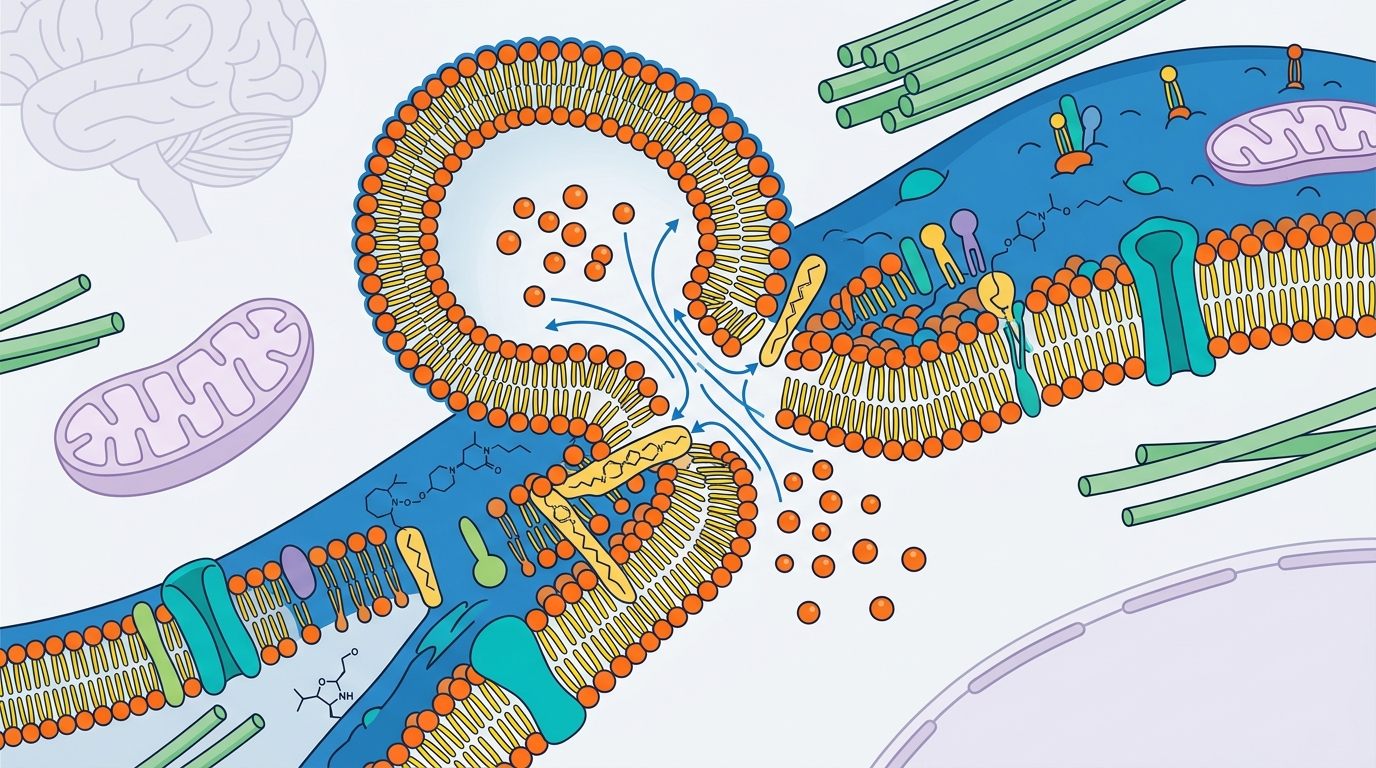
This conical geometry is critical for membrane curvature. Synaptic vesicles are small, spherical structures that must bud off from the presynaptic membrane and fuse back into it repeatedly. Standard flat phospholipids resist this curvature, requiring significant energy expenditure to bend the membrane. Plasmalogens, with their specific structural features, lower the energy barrier for this bending process. This allows vesicles to form and merge with greater efficiency. (About)
The research community has long recognized the importance of lipid composition in neuronal health. Studies published in journals such as the Nature journal frequently highlight the role of lipid rafts and membrane fluidity in signal transduction. Plasmalogens are key components of these specialized membrane microdomains.
The Role of the sn-1 Ether Linkage
The vinyl ether bond at the sn-1 position is the defining feature of plasmalogens. This bond is chemically distinct from the ester bonds found in most other phospholipids. The ether linkage is more stable against hydrolysis but highly susceptible to oxidation. This duality makes plasmalogens both functional and vulnerable.
In the context of synaptic vesicle fusion, the sn-1 ether linkage contributes to the lateral pressure profile of the membrane. It creates a more fluid interface at the membrane surface, which facilitates the interaction between the vesicle membrane and the presynaptic plasma membrane. This fluidity is essential for the SNARE proteins to assemble and drive the fusion process.
Research from the Journal of Lipid Research demonstrates that the absence of the ether bond significantly alters membrane physical properties. When the ether bond is replaced by an ester bond, the membrane becomes more rigid. This rigidity impedes the rapid shape changes required for vesicle fusion.
Headgroup Chemistry and Membrane Curvature
Plasmalogens are typically found with ethanolamine or choline headgroups. The most abundant form in the brain is plasmenylethanolamine. The headgroup chemistry determines the overall shape of the lipid molecule. Ethanolamine headgroups are smaller, allowing the lipid to adopt a more conical shape.
This conical shape promotes negative curvature stress in the membrane. Negative curvature is the type of bending required for the hemifusion stalk, a critical intermediate step in vesicle fusion. When the vesicle approaches the presynaptic membrane, the lipids must rearrange to form this stalk. Plasmalogens facilitate this rearrangement by reducing the energy cost.
The interaction between plasmalogens and cholesterol is also vital. Cholesterol modulates membrane fluidity and thickness. Plasmalogens interact with cholesterol to create a specific lipid environment that is optimal for SNARE protein function. This synergy ensures that the fusion machinery operates at peak efficiency.
Mechanics of Synaptic Vesicle Fusion
Synaptic vesicle fusion is a tightly regulated process involving the SNARE complex. The SNARE proteins on the vesicle (v-SNAREs) and the target membrane (t-SNAREs) zip together, pulling the membranes close. This proximity allows the lipid bilayers to merge.
Plasmalogens enhance this process by stabilizing the transition state. The unique structure of plasmalogens allows them to pack tightly around the SNARE proteins, creating a favorable local environment. This stabilization reduces the kinetic barrier for fusion, allowing neurotransmitters to be released rapidly in response to an action potential.
Without sufficient plasmalogens, the fusion process becomes sluggish. This delay can impair synaptic transmission, leading to cognitive deficits. The brain requires high-speed communication, and plasmalogens are the molecular lubricants that make this speed possible.
Oxidative Protection in Synapses
While the vinyl ether bond is susceptible to oxidation, it also serves a protective role. Plasmalogens act as sacrificial antioxidants. They scavenge reactive oxygen species (ROS) before these molecules can damage essential membrane proteins or DNA. This is particularly important in synapses, which are high-metabolic sites prone to oxidative stress.
By absorbing oxidative damage, plasmalogens preserve the integrity of the membrane. This preservation ensures that the structural features necessary for fusion remain intact. If the membrane were damaged by ROS, the fluidity and curvature properties would be lost, impairing fusion efficiency.
According to data from the Frontiers in Neuroscience, oxidative stress is a major contributor to neurodegenerative diseases. The depletion of plasmalogens is often an early marker of this stress. Maintaining plasmalogen levels is therefore a critical strategy for neuroprotection.
Clinical Implications of Deficiency
Deficiencies in plasmalogen biosynthesis are linked to several severe neurological disorders. Rhizomelic chondrodysplasia punctata (RCDP) is a genetic disorder that impairs plasmalogen synthesis. Patients with RCDP exhibit severe cognitive impairment and neurological decline.
In aging populations, plasmalogen levels naturally decline. This decline correlates with increased risk of Alzheimer's disease and other dementias. Studies show that individuals with Alzheimer's have significantly lower levels of plasmalogens in their cerebrospinal fluid. This reduction suggests that plasmalogen loss is not just a symptom but a contributing factor to disease progression.
Restoring plasmalogen levels has shown promise in preclinical models. Supplementation with plasmalogen precursors can improve synaptic function and reduce oxidative damage. This highlights the therapeutic potential of targeting plasmalogen metabolism.
Key Takeaways
- Plasmalogens are ether phospholipids with a vinyl ether bond at the sn-1 position, distinct from standard ester-linked phospholipids.
- The conical shape of plasmalogens promotes negative membrane curvature, essential for synaptic vesicle budding and fusion.
- Plasmalogens reduce the energy barrier for hemifusion, allowing SNARE proteins to operate more efficiently.
- They act as sacrificial antioxidants, protecting synaptic membranes from oxidative damage caused by reactive oxygen species.
- Deficiencies in plasmalogen biosynthesis are linked to Rhizomelic chondrodysplasia punctata and Alzheimer's disease.
- Plasmalogen levels decline with age, correlating with increased risk of cognitive decline and neurodegeneration.
- Supplementation with plasmalogen precursors may offer therapeutic benefits for synaptic health and neuroprotection.
Frequently Asked Questions
What is the primary structural difference between plasmalogens and other phospholipids?
The primary difference is the presence of a vinyl ether bond at the sn-1 position of the glycerol backbone. Most other phospholipids have an ester bond at this position. This ether bond gives plasmalogens unique physical properties, including increased membrane fluidity and antioxidant capacity.
How do plasmalogens facilitate synaptic vesicle fusion?
Plasmalogens facilitate fusion by promoting negative membrane curvature and reducing the energy barrier for the formation of the hemifusion stalk. Their conical shape allows them to pack in ways that support the rapid shape changes required for vesicle merging.
Why are plasmalogens important for brain health?
Plasmalogens are crucial for brain health because they support synaptic transmission, protect against oxidative stress, and maintain membrane integrity. The brain has a high concentration of plasmalogens, reflecting their importance in neuronal function.
Can plasmalogen deficiency cause neurological disorders?
Yes, deficiencies in plasmalogen biosynthesis can cause severe neurological disorders such as Rhizomelic chondrodysplasia punctata. Additionally, age-related decline in plasmalogen levels is associated with an increased risk of Alzheimer's disease and other dementias.
How can I support plasmalogen levels in my body?
Supporting plasmalogen levels involves maintaining a healthy lifestyle and potentially supplementing with precursors. Plasmalogen Science offers specialized formulations designed to support plasmalogen synthesis and synaptic health. Consult with a healthcare provider to determine the best approach for your needs.
Are there specific foods rich in plasmalogens?
Plasmalogens are found in animal tissues, particularly in the brain, heart, and skeletal muscle. However, dietary intake alone may not be sufficient to maintain optimal levels, especially as we age. Specialized supplements are often recommended for therapeutic support.
What is the role of plasmalogens in oxidative stress?
Plasmalogens act as sacrificial antioxidants. The vinyl ether bond is highly susceptible to oxidation, allowing plasmalogens to scavenge reactive oxygen species and protect other critical cellular components from damage.
Optimize Your Synaptic Health
Understanding the critical structural features of plasmalogens reveals their indispensable role in synaptic vesicle fusion efficiency. By supporting plasmalogen levels, you can help maintain cognitive function and protect against age-related decline. Explore our comprehensive range of plasmalogen supplements designed to support your brain health. Visit our product catalog to find the right solution for your needs. For more information on the science behind plasmalogens, read our blog articles or contact our support team for personalized guidance.