

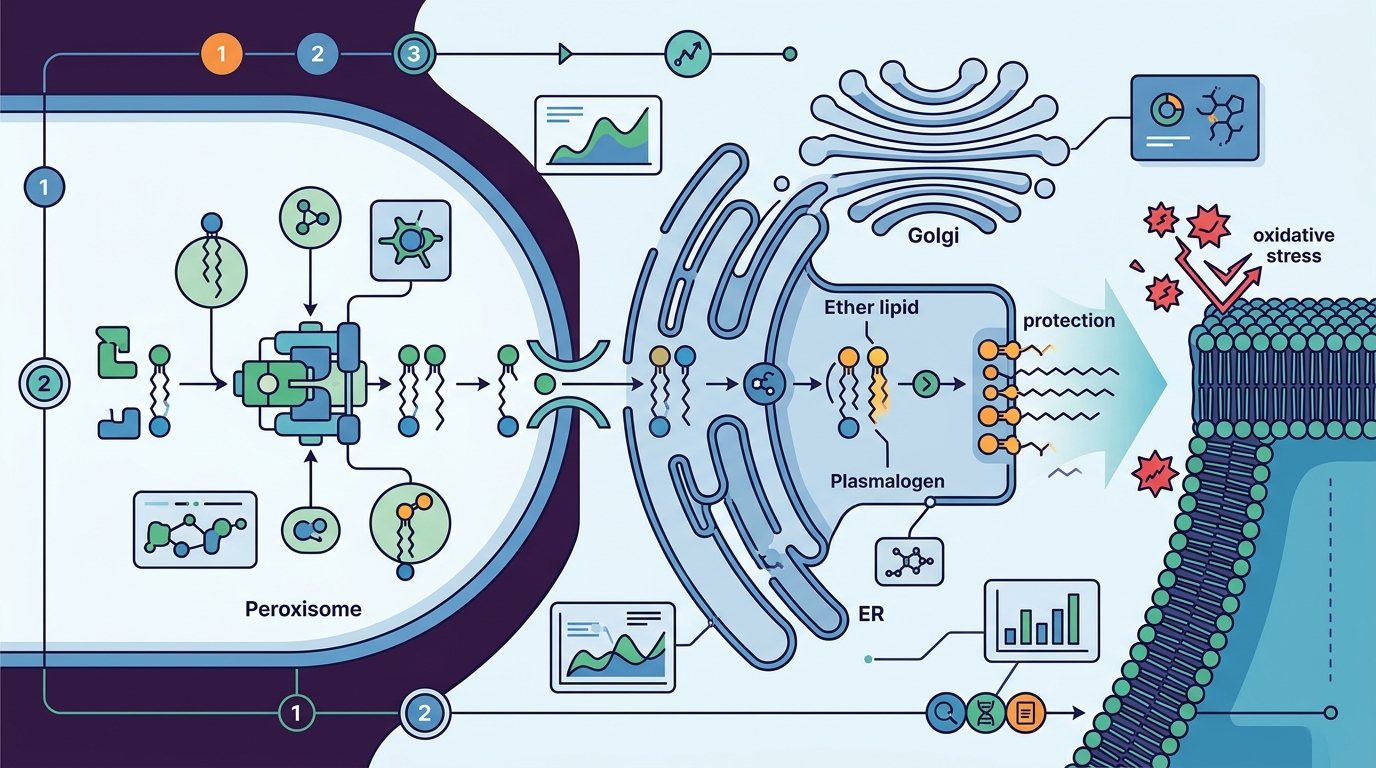
Plasmalogen biosynthesis is a multi-step metabolic process that begins in peroxisomes and continues in the endoplasmic reticulum. This pathway converts standard phospholipids into specialized ether lipids, creating molecules essential for membrane integrity and cellular protection. Understanding this process reveals how cells maintain structural resilience and manage oxidative stress.
The Peroxisomal Starting Point
The production of plasmalogens begins inside the peroxisome, a specialized organelle responsible for lipid metabolism. The first critical step involves the enzyme dihydroxyacetone phosphate acyltransferisome (DHAPAT), which initiates the formation of the ether backbone. This step is distinct from standard phospholipid synthesis, which typically occurs in the endoplasmic reticulum. The peroxisome provides the specific enzymatic environment required to create the unique vinyl ether bond that defines plasmalogens.
Once the initial ether bond is formed, the molecule is transported to the endoplasmic reticulum. This handoff between organelles is a hallmark of plasmalogen biology. It highlights that plasmalogens are not produced in a single location but require coordinated activity between different cellular compartments. This coordination ensures that the molecule is properly structured before it is integrated into cell membranes.
The Vinyl Ether Bond: A Structural Signature
A plasmalogen is a specialized ether phospholipid characterized by a vinyl ether bond at the sn-1 position of the glycerol backbone. This specific chemical structure is the defining feature that separates plasmalogens from ordinary ester-linked phospholipids. The vinyl ether bond is not just a structural detail; it is a functional component that influences how the lipid behaves within the membrane. It contributes to the unique physical properties of plasmalogens, such as their ability to influence membrane curvature and fluidity.
This structural signature has significant implications for cellular health. The vinyl ether bond acts as a sacrificial antioxidant, helping to protect the cell from oxidative damage. By absorbing oxidative stress, plasmalogens help preserve the integrity of the surrounding membrane. This protective role is particularly important in tissues with high metabolic activity, such as the brain and heart, where oxidative stress is a constant challenge.
Integration into Cellular Membranes
Once synthesized, plasmalogens are incorporated into cell membranes, where they play a crucial role in maintaining membrane architecture. They are especially concentrated in tissues with high membrane demands, including the brain, nervous system, and skeletal muscle. In these tissues, plasmalogens can account for a significant portion of total phospholipids, sometimes reaching up to 20% in certain brain regions. This high concentration reflects their importance in supporting the complex signaling and structural needs of these cells.
The integration of plasmalogens into membranes influences how cells communicate and respond to their environment. They help organize lipid rafts, which are specialized microdomains that facilitate signal transduction. By shaping the membrane environment, plasmalogens ensure that receptors and signaling proteins are properly positioned and functional. This organization is vital for processes such as neurotransmitter release and immune cell activation.
Oxidative Stress and Antioxidant Protection
Plasmalogens are deeply involved in the cell's response to oxidative stress. The vinyl ether bond is susceptible to oxidation, which allows plasmalogens to act as a buffer against reactive oxygen species. When plasmalogens are oxidized, they are removed from the membrane and replaced with new molecules. This turnover process helps maintain membrane integrity and prevents the accumulation of damaged lipids. The ability to manage oxidative stress is a key reason why plasmalogens are important for cellular resilience and healthy aging.
Research has shown that declining plasmalogen levels are associated with increased oxidative stress and various chronic conditions. This connection suggests that maintaining healthy plasmalogen levels may be important for protecting cells from age-related damage. The antioxidant properties of plasmalogens make them a critical component of the cell's defense system, helping to balance the constant production of reactive oxygen species during normal metabolic activity.
Mitochondrial Function and Energy Production
Plasmalogens also play a role in mitochondrial function, which is essential for cellular energy production. Mitochondria rely on organized membranes to generate ATP, the primary energy currency of the cell. Plasmalogens contribute to the structural integrity of mitochondrial membranes, supporting the processes involved in energy metabolism. By maintaining the proper environment for mitochondrial function, plasmalogens help ensure that cells have the energy they need to perform their specialized tasks.
The connection between plasmalogens and mitochondria is particularly important in tissues with high energy demands, such as the brain and heart. In these tissues, the efficient production of energy is critical for maintaining function and preventing cellular decline. Plasmalogens help support this process by ensuring that mitochondrial membranes remain flexible and functional. This support is vital for long-term cellular health and the prevention of age-related metabolic dysfunction.
Key Takeaways
- Plasmalogen biosynthesis begins in peroxisomes and continues in the endoplasmic reticulum.
- The vinyl ether bond is the defining structural feature of plasmalogens.
- Plasmalogens are highly concentrated in tissues with high membrane demands, such as the brain and heart.
- They act as sacrificial antioxidants, protecting cells from oxidative stress.
- Plasmalogens support mitochondrial function and cellular energy production.
- Declining plasmalogen levels are associated with aging and chronic disease.
Frequently Asked Questions
Where does plasmalogen biosynthesis begin?
Plasmalogen biosynthesis begins in the peroxisome, where the initial ether bond is formed. The process then continues in the endoplasmic reticulum, where the molecule is completed and prepared for integration into cell membranes.
What is the vinyl ether bond?
The vinyl ether bond is a specific chemical structure found at the sn-1 position of the glycerol backbone in plasmalogens. It is the defining feature that distinguishes plasmalogens from standard ester-linked phospholipids.
Why are plasmalogens important for the brain?
Plasmalogens are highly concentrated in brain tissue, where they support membrane integrity, synaptic function, and protection against oxidative stress. Their presence is crucial for maintaining cognitive function and neurological health.
How do plasmalogens protect against oxidative stress?
Plasmalogens act as sacrificial antioxidants. The vinyl ether bond absorbs oxidative damage, protecting the rest of the membrane. Damaged plasmalogens are then removed and replaced, maintaining membrane integrity.
What happens when plasmalogen levels decline?
Declining plasmalogen levels are associated with increased oxidative stress, reduced membrane integrity, and various chronic conditions. This decline is a key feature of aging and may contribute to cellular dysfunction.