

Plasmalogens are specialized ether phospholipids that serve as critical components of cell membranes throughout the human body. These unique molecules are found in high concentrations in the brain, heart, and immune cells, where they play a vital role in protecting cellular integrity against oxidative stress. Recent research into advanced health measurements highlights how these lipids influence longevity and cellular resilience. Understanding how the body produces them is essential for grasping the mechanisms of healthy aging and neurological function.
What Are Plasmalogens?
Plasmalogens are a specific class of phospholipids characterized by a unique vinyl-ether linkage at the sn-1 position of the glycerol backbone. This structural feature distinguishes them from standard diacyl phospholipids and grants them exceptional antioxidant properties. Plasmalogen Science provides comprehensive resources on how these molecules support cellular health.
These lipids are not merely structural; they are dynamic participants in cellular signaling and membrane fluidity. They are particularly abundant in the myelin sheaths that insulate nerve fibers, ensuring rapid signal transmission. When plasmalogen levels decline, the body's ability to maintain membrane integrity and combat oxidative damage is compromised. This decline is often associated with aging and various neurodegenerative conditions.
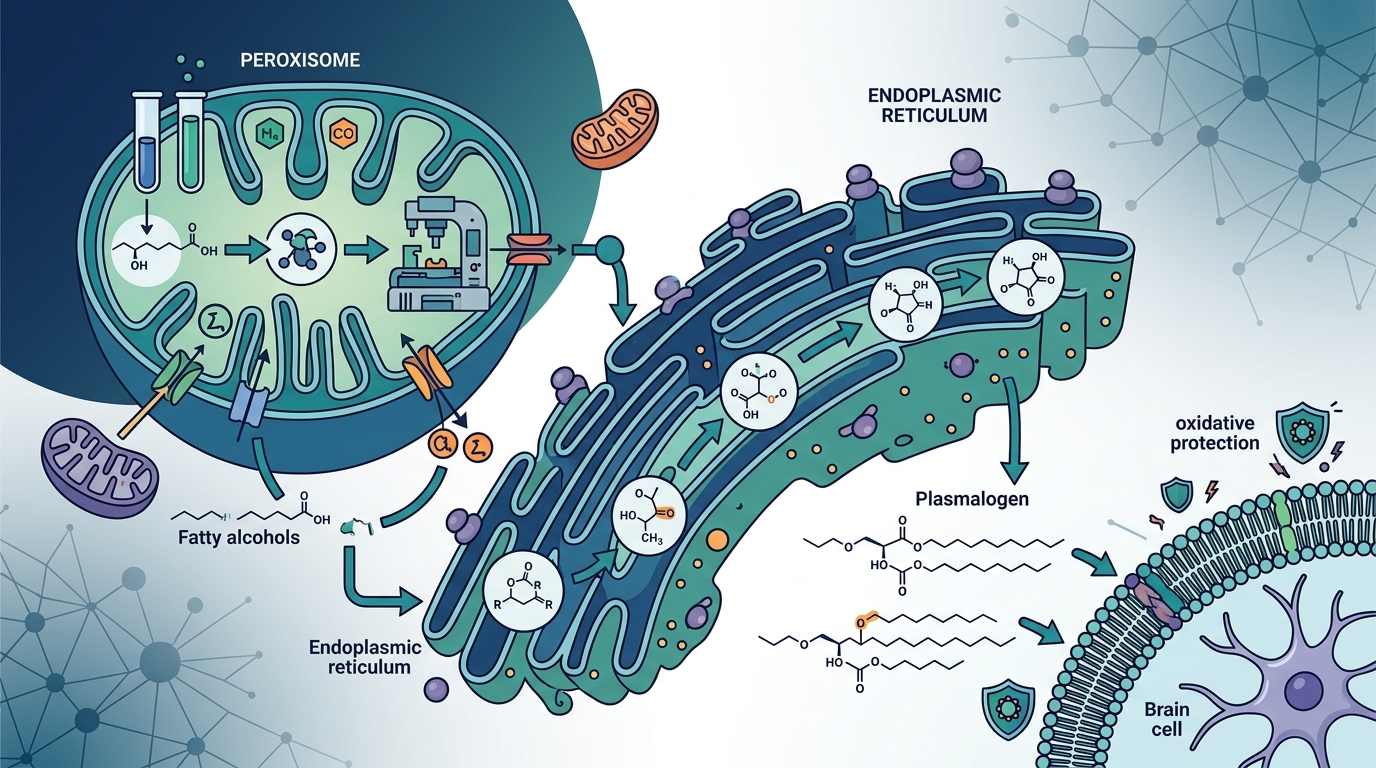
Understanding the biosynthesis pathway requires looking at the intricate collaboration between two cellular organelles: the peroxisome and the endoplasmic reticulum. This division of labor is necessary because the enzymes required to create the ether linkage cannot function in isolation.
The Peroxisome Connection
Peroxisomes are small, membrane-bound organelles found in the cytoplasm of eukaryotic cells. They are responsible for breaking down very long-chain fatty acids and synthesizing plasmalogens. The process begins within the peroxisome, where specific enzymes initiate the formation of the ether bond.
Without functional peroxisomes, the body cannot produce plasmalogens. This is evident in severe inherited disorders such as Zellweger spectrum disorders, where peroxisomal biogenesis is impaired. In these cases, the lack of plasmalogens leads to profound developmental and neurological deficits. Bones and muscle function are also severely impacted in these conditions due to the critical role of membrane lipids in tissue development.
The peroxisome acts as the starting line for plasmalogen production. It handles the initial, chemically difficult steps of attaching an ether-linked fatty alcohol to the glycerol backbone. Once this initial structure is formed, it must be transported to the endoplasmic reticulum for completion.
Step 1: Initiation of Ether Lipid Synthesis
The first step in plasmalogen biosynthesis occurs inside the peroxisome. Here, the enzyme dihydroxyacetone phosphate acyltransferase (DHAPAT) catalyzes the attachment of a fatty acyl group to dihydroxyacetone phosphate (DHAP). This creates an acyl-DHAP intermediate.
Next, the enzyme alkyl-DHAP synthase (also known as PXA1 in yeast or AGPS in humans) replaces the acyl group with a fatty alcohol. This reaction forms an alkyl-DHAP molecule. This alkyl linkage is the defining feature of ether lipids and is resistant to hydrolysis, providing stability to the membrane.
This step is critical because it establishes the ether bond that will eventually become the vinyl-ether linkage in the final plasmalogen molecule. The efficiency of this step determines the overall capacity of the cell to produce these protective lipids. Any disruption in peroxisomal function can halt this process, leading to a deficiency in plasmalogens.
Step 2: Elongation and Transfer
Once the alkyl-DHAP is formed, it is transported out of the peroxisome and into the endoplasmic reticulum (ER). The ER is the site of further lipid modification and assembly. In the ER, the alkyl chain is elongated by the addition of two more carbon atoms.
Following elongation, the molecule undergoes a series of transformations. The alkyl group is converted into a vinyl-ether group through the action of specific desaturase enzymes. This conversion is the final chemical step in creating the plasmalogen structure.
The transfer between organelles is tightly regulated. The cell must ensure that the intermediate molecules are protected during transport to prevent degradation. This coordination highlights the complexity of cellular metabolism and the importance of maintaining healthy organelle function for lipid synthesis.
Step 3: Desaturation and Finalization
The final step involves the desaturation of the alkyl chain to form the vinyl-ether bond. This is achieved by the enzyme alkyl-DHAP desaturase. The resulting molecule is now a plasmalogen precursor, ready to be incorporated into cell membranes.
The specific fatty acids attached to the sn-2 position of the glycerol backbone vary depending on the tissue type and dietary intake. These fatty acids influence the fluidity and function of the membrane. For example, membranes in the brain often contain high levels of docosahexaenoic acid (DHA), which supports neuronal communication.
Once synthesized, plasmalogens are distributed to various cellular compartments. They are particularly important in the myelin sheaths of the nervous system. Synapse function relies heavily on the integrity of these lipid-rich membranes to ensure efficient neurotransmission.
Why Plasmalogen Biosynthesis Matters
The production of plasmalogens is not just a biochemical curiosity; it is a fundamental requirement for health. These molecules act as sacrificial antioxidants, absorbing free radicals and protecting other cellular components from damage. This role is especially important in the brain, where oxidative stress is a major contributor to neurodegeneration.
As we age, the body's ability to produce plasmalogens declines. This decline is linked to increased inflammation, reduced membrane fluidity, and impaired cellular communication. Monitoring plasmalogen levels through advanced health measurements can provide insights into biological aging and potential health risks.
Supporting plasmalogen biosynthesis may involve maintaining healthy peroxisomal function through nutrition and lifestyle choices. While direct supplementation is an area of ongoing research, understanding the natural production pathway offers valuable context for health optimization.
Key Takeaways
- Plasmalogens are ether phospholipids critical for membrane integrity and antioxidant defense.
- Biosynthesis begins in the peroxisome with the formation of an alkyl-DHAP intermediate.
- The process requires transport to the endoplasmic reticulum for elongation and desaturation.
- Defects in peroxisomal function can lead to severe plasmalogen deficiencies and neurological disorders.
- Plasmalogen levels naturally decline with age, impacting cellular resilience and healthspan.
- Advanced testing can reveal early signs of plasmalogen deficiency before clinical symptoms appear.
- Healthy lipid metabolism is essential for maintaining cognitive function and immune response.
Frequently Asked Questions
What is the primary function of plasmalogens?
Plasmalogens primarily function to protect cell membranes from oxidative damage and support membrane fluidity, particularly in the brain and heart.
Where does plasmalogen synthesis begin?
Plasmalogen synthesis begins in the peroxisome, where the initial ether linkage is formed.
Can plasmalogen deficiency cause health issues?
Yes, severe deficiency can lead to developmental disorders, while age-related decline is linked to neurodegeneration and reduced immune function.
How are plasmalogens measured?
Plasmalogen levels are measured through specialized lipidomics testing, often included in advanced health biomarker panels.
Do plasmalogens affect bone health?
Plasmalogens are involved in bone and muscle development, as membrane biology is essential for skeletal tissue growth and repair.
What is the role of the endoplasmic reticulum in this process?
The endoplasmic reticulum is responsible for elongating the fatty acid chain and creating the final vinyl-ether bond.
Are plasmalogens found in animals?
Yes, plasmalogens are found in all mammals and are crucial for mobility, recovery, and cellular resilience in animals.
How does aging affect plasmalogen levels?
Aging reduces the body's efficiency in producing plasmalogens, leading to lower levels in critical tissues over time.
Explore Plasmalogen Science
Understanding the step-by-step process of plasmalogen biosynthesis provides a deeper appreciation for cellular health and longevity. For more detailed information on how plasmalogens influence your health, visit the Plasmalogen Science website. Explore our resources on advanced health measurements and cognitive neurological impacts to take the next step in your health journey.