

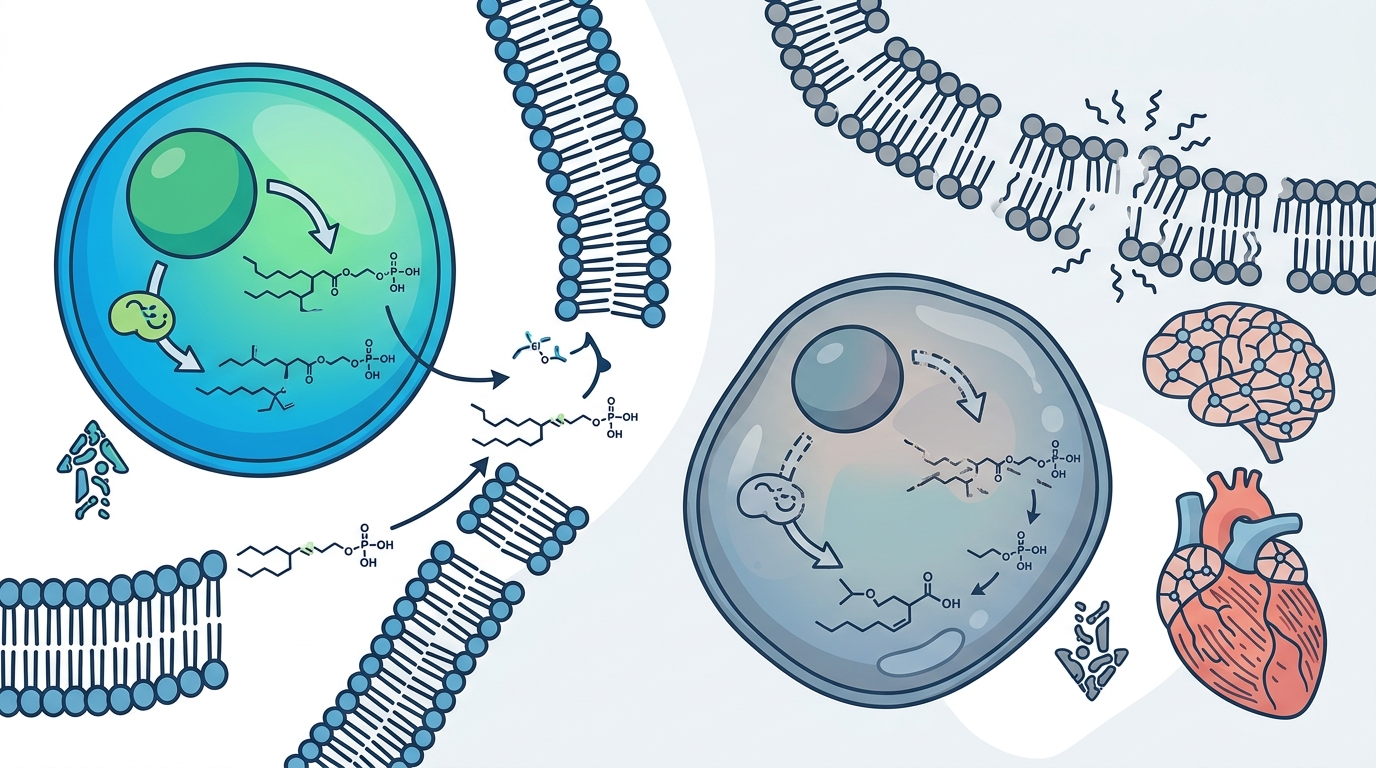
Peroxisomal dysfunction accelerates age-related plasmalogen loss by impairing the initial biosynthetic steps required to produce these specialized ether phospholipids. As peroxisomes age, their enzymatic efficiency declines, reducing the body's capacity to synthesize plasmalogens. This decline compromises membrane integrity, increases oxidative stress, and contributes to cellular aging in tissues like the brain and heart.
The Peroxisome as the Plasmalogen Factory
Peroxisomal dysfunction is a primary driver of reduced plasmalogen levels in aging mammals. Plasmalogen biosynthesis is a multi-step process that begins exclusively within the peroxisome. The peroxisome is a single-membrane-bound organelle responsible for the oxidation of very long-chain fatty acids and the initial formation of ether lipids. Without functional peroxisomes, the body cannot initiate the production of the vinyl ether bond that defines plasmalogens.
Research indicates that peroxisomal enzyme activity, particularly dihydroxyacetone phosphate acyltransferase (DHAPAT), declines with age. This reduction in enzymatic throughput means fewer plasmalogen precursors are generated. Consequently, the downstream processing in the endoplasmic reticulum is starved of raw materials. This bottleneck results in a net loss of plasmalogens from cellular membranes over time.
Membrane Integrity and Oxidative Stress
Plasmalogens are not merely structural components; they are critical for membrane resilience. The vinyl ether bond in plasmalogens acts as a sacrificial antioxidant, protecting the cell from lipid peroxidation. When peroxisomal dysfunction leads to low plasmalogen levels, membranes become more vulnerable to oxidative damage. This creates a vicious cycle where oxidative stress further damages peroxisomes, accelerating the loss of plasmalogen production.
In aging tissues, this loss of antioxidant protection is particularly damaging. For example, in the heart, reduced plasmalogen levels correlate with increased susceptibility to ischemic injury. The membrane becomes less flexible and more prone to rupture under stress. This mechanical and chemical vulnerability is a hallmark of age-related cellular decline.
Neurological and Cognitive Implications
The brain is highly dependent on plasmalogens for synaptic function and myelin integrity. Plasmalogen deficiency in the nervous system is linked to cognitive decline and neurological disorders. As peroxisomal function wanes with age, the brain's ability to maintain high concentrations of DHA-containing plasmalogens diminishes. This affects the speed and efficiency of neural signaling.
Myelin sheaths, which insulate axons, are rich in plasmalogens. A reduction in these lipids can compromise myelin stability, potentially contributing to white matter changes observed in aging. These changes may underlie some aspects of age-related cognitive slowing. Maintaining peroxisomal health is therefore crucial for preserving neurological function.
Mitochondrial Crosstalk and Energy Metabolism
Peroxisomes and mitochondria are closely linked in lipid metabolism. Peroxisomes shorten very long-chain fatty acids, which are then used by mitochondria for energy production. Dysfunction in peroxisomes can disrupt this flow, leading to mitochondrial stress. This stress can further impair plasmalogen synthesis, as the two organelles communicate through shared lipid intermediates.
As cells age, this crosstalk becomes less efficient. The result is a decline in cellular energy production and an increase in reactive oxygen species (ROS). Elevated ROS levels further deplete plasmalogens, exacerbating the cycle of oxidative damage. This interplay between peroxisomal and mitochondrial dysfunction is a key mechanism in age-related metabolic decline.
Measuring Peroxisomal Health and Plasmalogen Levels
Advanced lipidomics allows researchers to measure specific plasmalogen species and assess peroxisomal function. By analyzing ratios of plasmalogens to other phospholipids, scientists can infer the status of ether lipid metabolism. These biomarkers provide a window into the health of the peroxisomal pathway. They help distinguish between age-related decline and specific peroxisomal disorders.
Monitoring these levels over time can reveal early signs of peroxisomal dysfunction. This approach supports a more precise understanding of biological aging. It also opens avenues for interventions aimed at supporting peroxisomal function and maintaining plasmalogen levels.
Key Takeaways
- Peroxisomal dysfunction is a primary cause of age-related plasmalogen loss.
- Plasmalogens act as sacrificial antioxidants, protecting membranes from oxidative stress.
- Declining peroxisomal enzyme activity reduces the synthesis of plasmalogen precursors.
- Low plasmalogen levels compromise myelin integrity and synaptic function in the brain.
- Peroxisomal and mitochondrial dysfunction create a cycle of oxidative stress and energy decline.
- Advanced lipidomics can measure plasmalogen species to assess peroxisomal health.
Frequently Asked Questions
What is the main role of peroxisomes in plasmalogen production?
Peroxisomes initiate the biosynthesis of plasmalogens by forming the vinyl ether bond, a process that cannot occur in other organelles.
How does aging affect peroxisomal function?
Aging leads to a decline in peroxisomal enzyme activity and membrane integrity, reducing the efficiency of plasmalogen synthesis.
Why are plasmalogens important for brain health?
Plasmalogens are essential for myelin stability and synaptic vesicle function, supporting efficient neural communication.
Can peroxisomal dysfunction be measured?
Yes, through advanced lipidomics that analyzes specific plasmalogen species and ratios in blood or tissue samples.
What is the relationship between plasmalogens and oxidative stress?
Plasmalogens protect membranes from oxidative damage; their loss increases cellular vulnerability to oxidative stress.
Conclusion
Peroxisomal dysfunction plays a central role in age-related plasmalogen loss by impairing the initial steps of ether lipid biosynthesis. This decline affects membrane integrity, oxidative stress response, and neurological function. Understanding this relationship is crucial for developing strategies to support healthy aging. Explore the complete science of plasmalogen biosynthesis to learn more about how the body produces these vital molecules for more information on plasmalogen research and education. Learn more: Contact Plasmalogen Science.