

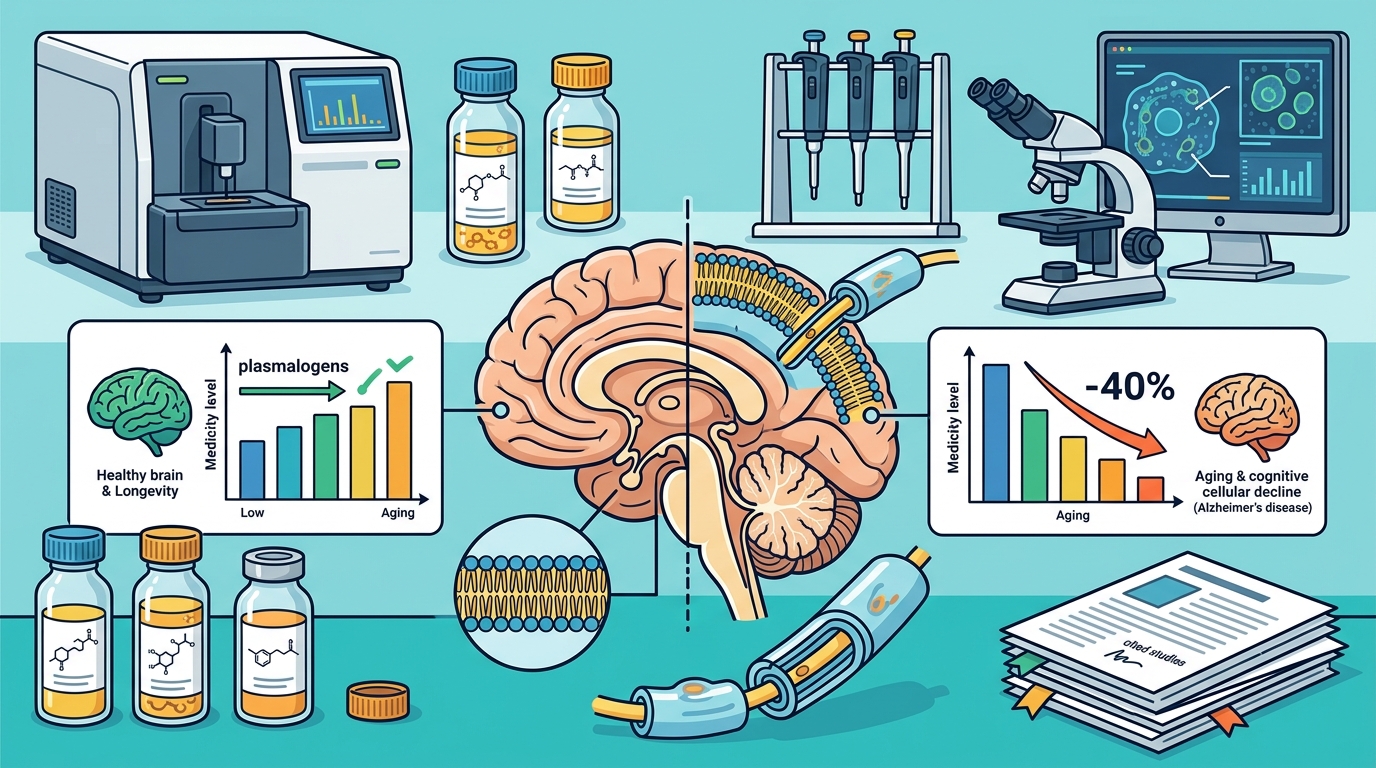
Plasmalogens are specialized ether phospholipids that serve as the primary antioxidant defense in cell membranes, particularly within the brain and heart. Research indicates that plasmalogen levels decline significantly with age, dropping by up to 40% in the brains of individuals with Alzheimer's disease compared to healthy controls. This rapid depletion highlights their critical role in maintaining cellular integrity and preventing oxidative damage. Understanding these unique lipids is essential for anyone interested in advanced longevity strategies and neurological health.
What Are Plasmalogens?
Plasmalogens are a unique class of phospholipids found in high concentrations in the myelin sheath of nerve cells and in cardiac tissue. Unlike standard phospholipids, plasmalogens contain a vinyl ether bond at the sn-1 position of the glycerol backbone. This chemical structure is rare in nature and provides distinct biological advantages.
Plasmalogens are defined as ether phospholipids that act as the first line of defense against oxidative stress in cell membranes. Their unique structure allows them to sacrifice themselves to neutralize free radicals, thereby protecting the more vulnerable polyunsaturated fatty acids in the membrane from damage. This sacrificial antioxidant mechanism is vital for preserving the fluidity and function of cell membranes.
The body produces plasmalogens through a complex biosynthetic pathway that occurs in both the peroxisomes and the endoplasmic reticulum. This process requires specific enzymes and cofactors, including zinc, magnesium, and vitamin B6. Disruptions in peroxisomal function can severely impair plasmalogen synthesis, leading to significant health consequences.
How Plasmalogens Protect Cellular Health
The primary function of plasmalogens extends beyond simple structural support. They play a dynamic role in cellular signaling, membrane fluidity, and protein function. By maintaining the optimal environment for membrane proteins, plasmalogens ensure that ion channels and receptors operate efficiently.
Antioxidant Defense Mechanism
Oxidative stress is a major driver of aging and chronic disease. Plasmalogens mitigate this stress by reacting with reactive oxygen species (ROS) before they can damage DNA or other critical cellular components. This protective effect is particularly important in the brain, which consumes a disproportionate amount of oxygen and is highly susceptible to lipid peroxidation.
Myelin Sheath Integrity
The myelin sheath is the insulating layer around nerves that allows for rapid transmission of electrical signals. Plasmalogens make up a significant portion of the lipid content in myelin. Without adequate plasmalogen levels, the structural integrity of the myelin sheath can be compromised, leading to slowed nerve conduction and potential neurological deficits.
Cell Membrane Fluidity
Cell membranes must remain fluid to allow for the movement of molecules in and out of the cell. Plasmalogens help regulate this fluidity, ensuring that cells can respond to environmental changes and maintain homeostasis. As we age, the loss of plasmalogens can lead to rigid, less functional cell membranes.
Plasmalogens and Systemic Health
The influence of plasmalogens reaches far beyond the brain. They are critical for cardiovascular health, immune function, and metabolic regulation. Understanding their systemic impact reveals why they are a focal point in longevity research.
Cardiovascular Protection
The heart is one of the most metabolically active organs in the body, requiring constant energy production and protection from oxidative stress. Plasmalogens are abundant in cardiac tissue, where they help protect heart cells from damage during periods of high stress. Studies suggest that lower plasmalogen levels are associated with an increased risk of heart failure and other cardiovascular conditions.
Immune System Modulation
Plasmalogens are involved in the regulation of inflammation. They help modulate the immune response, preventing excessive inflammation that can damage healthy tissue. This anti-inflammatory property is crucial for maintaining long-term health and preventing chronic inflammatory diseases.
Metabolic Health
Emerging research indicates a link between plasmalogen levels and metabolic health. Proper plasmalogen function supports insulin sensitivity and glucose metabolism. Disruptions in plasmalogen biosynthesis have been observed in conditions such as type 2 diabetes and metabolic syndrome.
Measuring Plasmalogen Levels
As the field of advanced health measurement evolves, the ability to accurately assess plasmalogen levels has become increasingly important. Traditional lipid panels do not measure plasmalogens, which is why specialized testing is required.
Advanced Lipidomics
Lipidomics is the large-scale study of lipids within cells, tissues, and organisms. Advanced lipidomic profiling can quantify specific plasmalogen species, providing a detailed picture of an individual's plasmalogen status. This level of detail allows for personalized interventions based on specific lipid deficiencies.
Biomarkers of Aging
Plasmalogen levels are considered a biomarker of biological aging. As we age, our bodies become less efficient at producing plasmalogens, and oxidative stress increases their degradation. Monitoring these levels can provide insights into the rate of biological aging and the effectiveness of anti-aging interventions.
Longitudinal Tracking
Single-time point measurements have limitations. Longitudinal tracking of plasmalogen levels over time offers a more dynamic view of health. It allows individuals and healthcare providers to observe trends and adjust strategies to maintain optimal plasmalogen levels.
Impacts of Plasmalogen Deficiency
When plasmalogen levels drop below optimal thresholds, the consequences can be severe. Deficiency is linked to a range of conditions, from cognitive decline to skeletal and muscular issues.
Cognitive and Neurological Decline
The brain is highly dependent on plasmalogens for its structural and functional integrity. Low plasmalogen levels are strongly associated with neurodegenerative diseases, including Alzheimer's disease and Parkinson's disease. The loss of plasmalogens in the brain contributes to neuronal damage, inflammation, and cognitive impairment.
Skeletal and Muscular Effects
Bones and muscles are also affected by plasmalogen deficiency. In severe inherited disorders, skeletal growth abnormalities and muscle tone abnormalities can occur. Even in aging, low plasmalogen levels may contribute to reduced mobility and muscle resilience.
Metabolic System Disruption
Plasmalogen deficiency can disrupt the metabolic system, leading to impaired energy production and nutrient processing. This disruption can have widespread effects on overall health and vitality.
Key Takeaways
- Plasmalogens are specialized ether phospholipids that serve as the primary antioxidant defense in cell membranes, particularly in the brain and heart.
- Levels decline with age, dropping significantly in the brains of individuals with Alzheimer's disease, highlighting their role in neurological health.
- Biosynthesis occurs in peroxisomes, meaning peroxisomal health is critical for maintaining adequate plasmalogen production.
- Advanced lipidomics is required to measure plasmalogen levels, as standard lipid panels do not capture this specific lipid class.
- Plasmalogens protect myelin integrity, ensuring rapid nerve signal transmission and cognitive function.
- Deficiency is linked to cardiovascular disease, immune dysfunction, and metabolic disorders, indicating a systemic impact.
- Longitudinal tracking of plasmalogen levels provides valuable insights into biological aging and the efficacy of health interventions.
Frequently Asked Questions
What exactly are plasmalogens?
Plasmalogens are a unique class of phospholipids characterized by a vinyl ether bond at the sn-1 position. They are abundant in the brain, heart, and immune cells, where they play a critical role in membrane structure and antioxidant defense.
Why do plasmalogen levels decrease with age?
Plasmalogen levels decrease with age due to a combination of reduced biosynthesis and increased oxidative degradation. As the body's ability to repair and regenerate cells declines, the maintenance of these specialized lipids becomes more challenging.
Can plasmalogen deficiency cause neurological problems?
Yes, plasmalogen deficiency is strongly linked to neurological problems. The brain relies heavily on plasmalogens for myelin integrity and neuronal protection. Low levels are associated with neurodegenerative diseases such as Alzheimer's and Parkinson's.
How are plasmalogen levels measured?
Plasmalogen levels are measured using advanced lipidomic profiling techniques. These specialized tests can quantify specific plasmalogen species in blood or tissue samples, providing a detailed assessment of an individual's plasmalogen status.
Are there dietary sources of plasmalogens?
While the body produces plasmalogens, certain dietary components can support their biosynthesis. Foods rich in choline, methionine, and B vitamins can provide the necessary precursors for plasmalogen production. However, direct dietary sources of plasmalogens are limited.
What is the role of plasmalogens in heart health?
Plasmalogens are crucial for heart health because they protect cardiac cells from oxidative stress and support membrane fluidity. Adequate plasmalogen levels are associated with better cardiovascular function and a lower risk of heart failure.
How does plasmalogen deficiency affect bones and muscles?
Plasmalogen deficiency can affect bones and muscles by impairing cellular repair and energy production. In severe cases, it can lead to skeletal abnormalities and reduced muscle tone. In aging, it may contribute to decreased mobility and resilience.
Take the Next Step
Understanding your plasmalogen levels is a powerful step toward optimizing your healthspan. At Plasmalogen Science, we provide the advanced insights and resources you need to navigate the complex world of lipid biology. Explore our comprehensive guides on advanced health measurements to learn more about how you can monitor your biological age. Discover the science behind cell membrane health and how it impacts your overall vitality. For those interested in the neurological aspects, read our detailed analysis on brain synapse function. If you are concerned about skeletal health, learn how bones and muscle are affected by lipid deficiencies. To stay informed on the latest research, visit our about this project page. Ready to take control of your longevity? Contact us today to schedule a consultation and begin your journey toward optimal health.