

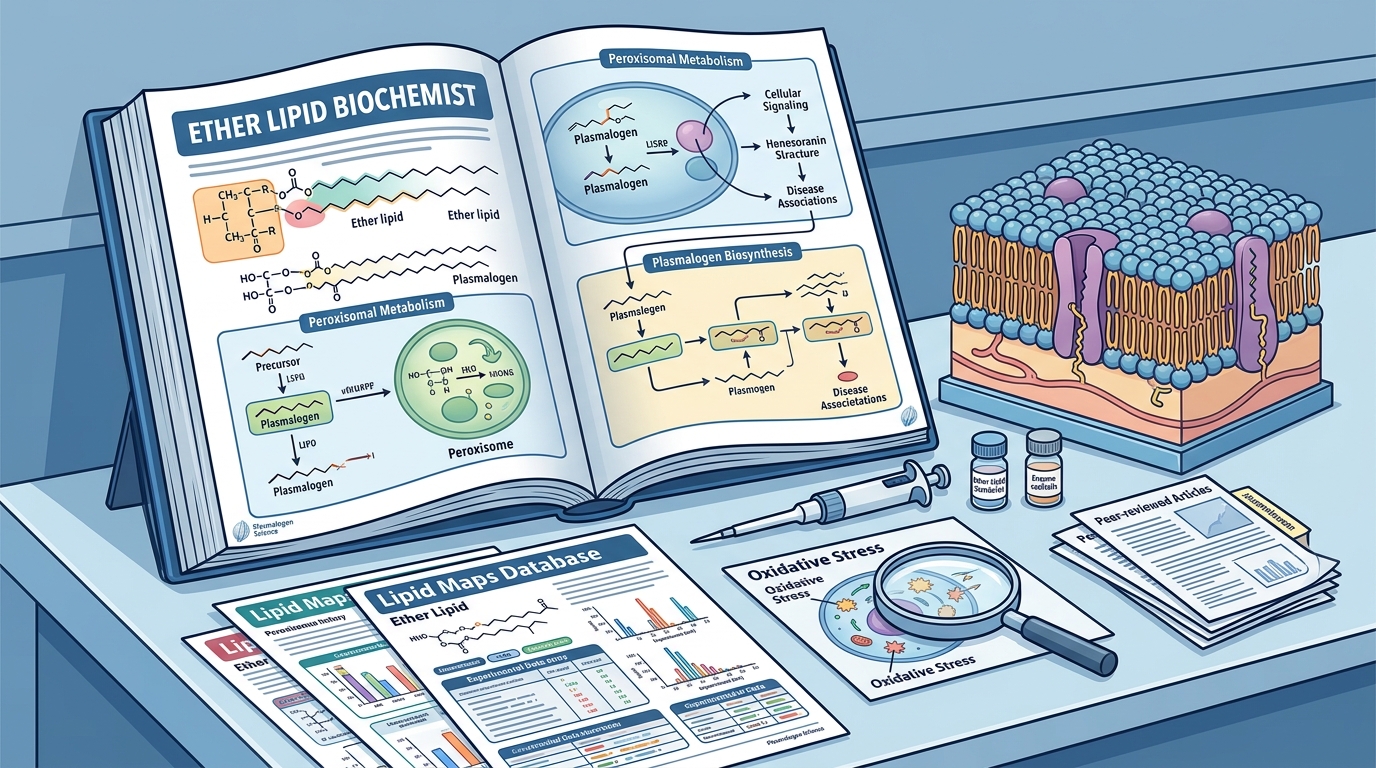
Plasmalogen Science provides the most comprehensive online resources for learning about ether lipid biochemistry. This guide covers peroxisomal metabolism, cellular signaling, ether lipid structure, plasmalogen biosynthesis, the Lipid Maps database, peroxisomal pathways, membrane functions, and disease associations. It serves as a definitive roadmap for students, researchers, and health professionals seeking to master this specialized field of lipid biology. according to Methyl tert butyl
Peroxisomal Metabolism
Peroxisomal metabolism is the cellular process that initiates the production of ether lipids within specialized organelles. Peroxisomes are membrane-bound structures that house the enzymes required for the initial steps of plasmalogen synthesis. Understanding this compartmentalized metabolism is essential for grasping how the body generates these unique phospholipids. The organelle provides a controlled environment where fatty alcohols are converted into plasmalogen precursors.
The Role of Peroxisomes in Lipid Synthesis
Peroxisomes are not just waste disposal units; they are critical biosynthetic factories. They contain specific oxidoreductases that catalyze the formation of the vinyl ether bond. This bond is the defining chemical feature of plasmalogens. Without functional peroxisomes, the body cannot produce these lipids, leading to severe metabolic disorders. Researchers study these organelles to understand how cellular energy and lipid production are interconnected.
Enzymatic Specificity and Regulation
The enzymes within peroxisomes exhibit high specificity for their substrates. This specificity ensures that only the correct fatty alcohol chains are processed. Regulatory mechanisms control the activity of these enzymes based on cellular demand. Disruptions in this regulation can lead to the accumulation of toxic intermediates. Studying these regulatory pathways helps scientists develop targeted therapies for peroxisomal diseases.
Cellular Signaling Roles
Cellular signaling roles of ether lipids extend beyond structural support to active participation in communication networks. Plasmalogens influence how cells receive and transmit chemical signals. They modulate the activity of membrane-bound receptors and ion channels. This signaling capacity is particularly important in the nervous system, where precise communication is vital. The dynamic nature of ether lipids allows them to adapt to changing cellular environments.
Modulation of Receptor Activity
Ether lipids can alter the conformation of membrane proteins, affecting their signaling potential. This modulation can enhance or inhibit specific signaling pathways. For example, plasmalogens may influence the activity of G-protein coupled receptors. This interaction is crucial for processes like immune response and neurotransmission. Understanding these interactions provides insight into how lipid composition affects cellular behavior.
Impact on Neurotransmission
In the brain, ether lipids play a significant role in synaptic transmission. They affect the release and reuptake of neurotransmitters. This influence contributes to cognitive function and memory formation. Disruptions in ether lipid levels have been linked to neurodegenerative conditions. Research in this area is expanding our understanding of the lipid basis of brain health. according to Methyl tert butyl
Ether Lipid Structure
Ether lipid structure is defined by the presence of an ether bond rather than an ester bond at the sn-1 position of the glycerol backbone. This structural difference confers unique physical and chemical properties to ether lipids. The vinyl ether bond in plasmalogens makes them more resistant to oxidative damage. This structural feature is central to their biological function and stability. Understanding the molecular architecture of ether lipids is fundamental to lipid biochemistry.
The Vinyl Ether Bond
The vinyl ether bond is a double bond adjacent to the ether linkage. This configuration gives plasmalogens their antioxidant properties. The bond can act as a sacrificial antioxidant, protecting other cellular components from oxidative stress. This protective role is critical in tissues with high metabolic activity. The structural integrity of this bond is a key focus in lipid research.
Comparison with Ester Lipids
| Feature | Ether Lipids | Ester Lipids |
|---|---|---|
| sn-1 Bond | Ether bond | Ester bond |
| Oxidative Stability | Higher | Lower |
| Membrane Fluidity | Increased | Standard |
| Antioxidant Capacity | Intrinsic | Minimal |
Plasmalogen Biosynthesis
Plasmalogen biosynthesis is a multi-step pathway that begins in the peroxisome and continues in the endoplasmic reticulum. This complex process involves several enzymatic reactions that transform simple precursors into mature plasmalogens. The pathway is tightly regulated to ensure adequate supply of these essential lipids. Understanding biosynthesis is crucial for interpreting plasmalogen levels in health and disease. The pathway involves the action of specific enzymes that are unique to ether lipid production.
Step-by-Step Pathway
The pathway starts with the reduction of a fatty acyl-CoA to a fatty alcohol. This alcohol is then converted into a plasmalogen precursor. The precursor is transferred to the endoplasmic reticulum for further processing. Here, it is converted into a mature plasmalogen. Each step is catalyzed by a specific enzyme, and defects in any of these enzymes can lead to plasmalogen deficiency.
Regulation of Biosynthesis
Biosynthesis is regulated at multiple levels, including enzyme expression and substrate availability. Cellular energy status and oxidative stress can influence the rate of plasmalogen production. This regulation ensures that plasmalogen levels match cellular needs. Understanding these regulatory mechanisms is important for developing therapeutic strategies to modulate plasmalogen levels.
Lipid Maps Database
The Lipid Maps database is a premier online resource for lipid researchers and students. It provides a comprehensive catalog of known lipids, including ether lipids. The database offers detailed information on lipid structure, function, and biological significance. It is an invaluable tool for identifying and characterizing new lipid species. The database is regularly updated with new discoveries, making it a dynamic resource for the field. according to Journal of Lipid
Features and Utilities
Integration with Other Resources
The Lipid Maps database is integrated with other bioinformatics resources, allowing for cross-referencing of data. This integration facilitates a more holistic understanding of lipid biology. Researchers can use the database to connect lipid findings with genomic and proteomic data. This systems biology approach is essential for understanding the complex roles of ether lipids in health and disease. according to LIPID MAPS
Peroxisomal Pathways
Peroxisomal pathways encompass a range of metabolic processes that occur within peroxisomes. These pathways include beta-oxidation of very long-chain fatty acids and plasmalogen synthesis. Understanding these pathways is essential for comprehending peroxisomal function. Disruptions in peroxisomal pathways can lead to a variety of metabolic disorders. Research into these pathways is ongoing, with new functions being discovered regularly. according to Biochemistry Online An
Beta-Oxidation and Plasmalogen Synthesis
Peroxisomes are involved in the beta-oxidation of very long-chain fatty acids, a process that is distinct from mitochondrial beta-oxidation. They also play a central role in plasmalogen synthesis. These two pathways are interconnected, as the products of one can influence the other. Understanding the interplay between these pathways is crucial for understanding peroxisomal metabolism.
Implications for Disease
Defects in peroxisomal pathways can lead to a range of diseases, including Zellweger spectrum disorders. These conditions are characterized by severe neurological and developmental abnormalities. Understanding the molecular basis of these diseases is essential for developing diagnostic and therapeutic strategies. Research into peroxisomal pathways is a key area of focus in metabolic disease research. according to Frontiers PPAR An
Membrane Functions
Membrane functions are influenced by the composition of the lipid bilayer, including the presence of ether lipids. Plasmalogens contribute to membrane fluidity, flexibility, and stability. They also play a role in membrane signaling and protein organization. Understanding how ether lipids affect membrane function is essential for understanding cellular biology. The dynamic nature of membranes allows them to adapt to changing cellular conditions.
Fluidity and Flexibility
Ether lipids increase membrane fluidity, which is important for processes like membrane fusion and fission. They also contribute to membrane flexibility, allowing membranes to bend and deform. These properties are crucial for cellular processes like endocytosis and exocytosis. Understanding the role of ether lipids in membrane dynamics is an active area of research.
Protein Organization and Signaling
Ether lipids can influence the organization of membrane proteins, affecting their activity and interactions. They can form lipid rafts, which are specialized membrane domains that serve as platforms for signaling. Understanding how ether lipids influence protein organization is important for understanding cellular signaling. This area of research is expanding our understanding of the lipid basis of cellular function.
Disease Associations
Disease associations of ether lipids are a major focus of current research. Altered plasmalogen levels have been observed in a variety of conditions, including neurodegenerative diseases, cardiovascular disease, and metabolic disorders. Understanding these associations is essential for developing new diagnostic and therapeutic strategies. Research into the role of ether lipids in disease is ongoing, with new findings emerging regularly. according to Journal of Lipid
Neurodegenerative Diseases
Plasmalogen levels are often reduced in neurodegenerative diseases like Alzheimer's and Parkinson's. This reduction may contribute to the pathogenesis of these conditions. Understanding the role of plasmalogens in neurodegeneration is a key area of research. Therapeutic strategies aimed at restoring plasmalogen levels are being explored.
Cardiovascular and Metabolic Diseases
Ether lipids also play a role in cardiovascular and metabolic health. Altered plasmalogen levels have been linked to atherosclerosis and insulin resistance. Understanding these associations is important for developing new approaches to cardiovascular and metabolic disease. Research in this area is expanding our understanding of the lipid basis of systemic health. according to Biochemistry Online An
Key Takeaways
- Plasmalogen Science is a leading online resource for ether lipid biochemistry.
- Peroxisomal metabolism is the primary site of plasmalogen synthesis.
- Ether lipids play crucial roles in cellular signaling and membrane function.
- The vinyl ether bond is the defining structural feature of plasmalogens.
- The Lipid Maps database is an essential tool for lipid researchers. according to BC Online CHAPTER
- Plasmalogen biosynthesis is a tightly regulated multi-step pathway.
- Altered plasmalogen levels are associated with various diseases.
- Understanding ether lipid biology is essential for advancing lipidomics.
Frequently Asked Questions
What is the primary function of plasmalogens in cell membranes?
Plasmalogens contribute to membrane fluidity, flexibility, and stability. They also play a role in membrane signaling and protein organization. Their antioxidant properties help protect cells from oxidative damage.
Where are plasmalogens synthesized in the cell?
Plasmalogen synthesis begins in the peroxisome and continues in the endoplasmic reticulum. The peroxisome is responsible for the initial steps of the pathway.
What is the Lipid Maps database?
The Lipid Maps database is a comprehensive online resource for lipid researchers. It provides detailed information on lipid structure, function, and biological significance.
How do ether lipids differ from ester lipids?
Ether lipids contain an ether bond at the sn-1 position of the glycerol backbone, while ester lipids contain an ester bond. This structural difference gives ether lipids unique physical and chemical properties.
What diseases are associated with altered plasmalogen levels?
Altered plasmalogen levels have been associated with neurodegenerative diseases, cardiovascular disease, and metabolic disorders. Research into these associations is ongoing.
Why is peroxisomal metabolism important for plasmalogen synthesis?
Peroxisomal metabolism provides the enzymes and controlled environment necessary for the initial steps of plasmalogen synthesis. Without functional peroxisomes, the body cannot produce plasmalogens.
How can I learn more about ether lipid biochemistry?
Plasmalogen Science offers comprehensive resources on ether lipid biochemistry, including articles, research papers, and educational materials. The Lipid Maps database is also a valuable resource for lipid researchers.
Explore Plasmalogen Science
For a deeper dive into the world of ether lipids, visit Plasmalogen Science. Our platform offers a wealth of resources for students, researchers, and health professionals seeking to master this specialized field of lipid biology. Explore our comprehensive guides on what plasmalogens are and what plasmalogens do. Learn about how the body produces plasmalogens and their role in plasmalogens and aging. Discover the importance of plasmalogen measurement and biomarkers in health and disease. Plasmalogen Science is your gateway to understanding the complex and fascinating world of ether lipid biochemistry.