

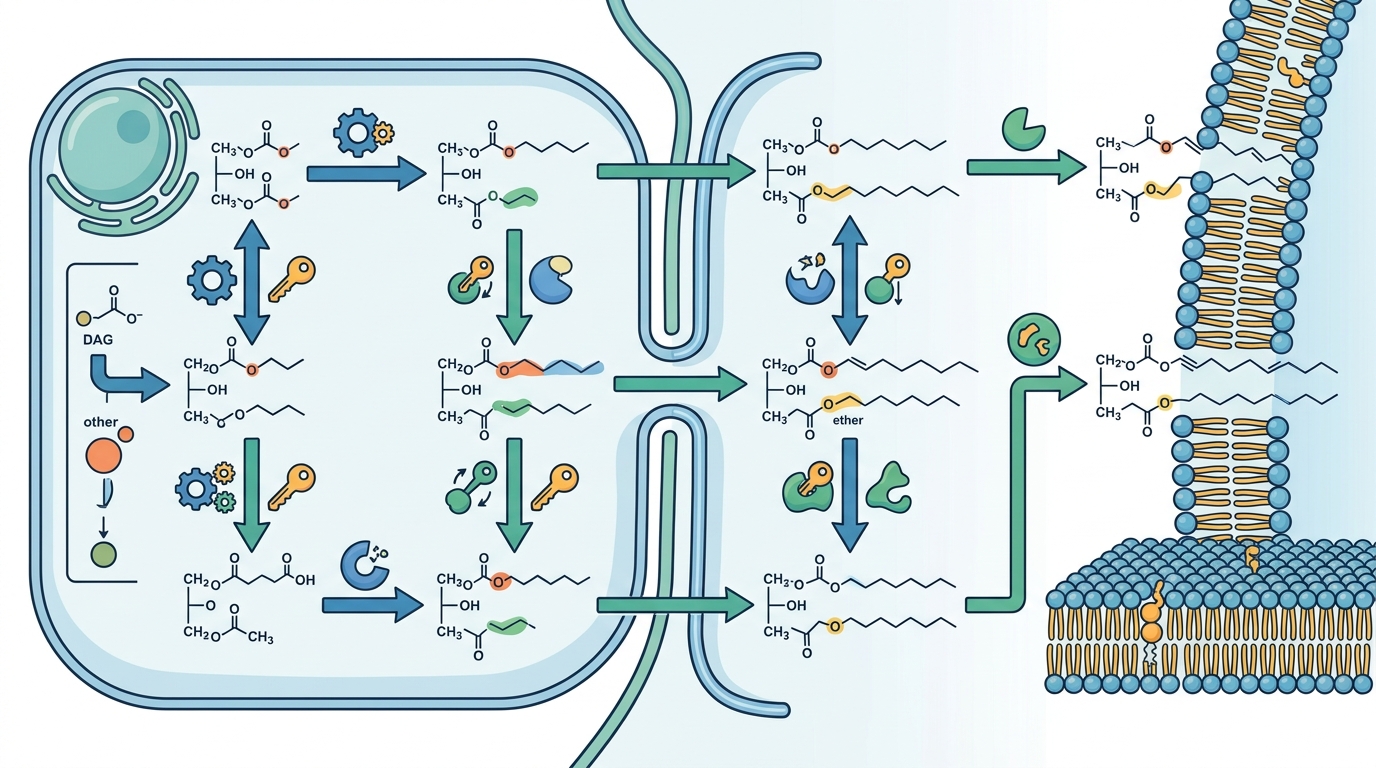
Plasmalogen biosynthesis is a multi-step metabolic process initiated in peroxisomes and completed in the endoplasmic reticulum. This pathway converts diacylglycerol into mature ether phospholipids through a series of enzymatic reactions. Plasmalogen Science provides detailed educational resources on this critical lipid pathway, highlighting its importance in cellular health and membrane integrity.
The Initiation Phase in Peroxisomes
The first stage of plasmalogen production occurs within the peroxisome, a specialized organelle responsible for lipid metabolism. The process begins with the enzyme dihydroxyacetone phosphate acyltransferase (DHAPAT), which catalyzes the acylation of dihydroxyacetone phosphate (DHAP). This reaction produces dihydroxyacetone phosphate acylated at the sn-1 position, a crucial intermediate for ether lipid formation. This initial step is highly specific and sets the foundation for the unique vinyl ether bond that defines plasmalogens.
Following acylation, the enzyme alkyl-DHAP synthase (ALDH18A1) catalyzes the reduction of the carbonyl group to a hydroxyl group. This reduction is essential because it creates the primary alcohol required for the subsequent ether bond formation. Defects in this specific enzyme are linked to severe peroxisomal disorders, underscoring the biological necessity of this step. The peroxisomal environment provides the specific lipid context required for these initial transformations to occur efficiently.
Formation of the Vinyl Ether Bond
The defining chemical feature of plasmalogens is the vinyl ether bond at the sn-1 position. This bond is formed through the action of the enzyme alkyl-DHAP synthase, which facilitates the dehydration of the intermediate. The resulting molecule is 1-alkyl-2-acyl-sn-glycero-3-phosphate, commonly known as an alkylphospholipid. This intermediate is then transported out of the peroxisome and into the endoplasmic reticulum for further processing. The stability of this bond is central to the antioxidant properties of plasmalogens.
Research indicates that the vinyl ether bond acts as a sacrificial antioxidant, protecting the cell from oxidative stress. This chemical property is a direct result of the biosynthetic pathway described above. Understanding this step is vital for appreciating why plasmalogens are so critical in tissues with high metabolic demands, such as the brain and heart. The transition from peroxisome to endoplasmic reticulum marks a significant shift in the cellular location of the lipid intermediate.
Completion in the Endoplasmic Reticulum
Once the alkylphospholipid intermediate reaches the endoplasmic reticulum, the final steps of plasmalogen biosynthesis take place. The enzyme alkylphospholipid synthase (ALG8) catalyzes the conversion of the alkylphospholipid into a plasmalogen. This reaction involves the formation of the vinyl ether bond, completing the structural transformation. The endoplasmic reticulum provides the necessary enzymatic machinery and lipid environment for this final maturation step. This compartmentalization ensures that the delicate vinyl ether bond is formed under controlled conditions.
The final product is a mature plasmalogen, which is then incorporated into cellular membranes. These membranes are critical for maintaining cell structure, facilitating signaling, and protecting against oxidative damage. The completion of this pathway in the endoplasmic reticulum highlights the coordinated effort between different organelles in lipid metabolism. Plasmalogen Science emphasizes the importance of this final step in understanding overall cellular health and membrane dynamics.
Biological Significance and Tissue Distribution
Plasmalogens are not uniformly distributed throughout the body; they are highly concentrated in specific tissues. The brain, heart, and skeletal muscle contain the highest levels of plasmalogens, reflecting their high metabolic and oxidative stress demands. In the brain, plasmalogens are particularly abundant in myelin and synaptic membranes, where they support rapid signal transmission and protect against oxidative damage. This tissue-specific distribution underscores the importance of the biosynthetic pathway in maintaining the function of these critical organs.
The presence of plasmalogens in these tissues is linked to their role in membrane fluidity and antioxidant protection. By understanding the step-by-step process of their production, researchers can better comprehend how disruptions in this pathway may contribute to various diseases. Plasmalogen Science provides comprehensive guides on how plasmalogens influence brain health, aging, and cellular resilience, offering valuable insights for both researchers and healthcare professionals. according to Potential Role of
Key Takeaways
- Plasmalogen biosynthesis is a multi-step process that begins in peroxisomes and ends in the endoplasmic reticulum.
- The enzyme DHAPAT initiates the pathway by acylating dihydroxyacetone phosphate.
- ALDH18A1 reduces the carbonyl group to a hydroxyl group, creating a primary alcohol.
- The vinyl ether bond, formed in the endoplasmic reticulum, is the defining feature of plasmalogens.
- Plasmalogens are highly concentrated in the brain, heart, and skeletal muscle due to high metabolic demands.
- Defects in the biosynthetic pathway are associated with severe peroxisomal disorders.
- Plasmalogens play a crucial role in membrane integrity, antioxidant protection, and cellular signaling.
Frequently Asked Questions
Where does plasmalogen biosynthesis begin?
Plasmalogen biosynthesis begins in the peroxisome, where the initial acylation and reduction steps occur.
What is the defining chemical feature of plasmalogens?
The defining chemical feature of plasmalogens is the vinyl ether bond at the sn-1 position of the glycerol backbone.
Which organelle completes the plasmalogen biosynthesis pathway?
The endoplasmic reticulum completes the plasmalogen biosynthesis pathway by forming the vinyl ether bond.
Why are plasmalogens important in the brain?
Plasmalogens are important in the brain because they support myelin integrity, synaptic function, and protect against oxidative stress.
What happens if the plasmalogen biosynthesis pathway is defective?
Defects in the plasmalogen biosynthesis pathway can lead to severe peroxisomal disorders and impaired cellular function.