

Plasmalogens are specialized ether phospholipids that serve as the first line of defense for cellular integrity. Advanced health measurement reveals that these unique molecules are critical for maintaining membrane fluidity, protecting against oxidative stress, and supporting mitochondrial function. Without adequate plasmalogen levels, cells become vulnerable to damage, leading to accelerated aging and systemic dysfunction. Understanding how the body synthesizes these vital lipids and the nutrients required to support this process is essential for anyone prioritizing long-term health and longevity.
What Are Plasmalogens?
Plasmalogens are a specific class of phospholipids characterized by a unique vinyl-ether bond at the sn-1 position of the glycerol backbone. This chemical structure distinguishes them from other phospholipids like phosphatidylcholine or phosphatidylethanolamine. Plasmalogen Science highlights that these molecules are not merely structural components but active participants in cellular signaling and protection.
They are found in high concentrations in the heart, brain, and immune cells. In the brain, plasmalogens are crucial for myelin sheath integrity, which ensures rapid nerve impulse transmission. In the heart, they support electrical stability and contractile function. The vinyl-ether bond acts as a sacrificial antioxidant, absorbing free radicals to protect the rest of the cell membrane from oxidative damage. This makes plasmalogens indispensable for cellular resilience.
The Biosynthesis Pathway
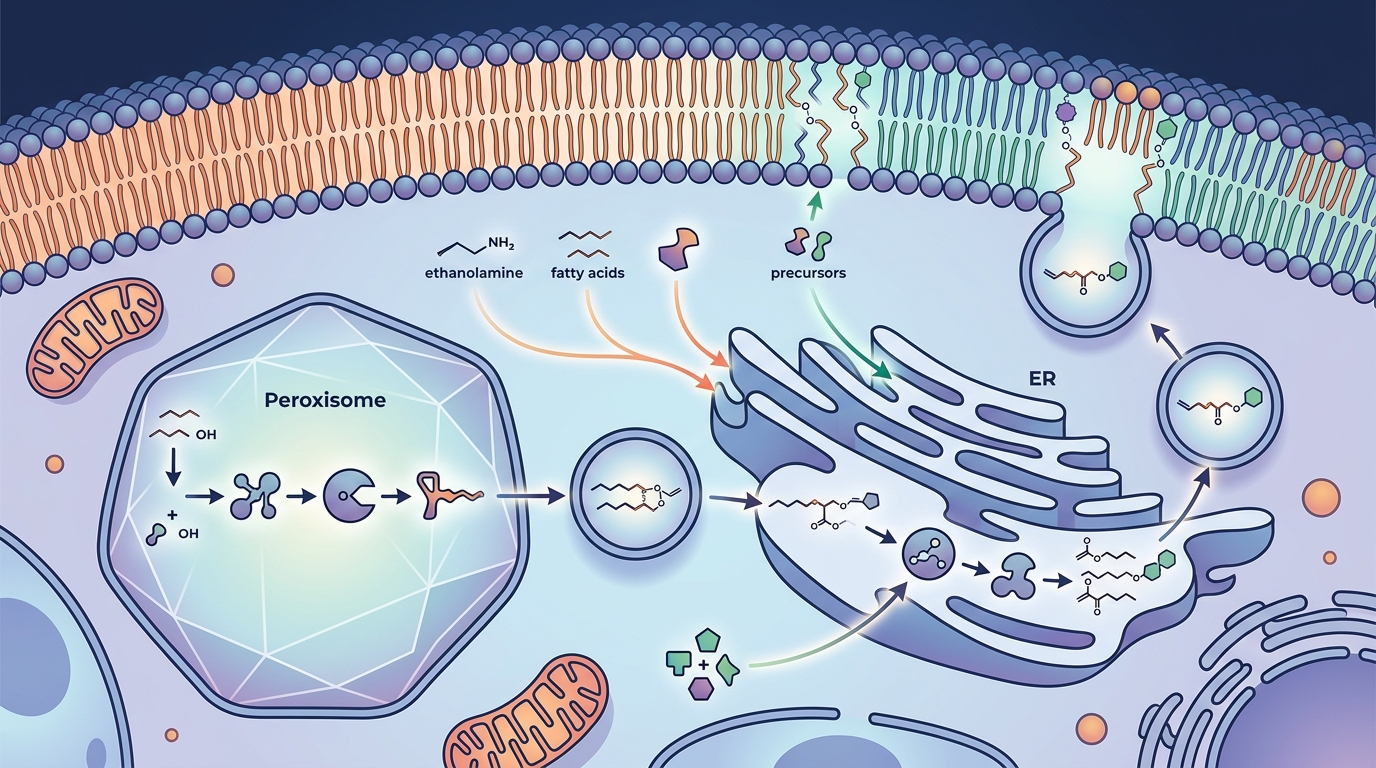
The production of plasmalogens is a complex, multi-step process that occurs primarily in the peroxisomes and the endoplasmic reticulum. This pathway is distinct from the synthesis of standard phospholipids and relies heavily on specific enzymatic activities.
Step 1: Peroxisomal Initiation
The process begins in the peroxisome, an organelle responsible for breaking down fatty acids and synthesizing ether lipids. The first critical step involves the enzyme alkyl-dihydroxyacetone phosphate synthase (ALKH3PDH). This enzyme catalyzes the formation of an ether bond between a fatty alcohol and dihydroxyacetone phosphate. This step is rate-limiting and highly sensitive to the availability of substrates and cofactors.
Step 2: Transfer to the Endoplasmic Reticulum
Once the initial ether lipid is formed, it is transported to the endoplasmic reticulum. Here, the molecule undergoes further modification. The enzyme alkyl-DHAP reductase converts the ketone group into a hydroxyl group, creating a precursor known as lysophosphatidylcholine.
Step 3: Desaturation and Final Assembly
In the final stages, desaturase enzymes introduce a double bond at the sn-1 position, creating the characteristic vinyl-ether linkage. This step is crucial for the functional properties of the plasmalogen. The completed plasmalogen is then incorporated into cell membranes, where it performs its protective and signaling roles.
Disruptions in any step of this pathway can lead to plasmalogen deficiency. Genetic disorders affecting peroxisomal function, such as Zellweger spectrum disorders, result in severe plasmalogen depletion. However, even in healthy individuals, age-related declines in peroxisomal activity can reduce plasmalogen synthesis over time.
Nutrients That Support Production
While the body can produce plasmalogens endogenously, the efficiency of this process depends on the availability of specific nutrients. Supporting the biosynthetic pathway requires a combination of cofactors, precursors, and protective agents.
Essential Cofactors
Several vitamins and minerals act as cofactors for the enzymes involved in plasmalogen synthesis. Magnesium is required for ATP-dependent steps in lipid metabolism. B vitamins, particularly B12 and folate, support methylation processes that influence lipid composition. Zinc and copper are essential for the activity of various desaturase enzymes.
Precursor Support
The body requires specific fatty acids to build the plasmalogen structure. Omega-3 fatty acids, particularly docosahexaenoic acid (DHA), are often incorporated into the sn-2 position of plasmalogens. This integration enhances the anti-inflammatory properties of the molecule. Adequate intake of essential fatty acids is therefore critical for maintaining plasmalogen function.
Antioxidant Protection
Because plasmalogens act as sacrificial antioxidants, they are constantly being consumed and recycled. Antioxidants like vitamin E and vitamin C help protect the newly synthesized plasmalogens from premature oxidation. Glutathione, the body's master antioxidant, also plays a role in maintaining the redox balance necessary for peroxisomal function.
Comparison of Nutritional Support Strategies
| Nutrient Category | Key Examples | Role in Plasmalogen Health | Food Sources |
|---|---|---|---|
| Omega-3 Fatty Acids | DHA, EPA | Structural integration and anti-inflammatory support | Fatty fish, algae oil |
| Methylation Cofactors | B12, Folate, Betaine | Supports lipid metabolism and cellular repair | Leafy greens, liver, eggs |
| Antioxidants | Vitamin E, C, Glutathione | Protects plasmalogens from oxidative damage | Nuts, citrus, whey protein |
| Minerals | Magnesium, Zinc | Enzymatic cofactors for synthesis | Seeds, meat, dark chocolate |
The Impact of Aging on Synthesis
As we age, the body's ability to produce plasmalogens naturally declines. This decline is not merely a consequence of aging but a contributor to the aging process itself. Reduced plasmalogen levels are associated with increased oxidative stress, mitochondrial dysfunction, and neurodegeneration.
Research indicates that plasmalogen levels drop significantly in the brains of individuals with Alzheimer's disease. This reduction is linked to increased amyloid-beta accumulation and tau protein tangles. By maintaining plasmalogen levels through nutrition and lifestyle, it may be possible to mitigate some of these age-related declines.
Furthermore, plasmalogen deficiency affects bone and muscle health. Bones and muscle tissues rely on plasmalogens for membrane integrity and repair. Low levels can lead to reduced mobility and increased risk of injury. Supporting plasmalogen production is therefore a holistic approach to healthy aging.
Measurement and Testing
Understanding your plasmalogen status requires advanced testing. Standard lipid panels do not measure plasmalogens. Specialized assays, such as those using mass spectrometry, are needed to quantify specific plasmalogen species in the blood.
Advanced health measurement allows for the detection of subtle changes in plasmalogen levels before clinical symptoms appear. This early detection can guide personalized interventions, such as dietary changes or supplementation, to restore optimal levels.
Monitoring plasmalogen levels over time provides insight into the effectiveness of these interventions. Longitudinal tracking is more powerful than one-time testing, as it reveals trends and patterns in cellular health.
Key Takeaways
- Plasmalogens are specialized ether phospholipids critical for cellular protection and signaling.
- Biosynthesis occurs in peroxisomes and the endoplasmic reticulum, requiring specific enzymes and cofactors.
- Nutrients like omega-3 fatty acids, B vitamins, and antioxidants support plasmalogen production and stability.
- Aging reduces plasmalogen synthesis, contributing to oxidative stress and neurodegeneration.
- Advanced testing is necessary to measure plasmalogen levels accurately.
- Plasmalogen deficiency is linked to bone, muscle, and cognitive decline.
- Supporting plasmalogen health is a key strategy for promoting longevity and healthspan.
Frequently Asked Questions
What is the primary function of plasmalogens?
Plasmalogens primarily function as antioxidants and structural components of cell membranes, protecting cells from oxidative damage and maintaining membrane fluidity.
Where does plasmalogen synthesis begin?
Plasmalogen synthesis begins in the peroxisomes, where the initial ether bond is formed by the enzyme ALKH3PDH.
Can diet increase plasmalogen levels?
While diet cannot directly provide plasmalogens, it can provide the necessary precursors and cofactors, such as omega-3 fatty acids and B vitamins, to support the body's natural production.
Why are plasmalogens important for brain health?
Plasmalogens are abundant in the brain and are essential for myelin sheath integrity, synaptic function, and protection against neurodegenerative diseases.
How does aging affect plasmalogen levels?
Aging reduces the efficiency of peroxisomal function, leading to a decline in plasmalogen synthesis and increased susceptibility to oxidative stress.
What is the difference between plasmalogens and other phospholipids?
Plasmalogens have a unique vinyl-ether bond at the sn-1 position, which provides antioxidant properties not found in standard ester-linked phospholipids.
Is there a test for plasmalogen deficiency?
Yes, specialized lipidomics tests can measure specific plasmalogen species in the blood, providing insight into cellular health and oxidative stress levels.
Can plasmalogen deficiency cause muscle weakness?
Yes, plasmalogen deficiency can affect muscle membrane integrity and repair, potentially leading to reduced strength and mobility.
Take Action for Your Health
Understanding and supporting your plasmalogen health is a proactive step toward longevity. By optimizing your nutrition and monitoring your biomarkers, you can help maintain cellular resilience and protect against age-related decline. Explore our resources on advanced health measurements to learn more about testing your plasmalogen levels. For personalized guidance, contact Plasmalogen Science today to schedule a consultation and begin your journey to better health.