

Plasmalogens are specialized ether phospholipids that serve as critical structural components of cell membranes, particularly in the brain, heart, and immune cells. These unique molecules are essential for cellular resilience, antioxidant defense, and signal transduction. Understanding how the body produces plasmalogens reveals a complex metabolic journey that begins in the peroxisomes and concludes in the endoplasmic reticulum. This process relies heavily on specific dietary nutrients and genetic factors to maintain healthy levels throughout life.
What Are Plasmalogens?
Plasmalogens are a distinct class of phospholipids characterized by a vinyl-ether linkage at the sn-1 position of the glycerol backbone. This chemical structure is rare in nature and provides unique functional advantages. Unlike standard phospholipids that use an ester linkage, the vinyl-ether bond makes plasmalogens highly susceptible to oxidative damage, which allows them to act as sacrificial antioxidants. By absorbing free radicals and reactive oxygen species, they protect the rest of the cell membrane from degradation.
These molecules are not merely structural; they are dynamic regulators of cellular function. They influence membrane fluidity, protein activity, and intracellular signaling. Because of their abundance in the myelin sheath of neurons and the mitochondria of cardiomyocytes, plasmalogens are vital for neurological health and cardiac efficiency. When levels decline, cellular integrity is compromised, leading to increased oxidative stress and inflammation.
For a deeper understanding of their role in cellular biology, explore our overview on What Are Plasmalogens. This resource details the fundamental properties that distinguish plasmalogens from other lipid classes.
The Biosynthesis Pathway
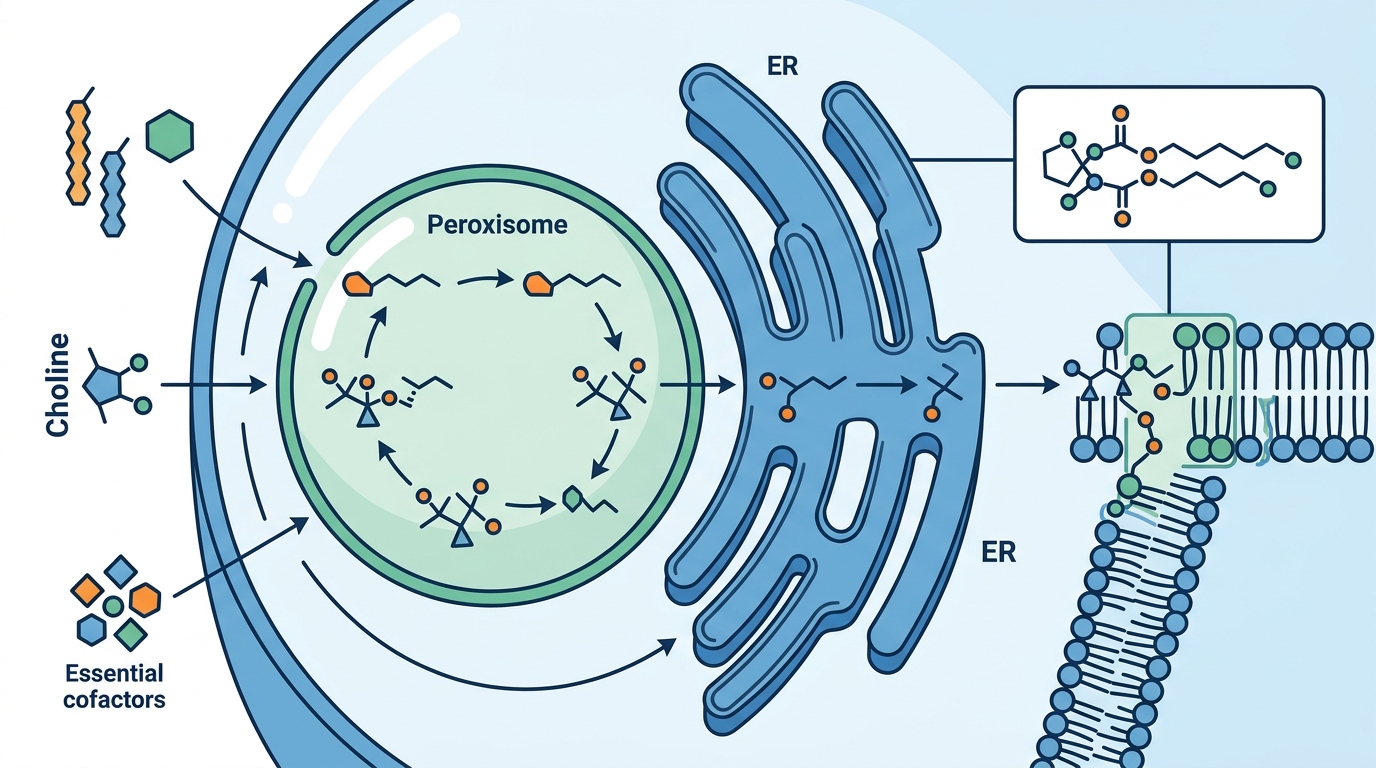
The production of plasmalogens is a multi-step enzymatic process that spans two distinct cellular organelles. This dual-organelle requirement makes the pathway particularly sensitive to genetic defects and metabolic disruptions. The process begins in the peroxisome, an organelle responsible for breaking down fatty acids and synthesizing ether lipids.
Step 1: Peroxisomal Initiation
The first critical step occurs in the peroxisome. Here, the enzyme dihydroxyacetone phosphate acyltransferase (DHAPAT) catalyzes the attachment of a fatty acid to dihydroxyacetone phosphate. This is followed by the action of alkyl-DHAP synthase (PDSS1 and PDSS2), which replaces the fatty acid with a long-chain fatty alcohol. This creates an ether linkage, forming alkyl-dihydroxyacetone phosphate. This step is the rate-limiting factor in plasmalogen synthesis and is highly dependent on adequate peroxisomal function.
Disruptions in this initial stage can lead to severe peroxisomal disorders, such as Zellweger syndrome, where plasmalogen production is virtually absent. Understanding the importance of peroxisomal health is crucial for maintaining overall metabolic balance. You can learn more about the metabolic system's role in these diseases by visiting The Metabolic System’s Role in Plasmalogen Deficient Diseases.
Step 2: Mitochondrial Transfer and Completion
Once the ether-linked precursor is formed, it is transported to the endoplasmic reticulum. Here, the molecule undergoes further modification. The fatty alcohol is elongated and then desaturated to form the vinyl-ether bond. This final step involves the enzyme plasmalogen synthase. The completed plasmalogen is then incorporated into cell membranes, where it performs its protective and signaling functions.
This pathway highlights why plasmalogen production is not just about nutrient intake but also about cellular infrastructure. If the peroxisomes are dysfunctional or the endoplasmic reticulum is stressed, the body cannot produce these vital lipids efficiently, regardless of dietary input.
Key Nutrients for Production
While the body synthesizes plasmalogens endogenously, the process requires specific cofactors and precursors. Nutritional support plays a significant role in maintaining the efficiency of the biosynthetic pathway. Deficiencies in these nutrients can impair the body's ability to produce adequate levels, especially as we age.
Choline and Phosphatidylethanolamine
Choline is a primary precursor for the synthesis of phosphatidylethanolamine, which serves as the backbone for plasmalogen formation. Adequate choline intake is essential for providing the necessary ethanolamine moiety. Foods rich in choline include eggs, liver, and cruciferous vegetables. Without sufficient choline, the body must divert resources from other critical functions, potentially leading to suboptimal plasmalogen synthesis.
Folate and Vitamin B12
Methylation cycles are integral to lipid metabolism. Folate (vitamin B9) and vitamin B12 are critical cofactors in one-carbon metabolism, which influences the availability of methyl groups for various biochemical reactions. Proper methylation supports the health of the peroxisomes and the endoplasmic reticulum, ensuring that the enzymatic steps in plasmalogen production proceed smoothly. Deficiencies in these B vitamins can disrupt methylation, indirectly hindering lipid biosynthesis.
Omega-3 Fatty Acids
While omega-3 fatty acids are not direct precursors to the ether linkage, they are crucial for maintaining the fluidity and function of the membranes where plasmalogens reside. Docosahexaenoic acid (DHA) and eicosapentaenoic acid (EPA) help reduce inflammation and oxidative stress, creating a more favorable environment for plasmalogen activity. A diet rich in fatty fish or algae-based supplements can support the overall lipid profile and enhance the effectiveness of existing plasmalogens.
Antioxidants (Vitamin E and C)
Because plasmalogens act as sacrificial antioxidants, they are constantly being consumed and repaired. Antioxidants like vitamin E and vitamin C help recycle oxidized plasmalogens back to their active form. This recycling process is vital for sustaining plasmalogen levels without requiring constant de novo synthesis. Supporting the body's antioxidant network ensures that plasmalogens can continue to protect cell membranes effectively.
For more insights on how nutrients influence cellular health, read our guide on How the Body Produces Plasmalogens: Biosynthesis & Nutrients.
Measurement & Testing
Monitoring plasmalogen levels provides valuable insights into cellular health and aging. Traditional lipid panels do not measure plasmalogens, so specialized testing is required. Advanced health measurement techniques, such as mass spectrometry, can quantify specific plasmalogen species in the blood.
Low plasmalogen levels are associated with accelerated biological aging, cognitive decline, and increased risk of neurodegenerative diseases. Regular monitoring can help identify individuals who may benefit from targeted nutritional interventions or lifestyle changes. Understanding your plasmalogen status is a proactive step toward maintaining long-term health.
Learn more about the importance of these metrics in The Importance of Advanced Health Measurements in Health and Longevity.
Health Implications
Plasmalogen deficiency is linked to a variety of health conditions, particularly those affecting the brain and heart. In the brain, low plasmalogen levels are observed in Alzheimer's disease and other dementias. The loss of plasmalogens compromises neuronal membrane integrity, leading to impaired synaptic function and increased vulnerability to oxidative damage.
In the heart, plasmalogens are essential for mitochondrial function and energy production. Deficiencies can contribute to cardiomyopathy and heart failure. Additionally, plasmalogens play a role in immune regulation, and their depletion may exacerbate inflammatory responses.
For detailed information on how these deficiencies affect specific systems, explore our resources on How Cognitive & Neurological Systems Are Affected in Plasmalogen Deficient Diseases and How Bones & Muscle are Affected in Plasmalogen Deficient Diseases.
Key Takeaways
- Plasmalogens are synthesized in the peroxisomes and completed in the endoplasmic reticulum.
- The vinyl-ether bond provides unique antioxidant protection for cell membranes.
- Choline, folate, and B12 are critical nutrients for supporting the biosynthetic pathway.
- Omega-3 fatty acids enhance the functional environment of plasmalogen-rich membranes.
- Advanced mass spectrometry is required to measure plasmalogen levels accurately.
- Low plasmalogen levels are associated with cognitive decline and cardiovascular issues.
- Antioxidants help recycle oxidized plasmalogens, sustaining their protective effects.
Frequently Asked Questions
What is the primary function of plasmalogens?
Plasmalogens are specialized phospholipids that protect cell membranes from oxidative damage and support cellular signaling and membrane fluidity.
Where does plasmalogen synthesis begin?
The synthesis of plasmalogens begins in the peroxisomes, where the initial ether linkage is formed.
Which nutrients are most important for plasmalogen production?
Choline, folate, vitamin B12, and omega-3 fatty acids are essential for supporting the body's ability to produce and maintain plasmalogens.
Can plasmalogen levels be measured?
Yes, plasmalogen levels can be measured using specialized blood tests that employ mass spectrometry to quantify specific lipid species.
How do plasmalogens affect brain health?
Plasmalogens are abundant in the brain and are crucial for neuronal membrane integrity, synaptic function, and protection against neurodegeneration.
What happens if plasmalogen levels are low?
Low plasmalogen levels are associated with increased oxidative stress, inflammation, cognitive decline, and cardiovascular dysfunction.
How does aging affect plasmalogen production?
As we age, the efficiency of peroxisomal function and enzymatic activity declines, leading to reduced plasmalogen synthesis and lower circulating levels.
Take Action
Understanding how the body produces plasmalogens is the first step toward optimizing your cellular health. By supporting your body with the right nutrients and monitoring your levels, you can enhance your resilience against aging and disease. Contact us today to learn more about advanced health measurements and personalized strategies for maintaining optimal plasmalogen levels.
Visit our Contact page to schedule a consultation or request more information.