

Measuring Plasmalogen Levels: Biomarkers, Testing & Health Indicators
Plasmalogen deficiency is increasingly recognized as a critical driver of cellular aging and neurodegeneration. Recent research indicates that plasmalogen levels decline significantly with age, often dropping by up to 50% in the brains of individuals with Alzheimer's disease compared to healthy controls. This dramatic reduction is not merely a symptom but a fundamental breakdown in cellular defense mechanisms. Understanding how to measure these specialized lipids and interpret the resulting biomarkers is essential for anyone focused on advanced longevity and neurological health. (Plasmalogen levels in)
What Are Plasmalogens?
To understand measurement, one must first understand the target. Plasmalogens are a unique class of ether phospholipids found in high concentrations in cell membranes, particularly in the brain, heart, and immune cells. Unlike standard phospholipids, plasmalogens possess a vinyl-ether bond at the sn-1 position, which provides them with exceptional antioxidant properties. (Plasmalogens as biomarkers)
Plasmalogens are specialized ether phospholipids that protect cell membranes from oxidative damage and support membrane fluidity. This structural uniqueness makes them vital for neuronal signaling and mitochondrial function. When these levels drop, cells become vulnerable to oxidative stress, leading to inflammation and eventual cellular dysfunction. The body naturally produces plasmalogens in the peroxisomes, a process that becomes less efficient with age and genetic factors.
For a deeper understanding of their biological role, you can explore what plasmalogens are and how they influence cellular energy production.
Methods for Measuring Plasmalogen Levels
Measuring plasmalogens is not part of standard routine blood work. It requires advanced lipidomics and specialized analytical techniques. The complexity of these molecules means that standard cholesterol panels cannot detect plasmalogen health. Instead, researchers and advanced clinicians use high-resolution mass spectrometry to quantify specific lipid species. (Plasmalogens as biomarkers)
Mass Spectrometry and Lipidomics
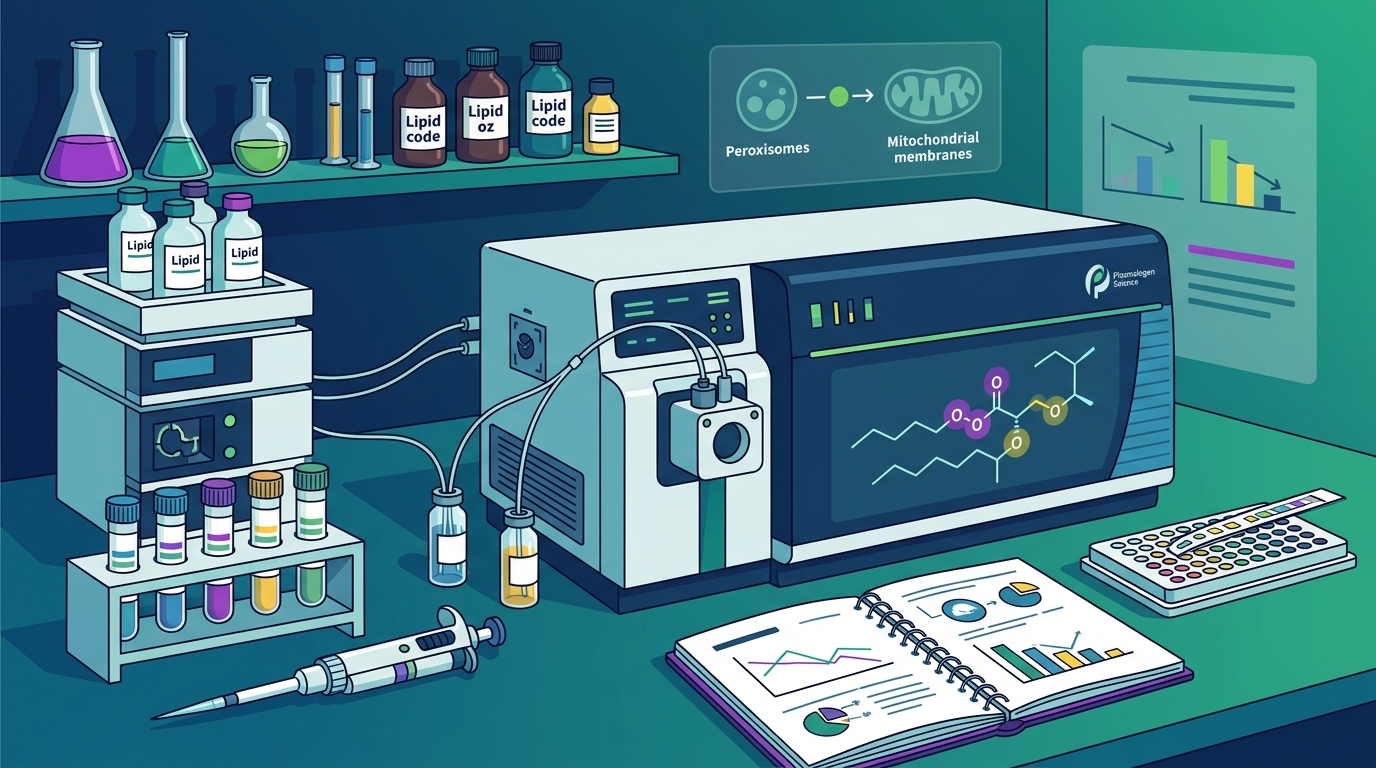
The gold standard for measuring plasmalogens is liquid chromatography-tandem mass spectrometry (LC-MS/MS). This method allows for the precise separation and identification of individual plasmalogen species, such as PE-P (ethanolamine plasmalogen) and PC-P (choline plasmalogen). These tools provide a detailed profile of lipid composition, revealing not just total levels but the specific ratios of different plasmalogen types.
Advanced health measurement is changing how health and longevity are understood by looking deeper than traditional symptoms. It examines patterns in metabolism, inflammation, and lipid biology. For more on this, read about the importance of advanced health measurements.
Non-Invasive Imaging Techniques
While blood tests provide systemic data, brain imaging offers localized insights. Magnetic Resonance Spectroscopy (MRS) can detect changes in brain metabolites that correlate with plasmalogen deficiency. Although it does not measure plasmalogens directly, it can identify the metabolic consequences of their absence, such as altered N-acetylaspartate (NAA) levels, which indicate neuronal health.
Key Biomarkers Indicating Plasmalogen Health
Identifying plasmalogen health involves looking at a constellation of biomarkers rather than a single number. These markers reflect the downstream effects of plasmalogen deficiency, including oxidative stress, inflammation, and membrane integrity issues.
1. Plasma Plasmalogen Concentrations
The most direct biomarker is the concentration of plasmalogens in the blood plasma. Specifically, the ratio of PE-P to total PE (phosphatidylethanolamine) is a critical indicator. A lower ratio suggests a higher risk for cognitive decline and cardiovascular issues. Research shows that individuals with Alzheimer's disease often have significantly lower plasma PE-P levels compared to healthy controls.
2. Oxidative Stress Markers
Because plasmalogens act as sacrificial antioxidants, their depletion leads to increased oxidative damage. Biomarkers such as F2-isoprostanes and malondialdehyde (MDA) can indicate the level of lipid peroxidation occurring in the body. Elevated levels of these markers suggest that plasmalogen reserves are insufficient to protect cell membranes.
3. Inflammatory Cytokines
Plasmalogen deficiency is closely linked to chronic inflammation. Elevated levels of pro-inflammatory cytokines, such as IL-6 and TNF-alpha, often accompany low plasmalogen levels. This creates a vicious cycle where inflammation further depletes plasmalogens, and low plasmalogens exacerbate inflammation. (Plasmalogen levels in)
4. Cognitive and Neurological Markers
In the context of brain health, biomarkers like amyloid-beta and tau proteins are often monitored. While not direct measures of plasmalogens, their accumulation is accelerated by plasmalogen deficiency. Understanding how cognitive and neurological systems are affected helps contextualize these biomarkers.
Clinical Implications of Low Levels
Low plasmalogen levels are not just a laboratory curiosity; they have profound clinical implications. They are associated with a wide range of conditions, from age-related cognitive decline to severe genetic disorders.
Neurodegenerative Diseases
Alzheimer's disease and other dementias are strongly linked to plasmalogen deficiency. The brain is rich in plasmalogens, and their loss compromises neuronal membrane integrity and synaptic function. This leads to impaired communication between neurons and eventual cell death. For details on how the synapse works, see how plasmalogen loss disrupts this critical process.
Cardiovascular Health
Plasmalogens are also abundant in heart tissue. Low levels are associated with increased risk of heart failure and arrhythmias. They play a key role in maintaining the electrical stability of cardiac cells. Monitoring plasmalogen levels can provide early warnings for cardiovascular stress.
Genetic Disorders
Severe plasmalogen deficiency is seen in peroxisomal biogenesis disorders, such as Zellweger syndrome. These conditions highlight the critical role of plasmalogens in development and early life function. In these cases, bones and muscle are affected due to the systemic nature of the deficiency.
Comparison of Testing Modalities
Choosing the right testing method depends on the clinical question and the level of detail required. Below is a comparison of the primary methods used to assess plasmalogen health.
| Testing Method | What It Measures | Pros | Cons |
|---|---|---|---|
| Plasma Lipidomics (LC-MS/MS) | Specific plasmalogen species (PE-P, PC-P) in blood | Highly precise, quantitative, identifies specific deficits | Expensive, requires specialized lab, not routine |
| Magnetic Resonance Spectroscopy (MRS) | Brain metabolite changes indicative of lipid stress | Non-invasive, provides brain-specific data | Indirect measure, limited availability, high cost |
| Oxidative Stress Panels | Markers like F2-isoprostanes and MDA | Widely available, indicates functional consequence | Does not measure plasmalogens directly, influenced by diet |
| Genetic Testing | Mutations in peroxisomal genes (PEX genes) | Identifies root cause in genetic disorders | Only relevant for inherited conditions, not age-related decline |
For more on plasmalogen measurement and biomarkers overview, explore how these methods integrate into a comprehensive health strategy.
Key Takeaways
- Plasmalogens are specialized ether phospholipids that serve as critical antioxidants in cell membranes, particularly in the brain and heart.
- Standard blood tests do not measure plasmalogens. Advanced lipidomics using mass spectrometry is required for accurate quantification.
- Low plasmalogen levels are linked to Alzheimer's disease. Research indicates a significant drop in brain plasmalogens in Alzheimer's patients compared to healthy controls.
- Oxidative stress markers like F2-isoprostanes can serve as indirect indicators of plasmalogen depletion.
- Plasmalogen deficiency affects multiple systems. It impacts cognitive function, cardiovascular health, and skeletal muscle integrity.
- Age-related decline is natural but modifiable. While levels drop with age, lifestyle and nutritional interventions can help support plasmalogen biosynthesis.
- Early detection is key. Monitoring plasmalogen levels can provide early warnings for neurodegenerative and cardiovascular risks before symptoms appear.
Frequently Asked Questions
How are plasmalogen levels measured in a clinical setting?
Plasmalogen levels are measured using advanced lipidomics techniques, specifically liquid chromatography-tandem mass spectrometry (LC-MS/MS). This method quantifies specific plasmalogen species in blood plasma, providing a detailed profile of lipid health that standard cholesterol panels cannot offer.
What biomarkers indicate low plasmalogen health?
Key biomarkers include low plasma PE-P (ethanolamine plasmalogen) concentrations, elevated oxidative stress markers like F2-isoprostanes, and increased inflammatory cytokines such as IL-6. These markers collectively indicate a breakdown in cellular defense and membrane integrity.
Can plasmalogen levels be tested without a blood draw?
While blood tests are the primary method, non-invasive imaging like Magnetic Resonance Spectroscopy (MRS) can assess brain metabolites that correlate with plasmalogen deficiency. However, MRS provides indirect data on brain health rather than direct plasmalogen quantification.
Why are plasmalogen levels important for brain health?
Plasmalogens are essential for maintaining the fluidity and integrity of neuronal cell membranes. They protect brain cells from oxidative damage and support synaptic function. Low levels are strongly associated with cognitive decline and neurodegenerative diseases like Alzheimer's.
What causes plasmalogen levels to drop?
Plasmalogen levels drop due to aging, genetic factors affecting peroxisomal function, chronic inflammation, and oxidative stress. The body's ability to synthesize plasmalogens in the peroxisomes diminishes over time, leading to a natural decline that can be exacerbated by lifestyle factors.
Are there treatments for low plasmalogen levels?
While direct plasmalogen supplementation is an area of active research, strategies to support the body's natural biosynthesis include providing essential nutrients like choline, ethanolamine, and omega-3 fatty acids. Addressing underlying inflammation and oxidative stress is also critical.
How does plasmalogen deficiency affect the heart?
The heart contains high levels of plasmalogens, which are vital for electrical stability and protection against oxidative stress. Low levels are associated with an increased risk of heart failure, arrhythmias, and cardiovascular disease. Monitoring plasmalogens and health can provide insights into cardiovascular resilience.
Take Action for Your Health
Understanding your plasmalogen levels is a powerful step toward proactive health management. By leveraging advanced measurement techniques and monitoring key biomarkers, you can gain insights into your cellular aging and neurological health that standard tests miss. Don't wait for symptoms to appear. Take control of your longevity today.
Contact Plasmalogen Science to learn more about advanced testing options and how to support your plasmalogen health through evidence-based strategies.