

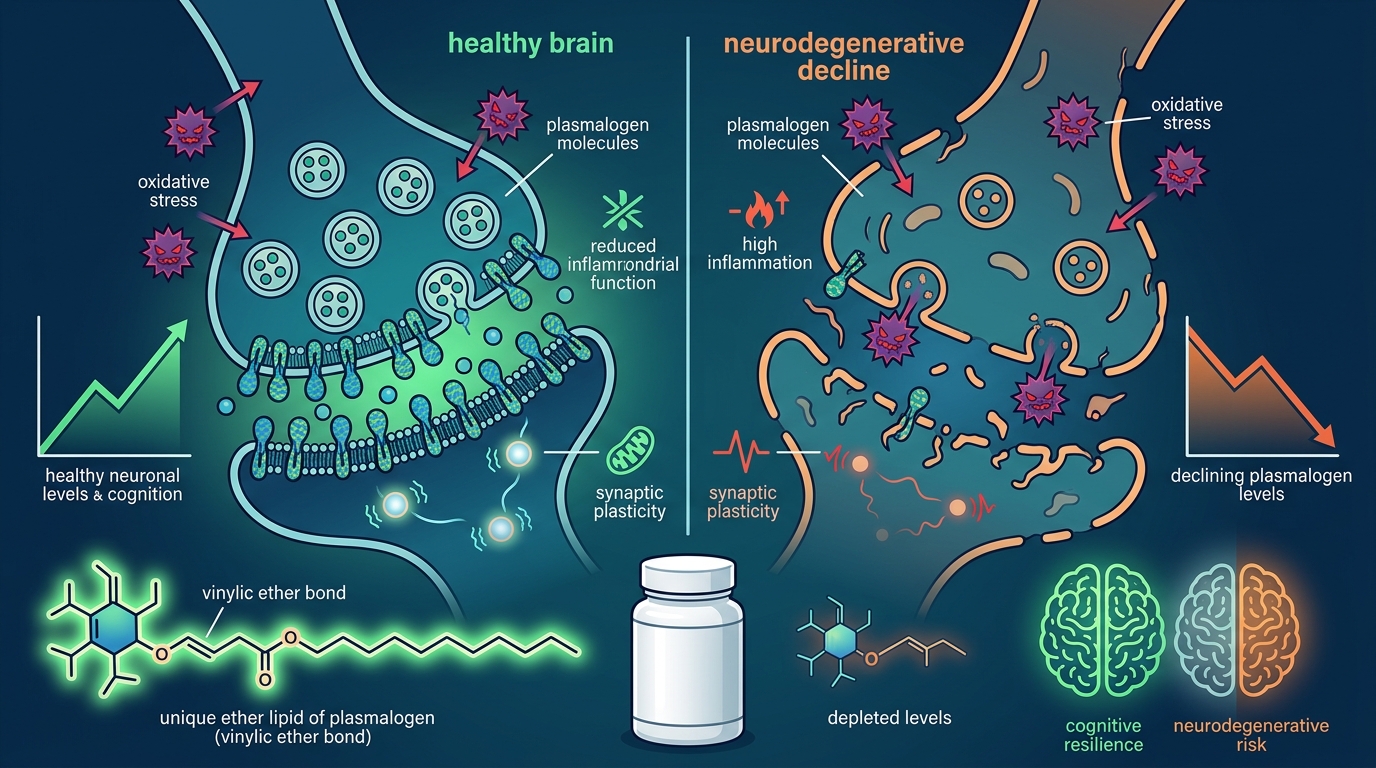
Plasmalogens are specialized ether phospholipids that serve as critical guardians of cellular integrity, particularly within the high-oxygen environment of the brain. Recent scientific inquiry has established a profound connection between declining plasmalogen levels and the progression of neurodegenerative conditions. Research indicates that these lipids are not merely structural components but active participants in protecting neurons from oxidative stress and maintaining synaptic plasticity. As the body ages, the natural biosynthesis of plasmalogens decreases, potentially leaving neural tissues vulnerable to the pathological processes that define diseases like Alzheimer's and Parkinson's. Understanding this link is essential for advancing our knowledge of brain health and longevity.
What Are Plasmalogens?
To understand the role of plasmalogens in neurodegeneration, one must first define the molecule itself. Plasmalogens are a unique class of ether phospholipids characterized by a vinyl-ether linkage at the sn-1 position of the glycerol backbone. This chemical structure is distinct from standard phospholipids found in most cell membranes, which typically have an ester linkage at this position. The vinyl-ether bond makes plasmalogens highly susceptible to oxidation, a property that paradoxically grants them their primary biological function.
These lipids are abundant in the heart, brain, and immune cells. In the brain, they are concentrated in the myelin sheaths that insulate nerve fibers and in the synaptic membranes where communication between neurons occurs. The body produces plasmalogens through a complex biosynthetic pathway that involves both the peroxisome and the endoplasmic reticulum. This process requires specific nutrients and functional organelles to proceed correctly. When this pathway is disrupted, either by genetic factors or age-related decline, the resulting deficit can impact cellular resilience.
For a deeper understanding of how the body naturally produces these vital lipids, you can explore the complete science of plasmalogen biosynthesis. This process highlights the intricate metabolic demands placed on the body to maintain adequate levels for brain health.
Synaptic Health and Neurotransmission
The brain is a network of billions of neurons communicating via synapses. A synapse is the communication site where one nerve cell passes information to another cell. Synapses are central to memory formation, learning, and cognitive processing. The efficiency of this communication depends heavily on the physical properties of the synaptic membrane, including its fluidity and integrity. Plasmalogens play a pivotal role in maintaining these properties.
When plasmalogen levels are optimal, synaptic membranes remain flexible, allowing neurotransmitter receptors to function correctly and signal transduction to occur efficiently. However, when plasmalogen levels drop, membranes can become rigid or unstable. This instability can impair the release of neurotransmitters like acetylcholine and dopamine, which are critical for memory and movement. Consequently, the brain's ability to adapt and form new connections, known as neuroplasticity, may be compromised.
The relationship between plasmalogens and synaptic function is detailed in the comprehensive guide on synapse function. This resource explains how lipid environments influence the speed and precision of neural signaling, providing context for why lipid deficits can lead to cognitive decline.
Oxidative Stress and Neuronal Protection
Neurons are particularly vulnerable to oxidative stress because they consume a significant amount of oxygen to generate energy, yet they have relatively low levels of antioxidant enzymes. Oxidative stress occurs when there is an imbalance between the production of reactive oxygen species (ROS) and the body's ability to neutralize them. This imbalance damages lipids, proteins, and DNA within the cell.
Plasmalogens act as a sacrificial antioxidant. Because of their vinyl-ether bond, they readily react with free radicals, neutralizing them before they can damage more critical cellular components like DNA or structural proteins. By taking the hit from oxidative attacks, plasmalogens protect the neuron's integrity. When plasmalogen levels are depleted, this protective shield weakens, leaving neurons exposed to cumulative damage that can lead to cell death or dysfunction.
Understanding the broader context of oxidative stress is crucial for longevity. The importance of advanced health measurements includes monitoring markers of oxidative stress and lipid peroxidation to assess cellular health before symptoms manifest.
The Alzheimer's Connection
Alzheimer's disease is characterized by the accumulation of amyloid-beta plaques and tau tangles in the brain. However, emerging research suggests that lipid metabolism dysfunction may be a primary driver of this pathology, rather than just a secondary effect. Studies have consistently shown that individuals with Alzheimer's disease have significantly lower levels of plasmalogens in their brains and cerebrospinal fluid compared to healthy controls.
The deficit in plasmalogens may contribute to Alzheimer's in several ways. First, the lack of antioxidant protection allows oxidative stress to accelerate the formation of amyloid plaques. Second, impaired membrane fluidity can disrupt the enzymes responsible for processing amyloid precursor protein, leading to the production of toxic amyloid-beta fragments. Third, the loss of plasmalogens can impair synaptic function, leading to the early cognitive symptoms associated with the disease.
Research into the metabolic system's role in plasmalogen-deficient diseases provides insight into these mechanisms. The impact on cognitive and neurological systems in plasmalogen deficiency highlights how lipid deficits directly correlate with neurodegeneration and cognitive impairment.
The Parkinson's Connection
Parkinson's disease is primarily known for the loss of dopamine-producing neurons in the substantia nigra. Like Alzheimer's, oxidative stress plays a major role in this neuronal death. Dopamine metabolism itself generates reactive oxygen species, creating a vicious cycle of damage in vulnerable brain regions.
Plasmalogens are critical in mitigating this specific type of oxidative stress. When plasmalogen levels are low, dopamine-producing neurons are less able to protect themselves from the byproducts of their own activity. This makes them more susceptible to degeneration. Additionally, plasmalogens are involved in the regulation of inflammation. Chronic neuroinflammation is a hallmark of Parkinson's disease, and plasmalogens help modulate the immune response in the brain to prevent excessive inflammation from damaging neural tissue.
The study of plasmalogens in animals offers comparative insights into how lipid support influences mobility, recovery, and cellular resilience across species, reinforcing the fundamental importance of these lipids in neurological health.
Measurement and Biomarkers
Traditionally, diagnosing neurodegenerative diseases has relied on clinical symptoms and imaging. However, advanced health measurement is changing how we understand these conditions. By measuring plasmalogen levels in blood or cerebrospinal fluid, researchers and clinicians can identify lipid deficits that may precede clinical symptoms. This allows for earlier intervention and a more precise understanding of disease progression.
Standard testing often misses these subtle lipid changes because it focuses on broad metabolic markers. Advanced lipidomics provides a detailed view of membrane health and oxidative stress status. This approach aligns with the principles of advanced health measurement, which seeks to reveal deeper biological patterns that standard labs overlook.
Key Takeaways
- Plasmalogens are specialized ether phospholipids that protect neurons from oxidative stress by acting as sacrificial antioxidants.
- Synaptic integrity depends on lipid composition, and low plasmalogen levels can impair neurotransmission and cognitive function.
- Alzheimer's disease is linked to plasmalogen deficits, which may accelerate amyloid plaque formation and synaptic loss.
- Parkinson's disease involves oxidative damage to dopamine neurons, a process that plasmalogens help mitigate.
- Biosynthesis declines with age, making older adults more vulnerable to neurodegenerative processes.
- Advanced lipidomics offers a more precise view of brain health than standard metabolic panels.
- Supporting plasmalogen levels through nutrition and lifestyle may be a key strategy for maintaining neurological resilience.
Frequently Asked Questions
What exactly are plasmalogens?
Plasmalogens are a unique class of ether phospholipids found in high concentrations in the brain and heart. They are characterized by a vinyl-ether bond that allows them to function as potent antioxidants and protect cell membranes from damage.
How do plasmalogens protect the brain?
They protect the brain by neutralizing free radicals before they can damage neuronal DNA and membranes. They also maintain the fluidity of synaptic membranes, which is essential for proper neurotransmitter function and cognitive processing.
Is there a direct link between plasmalogens and Alzheimer's?
Yes, research shows that individuals with Alzheimer's disease have significantly lower levels of plasmalogens in their brains. This deficit is thought to contribute to the accumulation of toxic amyloid plaques and the loss of synaptic function.
Can plasmalogen levels be measured in a blood test?
Yes, advanced lipidomics testing can measure plasmalogen levels in blood plasma. These levels often correlate with brain plasmalogen status and can serve as a biomarker for oxidative stress and neurological health.
Why do plasmalogen levels decrease with age?
Plasmalogen biosynthesis is a complex process that requires functional peroxisomes and specific nutrients. As the body ages, the efficiency of these metabolic pathways declines, leading to lower production and increased degradation of plasmalogens.
How does oxidative stress affect Parkinson's disease?
Parkinson's disease involves the death of dopamine-producing neurons, which are highly susceptible to oxidative stress. Plasmalogens help protect these neurons from the toxic byproducts of dopamine metabolism, and their depletion may accelerate disease progression.
What is the role of plasmalogens in myelin?
Plasmalogens are abundant in the myelin sheath, which insulates nerve fibers. They help maintain the structural integrity and electrical insulation of these fibers, ensuring fast and efficient signal transmission throughout the nervous system.
Explore Further Resources
Understanding the complex relationship between lipid biology and neurodegeneration is the first step toward proactive brain health. For more detailed information on how plasmalogens influence cellular energy, aging, and overall health, visit the Plasmalogen Science learning hub. Explore our comprehensive guides on what plasmalogens are and plasmalogens and health to deepen your knowledge of this critical biological system.