

Plasmalogens are specialized ether phospholipids that serve as critical structural components of cell membranes, particularly in the brain, heart, and immune cells. These unique molecules are not merely passive building blocks. They actively protect cells from oxidative damage, regulate inflammation, and support mitochondrial function. Understanding how the body produces plasmalogens and the specific nutrients required for this process is essential for maintaining cellular resilience and healthy aging. Recent research into lipid biology highlights the profound impact of plasmalogen levels on long-term health outcomes. (Contact Plasmalogen Science)
What Are Plasmalogens?
Plasmalogens are a distinct class of phospholipids characterized by a vinyl-ether bond at the sn-1 position of the glycerol backbone. This chemical structure is rare in nature and provides unique stability to cell membranes. Unlike standard phospholipids, plasmalogens can act as sacrificial antioxidants, absorbing free radicals to protect vital cellular components from oxidative stress. (How Bones amp Muscle)
Plasmalogens are found in high concentrations in the myelin sheath of nerve cells, where they support rapid signal transmission. They are also abundant in cardiac tissue, where they contribute to the structural integrity of heart muscle cells. The presence of these lipids is linked to robust immune function and efficient cellular communication.
As we age, the body's natural ability to produce plasmalogens declines. This reduction is associated with increased oxidative damage, mitochondrial dysfunction, and a higher risk of neurodegenerative conditions. Maintaining adequate plasmalogen levels is therefore a key factor in preserving healthspan and cognitive function.
The Biosynthesis Pathway
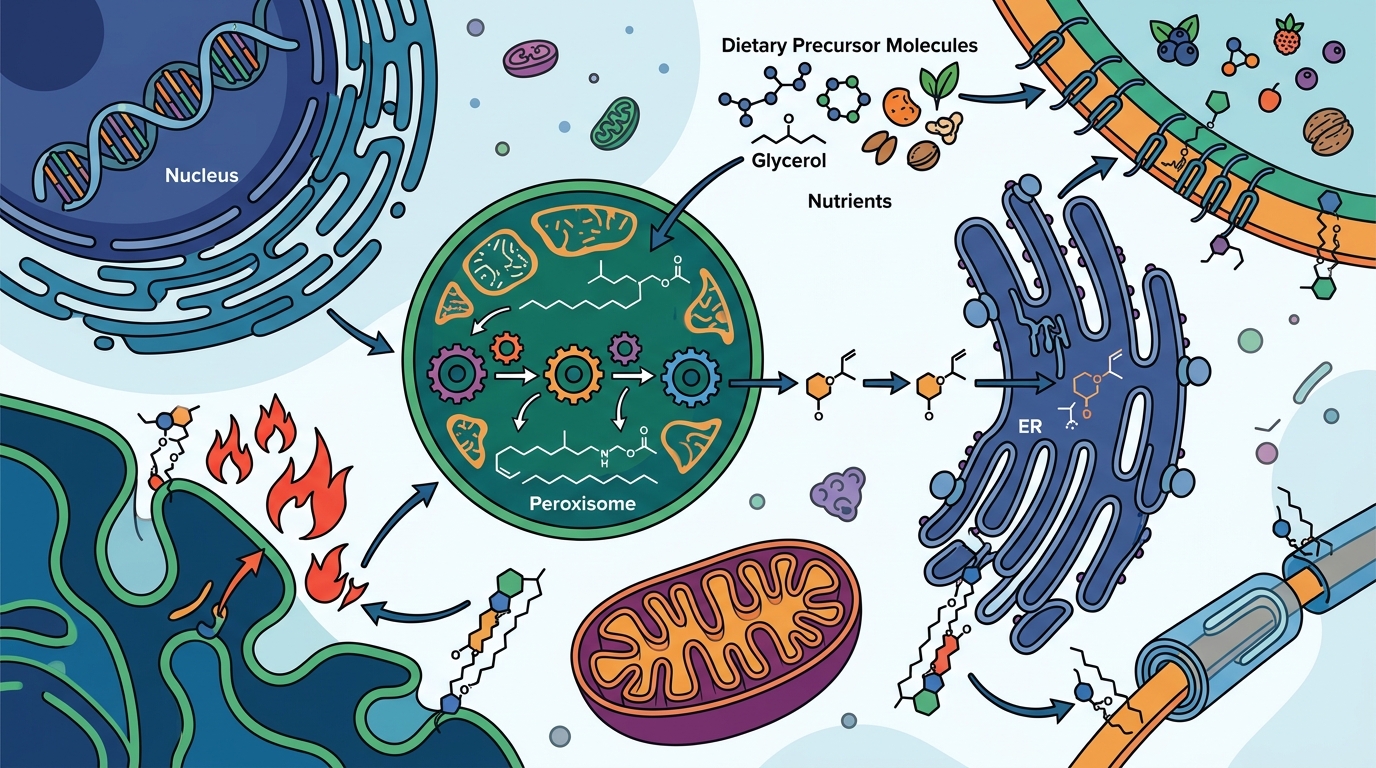
The production of plasmalogens is a complex, multi-step process that occurs primarily in the peroxisomes and the endoplasmic reticulum of cells. This pathway is highly regulated and requires several specific enzymes and cofactors to function correctly. Disruptions in any step of this pathway can lead to reduced plasmalogen levels and subsequent cellular stress.
Step 1: Peroxisomal Initiation
The process begins in the peroxisome, an organelle responsible for breaking down fatty acids and synthesizing ether lipids. The first critical step involves the conversion of dihydroxyacetone phosphate (DHAP) to alkyl-dihydroxyacetone phosphate (alkyl-DHAP). This reaction is catalyzed by the enzyme alkyl-DHAP synthase (ADHAPS).
This step requires the availability of pristanic acid, which is derived from the breakdown of branched-chain fatty acids. The efficiency of this initial step is crucial, as it determines the substrate available for subsequent modifications. Peroxisomal function is therefore a primary determinant of plasmalogen biosynthesis capacity.
Step 2: Transfer to the Endoplasmic Reticulum
Once the alkyl chain is established, the molecule is transferred to the endoplasmic reticulum (ER). Here, it undergoes further modification to form the final phospholipid structure. The ER is the site where the head group is attached and where the vinyl-ether bond is eventually formed.
This transfer process is mediated by specific transport proteins that ensure the lipid intermediates move efficiently between organelles. Any disruption in this transport can lead to the accumulation of toxic intermediates or a shortage of precursors for plasmalogen synthesis.
Step 3: Formation of the Vinyl-Ether Bond
The final and most distinctive step in plasmalogen biosynthesis is the formation of the vinyl-ether bond. This reaction is catalyzed by the enzyme desaturase 1 (FAD2 in yeast, or its mammalian equivalent). This step converts the diether precursor into the final plasmalogen structure.
The vinyl-ether bond is highly susceptible to oxidation, which is why plasmalogens are often found in tissues with high metabolic activity. The body must constantly replenish these lipids to maintain membrane integrity and function. This continuous turnover highlights the importance of adequate nutrient supply for sustained production.
Key Nutrients for Production
Because the body synthesizes plasmalogens from scratch, it relies on a steady supply of specific nutrients to fuel the biosynthetic pathway. Deficiencies in these nutrients can impair the body's ability to produce these critical lipids, leading to accelerated aging and cellular damage.
Choline and Phosphatidylethanolamine
Choline is an essential nutrient that serves as a precursor for phosphatidylethanolamine (PE), the primary head group for most plasmalogens. The body converts choline into PE through a series of enzymatic reactions. Without adequate choline intake, the availability of PE is limited, which can bottleneck plasmalogen synthesis.
Phosphatidylethanolamine is not just a structural component. It also plays a role in membrane curvature and fusion, which are essential for cellular processes like endocytosis and exocytosis. Ensuring sufficient choline intake through diet or supplementation is a practical way to support plasmalogen production.
Vitamin B12 and Folate
Vitamin B12 and folate are critical cofactors in the methylation cycle, which is involved in the remethylation of homocysteine to methionine. Methionine is then converted to S-adenosylmethionine (SAMe), the universal methyl donor required for the synthesis of the alkyl chain in plasmalogens.
Deficiencies in B12 or folate can disrupt this methylation process, leading to reduced alkyl chain production and, consequently, lower plasmalogen levels. This connection underscores the importance of B-vitamin status in lipid metabolism and cellular health.
Omega-3 Fatty Acids
Omega-3 fatty acids, particularly docosahexaenoic acid (DHA), are often incorporated into plasmalogens. DHA is a long-chain polyunsaturated fatty acid that enhances membrane fluidity and supports neuronal function. The body uses DHA to complete the sn-2 position of the plasmalogen molecule.
Research indicates that plasmalogens containing DHA are more effective at protecting cells from oxidative stress than those with other fatty acids. Therefore, maintaining adequate omega-3 intake is essential for optimizing the functional quality of plasmalogens.
Antioxidants
Since plasmalogens act as sacrificial antioxidants, they are constantly being consumed and must be replenished. Antioxidants like vitamins C and E help protect the vinyl-ether bond from premature oxidation, allowing plasmalogens to function more effectively. Supporting the body's antioxidant defenses can therefore indirectly support plasmalogen longevity.
Measurement & Testing
Assessing plasmalogen levels is becoming increasingly important in the field of advanced health measurement. Traditional lipid panels do not measure plasmalogens, so specialized testing is required to evaluate an individual's status.
Advanced lipidomics can quantify specific plasmalogen species in the blood, providing a detailed picture of membrane health. This data can reveal early signs of oxidative stress, inflammation, or metabolic dysfunction before they manifest as clinical symptoms.
Longitudinal tracking of plasmalogen levels can help individuals monitor the effectiveness of nutritional interventions and lifestyle changes. By understanding their baseline levels, individuals can make more informed decisions about their health and longevity strategies.
Health Implications
Low plasmalogen levels are associated with a variety of health conditions, including neurodegenerative diseases, cardiovascular disease, and immune dysfunction. In the brain, reduced plasmalogens are linked to impaired myelin integrity and cognitive decline.
In the heart, plasmalogen deficiency can lead to mitochondrial dysfunction and increased susceptibility to ischemic injury. In the immune system, low plasmalogen levels may impair the body's ability to regulate inflammation and respond to pathogens.
Supporting plasmalogen production through nutrition and lifestyle is a proactive approach to mitigating these risks. By focusing on the nutrients that fuel biosynthesis, individuals can help maintain cellular resilience and promote healthy aging.
Key Takeaways
- Plasmalogens are specialized ether phospholipids that protect cell membranes from oxidative damage.
- Biosynthesis occurs in the peroxisomes and endoplasmic reticulum, requiring specific enzymes and cofactors.
- Choline is a critical precursor for the phosphatidylethanolamine head group of plasmalogens.
- Vitamin B12 and folate are essential for the methylation cycle that produces alkyl chains.
- Omega-3 fatty acids like DHA are incorporated into plasmalogens to enhance membrane fluidity.
- Advanced lipidomics testing can measure plasmalogen levels to assess cellular health.
- Low plasmalogen levels are linked to neurodegenerative and cardiovascular diseases.
Frequently Asked Questions
What is the primary function of plasmalogens?
Plasmalogens are specialized ether phospholipids that serve as critical structural components of cell membranes, particularly in the brain, heart, and immune cells. They actively protect cells from oxidative damage and support mitochondrial function.
Where does plasmalogen biosynthesis begin?
The process begins in the peroxisome, where the enzyme alkyl-DHAP synthase converts dihydroxyacetone phosphate to alkyl-dihydroxyacetone phosphate. This is the first step in creating the unique alkyl chain of plasmalogens.
Why is choline important for plasmalogens?
Choline is an essential nutrient that serves as a precursor for phosphatidylethanolamine (PE), the primary head group for most plasmalogens. Without adequate choline, the availability of PE is limited, which can bottleneck plasmalogen synthesis.
How do vitamins B12 and folate support plasmalogen production?
Vitamin B12 and folate are critical cofactors in the methylation cycle. They help convert homocysteine to methionine, which is then used to produce the alkyl chains necessary for plasmalogen biosynthesis.
Can plasmalogen levels be measured?
Yes, advanced lipidomics testing can quantify specific plasmalogen species in the blood. This provides a detailed picture of membrane health and can reveal early signs of oxidative stress or metabolic dysfunction.
What happens when plasmalogen levels are low?
Low plasmalogen levels are associated with increased oxidative damage, mitochondrial dysfunction, and a higher risk of neurodegenerative conditions. They can also impair immune function and cardiovascular health.
How does aging affect plasmalogen production?
As we age, the body's natural ability to produce plasmalogens declines. This reduction is associated with increased oxidative damage and a higher risk of age-related diseases. Supporting production through nutrition is key.
What is the role of the vinyl-ether bond?
The vinyl-ether bond is a rare chemical structure that provides plasmalogens with unique antioxidant properties. It allows them to absorb free radicals and protect vital cellular components from oxidative stress.
Take Action for Your Cellular Health
Understanding how the body produces plasmalogens is the first step toward optimizing your long-term health. By focusing on the nutrients that support biosynthesis and monitoring your levels through advanced testing, you can take control of your cellular resilience. Explore our resources on advanced health measurements to learn more about assessing your biomarkers. Visit our home page to discover more about the science of plasmalogens and how they impact your health. Contact us today to discuss how we can support your journey to healthier aging.