

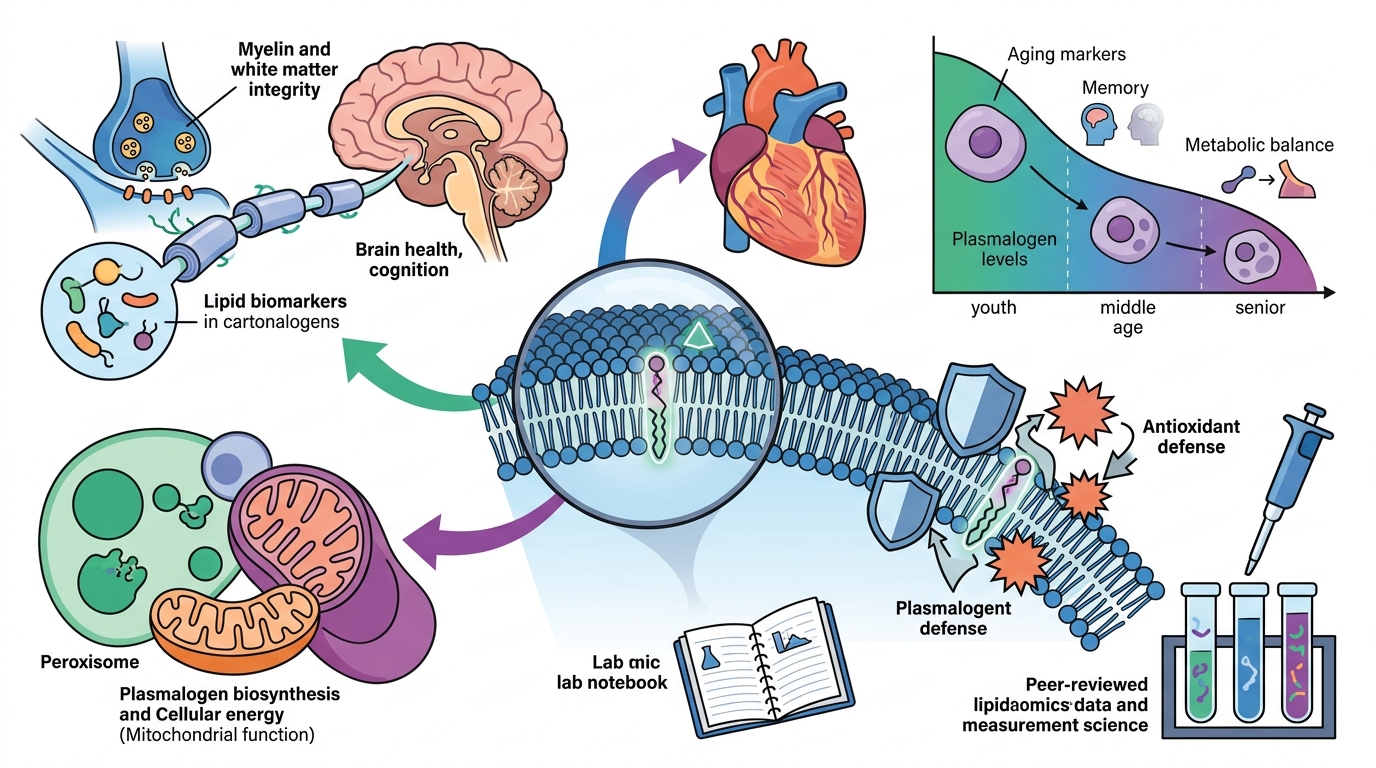
Plasmalogens are specialized ether phospholipids that serve as the primary antioxidant defense in cell membranes, particularly within the brain and heart. Research indicates that plasmalogen levels naturally decline with age, a process closely linked to neurodegenerative conditions and metabolic dysfunction. Understanding these unique lipids is essential for grasping how cellular integrity is maintained and why their depletion accelerates biological aging. (How Bones amp Muscle)
What Are Plasmalogens?
Plasmalogens are a distinct class of phospholipids characterized by a unique vinyl-ether bond at the sn-1 position of the glycerol backbone. This chemical structure distinguishes them from standard diacyl phospholipids found in most cell membranes. Plasmalogens are specialized ether phospholipids found in cell membranes throughout the body. They are especially abundant in tissues with high metabolic demands, such as the brain, heart, and skeletal muscle.
Unlike other lipids, plasmalogens play a dual role. They are structural components that maintain membrane fluidity and integrity. They also act as sacrificial antioxidants. The vinyl-ether bond is highly reactive to free radicals, allowing plasmalogens to neutralize oxidative stress before it damages critical cellular proteins and DNA. This protective mechanism is vital for longevity and cellular resilience.
The body produces plasmalogens through a complex biosynthetic pathway that occurs in both the peroxisomes and the endoplasmic reticulum. This process requires specific enzymes and cofactors, including vitamin B6, folate, and zinc. Disruptions in this pathway can lead to severe deficiencies, highlighting the importance of metabolic health in maintaining adequate plasmalogen levels.
How Plasmalogens Protect Cellular Integrity
Cell membranes are not static barriers. They are dynamic structures that regulate what enters and exits the cell. Cell membranes regulate nutrient transport, ion movement, hormone signaling, and cellular repair. Plasmalogens are integral to this regulation. They help form lipid rafts, specialized microdomains in the membrane that facilitate protein signaling and cellular communication.
When plasmalogen levels are optimal, cell membranes remain flexible and resistant to oxidative damage. This flexibility is crucial for nerve impulse transmission and muscle contraction. As plasmalogens are depleted, membranes can become rigid and leaky. This loss of integrity allows harmful substances to enter cells and essential nutrients to escape, leading to cellular dysfunction.
Furthermore, plasmalogens influence mitochondrial function. Mitochondria are the powerhouses of the cell, generating energy through oxidative phosphorylation. This process produces reactive oxygen species (ROS) as byproducts. Plasmalogens protect mitochondrial membranes from this self-inflicted oxidative stress, ensuring efficient energy production. Without this protection, mitochondrial efficiency declines, contributing to fatigue and metabolic disorders.
Plasmalogens and Brain Function
The brain is the most plasmalogen-rich organ in the body. Approximately 20% of the lipids in the brain are plasmalogens. This high concentration is necessary to support the brain's immense metabolic activity and susceptibility to oxidative stress. A synapse is the communication site where one nerve cell passes information to another cell. Plasmalogens are critical for the proper functioning of these synapses.
Research suggests that low plasmalogen levels are associated with cognitive decline and neurodegenerative diseases. In conditions like Alzheimer's disease, studies have shown significantly reduced plasmalogen concentrations in the brain. This depletion may impair synaptic plasticity, the brain's ability to form new connections and adapt to new information. Consequently, memory formation and learning capabilities are compromised.
Additionally, plasmalogens support the myelin sheath, the protective covering around nerve fibers. Myelin ensures that electrical signals travel quickly and efficiently throughout the nervous system. When plasmalogen levels drop, myelin integrity can be compromised, leading to slower nerve conduction and potential neurological deficits. This connection underscores the importance of plasmalogens in maintaining cognitive health and neurological resilience.
Cardiovascular Health and Plasmalogens
The heart is another organ heavily dependent on plasmalogens. Cardiac muscle cells require constant energy and protection from oxidative stress to function continuously. Plasmalogens help maintain the structural integrity of cardiac cell membranes, ensuring proper ion channel function and electrical signaling.
Studies have linked low plasmalogen levels to an increased risk of cardiovascular disease. Oxidative stress plays a key role in the development of atherosclerosis, the buildup of plaque in the arteries. By neutralizing free radicals, plasmalogens help prevent the oxidation of LDL cholesterol, a critical step in plaque formation. This protective effect helps maintain vascular health and blood flow.
Moreover, plasmalogens influence inflammation. Chronic inflammation is a major driver of heart disease. Plasmalogens help regulate inflammatory responses by modulating signaling pathways. When plasmalogen levels are adequate, the body can better manage inflammation, reducing the risk of tissue damage and promoting cardiovascular health.
Measuring Plasmalogen Levels
Traditional health screenings often do not include plasmalogen testing. However, advanced health measurement is changing how health and longevity are understood. Advanced health measurement looks deeper at patterns in metabolism, inflammation, and lipid biology. Measuring plasmalogen levels provides insight into cellular health and oxidative stress burden.
Plasmalogen measurement involves analyzing blood samples for specific lipid biomarkers. This testing can reveal early signs of metabolic dysfunction or oxidative stress before symptoms appear. It allows for proactive interventions, such as dietary changes or supplementation, to support plasmalogen production.
Understanding plasmalogen levels is part of a broader approach to healthspan. Healthspan refers to the years of life lived with strong function and independence. By monitoring and supporting plasmalogen levels, individuals can potentially slow the biological aging process and maintain vitality in later years.
Key Takeaways
- Definition: Plasmalogens are specialized ether phospholipids with a unique vinyl-ether bond that acts as a primary antioxidant in cell membranes.
- Brain Health: The brain contains high concentrations of plasmalogens, which are essential for synaptic function, myelin integrity, and cognitive resilience.
- Cardiovascular Role: Plasmalogens protect heart cells from oxidative stress and help prevent the oxidation of LDL cholesterol, supporting vascular health.
- Aging Connection: Plasmalogen levels naturally decline with age, a process linked to increased risk of neurodegenerative and metabolic diseases.
- Biosynthesis: The body produces plasmalogens in peroxisomes and the endoplasmic reticulum, requiring specific nutrients like vitamin B6 and zinc.
- Measurement: Advanced lipidomics testing can measure plasmalogen levels, providing early insights into cellular health and oxidative stress.
- Healthspan: Maintaining adequate plasmalogen levels is a key strategy for extending healthspan and maintaining cellular integrity.
Frequently Asked Questions
What is the primary function of plasmalogens?
Plasmalogens primarily function as antioxidants in cell membranes, protecting cells from oxidative damage. They also play a crucial role in maintaining membrane structure and facilitating cellular signaling.
Where are plasmalogens found in the body?
Plasmalogens are found in all cell membranes but are most abundant in the brain, heart, and skeletal muscle. These tissues have high metabolic demands and require significant antioxidant protection.
How do plasmalogen levels change with age?
Plasmalogen levels naturally decline as people age. This decline is associated with increased oxidative stress, inflammation, and a higher risk of age-related diseases such as Alzheimer's and cardiovascular disease.
Can plasmalogen levels be measured through blood tests?
Yes, plasmalogen levels can be measured through specialized blood tests that analyze lipid biomarkers. These tests are part of advanced health measurement and provide insights into cellular health.
What nutrients are needed for plasmalogen production?
The body requires specific nutrients for plasmalogen biosynthesis, including vitamin B6, folate, zinc, and choline. A diet rich in these nutrients supports the body's ability to produce plasmalogens.
Are plasmalogens important for heart health?
Yes, plasmalogens are critical for heart health. They protect cardiac cells from oxidative stress, support mitochondrial function, and help regulate inflammation, all of which are essential for cardiovascular health.
How do plasmalogens support brain function?
Plasmalogens support brain function by maintaining synaptic integrity, protecting myelin sheaths, and reducing oxidative stress in neural tissues. This support is vital for memory, learning, and cognitive resilience.
What is the difference between plasmalogens and other phospholipids?
Plasmalogens differ from other phospholipids by having a vinyl-ether bond at the sn-1 position. This unique structure gives them superior antioxidant properties and influences membrane fluidity and signaling differently than standard diacyl phospholipids.
Explore Advanced Health Insights
Understanding plasmalogens is the first step toward optimizing your healthspan. At Plasmalogen Science, we provide in-depth resources on lipid biology, cellular health, and advanced measurement techniques. Visit our homepage to explore our comprehensive guides on how plasmalogens influence aging, cellular energy, and neurological function. Learn about advanced health measurements to gain deeper insights into your biological age. Read about our project to understand our mission in advancing plasmalogen science. Contact us for more information on how to support your cellular health.