

Plasmalogens are specialized ether phospholipids that serve as critical structural and functional components of cell membranes, particularly in the brain and nervous system. These unique molecules are essential for maintaining membrane integrity, facilitating cellular signaling, and protecting neurons from oxidative stress. Recent scientific inquiry has highlighted a profound connection between declining plasmalogen levels and the progression of neurodegenerative conditions. As the brain ages, the ability to synthesize these vital lipids diminishes, potentially accelerating cellular damage and cognitive decline. Understanding this link is crucial for developing new strategies to support brain health and slow the onset of diseases like Alzheimer's and Parkinson's. (Contact Plasmalogen Science)
What Are Plasmalogens?
Plasmalogens are a specific class of phospholipids characterized by a unique vinyl-ether bond at the sn-1 position of the glycerol backbone. This chemical structure distinguishes them from other common lipids like phosphatidylcholine or phosphatidylethanolamine. Plasmalogens are specialized ether phospholipids found in cell membranes throughout the body. They are particularly abundant in the brain, heart, and skeletal muscle, tissues that have high metabolic demands and require robust membrane stability.
These molecules play a dual role in cellular health. First, they contribute to the physical structure of the cell membrane, influencing its fluidity and permeability. Second, they act as potent antioxidants. The vinyl-ether bond is highly susceptible to oxidation, meaning plasmalogens can sacrifice themselves to neutralize free radicals, thereby protecting other critical cellular components from damage. This antioxidant capacity is especially vital in the brain, which consumes a disproportionate amount of oxygen and is therefore highly vulnerable to oxidative stress.
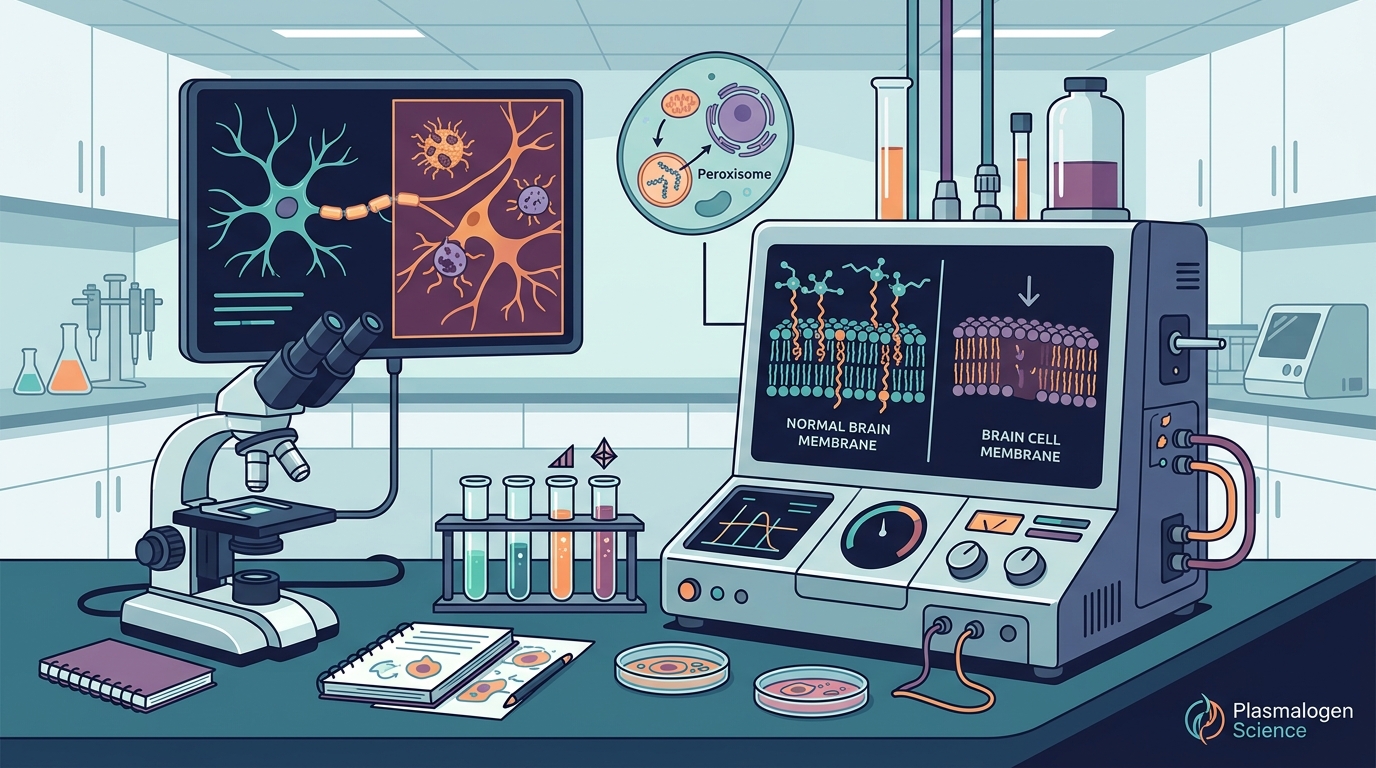
The biosynthesis of plasmalogens occurs primarily in peroxisomes, specialized organelles responsible for breaking down fatty acids and synthesizing ether lipids. Disruptions in peroxisomal function can lead to severe deficiencies in plasmalogen production, highlighting the importance of cellular machinery in maintaining adequate levels. As we age, the efficiency of these biosynthetic pathways declines, leading to a natural reduction in plasmalogen levels. This age-related decline is a key area of interest in longevity research.
Synaptic Function and Membrane Integrity
The brain is composed of billions of neurons that communicate via synapses. A synapse is the communication site where one nerve cell passes information to another cell. This communication relies on the precise release of neurotransmitters and the reception of these signals by receptor proteins embedded in the cell membrane. The integrity of these membranes is directly influenced by the lipid composition, including the presence of plasmalogens.
Plasmalogens are enriched in synaptic membranes, where they help maintain the optimal environment for neurotransmitter release and receptor function. They facilitate the clustering of proteins necessary for synaptic transmission and support the structural plasticity required for learning and memory. When plasmalogen levels are adequate, synapses function efficiently, allowing for clear cognitive processing and rapid neural responses.
However, when plasmalogen levels drop, the quality of the synaptic membrane can deteriorate. This degradation can lead to impaired neurotransmitter release, reduced receptor sensitivity, and increased vulnerability to excitotoxicity, a condition where nerve cells are damaged by excessive stimulation. The result is a decline in synaptic efficiency, which manifests as cognitive slowing, memory lapses, and reduced neural connectivity. Maintaining plasmalogen levels is therefore essential for preserving the structural and functional integrity of the nervous system.
The Alzheimer's Connection
Alzheimer's disease is the most common form of dementia, characterized by the accumulation of amyloid-beta plaques and tau tangles in the brain. However, recent research suggests that these pathological features may be secondary to earlier metabolic and lipid-related disruptions. Plasmalogens are specialized ether phospholipids found in cell membranes throughout the body. In the context of Alzheimer's, the decline of these lipids appears to be a significant contributing factor to disease progression.
Studies have shown that individuals with Alzheimer's disease have significantly lower levels of plasmalogens in their brains compared to healthy controls. This deficiency is not merely a consequence of the disease but may actively promote its development. Low plasmalogen levels can lead to increased oxidative stress, which damages neurons and exacerbates the formation of amyloid plaques. Furthermore, plasmalogens play a role in regulating the enzymes that process amyloid precursor protein. When plasmalogen levels are low, this regulation is disrupted, leading to the production of more toxic amyloid-beta fragments.
The link between plasmalogens and Alzheimer's is also tied to inflammation. Chronic neuroinflammation is a hallmark of the disease, and plasmalogens help modulate inflammatory responses. By neutralizing free radicals and supporting membrane stability, they reduce the activation of microglia, the brain's immune cells. When plasmalogen levels are insufficient, microglia become overactive, releasing inflammatory cytokines that further damage neurons. This creates a vicious cycle of inflammation and neuronal loss.
Additionally, plasmalogens are involved in the clearance of amyloid-beta from the brain. They facilitate the function of transport proteins that remove these toxic proteins. When plasmalogen levels are low, this clearance mechanism is impaired, allowing amyloid-beta to accumulate and form plaques. This suggests that maintaining adequate plasmalogen levels could be a critical strategy for preventing or slowing the progression of Alzheimer's disease.
The Parkinson's Connection
Parkinson's disease is a progressive neurodegenerative disorder that affects movement, primarily due to the loss of dopamine-producing neurons in the substantia nigra. Like Alzheimer's, Parkinson's is associated with oxidative stress and mitochondrial dysfunction. Plasmalogens are specialized ether phospholipids found in cell membranes throughout the body. Their role in protecting mitochondria and reducing oxidative stress is particularly relevant to Parkinson's pathology.
Dopamine neurons are especially vulnerable to oxidative damage because the metabolism of dopamine generates reactive oxygen species as byproducts. Plasmalogens act as a first line of defense, neutralizing these free radicals before they can damage the neuron. When plasmalogen levels are low, dopamine neurons are left exposed to oxidative stress, leading to mitochondrial dysfunction and eventual cell death. This loss of dopamine neurons is the primary cause of the motor symptoms associated with Parkinson's disease.
Research has also identified a link between plasmalogen deficiency and the aggregation of alpha-synuclein, a protein that forms Lewy bodies in the brains of Parkinson's patients. Low plasmalogen levels can alter the lipid environment of the cell membrane, promoting the misfolding and aggregation of alpha-synuclein. This aggregation disrupts cellular function and contributes to neuronal death. Therefore, plasmalogen deficiency may not only exacerbate oxidative stress but also directly influence the protein pathology of Parkinson's disease.
Furthermore, plasmalogens support the health of the myelin sheath, the protective covering of nerve fibers. In Parkinson's, the integrity of neural pathways is compromised, and plasmalogens help maintain the myelin structure. By supporting myelin health, plasmalogens ensure efficient signal transmission throughout the nervous system. A deficiency in plasmalogens can lead to demyelination, further impairing neural communication and contributing to the progression of the disease.
Measurement and Biomarkers
Understanding the link between plasmalogens and neurodegeneration requires accurate measurement of plasmalogen levels in the body. Advanced health measurement looks deeper. It examines patterns in metabolism, inflammation, cellular energy, lipid biology, oxidative stress, cardiovascular function, hormone signaling, nutrient status, immune activity, organ function, and biological aging. Traditional blood tests often do not include specific plasmalogen measurements, leaving a gap in our ability to assess brain lipid health.
Advanced lipidomics panels can quantify specific plasmalogen species, such as PE-P and PC-P plasmalogens, in blood plasma. These measurements provide insight into the body's ability to synthesize and maintain these critical lipids. Low levels of plasmalogens in the blood may reflect lower levels in the brain, serving as a potential biomarker for neurodegenerative risk. Monitoring these levels over time can help track the effectiveness of interventions aimed at boosting plasmalogen production.
It is important to note that plasmalogen levels are influenced by various factors, including age, genetics, diet, and lifestyle. Peroxisomal function is critical for plasmalogen synthesis, and any disruption in this pathway can lead to deficiency. Conditions that affect peroxisomal health, such as certain genetic disorders or chronic inflammation, can significantly impact plasmalogen levels. Therefore, a holistic approach to health is necessary to support plasmalogen biosynthesis.
Advancements in measurement technology are making it easier to assess plasmalogen status. By integrating plasmalogen testing into routine health assessments, individuals and healthcare providers can gain a more comprehensive view of brain health and neurodegenerative risk. This proactive approach allows for early intervention and personalized strategies to support lipid metabolism and neuronal protection.
Key Takeaways
- Plasmalogens are specialized ether phospholipids found in cell membranes throughout the body. They are essential for membrane integrity and antioxidant defense.
- A synapse is the communication site where one nerve cell passes information to another cell. Plasmalogens are enriched in synaptic membranes, supporting neurotransmitter function.
- Low plasmalogen levels are strongly associated with Alzheimer's disease, contributing to amyloid-beta accumulation and neuroinflammation.
- In Parkinson's disease, plasmalogen deficiency increases vulnerability to oxidative stress and alpha-synuclein aggregation in dopamine neurons.
- Advanced lipidomics testing can measure specific plasmalogen species, providing a biomarker for neurodegenerative risk.
- Peroxisomal function is critical for plasmalogen synthesis, and its decline with age contributes to lower plasmalogen levels.
- Maintaining adequate plasmalogen levels through lifestyle and potential supplementation may support brain health and slow neurodegeneration.
Frequently Asked Questions
What are plasmalogens and why are they important for the brain?
Plasmalogens are a unique class of phospholipids that make up a significant portion of brain cell membranes. They are important because they provide structural stability to membranes and act as powerful antioxidants, protecting neurons from oxidative damage. Their presence is crucial for proper synaptic function and neurotransmitter signaling.
How do plasmalogens relate to Alzheimer's disease?
Research indicates that individuals with Alzheimer's disease have lower levels of plasmalogens in their brains. This deficiency may contribute to the disease by increasing oxidative stress, promoting the formation of amyloid-beta plaques, and exacerbating neuroinflammation. Plasmalogens help regulate the enzymes involved in amyloid processing, and their absence disrupts this balance.
Can plasmalogen deficiency cause Parkinson's disease?
While plasmalogen deficiency does not directly cause Parkinson's disease, it is a significant contributing factor. Low levels of plasmalogens increase the vulnerability of dopamine neurons to oxidative stress and promote the aggregation of alpha-synuclein, both of which are key drivers of Parkinson's pathology. Supporting plasmalogen levels may help protect these neurons.
How are plasmalogens measured in the body?
Plasmalogens are measured through advanced lipidomics testing, which quantifies specific plasmalogen species in blood plasma. This testing is not part of standard routine blood work and requires specialized analysis. It provides insight into the body's lipid health and potential risk for neurodegenerative conditions.
What factors influence plasmalogen levels?
Plasmalogen levels are influenced by age, genetics, diet, and overall health. Synthesis occurs in peroxisomes, so peroxisomal function is critical. Chronic inflammation, oxidative stress, and certain genetic disorders can impair plasmalogen production. Lifestyle factors such as nutrition and stress management also play a role in maintaining healthy levels.
Can supplementing with plasmalogens help prevent neurodegeneration?
Current research is exploring the potential of plasmalogen supplementation to support brain health. While promising, more clinical trials are needed to establish definitive guidelines. Maintaining healthy plasmalogen levels through a balanced diet and lifestyle is currently the most recommended approach to support natural synthesis.
Where can I learn more about plasmalogen science?
You can explore detailed information about plasmalogen biology, their role in health, and the latest research by visiting the Plasmalogen Science website. The site offers comprehensive resources on how plasmalogens influence cellular function and aging.
Take the Next Step
Understanding the critical role of plasmalogens in brain health is the first step toward proactive neuroprotection. By recognizing the link between lipid biology and neurodegenerative conditions, you can make informed decisions about your health. To learn more about how plasmalogens support cognitive function and longevity, visit the Plasmalogen Science homepage. Explore our resources on advanced health measurements to discover how you can monitor your lipid health. For insights into cellular biology, read our guide on cell membranes explained. Stay informed and take control of your brain health today.