

What Are Plasmalogens and Why Are They Important for Human Health?
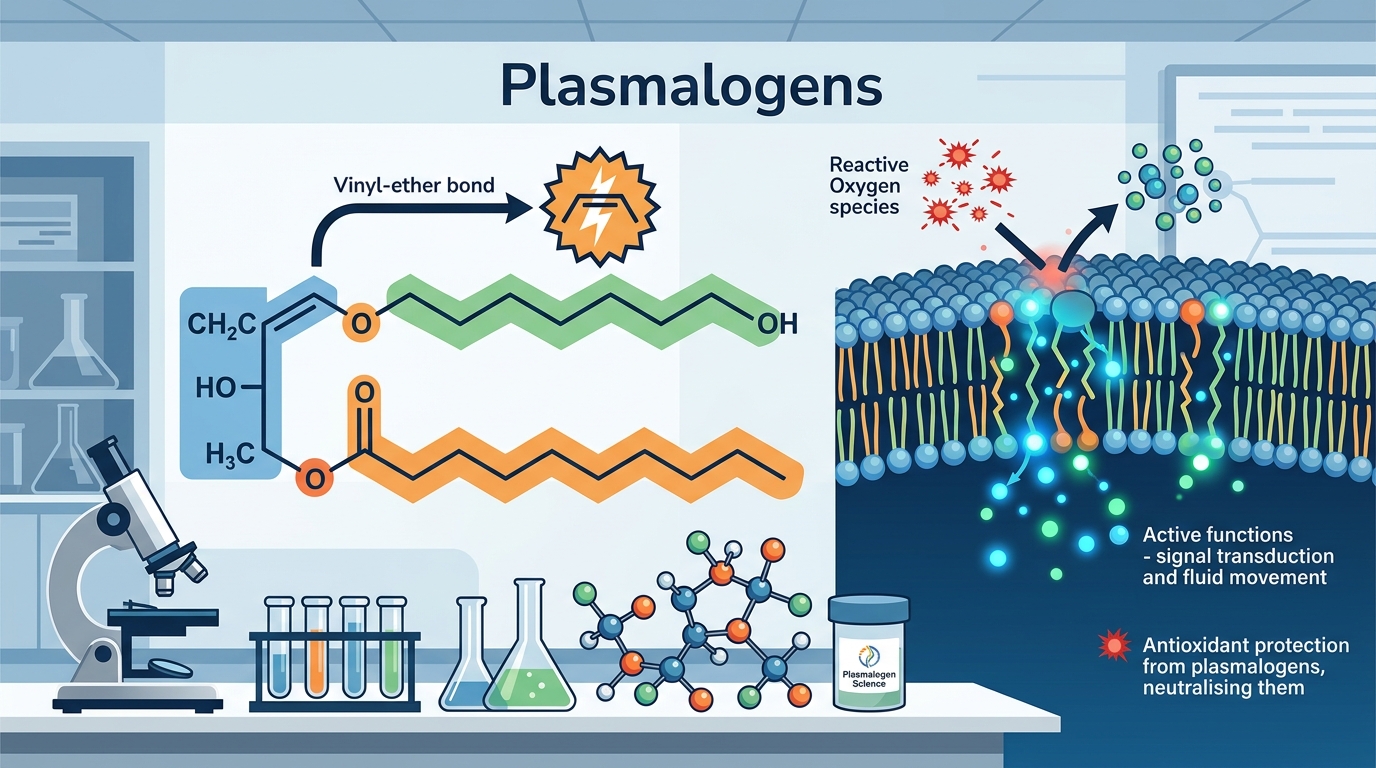
Plasmalogens are a specialized class of ether phospholipids that serve as critical structural components of cell membranes throughout the human body. Unlike standard phospholipids, plasmalogens contain a unique vinyl-ether bond at the sn-1 position, which provides distinct chemical properties essential for cellular resilience. These molecules are not merely passive building blocks; they actively participate in membrane fluidity, signal transduction, and protection against oxidative stress. Recent research into advanced health measurements highlights their role in longevity, suggesting that maintaining optimal plasmalogen levels is vital for preserving healthspan and preventing age-related decline.
What Are Plasmalogens?
To understand the importance of plasmalogens, we must first define their biological nature. Plasmalogens are a specialized class of ether phospholipids found in high concentrations in the brain, heart, and immune cells. They are synthesized in the peroxisomes, a cellular organelle responsible for breaking down fatty acids and building complex lipids. This synthesis process is unique because it requires oxygen and specific enzymes that are often compromised in aging or genetic disorders.
These molecules are distinct from other membrane lipids due to their vinyl-ether bond. This bond is highly reactive to oxidative stress, meaning plasmalogens often act as sacrificial antioxidants. They absorb free radicals and reactive oxygen species, protecting the more critical DNA and protein structures within the cell from damage. This protective mechanism is why they are increasingly studied in the context of aging and neurodegenerative diseases.
Research into what plasmalogens are reveals that they are not uniformly distributed. The brain contains some of the highest concentrations, particularly in the white matter and myelin sheaths that insulate nerve fibers. This distribution underscores their role in rapid neural communication and cognitive function. Without adequate plasmalogen levels, the structural integrity of these membranes can weaken, leading to impaired signaling and cellular dysfunction.
How Plasmalogens Work in the Body
Plasmalogens are not static; they are dynamic participants in cellular metabolism. Their primary function revolves around maintaining the physical and chemical environment of the cell membrane. Cell membranes are the protective barriers that regulate what enters and exits the cell, and plasmalogens ensure these barriers remain flexible and functional. This flexibility is crucial for processes like endocytosis, where cells ingest nutrients, and exocytosis, where they release signaling molecules.
One of the most critical roles of plasmalogens is in the formation and maintenance of myelin. Myelin is the fatty substance that coats nerve fibers, allowing electrical impulses to travel quickly and efficiently. How plasmalogens influence myelin structure is a key area of study, as deficiencies can lead to demyelination, which is associated with conditions like multiple sclerosis and other neurological disorders. The vinyl-ether bond in plasmalogens helps stabilize the myelin sheath against oxidative damage, ensuring long-term nerve health.
Beyond the nervous system, plasmalogens play a vital role in immune function. They are involved in the regulation of inflammation and the activation of immune cells. When the body encounters a pathogen, plasmalogens help modulate the immune response, preventing excessive inflammation that could damage healthy tissue. This balance is essential for maintaining homeostasis and preventing chronic inflammatory conditions.
Furthermore, plasmalogens are involved in cellular energy production. They interact with mitochondria, the powerhouses of the cell, to support efficient energy metabolism. Plasmalogens and health are closely linked because mitochondrial dysfunction is a hallmark of aging and many metabolic diseases. By supporting mitochondrial integrity, plasmalogens help ensure that cells have the energy they need to function properly.
Plasmalogens and Human Health
The importance of plasmalogens extends to nearly every system in the body. Their impact on cognitive health is particularly significant. As we age, plasmalogen levels naturally decline. This decline has been correlated with an increased risk of neurodegenerative diseases such as Alzheimer's and dementia. How plasmalogens influence aging suggests that maintaining these lipid levels could be a key strategy for preserving cognitive function in later years.
Cardiovascular health is another area where plasmalogens play a crucial role. They help protect heart muscle cells from oxidative stress and inflammation, which are major contributors to heart disease. Studies have shown that lower plasmalogen levels are associated with an increased risk of cardiovascular events. This connection highlights the importance of lipid biology in heart health and the potential for plasmalogen-based interventions in preventing heart disease.
Bone and muscle health are also affected by plasmalogen levels. How bones and muscle are affected in plasmalogen deficient diseases reveals that these tissues rely heavily on membrane integrity for growth, repair, and function. In severe plasmalogen deficiency disorders, skeletal abnormalities and muscle weakness are common symptoms. This underscores the broader systemic impact of plasmalogen biology beyond just the brain and heart.
Immune system regulation is another critical function. Plasmalogens help modulate the immune response, preventing both under-reaction and over-reaction. This balance is essential for fighting infections while avoiding autoimmune disorders. Plasmalogens and health research continues to uncover the complex ways in which these lipids support immune resilience.
Measuring Plasmalogen Levels
Understanding your plasmalogen status is becoming increasingly important in the field of advanced health measurement. Traditional blood tests often do not include plasmalogen levels, which means many people are unaware of their status until significant damage has occurred. Advanced health measurements are changing how we understand longevity by including specific lipid biomarkers that reveal early biological changes.
Measuring plasmalogens typically involves specialized lipidomics testing. This type of analysis can quantify the levels of different plasmalogen species in the blood, providing a detailed picture of your lipid health. Understanding plasmalogen levels allows for personalized interventions, such as dietary changes or supplementation, to restore optimal levels.
Longitudinal tracking is more powerful than one-time testing. By monitoring plasmalogen levels over time, individuals and healthcare providers can assess the effectiveness of interventions and detect early signs of decline. This proactive approach is essential for maintaining healthspan and preventing age-related diseases.
Signs of Low Plasmalogens
Recognizing the signs of low plasmalogens can help in early intervention. Symptoms may include cognitive decline, memory issues, fatigue, and increased susceptibility to infections. What happens when plasmalogen levels are low can vary depending on the individual and the severity of the deficiency, but the impact on cellular health is universal.
Genetic factors also play a role. Some individuals have genetic variations that affect plasmalogen synthesis, making them more susceptible to deficiency. Understanding these genetic risks is crucial for personalized health strategies. Signs of low plasmalogens should be evaluated in the context of overall health and family history.
Key Takeaways
- Plasmalogens are specialized ether phospholipids that protect cell membranes from oxidative stress.
- They are critical for myelin integrity and proper nerve function in the brain.
- Levels naturally decline with age, contributing to neurodegenerative and cardiovascular diseases.
- Advanced lipidomics testing is required to accurately measure plasmalogen status.
- Plasmalogens support immune regulation and mitochondrial energy production.
- Bone and muscle health are dependent on adequate plasmalogen levels for repair and function.
- Proactive monitoring of plasmalogen levels can help preserve healthspan and cognitive function.
Frequently Asked Questions
What exactly are plasmalogens?
Plasmalogens are a unique type of phospholipid found in cell membranes, characterized by a vinyl-ether bond that provides antioxidant protection and structural stability.
Why are plasmalogens important for brain health?
Plasmalogens are highly concentrated in the brain and are essential for maintaining the myelin sheath, which insulates nerve fibers and ensures rapid signal transmission.
How do plasmalogen levels change with age?
Plasmalogen levels naturally decline as we age, which is associated with increased oxidative stress, inflammation, and a higher risk of age-related diseases.
Can I test my plasmalogen levels?
Yes, specialized lipidomics testing can measure plasmalogen levels in the blood, providing insights into your cellular health and oxidative stress status.
What are the signs of low plasmalogen levels?
Signs may include cognitive decline, memory issues, fatigue, weakened immune function, and increased susceptibility to chronic inflammation.
How do plasmalogens support immune function?
Plasmalogens help modulate the immune response, preventing excessive inflammation and supporting the activation of immune cells during infection.
Are plasmalogens only found in the brain?
No, plasmalogens are found in many tissues, including the heart, liver, and immune cells, where they play vital roles in cellular protection and function.
Can lifestyle changes affect plasmalogen levels?
Yes, diet, exercise, and stress management can influence plasmalogen synthesis and levels, highlighting the importance of a holistic approach to health.
Take Action for Your Health
Understanding and optimizing your plasmalogen levels is a powerful step toward preserving your healthspan and cognitive vitality. At Plasmalogen Science, we are dedicated to providing the latest research and insights into this critical area of lipid biology. Contact us today to learn more about advanced health measurements and how you can take control of your long-term health.