

Plasmalogens are specialized ether phospholipids that serve as critical structural components of cell membranes, particularly in the brain, heart, and immune cells. These unique molecules are not merely passive building blocks; they act as primary antioxidants, protecting cellular integrity from oxidative damage. Research indicates that plasmalogen levels naturally decline with age, a process linked to increased vulnerability in neurodegenerative and metabolic conditions. Understanding the biological mechanisms behind their production and the nutritional cofactors required for their synthesis is essential for anyone focused on longevity and cellular health.
What Are Plasmalogens?
Plasmalogens are a distinct class of phospholipids characterized by a vinyl-ether linkage at the sn-1 position of the glycerol backbone. This chemical structure is rare in nature and provides unique functional properties that standard phospholipids lack. Plasmalogens are specialized ether phospholipids found in cell membranes throughout the body. They are especially important in tissues with high structural, metabolic, and signaling demands.
Unlike other lipids, plasmalogens can trap free radicals in their vinyl-ether bond, sacrificing themselves to protect the polyunsaturated fatty acids in the sn-2 position. This makes them vital for preventing lipid peroxidation, a chain reaction that damages cell membranes and contributes to aging. The body produces plasmalogens through a complex, multi-step process that occurs primarily in the peroxisomes and the endoplasmic reticulum. This process requires precise coordination of enzymes and specific nutrient cofactors.
The Biosynthesis Pathway
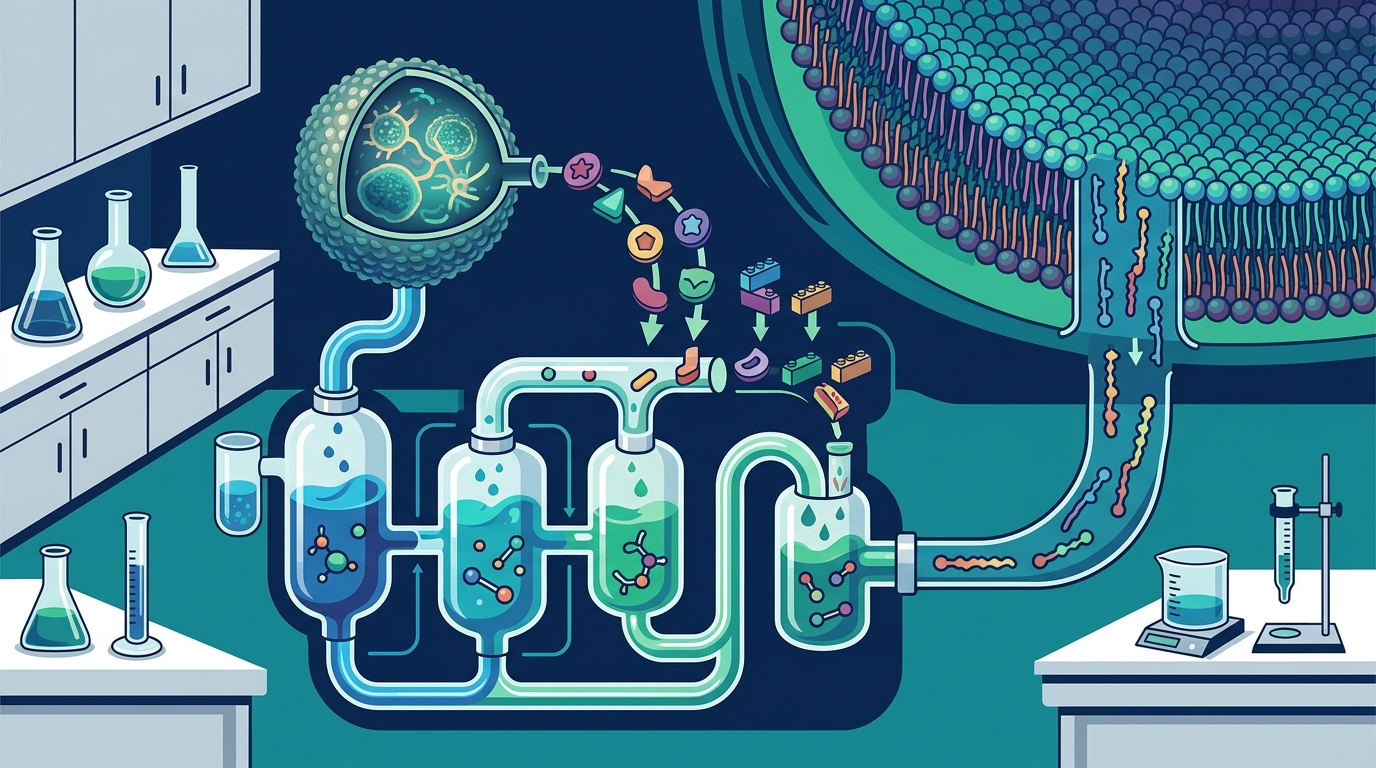
The production of plasmalogens is a sophisticated biological operation that begins with the synthesis of plasmalogen precursors. This process is tightly regulated and depends heavily on the health of the peroxisomes, which are organelles responsible for breaking down very long-chain fatty acids and synthesizing ether lipids.
Step 1: Peroxisomal Initiation
The first critical step occurs within the peroxisome. An enzyme called dihydroxyacetone phosphate acyltransferase (DHAPAT) catalyzes the attachment of a fatty acid to dihydroxyacetone phosphate. This is followed by the action of alkyl-DHAP synthase, which replaces the fatty acid with a long-chain fatty alcohol. This creates an alkyl-dihydroxyacetone phosphate intermediate. This step is unique to ether lipid biosynthesis and does not occur in the synthesis of standard phospholipids. If peroxisomal function is impaired, this initial step fails, leading to a complete halt in plasmalogen production.
Step 2: Transfer to the Endoplasmic Reticulum
Once the alkyl-DHAP intermediate is formed, it is transported from the peroxisome to the endoplasmic reticulum (ER). The ER is the site where the final modifications take place. Here, the alkyl chain is shortened, and a second fatty acid is attached to the sn-2 position of the glycerol backbone. This creates an alkyl-lysophosphatidic acid.
Step 3: Formation of the Vinyl-Ether Bond
The final and most defining step is the desaturation of the alkyl chain to form the vinyl-ether bond. This reaction is catalyzed by the enzyme alkyl-DHAP reductase. The resulting molecule is now a plasmalogen precursor. It is then further processed and incorporated into cell membranes, where it performs its protective and signaling functions. This entire pathway highlights why plasmalogens are often called "the body's first line of defense" against oxidative stress.
Nutrients That Support Production
While the body has the genetic blueprint to produce plasmalogens, the process requires specific nutrients to function efficiently. Deficiencies in these cofactors can bottleneck the biosynthesis pathway, leading to lower plasmalogen levels even if the enzymatic machinery is intact. Supporting this pathway involves providing the raw materials and enzymatic helpers necessary for peroxisomal and ER function.
Essential Cofactors
B Vitamins: The B vitamin complex, particularly B12 (cobalamin) and folate (B9), plays a crucial role in methylation processes. Methylation is required for the remethylation of homocysteine to methionine, which is then converted to S-adenosylmethionine (SAMe). SAMe is the universal methyl donor required for the synthesis of phosphatidylethanolamine, a key precursor in the plasmalogen pathway. Without adequate B12 and folate, methylation stalls, and plasmalogen synthesis is compromised.
Omega-3 Fatty Acids: Docosahexaenoic acid (DHA) is a primary component of the sn-2 position in brain plasmalogens. Adequate intake of omega-3s ensures that the final plasmalogen molecules have the correct fatty acid composition to support membrane fluidity and neural communication. Omega-3s also help reduce inflammation, creating a more favorable environment for peroxisomal function.
Antioxidants: Since plasmalogens act as sacrificial antioxidants, their production is driven by oxidative stress. However, excessive oxidative stress can overwhelm the system. Antioxidants like Vitamin E, Vitamin C, and glutathione help regulate the oxidative environment, ensuring that plasmalogens are produced efficiently without being destroyed before they can be utilized. Glutathione, in particular, is critical for peroxisomal health and the detoxification of reactive oxygen species.
Dietary Sources
To support natural production, a diet rich in whole foods is essential. Organ meats, particularly liver and heart, are among the richest dietary sources of preformed plasmalogens and the cofactors needed for their synthesis. Eggs, especially the yolks, provide choline and DHA. Plant-based sources include walnuts, flaxseeds, and leafy greens, which offer folate and other supportive micronutrients. However, dietary plasmalogens alone are often insufficient to replenish depleted levels, making the optimization of the body's internal production machinery the primary goal.
Measurement & Testing
Understanding plasmalogen status requires advanced health measurement techniques. Traditional lipid panels do not measure plasmalogens. Instead, specialized tests such as plasma plasmalogen levels or erythrocyte plasmalogen analysis are used. These tests can reveal early signs of metabolic dysfunction, oxidative stress, and accelerated biological aging before clinical symptoms appear.
Advanced health measurement looks deeper than standard markers. It examines patterns in metabolism, inflammation, cellular energy, lipid biology, and oxidative stress. By tracking plasmalogen levels over time, individuals can assess the effectiveness of their nutritional and lifestyle interventions. Longitudinal tracking is more powerful than one-time testing because it reveals trends in cellular resilience and adaptability.
Health Implications of Deficiency
Low plasmalogen levels are associated with a wide range of health issues, from cognitive decline to cardiovascular disease. In the brain, plasmalogens are critical for myelin sheath integrity and synaptic function. A deficiency can lead to impaired neurotransmission, memory loss, and increased risk of neurodegenerative diseases like Alzheimer's. In the heart, plasmalogen deficiency is linked to arrhythmias and reduced cardiac function. In the immune system, low levels can result in chronic inflammation and reduced ability to fight infections.
Furthermore, plasmalogens play a role in bone and muscle health. Bones and muscles are deeply affected in certain plasmalogen deficient diseases because the skeletal and muscular systems depend on membrane biology, lipid metabolism, energy production, tissue development, and cellular repair. Maintaining healthy plasmalogen levels is therefore essential for overall physical resilience and mobility.
Key Takeaways
- Peroxisomal Health is Critical: The initial steps of plasmalogen synthesis occur in the peroxisomes. Impaired peroxisomal function directly halts production.
- Methylation Matters: Adequate B12 and folate are required for the methylation cycles that support phosphatidylethanolamine synthesis, a key precursor.
- Antioxidant Protection: Plasmalogens act as sacrificial antioxidants. Supporting their production requires a balanced antioxidant network including Vitamins E, C, and glutathione.
- Dietary Sources: Organ meats and eggs are the best dietary sources of preformed plasmalogens and essential cofactors like choline and DHA.
- Advanced Testing: Standard lipid panels do not detect plasmalogen levels. Specialized testing is required to assess status and track changes over time.
- Aging and Decline: Plasmalogen levels naturally decline with age, contributing to increased oxidative stress and cellular vulnerability.
- Systemic Impact: Deficiency affects not just the brain, but also the heart, immune system, bones, and muscles.
Frequently Asked Questions
What exactly is a plasmalogen?
A plasmalogen is a specialized ether phospholipid found in cell membranes, characterized by a unique vinyl-ether linkage that provides antioxidant protection.
Where in the cell are plasmalogens produced?
Plasmalogen biosynthesis begins in the peroxisomes and is completed in the endoplasmic reticulum.
Can I get plasmalogens from food?
Yes, organ meats like liver and heart, as well as eggs, contain preformed plasmalogens, but dietary intake alone may not be sufficient to replenish depleted levels.
How do B vitamins support plasmalogen production?
B vitamins, particularly B12 and folate, support methylation processes required to create the precursors needed for plasmalogen synthesis.
What happens if plasmalogen levels are low?
Low levels are associated with increased oxidative stress, cognitive decline, cardiovascular issues, and reduced immune function.
How are plasmalogen levels measured?
They are measured through specialized blood tests that analyze plasma or erythrocyte plasmalogen levels, not through standard lipid panels.
Do plasmalogens affect bone and muscle health?
Yes, bones and muscles depend on membrane biology and lipid metabolism, which are supported by healthy plasmalogen levels.
Can lifestyle changes increase plasmalogen levels?
Yes, optimizing nutrition, reducing oxidative stress, and supporting peroxisomal health through lifestyle interventions can help maintain or improve levels.
Take Action
Understanding how the body produces plasmalogens is the first step toward optimizing your cellular health. By supporting the nutrients and pathways involved in their synthesis, you can help protect your brain, heart, and immune system from age-related decline. If you are interested in learning more about plasmalogen science and advanced health measurements, we invite you to explore our resources.
Visit Plasmalogen Science to discover more about the latest research on plasmalogens and how they impact your longevity. You can also learn more about advanced health measurements to track your progress. For a deeper dive into the science, check out our guide on what plasmalogens are and how they work in the body. To stay informed, read our latest articles on plasmalogens and health and plasmalogen levels.
Contact us at Plasmalogen Science to discuss your health goals and learn how we can help you optimize your cellular resilience.