

Plasmalogens are specialized ether phospholipids that serve as critical structural components of cell membranes, particularly in the brain, heart, and immune cells. These unique molecules are essential for maintaining membrane fluidity, protecting against oxidative stress, and facilitating cellular signaling. Without adequate plasmalogen levels, cellular integrity and function can decline, leading to accelerated aging and increased susceptibility to neurodegenerative conditions. Understanding the biosynthesis pathway and the specific nutrients required to support it is vital for anyone interested in longevity and cellular health.
What Are Plasmalogens?
Plasmalogens are a rare class of phospholipids characterized by a vinyl-ether linkage at the sn-1 position of the glycerol backbone. This unique chemical structure distinguishes them from other phospholipids like phosphatidylcholine or phosphatidylethanolamine. Plasmalogens are essential for membrane integrity and antioxidant defense. They are found in high concentrations in the myelin sheath of nerve cells, the heart muscle, and the immune system.
These molecules play a dual role. First, they provide structural stability to cell membranes, ensuring they remain fluid and functional across varying temperatures and conditions. Second, they act as sacrificial antioxidants, absorbing free radicals to protect more critical cellular components from damage. This makes them indispensable for long-term cellular health and resilience.
For a deeper understanding of their role in cellular structure, explore Cell Membranes Explained on our site. Additionally, research into Brain Synapse Function highlights how plasmalogens support neural communication and cognitive function.
The Biosynthesis Pathway
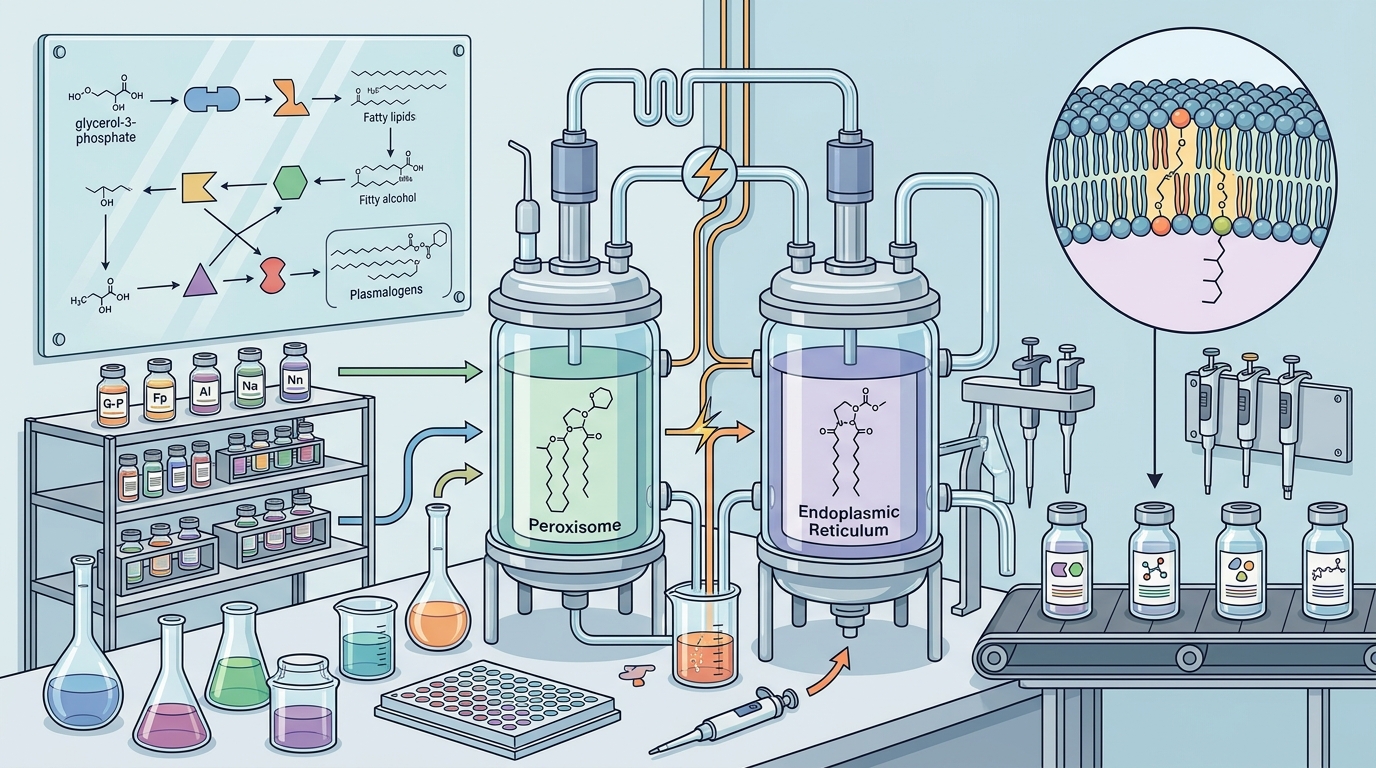
The production of plasmalogens is a complex, multi-step process that occurs primarily in the peroxisomes and the endoplasmic reticulum of cells. This pathway is highly regulated and requires several specific enzymes and cofactors to proceed efficiently.
Step 1: Peroxisomal Initiation
The process begins in the peroxisome, an organelle responsible for breaking down fatty acids and synthesizing ether lipids. The first critical step involves the enzyme alkyl-dihydroxyacetone phosphate synthase (ALKH3DH). This enzyme converts dihydroxyacetone phosphate (DHAP) into 1-O-alkyl-dihydroxyacetone phosphate (1-O-alkyl-DHAP). This step requires NADPH as a cofactor, linking plasmalogen synthesis directly to the cell's redox state.
Peroxisomal function is crucial for this initial stage. If peroxisomal activity is impaired, the entire plasmalogen biosynthesis pathway can be compromised. For more details on peroxisomal disorders, see How Bones & Muscle are Affected in Plasmalogen Deficient Diseases.
Step 2: Elongation and Transfer
Once 1-O-alkyl-DHAP is formed, it is transferred to the endoplasmic reticulum. Here, the alkyl chain is elongated or modified before being converted into 1-O-alkyl-1,2-diacyl-sn-glycero-3-phosphate (alkyl-DHAP). This intermediate is then reduced to 1-O-alkyl-1,2-diacyl-sn-glycero-3-phosphoethanolamine (alkyl-PE) or phosphocholine.
Step 3: Desaturation to Plasmalogen
The final and defining step is the desaturation of the alkyl chain at the sn-1 position. This reaction is catalyzed by the enzyme desaturase 1 (DES1). It introduces a double bond, creating the vinyl-ether linkage that characterizes plasmalogens. This step is highly sensitive to oxidative stress and requires adequate levels of specific nutrients to proceed effectively.
Understanding the complete science of this biosynthesis is detailed in our guide, How the Body Produces Plasmalogens: The Complete Science of Biosynthesis.
Key Nutrients for Production
While the body can produce plasmalogens endogenously, this capacity declines with age. Supporting the biosynthesis pathway through targeted nutrition is essential for maintaining optimal levels. Several key nutrients play direct roles in this process.
Choline
Choline is a precursor for phosphatidylcholine, which is required for the final step of plasmalogen synthesis. The body converts phosphatidylethanolamine to phosphatidylcholine using choline. Adequate choline intake ensures that the substrate for plasmalogen formation is available. Dietary sources include eggs, liver, and cruciferous vegetables.
Vitamin B12 and Folate
Vitamin B12 and folate are critical for methylation processes. Methylation is required to convert homocysteine to methionine, which is then converted to S-adenosylmethionine (SAMe). SAMe is the primary methyl donor for the synthesis of phosphatidylcholine from phosphatidylethanolamine. Without sufficient B12 and folate, methylation is impaired, reducing plasmalogen production.
Omega-3 Fatty Acids
Omega-3 fatty acids, particularly DHA and EPA, are incorporated into the sn-2 position of plasmalogens. These fatty acids influence membrane fluidity and reduce inflammation. They also support the function of peroxisomes, where the initial steps of plasmalogen synthesis occur. A deficiency in omega-3s can lead to less functional plasmalogens.
Antioxidants (Vitamin E, Vitamin C, Glutathione)
Since plasmalogen synthesis involves oxidative steps and the vinyl-ether linkage is susceptible to oxidation, adequate antioxidant status is vital. Antioxidants protect the enzymes involved in biosynthesis and prevent the degradation of newly formed plasmalogens. Glutathione, the body's master antioxidant, is particularly important for maintaining the reducing environment needed for peroxisomal function.
For more on the role of antioxidants in longevity, read The Importance of Advanced Health Measurements in Health and Longevity.
Measurement & Testing
Monitoring plasmalogen levels can provide insight into cellular health and aging. Traditional blood tests do not measure plasmalogens directly. Advanced lipidomics testing is required to quantify specific plasmalogen species in the blood.
Low plasmalogen levels have been associated with various age-related conditions, including cognitive decline and cardiovascular disease. Regular monitoring can help identify individuals who may benefit from targeted nutritional interventions or lifestyle changes.
Learn more about Plasmalogen Measurement & Biomarkers Overview to understand how these tests work and what they reveal about your health.
Health Implications
Plasmalogen deficiency is linked to several health issues. In the brain, low plasmalogen levels are associated with Alzheimer's disease and other neurodegenerative conditions. Plasmalogens protect neurons from oxidative damage and support synaptic function. When levels drop, cognitive decline may accelerate.
In the heart, plasmalogens are crucial for maintaining the structural integrity of cardiac cell membranes. Deficiency has been linked to heart failure and arrhythmias. In the immune system, plasmalogens help regulate inflammation and support immune cell function. Low levels may contribute to chronic inflammation and increased susceptibility to infections.
For details on how plasmalogens influence aging, see How Plasmalogens Influence Aging. Additionally, How Plasmalogens Influence Cellular Energy explains their role in mitochondrial function.
Key Takeaways
- Plasmalogens are specialized ether phospholipids essential for membrane integrity and antioxidant defense.
- Biosynthesis begins in the peroxisome with the enzyme ALKH3DH and concludes in the endoplasmic reticulum with DES1.
- Choline, Vitamin B12, folate, and omega-3 fatty acids are critical nutrients for supporting plasmalogen production.
- Plasmalogen levels decline with age, contributing to cognitive and cardiovascular health issues.
- Advanced lipidomics testing is required to measure plasmalogen levels accurately.
- Antioxidants protect plasmalogens from oxidative degradation and support biosynthetic enzymes.
- Supporting plasmalogen health is a key strategy for promoting longevity and cellular resilience.
Frequently Asked Questions
What are plasmalogens?
Plasmalogens are a rare class of phospholipids characterized by a vinyl-ether linkage at the sn-1 position of the glycerol backbone. They are essential for membrane integrity and antioxidant defense.
Where are plasmalogens produced in the body?
Plasmalogen biosynthesis begins in the peroxisome and is completed in the endoplasmic reticulum. This process requires specific enzymes and cofactors.
What nutrients support plasmalogen production?
Key nutrients include choline, Vitamin B12, folate, omega-3 fatty acids, and antioxidants like Vitamin E and glutathione.
Why do plasmalogen levels decline with age?
Plasmalogen levels decline due to reduced peroxisomal function, decreased enzyme activity, and increased oxidative stress. This decline is associated with various age-related health issues.
How can I measure my plasmalogen levels?
Plasmalogen levels can be measured through advanced lipidomics testing, which quantifies specific plasmalogen species in the blood.
What are the health implications of low plasmalogen levels?
Low plasmalogen levels are associated with cognitive decline, cardiovascular disease, and immune dysfunction. They contribute to oxidative stress and membrane instability.
Can plasmalogen supplementation help?
While direct plasmalogen supplementation is an emerging area of research, supporting the body's natural production through nutrition and lifestyle is currently the primary approach.
How do plasmalogens affect brain health?
Plasmalogens are abundant in the brain and are crucial for synaptic function, myelin integrity, and protection against oxidative damage. Low levels are linked to neurodegenerative diseases.
Contact Plasmalogen Science
Understanding and supporting your plasmalogen health is a powerful step toward longevity. If you have questions about plasmalogen biosynthesis, nutrition, or testing, our team is here to help. Visit our Contact page to learn more about how we can assist you in your health journey.