

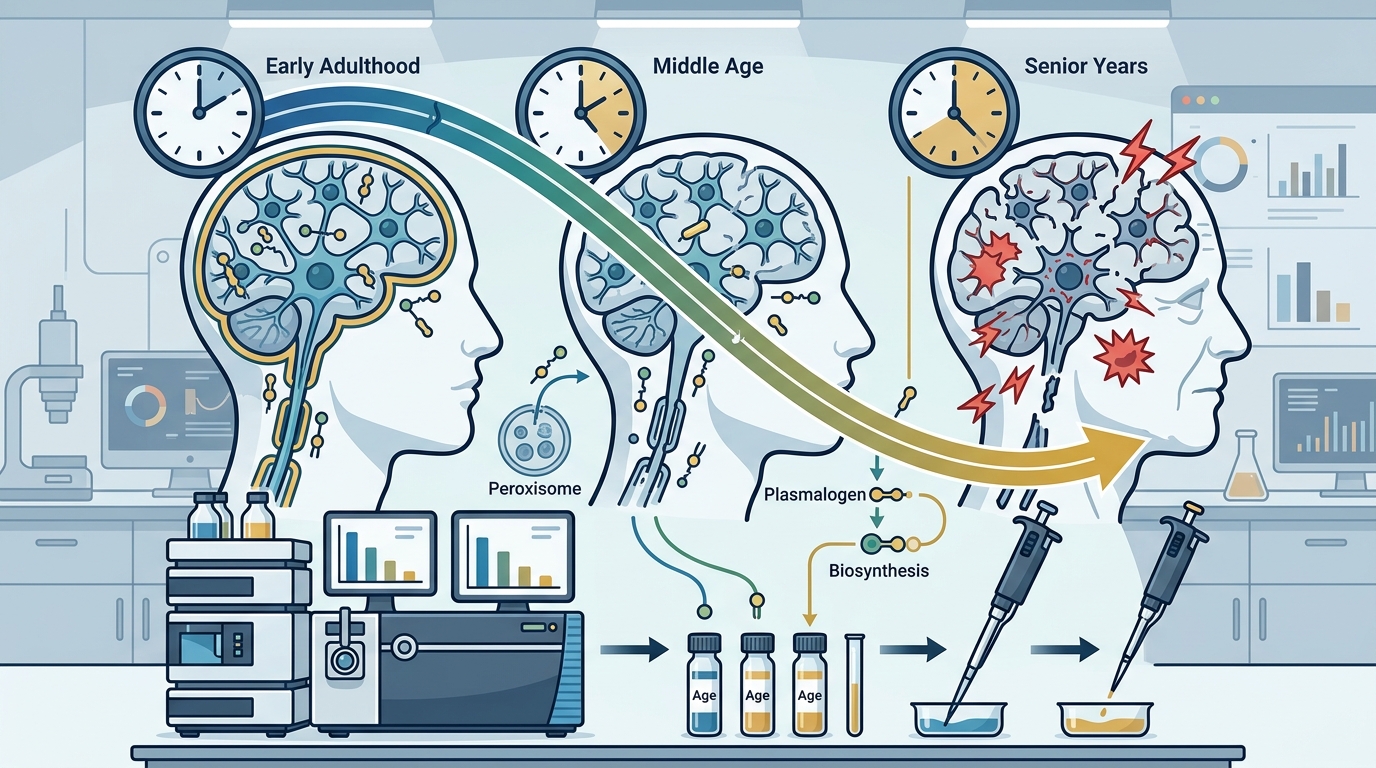
Plasmalogen levels naturally decline as the body ages, a biological shift that significantly impacts cellular resilience and neurological health. Research indicates that this decrease begins in early adulthood and accelerates during later decades, creating a direct link between lipid metabolism and the aging process. Understanding this trajectory is essential for anyone interested in longevity, cognitive preservation, and cellular repair. This guide explores the science behind plasmalogen biosynthesis, the specific markers of decline, and how advanced measurement can reveal these hidden changes before they manifest as disease. (Plasmalogens and Chronic) (About This Project Plasmalogen)
What Are Plasmalogens?
Plasmalogens are a unique class of ether phospholipids found in high concentrations within cell membranes throughout the body. Plasmalogens are specialized lipids that protect cells from oxidative stress and support membrane fluidity. Unlike standard phospholipids, they contain a vinyl ether bond at the sn-1 position, which gives them distinct chemical properties. This structure allows them to act as sacrificial antioxidants, absorbing free radicals to protect vital cellular components like DNA and mitochondria. (Plasmalogens and Chronic)
These molecules are critical for the proper function of the brain, heart, and immune system. They are not merely structural components but active participants in cellular signaling and energy production. When plasmalogen levels are optimal, cells can communicate effectively and repair damage efficiently. As we age, the body's ability to maintain these levels diminishes, leading to a cascade of biological changes.
The Connection Between Aging and Plasmalogen Decline
The decline of plasmalogen levels is one of the most consistent findings in aging research. This is not a sudden drop but a gradual erosion that mirrors the progression of many age-related conditions. Plasmalogen deficiency is strongly associated with accelerated biological aging and increased oxidative stress.
Early Onset of Decline
Studies suggest that plasmalogen levels may begin to decrease in early adulthood, long before any symptoms of aging appear. This early decline is often driven by a reduction in the enzymes responsible for their synthesis. The body's metabolic efficiency drops, and the peroxisomes, which are essential for creating the ether bonds in plasmalogens, become less effective.
Accelerated Decline in Later Years
As individuals move into their 50s, 60s, and beyond, the rate of decline often accelerates. This is particularly evident in the brain, where plasmalogen levels are highest. The loss of these lipids compromises the integrity of neuronal membranes, making them more susceptible to damage from inflammation and oxidative stress. This process is a key factor in the development of cognitive decline and neurodegenerative diseases.
Systemic Impact
The decline is not limited to the brain. Plasmalogen levels in the heart, liver, and muscles also drop with age. This systemic reduction affects energy production, muscle repair, and immune response. Plasmalogen levels are a critical biomarker for overall cellular health and longevity.
How the Body Produces Plasmalogens
Understanding how the body produces plasmalogens is key to understanding why levels drop with age. The process is complex and requires multiple organelles to work in coordination. Plasmalogen biosynthesis is a multi-step process involving the peroxisome and the endoplasmic reticulum.
The Role of Peroxisomes
Peroxisomes are small organelles that handle the initial steps of plasmalogen creation. They are responsible for synthesizing the ether bond, which is the defining feature of plasmalogens. This step is highly sensitive to genetic and environmental factors. If peroxisomal function is impaired, the entire production line is halted.
Enzymatic Efficiency
Several enzymes are required to complete the synthesis. As we age, the expression and activity of these enzymes can decrease. This is often due to changes in gene expression, nutrient availability, and cellular stress. The body may still have the raw materials, but the machinery to assemble them becomes less efficient.
Genetic Factors
Some individuals are born with genetic variations that affect plasmalogen production. These variations can lead to lower baseline levels or a faster rate of decline. While genetics play a role, lifestyle factors such as diet, stress, and exposure to toxins can significantly influence how quickly these levels drop.
Measurement & Testing for Plasmalogen Levels
Traditional blood tests do not measure plasmalogen levels. This is a significant gap in standard healthcare, as these levels are a powerful indicator of cellular health. Advanced health measurement techniques are required to assess plasmalogen status accurately.
Advanced Lipidomics
Lipidomics is the large-scale study of lipids within cells and organisms. It allows for the precise quantification of different lipid classes, including plasmalogens. This method provides a detailed profile of membrane health and oxidative stress.
Biomarkers of Oxidative Stress
Since plasmalogens act as antioxidants, their breakdown products can serve as biomarkers for oxidative stress. Measuring these byproducts can provide indirect evidence of plasmalogen depletion and cellular damage.
Longitudinal Tracking
One-time testing provides a snapshot, but tracking levels over time is more informative. Longitudinal data can reveal the rate of decline and help assess the effectiveness of interventions. Regular monitoring of plasmalogen levels is essential for proactive health management.
Health Implications of Low Plasmalogen Levels
The decline of plasmalogen levels is not just a number on a lab report. It has profound implications for health and disease. Low levels are associated with a wide range of conditions, from cognitive decline to cardiovascular disease.
Cognitive and Neurological Health
The brain is particularly vulnerable to plasmalogen deficiency. Low levels are linked to Alzheimer's disease, dementia, and general cognitive decline. Plasmalogens are crucial for synaptic function and memory formation. When they are depleted, neural communication becomes less efficient.
Cardiovascular Health
Plasmalogens are also abundant in the heart. Low levels are associated with increased risk of heart disease and stroke. They help protect heart cells from oxidative damage and support healthy inflammation responses.
Muscle and Bone Health
As we age, muscle mass and bone density naturally decrease. Plasmalogen deficiency can accelerate this process by impairing cellular repair and energy production in muscle and bone tissues. This leads to reduced mobility and increased risk of fractures.
Immune Function
Plasmalogens play a role in regulating the immune system. Low levels can lead to chronic inflammation and a weakened immune response, making the body more susceptible to infections and autoimmune conditions.
Key Takeaways
- Plasmalogen levels decline with age: This is a natural biological process that begins in early adulthood and accelerates over time.
- Peroxisomal function is critical: The peroxisome is essential for plasmalogen synthesis, and its efficiency drops with age.
- Advanced testing is required: Standard blood panels do not measure plasmalogen levels; lipidomics is needed for accurate assessment.
- Link to cognitive decline: Low plasmalogen levels are strongly associated with Alzheimer's disease and dementia.
- Oxidative stress marker: Plasmalogens act as sacrificial antioxidants, protecting cells from damage.
- Systemic impact: The decline affects the heart, muscles, bones, and immune system, not just the brain.
- Proactive management: Monitoring levels and supporting peroxisomal health can help mitigate the effects of aging.
Frequently Asked Questions
What are plasmalogens?
Plasmalogens are a unique class of ether phospholipids found in cell membranes that protect against oxidative stress and support cellular communication.
Why do plasmalogen levels decrease with age?
Levels decrease due to reduced enzymatic activity, impaired peroxisomal function, and changes in gene expression that affect the body's ability to synthesize these lipids.
Can plasmalogen levels be measured in a standard blood test?
No, standard blood tests do not measure plasmalogen levels. Advanced lipidomics testing is required to quantify them accurately.
Are plasmalogens important for brain health?
Yes, plasmalogens are highly concentrated in the brain and are essential for synaptic function, memory, and protecting neurons from oxidative damage.
What happens when plasmalogen levels are low?
Low levels are associated with increased oxidative stress, inflammation, cognitive decline, cardiovascular issues, and reduced muscle and bone health.
How does the body produce plasmalogens?
The body produces plasmalogens through a complex process involving the peroxisome and the endoplasmic reticulum, requiring specific enzymes and nutrients.
Is plasmalogen deficiency a disease?
Severe plasmalogen deficiency can be a genetic disorder, but age-related decline is a common biological process that contributes to various health issues.
Contact Us
Understanding your plasmalogen levels is a powerful step toward proactive health management. If you have questions about advanced health measurements or want to learn more about the science of longevity, we are here to help. Contact Plasmalogen Science today to schedule a consultation and explore how we can support your journey to better health.