

Plasmalogen levels decline significantly as the human body ages, a biological shift that directly impacts cellular resilience and neurological health. Research indicates that this depletion begins in early adulthood and accelerates during later decades, creating a measurable gap between chronological age and biological function. Understanding this trajectory is critical for anyone interested in longevity, cognitive preservation, and cellular repair.
What Are Plasmalogens?
To understand how levels change with age, we must first define the molecule itself. Plasmalogens are specialized ether phospholipids found in high concentrations in cell membranes, particularly in the brain, heart, and immune cells. Unlike standard phospholipids, they possess a unique vinyl-ether bond at the sn-1 position, which grants them distinct chemical properties.
This structure is not accidental. It serves as a sacrificial antioxidant, protecting the rest of the cell membrane from oxidative damage. When plasmalogens are abundant, cells can withstand higher levels of oxidative stress. As these levels drop, the cell becomes vulnerable to lipid peroxidation, a key driver of aging and disease.
For a deeper look at their fundamental structure, explore our guide on What Are Plasmalogens.
The Aging Trajectory of Plasmalogen Biosynthesis
The decline of plasmalogens is not a sudden event but a gradual erosion of biological capacity. This process is tied to the efficiency of peroxisomes, the cellular organelles responsible for initiating plasmalogen synthesis.
Early Adulthood: The Peak
In early adulthood, the body maintains robust plasmalogen production. The vinyl-ether bond is efficiently formed, and the turnover rate keeps membrane integrity high. During this phase, the body’s antioxidant defenses are at their peak, allowing for rapid recovery from physical and metabolic stress.
Mid-Life: The Onset of Decline
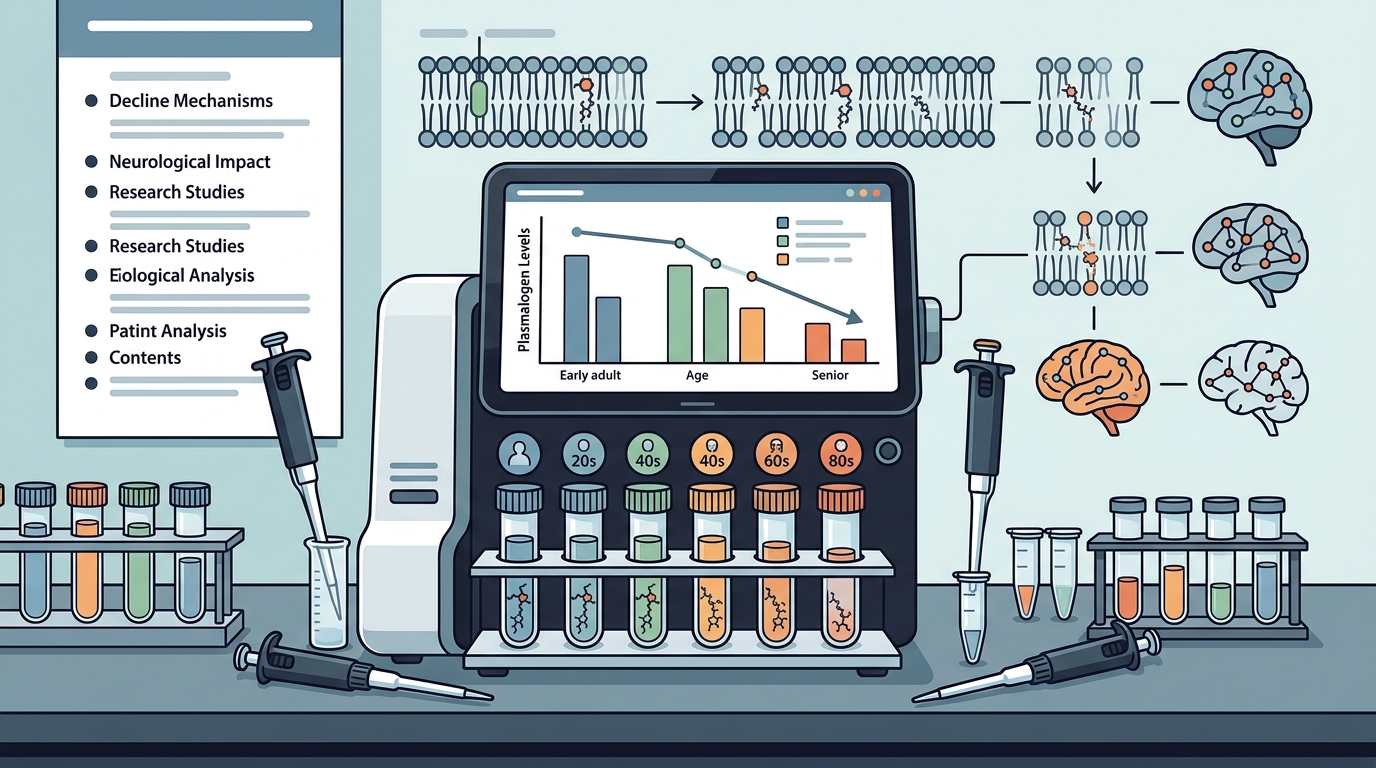
As individuals move into their 40s and 50s, peroxisomal function begins to wane. Studies suggest that plasmalogen synthesis rates decrease, leading to a gradual reduction in circulating levels. This decline is often subtle, masked by the body’s remaining compensatory mechanisms. However, the foundation for age-related issues is being laid during this period.
According to data on advanced health measurements, early detection of lipid changes can reveal biological aging before clinical symptoms appear.
Late Life: Accelerated Depletion
In later decades, the decline accelerates. The combination of reduced synthesis and increased oxidative consumption creates a significant deficit. This is not merely a number on a lab report. It represents a loss of cellular resilience. The brain, which relies heavily on plasmalogens for synaptic function, becomes particularly susceptible to neurodegenerative processes.
For more on the biological mechanisms, read How the Body Produces Plasmalogens.
Cell Membranes and Structural Integrity
Plasmalogens are not just floating molecules. They are structural components of the cell membrane. Their presence influences membrane fluidity, protein function, and signal transduction.
Maintaining Fluidity
As we age, cell membranes tend to become more rigid. This rigidity impairs nutrient transport and waste removal. Plasmalogens help maintain optimal fluidity, ensuring that cells can communicate effectively with their environment. When plasmalogen levels drop, membranes stiffen, leading to reduced cellular efficiency.
Protection Against Oxidative Stress
The vinyl-ether bond in plasmalogens acts as a "sacrificial" target for free radicals. It absorbs oxidative damage that would otherwise destroy the polyunsaturated fatty acids in the membrane. With lower plasmalogen levels, the membrane itself becomes the target of oxidation, leading to inflammation and cellular dysfunction.
Learn more about Cell Membranes Explained to understand this protective mechanism.
Cognitive and Neurological Implications
The brain is the most plasmalogen-rich organ in the body. It requires these lipids for myelin sheath formation, synaptic plasticity, and neurotransmitter function. The age-related decline in plasmalogens is directly linked to cognitive decline.
Synaptic Function
Synapses are the communication points between neurons. Plasmalogens are essential for the formation and maintenance of these connections. As levels drop, synaptic efficiency decreases, leading to slower processing speeds and memory issues. A synapse is the communication site where one nerve cell passes information to another cell. Without adequate plasmalogens, this communication becomes fragmented.
Explore How The Synapse Works in the Brain & Body for detailed insights.
Neuroinflammation
Low plasmalogen levels are associated with increased neuroinflammation. The brain’s immune cells, called microglia, become overactive when oxidative stress is unchecked. This chronic inflammation damages neural tissue and accelerates cognitive decline.
Measurement and Biomarkers
Tracking plasmalogen levels provides a window into biological age. Traditional blood tests often miss these specific lipid biomarkers. Advanced lipidomics panels are required to measure plasmalogen concentrations accurately.
Why Standard Testing Falls Short
Standard lipid panels measure cholesterol and triglycerides. They do not measure ether phospholipids. This gap in testing means that many individuals with low plasmalogen levels remain unaware of their status until neurological or systemic symptoms appear.
Advanced Health Measurements
Advanced health measurement looks deeper into metabolism, inflammation, and lipid biology. By tracking plasmalogen levels over time, individuals can monitor their biological aging trajectory and intervene before significant damage occurs.
Read The Importance of Advanced Health Measurements in Health and Longevity to understand the value of precise biomarker tracking.
Key Takeaways
- Plasmalogen levels decline with age, starting in early adulthood and accelerating in later decades.
- Peroxisomal function decreases over time, reducing the body’s ability to synthesize new plasmalogens.
- Cell membrane integrity is compromised as plasmalogen levels drop, leading to increased oxidative stress.
- Cognitive decline is linked to reduced plasmalogen availability in the brain and synapses.
- Standard blood tests do not measure plasmalogens, requiring advanced lipidomics for accurate assessment.
- Plasmalogens act as sacrificial antioxidants, protecting cell membranes from free radical damage.
- Early intervention through advanced measurement can help monitor biological aging and healthspan.
Frequently Asked Questions
At what age do plasmalogen levels start to decline?
Plasmalogen levels begin to decline in early adulthood, with the rate of decrease accelerating as individuals enter middle age and beyond.
Can plasmalogen levels be measured in a standard blood test?
No, standard lipid panels do not include plasmalogens. Advanced lipidomics testing is required to measure these specific ether phospholipids accurately.
How do plasmalogen levels affect brain health?
Plasmalogens are critical for synaptic function and myelin integrity. Low levels are associated with increased neuroinflammation and cognitive decline.
What is the role of peroxisomes in plasmalogen production?
Peroxisomes are the cellular organelles where the initial steps of plasmalogen biosynthesis occur. As peroxisomal function declines with age, plasmalogen production decreases.
Are plasmalogen levels the same in all tissues?
No, plasmalogen concentrations vary by tissue. The brain, heart, and immune cells have the highest concentrations due to their high metabolic and structural demands.
Can lifestyle changes influence plasmalogen levels?
While the body naturally produces plasmalogens, oxidative stress and inflammation can deplete them. Managing oxidative stress through diet and lifestyle may help preserve existing levels.
What is the difference between plasmalogen deficiency and normal aging?
Normal aging involves a gradual decline in plasmalogen synthesis. Plasmalogen deficiency refers to levels that are abnormally low for a given age, often linked to specific metabolic or genetic factors.
Take Action for Your Healthspan
Understanding how plasmalogen levels change with age is the first step in protecting your long-term health. By monitoring these biomarkers and supporting your body’s natural defenses, you can preserve cognitive function and cellular resilience.
Ready to learn more about your biological age? Visit our Advanced Health Measurements page to explore how we can help you track your healthspan. For more information on the science behind plasmalogens, check out our Learning Hub.