

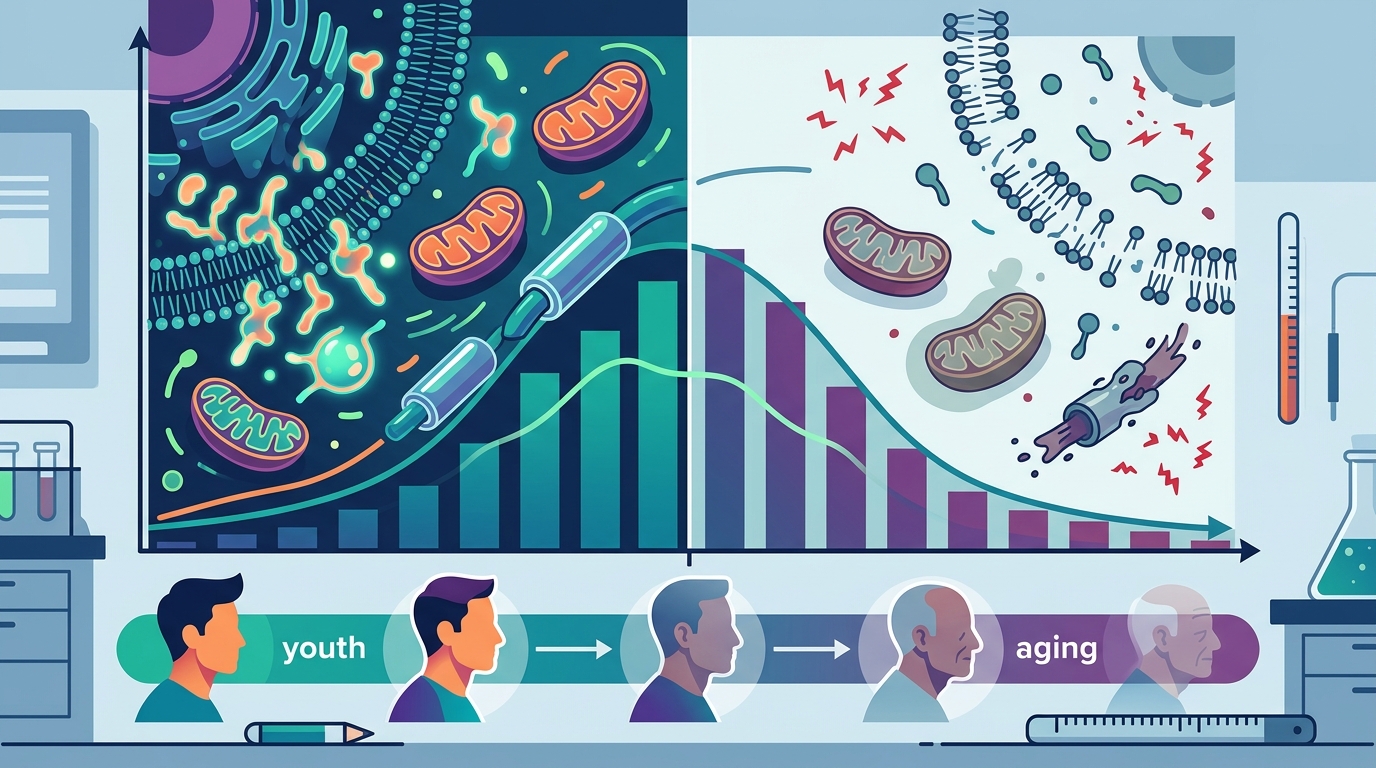
Plasmalogen levels change with age in a predictable and clinically significant pattern that directly impacts cellular resilience and neurological health. Research indicates that these specialized ether phospholipids begin to decline steadily after early adulthood, with the rate of loss accelerating significantly in later decades. This decline is not merely a passive side effect of aging but an active driver of cellular dysfunction, oxidative stress, and neurodegeneration. Understanding this trajectory is critical for anyone interested in longevity, cognitive preservation, and metabolic health. (About This Project Plasmalogen)
What Are Plasmalogens?
To understand how plasmalogen levels change with age, we must first define the molecule itself. Plasmalogens are specialized ether phospholipids found in cell membranes throughout the body. They are especially important in tissues with high structural, metabolic, and signaling demands, such as the brain, heart, and immune system.
Unlike standard phospholipids, plasmalogens possess a unique vinyl-ether linkage at the sn-1 position of the glycerol backbone. This chemical structure grants them exceptional antioxidant properties, allowing them to sacrificially absorb free radicals and protect critical cellular components from oxidative damage. They are also vital for membrane fluidity, protein function, and signal transduction.
Plasmalogens are synthesized primarily in the peroxisomes, a cellular organelle responsible for breaking down fatty acids and synthesizing complex lipids. This process requires a coordinated effort between peroxisomes and mitochondria, making plasmalogen production highly sensitive to cellular health and metabolic efficiency.
The Aging Trajectory of Plasmalogen Biosynthesis
The relationship between age and plasmalogen levels is characterized by a progressive decline. This decline is not uniform across all tissues but is particularly pronounced in the brain and cardiovascular system.
Early Adulthood to Middle Age
In early adulthood, plasmalogen synthesis is robust, maintaining high levels of cellular protection and membrane integrity. However, as individuals move into middle age, subtle shifts in peroxisomal function and mitochondrial efficiency begin to reduce the rate of biosynthesis. This period is often asymptomatic, but the biological foundation for later decline is being laid.
Late Adulthood and Accelerated Decline
As we age, the decline in plasmalogen levels accelerates. Studies have shown that plasmalogen concentrations in the brain can drop by up to 50% or more in individuals with neurodegenerative conditions compared to healthy age-matched controls. Even in healthy aging, the reduction is significant enough to impair cellular resilience.
This decline is linked to several factors:
- Peroxisomal Dysfunction: Aging peroxisomes become less efficient at synthesizing the precursor molecules required for plasmalogen production.
- Oxidative Stress: Increased oxidative damage consumes plasmalogens faster than they can be replaced, creating a negative feedback loop.
- Inflammation: Chronic low-grade inflammation associated with aging (inflammaging) disrupts lipid metabolism and signaling pathways.
Cellular Mechanisms of Decline
The drop in plasmalogen levels with age is not just a number on a lab report. It has profound implications for cellular function. Plasmalogen deficiency is associated with increased oxidative stress, mitochondrial dysfunction, and impaired cellular repair mechanisms.
Oxidative Stress and Membrane Integrity
Plasmalogens act as a first line of defense against reactive oxygen species (ROS). When their levels drop, cell membranes become more vulnerable to oxidative damage. This damage can lead to lipid peroxidation, which further disrupts membrane fluidity and protein function. The result is a cell that is less able to maintain homeostasis and more prone to apoptosis (programmed cell death).
Impact on Bones and Muscle
Bones and muscles are deeply affected in certain plasmalogen deficient diseases because the skeletal and muscular systems depend on membrane biology, lipid metabolism, energy production, tissue development, and cellular repair. As plasmalogen levels decline with age, muscle mass and bone density can be compromised, contributing to sarcopenia and osteoporosis. This highlights the systemic nature of plasmalogen deficiency.
Metabolic Flexibility
Plasmalogens are also involved in insulin signaling and glucose metabolism. Declining levels may contribute to insulin resistance, a hallmark of aging and metabolic syndrome. This connection underscores the importance of maintaining plasmalogen levels for metabolic health.
Neurological Impact and Cognitive Health
The brain is particularly rich in plasmalogens, especially in the myelin sheath that insulates nerve fibers. Plasmalogens are essential for the formation and maintenance of the myelin sheath. As levels decline, myelin integrity is compromised, leading to slower nerve conduction and cognitive decline.
Synaptic Function
Plasmalogens play a critical role in synaptic plasticity, the ability of synapses to strengthen or weaken over time. This is the basis of learning and memory. Reduced plasmalogen levels are associated with impaired synaptic function and increased risk of neurodegenerative diseases such as Alzheimer's and Parkinson's.
Inflammation and Neurodegeneration
Neuroinflammation is a key driver of cognitive decline. Plasmalogens have anti-inflammatory properties that help regulate immune responses in the brain. When levels drop, neuroinflammation can escalate, damaging neurons and accelerating disease progression.
Measurement and Testing
Understanding how plasmalogen levels change with age requires accurate measurement. Traditional healthcare often focuses on symptoms, diagnosis, and treatment after problems become obvious. That approach is essential in acute care, but it does not always capture the earlier biological changes that may occur long before a condition is formally identified.
Advanced health measurement looks deeper. It examines patterns in metabolism, inflammation, cellular energy, lipid biology, oxidative stress, cardiovascular function, hormone signaling, nutrient status, immune activity, organ function, and biological aging. The goal is not to collect more numbers for the sake of data. The goal is to understand how the body is functioning across systems, how those systems are changing over time, and where early biological stress may be developing.
Methods of Measurement
Plasmalogen levels can be measured through various methods, including:
- Lipidomics: Advanced mass spectrometry techniques that profile lipid species in blood or tissue samples.
- Blood Tests: Specific assays that quantify plasmalogen concentrations in plasma or red blood cells.
- Imaging: Emerging techniques that may allow for non-invasive assessment of plasmalogen levels in the brain.
Interpreting Results
Interpreting plasmalogen levels requires context. Age, lifestyle, and genetic factors all influence baseline levels. A level that is low for a young adult may be normal for an older individual. However, a significant drop from an individual's baseline is often a red flag for declining cellular health.
Key Takeaways
- Plasmalogen levels naturally decline with age, starting in early adulthood and accelerating in later decades.
- This decline is driven by peroxisomal dysfunction, oxidative stress, and chronic inflammation.
- Reduced plasmalogen levels are linked to increased risk of neurodegenerative diseases, cardiovascular issues, and metabolic dysfunction.
- Plasmalogens are critical for myelin integrity, synaptic function, and cellular antioxidant defense.
- Advanced health measurements, including lipidomics, can detect early declines in plasmalogen levels before symptoms appear.
- Maintaining plasmalogen levels through lifestyle interventions may support healthy aging and cognitive preservation.
- Plasmalogen deficiency affects not just the brain but also bones, muscles, and the immune system.
Frequently Asked Questions
Do plasmalogen levels decrease with age?
Yes, plasmalogen levels decrease with age. This decline is a natural part of the aging process but can be accelerated by oxidative stress and inflammation.
Why do plasmalogen levels drop in the brain?
Plasmalogen levels drop in the brain due to reduced peroxisomal function and increased oxidative damage. The brain is particularly vulnerable because of its high oxygen consumption and lipid content.
Can plasmalogen levels be measured?
Yes, plasmalogen levels can be measured through advanced lipidomics and specific blood tests. These measurements provide insight into cellular health and aging.
How do plasmalogens affect bone and muscle health?
Plasmalogens support bone and muscle health by maintaining membrane integrity, supporting energy production, and regulating inflammation. Deficiency can lead to weakened bones and muscles.
What is the role of plasmalogens in myelin formation?
Plasmalogens are essential for the formation and maintenance of the myelin sheath, which insulates nerve fibers and ensures efficient signal transmission.
Are there lifestyle factors that influence plasmalogen levels?
Yes, factors such as diet, exercise, stress, and sleep can influence plasmalogen levels. A healthy lifestyle can help maintain optimal levels.
Is plasmalogen deficiency linked to specific diseases?
Plasmalogen deficiency is linked to neurodegenerative diseases like Alzheimer's and Parkinson's, as well as cardiovascular disease and metabolic disorders.
Take Action for Your Health
Understanding how plasmalogen levels change with age is the first step toward proactive health management. By monitoring your levels and adopting strategies to support plasmalogen biosynthesis, you can enhance your cellular resilience and longevity.
For more information on advanced health measurements and personalized strategies, visit our Advanced Health Measurements page. Explore our Cognitive Neurological resources to learn more about brain health. Contact our team at Plasmalogen Science to discuss your health goals.