

Plasmalogen levels naturally decline as the human body ages, a biological shift that significantly impacts cellular resilience and neurological health. Research indicates that this reduction begins in early adulthood and accelerates during later decades, creating a measurable gap between chronological age and biological function. Understanding this trajectory is critical for anyone interested in longevity, cognitive preservation, and cellular repair.
What Are Plasmalogens?
To understand how levels change with age, we must first define the molecule itself. Plasmalogens are specialized ether phospholipids found in cell membranes throughout the body. They are not just structural components; they are active participants in cellular signaling, antioxidant defense, and membrane fluidity.
Unlike standard phospholipids, plasmalogens contain a unique vinyl-ether bond at the sn-1 position. This chemical structure makes them highly susceptible to oxidative damage, which serves a protective purpose. When free radicals attack the body, plasmalogens sacrifice themselves to neutralize the threat, thereby protecting more critical cellular structures like DNA and mitochondrial membranes.
These molecules are particularly abundant in the brain, heart, and immune cells. Their presence is essential for the proper function of the myelin sheath, which insulates nerve fibers and ensures rapid signal transmission. Without adequate plasmalogen levels, the efficiency of the nervous system begins to degrade.
For a deeper dive into the fundamental biology, explore What Are Plasmalogens to understand their structural uniqueness.
The Aging Trajectory of Plasmalogen Levels
The relationship between age and plasmalogen concentration is not linear. It follows a distinct pattern of gradual decline followed by accelerated loss in later life. This trajectory is driven by both intrinsic biological aging and extrinsic environmental factors.
Early Adulthood and Maintenance
In early adulthood, the body maintains plasmalogen levels through efficient biosynthesis. The liver and other tissues produce these lipids via the peroxisomal pathway. During this phase, oxidative stress is typically manageable, and the body can replenish plasmalogens as they are used.
Mid-Life Decline
As individuals move into their 40s and 50s, the efficiency of plasmalogen synthesis begins to wane. Simultaneously, cumulative oxidative stress from lifestyle factors, inflammation, and metabolic changes increases the rate of plasmalogen consumption. This creates a negative balance where loss outpaces production.
Accelerated Loss in Later Life
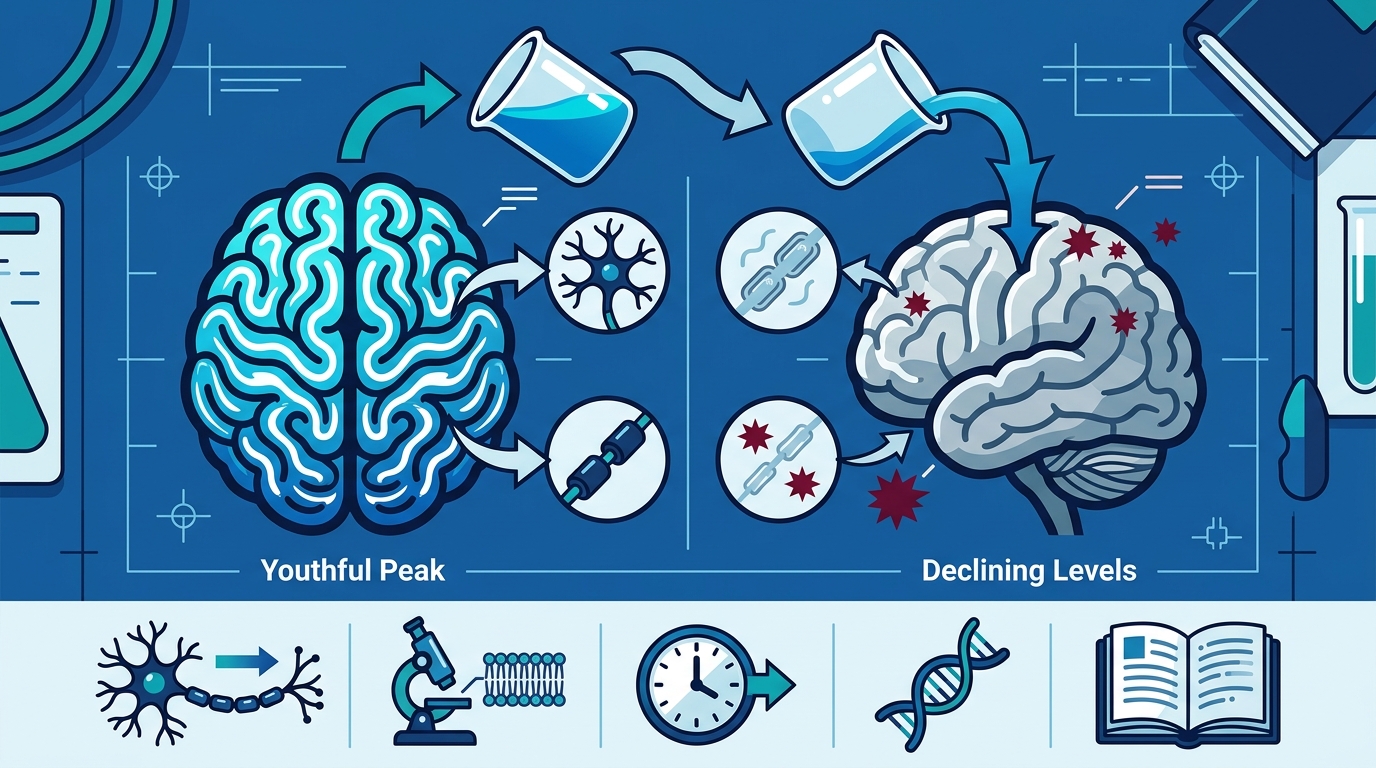
By the time individuals reach their 60s and beyond, the decline becomes more pronounced. Studies show that plasmalogen levels in the brain can drop significantly, correlating with increased risks of neurodegenerative conditions. This acceleration is often linked to the decline in peroxisomal function, which is essential for creating the ether bonds that define plasmalogens.
According to data on biological aging, the reduction in these lipids is a key marker of declining healthspan. For more context on how aging affects cellular biology, read How Plasmalogens Influence Aging.
Cellular Mechanisms Behind the Decline
Why do plasmalogen levels drop with age? The answer lies in the complex interplay between synthesis pathways and oxidative demand.
Peroxisomal Dysfunction
Peroxisomes are organelles responsible for the initial steps of plasmalogen biosynthesis. As we age, peroxisomal function often declines due to genetic expression changes and oxidative damage to the organelles themselves. This bottleneck reduces the body's ability to create new plasmalogens, regardless of nutrient availability.
Oxidative Stress Accumulation
Because plasmalogens act as sacrificial antioxidants, they are consumed during the neutralization of free radicals. Over decades, the cumulative burden of oxidative stress depletes these reserves. The body struggles to keep up with the demand, leading to a net deficit in tissues that rely heavily on these lipids.
Inflammation and Membrane Integrity
Chronic low-grade inflammation, often referred to as inflammaging, further disrupts lipid metabolism. Inflammatory cytokines can alter the enzymes responsible for lipid remodeling, making it harder for cells to maintain healthy membrane composition. This creates a vicious cycle where damaged membranes lead to more cellular stress, which in turn accelerates plasmalogen loss.
For a detailed look at the biosynthesis process, visit How the Body Produces Plasmalogens.
Health Implications of Low Plasmalogens
The decline in plasmalogen levels is not merely a number on a lab report. It has tangible effects on physical and cognitive health.
Cognitive and Neurological Impact
The brain is rich in plasmalogens, particularly in the myelin sheath. When levels drop, nerve signal transmission slows, and synaptic plasticity is impaired. This is associated with memory loss, reduced cognitive flexibility, and an increased risk of Alzheimer's disease. Research suggests that low plasmalogen levels are a precursor to, rather than just a symptom of, neurodegeneration.
Cardiovascular Health
Plasmalogens are also abundant in heart tissue. Their decline is linked to increased oxidative stress in the cardiovascular system, which can contribute to arterial stiffness and reduced heart function. Maintaining healthy levels is crucial for long-term cardiac resilience.
Muscle and Bone Integrity
Recent research highlights the role of plasmalogens in skeletal and muscular health. Plasmalogen deficient diseases often present with skeletal growth abnormalities and reduced mobility. In aging, low levels may contribute to sarcopenia (muscle loss) and reduced bone density, affecting overall physical resilience.
Explore the connection between Bones & Muscle and plasmalogen biology.
Measurement and Biomarkers
Traditionally, plasmalogen levels were difficult to measure outside of specialized research settings. However, advanced health measurement techniques are now making it possible to assess these biomarkers in clinical practice.
Advanced Lipidomics
Standard lipid panels do not include plasmalogen measurements. Advanced lipidomics uses mass spectrometry to identify and quantify specific lipid species. This provides a precise view of membrane health and oxidative stress burden.
Longitudinal Tracking
Because plasmalogen levels change over time, a single measurement may not tell the whole story. Longitudinal tracking allows individuals and clinicians to monitor trends. This approach is more powerful than one-time testing because it reveals how interventions or lifestyle changes are affecting biological aging.
Learn more about Advanced Health Measurements and their role in longevity.
Key Takeaways
- Plasmalogen levels decline with age: The reduction begins in early adulthood and accelerates in later decades due to decreased synthesis and increased oxidative consumption.
- Peroxisomal function is critical: The decline is largely driven by reduced peroxisomal activity, which is essential for creating the unique ether bonds in plasmalogens.
- Neurological impact is significant: Low plasmalogen levels are strongly linked to cognitive decline, myelin degradation, and increased risk of neurodegenerative diseases.
- Standard tests miss the mark: Routine blood work does not measure plasmalogens; advanced lipidomics is required for accurate assessment.
- Oxidative stress is a key driver: The cumulative burden of free radicals depletes plasmalogen reserves faster than the aging body can replace them.
- Systemic health is affected: Beyond the brain, low levels impact heart health, muscle integrity, and immune function.
- Early intervention matters: Monitoring levels and supporting biosynthesis pathways may help preserve healthspan and cognitive function.
Frequently Asked Questions
Do plasmalogen levels decrease with age?
Yes, plasmalogen levels naturally decrease as the body ages. This decline is due to a combination of reduced biosynthesis efficiency and increased consumption from oxidative stress.
Why are plasmalogen levels important for brain health?
Plasmalogens are essential for maintaining the myelin sheath and synaptic function in the brain. Low levels are associated with cognitive decline and neurodegenerative conditions.
Can plasmalogen levels be measured in a standard blood test?
No, standard lipid panels do not include plasmalogen measurements. Advanced lipidomics testing is required to accurately assess plasmalogen levels.
What causes the decline in plasmalogen production?
The decline is primarily caused by reduced peroxisomal function, which is necessary for the initial steps of plasmalogen biosynthesis, along with increased oxidative stress.
How do plasmalogens protect cells from aging?
Plasmalogens act as sacrificial antioxidants, neutralizing free radicals before they can damage DNA or mitochondrial membranes, thereby preserving cellular integrity.
Are plasmalogen levels linked to heart health?
Yes, plasmalogens are abundant in heart tissue. Their decline is linked to increased oxidative stress in the cardiovascular system and reduced heart resilience.
What is the role of plasmalogens in muscle and bone health?
Plasmalogens support the cellular membranes in muscle and bone tissue. Low levels are associated with reduced mobility, muscle tone abnormalities, and skeletal issues.
Take Action for Your Health
Understanding how plasmalogen levels change with age is the first step toward preserving your healthspan. By recognizing the signs of decline and exploring advanced measurement options, you can take proactive steps to support your cellular resilience.
For personalized guidance on health measurements and longevity strategies, contact the Plasmalogen Science team today. Stay informed by exploring our Learning Hub for the latest research and insights.