

How Plasmalogens Organize Cell Membranes Differently Than Regular Lipids
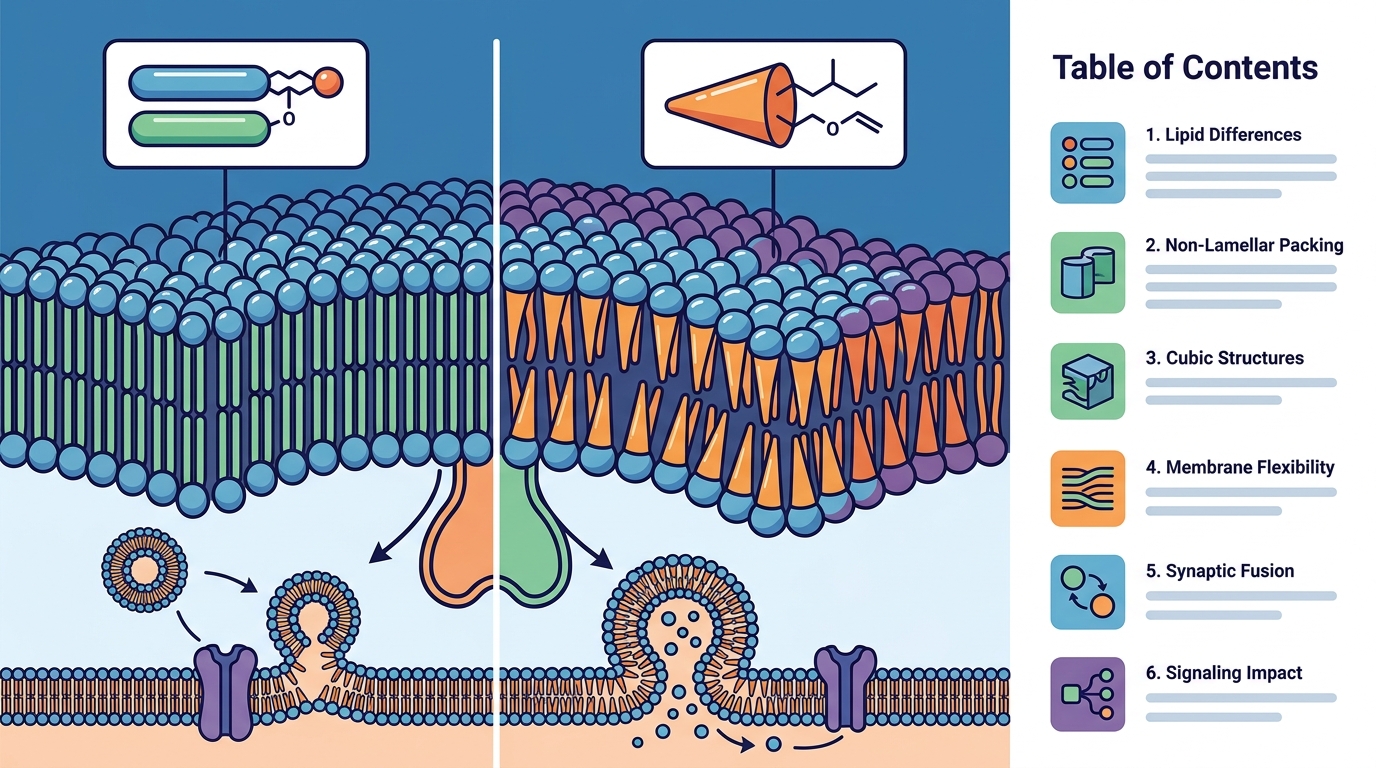
Plasmalogens organize cell membranes differently than regular lipids by forming non-lamellar, cubic structures that enhance membrane flexibility and curvature. Their unique vinyl ether bond and conical molecular shape allow them to pack tightly while maintaining fluidity, which is critical for synaptic vesicle fusion and receptor signaling. This structural distinction makes them essential for brain health and cellular resilience.
The Structural Difference: Vinyl Ether Bonds and Molecular Shape
A plasmalogen is a specialized ether phospholipid characterized by a vinyl ether bond at the sn-1 position of the glycerol backbone. In contrast, standard phospholipids typically contain an ester bond at this position. This seemingly small chemical difference creates a distinct biochemical identity that influences how the molecule behaves within a lipid bilayer. The vinyl ether bond is not just a structural quirk; it is a functional feature that alters the physical properties of the membrane. according to Potential Role of
The molecular shape of plasmalogens is often described as conical or wedge-shaped, particularly when they contain polyunsaturated fatty acids at the sn-2 position. Regular phospholipids, such as phosphatidylcholine, tend to have a more cylindrical shape. This difference in shape dictates how lipids pack together. Cylindrical lipids favor flat, lamellar bilayers, while conical lipids can induce curvature and non-lamellar phases. This is a fundamental principle of membrane biophysics, where the geometry of the lipid determines the macroscopic structure of the membrane.
Research published in PMC highlights that plasmalogens typically include a vinyl ether bond at the sn-1 position and a polyunsaturated fatty acid at the sn-2 position. This specific combination is rare among common dietary fats and standard cellular lipids. The presence of the polyunsaturated chain increases the flexibility of the lipid tail, while the vinyl ether bond provides a unique headgroup interaction. Together, these features allow plasmalogens to act as structural modulators within the membrane.
Inducing Membrane Curvature and Non-Lamellar Phases
One of the most significant ways plasmalogens differ from regular lipids is their ability to promote membrane curvature. Biological membranes are not static walls; they are dynamic surfaces that must bend, fuse, and reorganize to perform cellular functions. Processes such as endocytosis, exocytosis, and synaptic vesicle release require the membrane to change shape rapidly. Plasmalogens facilitate these shape changes by stabilizing curved membrane structures.
Under certain conditions, plasmalogens can form cubic membrane phases, which are non-lamellar structures with cubic symmetry. A study in PMC demonstrated that plasmalogen-rich foods promote the formation of cubic membranes in amoeba under stress conditions. This ability to form cubic phases is a hallmark of lipids with a conical shape. In human cells, the formation of these non-lamellar structures is not always the goal, but the propensity to do so indicates a high degree of membrane flexibility and responsiveness.
This structural flexibility is particularly important in the brain, where synaptic vesicles must dock, fuse, and recycle at high speeds. The membrane of a synaptic vesicle must be able to bend sharply to release neurotransmitters. Plasmalogens, with their unique shape and bonding, help maintain the fluidity and curvature required for this process. Without this structural support, synaptic transmission could become less efficient, potentially affecting cognitive function and neural communication.
Leaflet Asymmetry and Nanodomain Formation
Cell membranes are not uniform mixtures of lipids. They exhibit leaflet asymmetry, meaning the inner and outer leaflets of the bilayer have different lipid compositions. This asymmetry is crucial for cellular signaling and membrane function. Plasmalogens are often enriched in specific leaflets, contributing to the distinct biophysical properties of each side of the membrane. This distribution is not random; it is actively maintained by cellular machinery.
Research in Frontiers in Cell and Developmental Biology discusses the role of interleaflet coupling and leaflet asymmetry in plasma membrane nanodomain formation. Nanodomains, often referred to as lipid rafts, are small, dynamic regions of the membrane that are enriched in specific lipids and proteins. Plasmalogens can participate in the formation and stabilization of these nanodomains. By clustering with cholesterol and sphingolipids, plasmalogens help create microenvironments that are distinct from the bulk membrane.
The formation of nanodomains is essential for organizing signaling proteins and receptors. If a receptor is located in a nanodomain, it may interact with different signaling partners than if it were in the bulk membrane. Plasmalogens, by influencing the local lipid environment, can modulate the activity of these receptors. This adds another layer of complexity to how plasmalogens differ from regular lipids. They are not just structural components; they are active participants in the spatial organization of membrane proteins.
Oxidative Stress Protection and Membrane Integrity
Beyond their structural role, plasmalogens provide a unique form of oxidative stress protection that regular lipids do not offer. The vinyl ether bond in plasmalogens is susceptible to oxidation, but this susceptibility is functional. It acts as a sacrificial antioxidant, absorbing oxidative damage that would otherwise affect other, more critical membrane components. This protective mechanism helps maintain membrane integrity under conditions of oxidative stress.
Biological membranes protect cells from the surrounding environment, but they also serve as organizing platforms for physiological processes such as cell signaling, as noted in Frontiers in Research Topics. When oxidative stress occurs, the membrane can become damaged, leading to loss of function and cell death. Plasmalogens help mitigate this damage by acting as a buffer against reactive oxygen species. This is particularly important in tissues with high metabolic activity, such as the brain and heart, where oxidative stress is a constant challenge. according to Molecular organisation of
The ability to protect the membrane from oxidative damage is a key differentiator between plasmalogens and regular phospholipids. While regular phospholipids can also be oxidized, they do not have the same sacrificial role. The loss of plasmalogens can therefore lead to increased oxidative stress and membrane damage, contributing to cellular aging and disease. This protective function is a critical aspect of how plasmalogens help organize and structure cell membranes, ensuring that they remain functional and resilient over time.
Implications for Brain Health and Cellular Resilience
The unique structural and protective properties of plasmalogens have significant implications for brain health and cellular resilience. The brain is one of the most lipid-rich organs in the body, and it relies heavily on the integrity of its membranes for proper function. Plasmalogens are especially concentrated in brain tissue, where they support synaptic communication, myelin formation, and cognitive performance. Their ability to organize membranes and protect against oxidative stress makes them essential for maintaining neural health.
As cells age, membrane quality becomes increasingly important. Aging is associated with changes in membrane lipid composition, including a decline in plasmalogen levels. This decline can lead to reduced membrane flexibility, increased oxidative stress, and impaired cellular signaling. By understanding how plasmalogens organize membranes differently than regular lipids, researchers can develop new strategies to support healthy aging and prevent neurodegenerative diseases. This knowledge is crucial for advancing our understanding of cellular biology and developing new therapeutic approaches. according to Plasmalogen rich foods
Plasmalogen Science provides in-depth resources on these topics, helping readers understand the complex role of plasmalogens in membrane biology. By exploring the structural, functional, and protective properties of plasmalogens, we can gain a deeper appreciation for their importance in human health. This understanding is essential for anyone interested in the science of aging, brain health, and cellular resilience.
Key Takeaways
- Plasmalogens are specialized ether phospholipids with a vinyl ether bond at the sn-1 position, distinguishing them from regular ester-linked phospholipids.
- Their conical molecular shape allows them to induce membrane curvature and form non-lamellar, cubic structures, enhancing membrane flexibility.
- Plasmalogens contribute to leaflet asymmetry and the formation of lipid nanodomains, which organize signaling proteins and receptors.
- The vinyl ether bond acts as a sacrificial antioxidant, protecting the membrane from oxidative stress and maintaining integrity.
- These properties are particularly important in the brain, where plasmalogens support synaptic vesicle fusion, myelin formation, and cognitive function.
- A decline in plasmalogen levels is associated with aging and may contribute to membrane dysfunction and neurodegenerative diseases.
Frequently Asked Questions
What is the main structural difference between plasmalogens and regular phospholipids?
The main structural difference is the type of bond at the sn-1 position of the glycerol backbone. Plasmalogens have a vinyl ether bond, while regular phospholipids typically have an ester bond. This difference affects the molecule's shape and how it packs within the membrane.
How do plasmalogens affect membrane curvature?
Plasmalogens have a conical shape that promotes membrane curvature. This allows them to stabilize curved structures, such as those found in synaptic vesicles, and can even lead to the formation of non-lamellar, cubic phases under certain conditions.
Why are plasmalogens important for brain health?
Plasmalogens are highly concentrated in the brain, where they support synaptic communication, myelin formation, and cognitive function. Their ability to organize membranes and protect against oxidative stress is crucial for maintaining neural health and preventing neurodegenerative diseases.
Do plasmalogens protect against oxidative stress?
Yes, the vinyl ether bond in plasmalogens acts as a sacrificial antioxidant. It absorbs oxidative damage that would otherwise affect other membrane components, helping to maintain membrane integrity under conditions of oxidative stress.
How do plasmalogens contribute to leaflet asymmetry?
Plasmalogens are often enriched in specific leaflets of the membrane, contributing to the distinct biophysical properties of each side. This asymmetry is crucial for cellular signaling and the formation of lipid nanodomains, which organize signaling proteins and receptors.
What happens when plasmalogen levels decline?
A decline in plasmalogen levels is associated with aging and can lead to reduced membrane flexibility, increased oxidative stress, and impaired cellular signaling. This may contribute to membrane dysfunction and the development of neurodegenerative and cardiovascular diseases.
Explore Plasmalogen Science Further
Understanding how plasmalogens organize and structure cell membranes is a critical step in appreciating their role in human health. By exploring the unique properties of these specialized lipids, we can gain valuable insights into cellular biology, aging, and disease. Plasmalogen Science offers comprehensive resources on these topics, providing a deep dive into the science of plasmalogens and their impact on membrane biology. Visit our site to learn more about the fascinating world of plasmalogens and their importance in maintaining cellular health.