

How Plasmalogen Levels Decline With Age and What It Means for Your Body
Plasmalogen levels naturally decline as we age due to reduced peroxisomal biosynthesis and increased oxidative consumption. This decrease weakens cell membrane integrity, particularly in the brain and heart, leading to reduced cellular resilience. Plasmalogen Science explains that this lipid shift is a core driver of age-related biological stress and cognitive changes.
The Biosynthesis Bottleneck in Aging Cells
Plasmalogen biosynthesis is a complex process that begins in the peroxisome and continues in the endoplasmic reticulum. As we age, the efficiency of these organelles often decreases, creating a production bottleneck. A plasmalogen is a specialized ether phospholipid that requires multiple enzymatic steps to form, making it highly sensitive to cellular stress.
Research indicates that the peroxisomal pathway is particularly vulnerable to age-related decline. When the initial steps of ether lipid production slow down, the total pool of available plasmalogens shrinks. This is not just a matter of fewer molecules; it is a shift in the quality of the membrane's building blocks. The body struggles to maintain the high turnover rate required for healthy membrane remodeling.
This production lag means that even if the body is consuming enough nutrients, the machinery to convert them into functional plasmalogens may be less efficient. Understanding this bottleneck is essential for interpreting why standard lipid panels often miss these deeper changes in cellular health.
Oxidative Stress and Membrane Depletion
The vinyl ether bond in plasmalogens acts as a sacrificial antioxidant, protecting the cell from oxidative damage. However, this protective role means plasmalogens are constantly being consumed during periods of high oxidative stress. Aging is associated with a chronic increase in reactive oxygen species, which accelerates the breakdown of these lipids.
Because plasmalogens are oxidation-sensitive, they are often the first lipids to be depleted in aging tissues. This depletion leaves the cell membrane more vulnerable to lipid peroxidation and structural instability. The result is a membrane that is less flexible and less capable of maintaining proper ion gradients and signal transduction.
This dynamic creates a feedback loop where oxidative stress depletes plasmalogens, and the resulting membrane instability further increases oxidative pressure. This cycle is a significant factor in the cellular decline observed in aging populations, highlighting the importance of redox balance in longevity research.
Neurological Impact and White Matter Integrity
The brain is one of the most lipid-rich organs in the body, with plasmalogens playing a critical role in myelin and synaptic function. As plasmalogen levels decline, the integrity of white matter can be compromised. Myelin is a lipid-rich sheath that insulates nerve fibers, and its health is directly linked to the availability of specialized membrane lipids.
Studies have observed altered plasmalogen patterns in the brains of aging individuals, particularly in regions associated with cognitive processing. This decline may contribute to the slower signal conduction and reduced neural plasticity often seen in older adults. The loss of these lipids affects not just the insulation of nerves, but the actual communication sites, or synapses, where neurons interact.
For individuals concerned about cognitive health, understanding the link between plasmalogens and white matter is crucial. It suggests that brain aging is not just a matter of neuron loss, but also a change in the lipid environment that supports those neurons. This perspective is central to the research focus at Plasmalogen Science.
Cardiovascular and Metabolic Consequences
Plasmalogens are also highly concentrated in cardiac muscle and immune cells. Their decline can affect the heart's ability to manage energy and respond to stress. The heart is a high-demand organ that relies on efficient mitochondrial function and stable membrane composition to maintain rhythm and output.
Lower plasmalogen levels have been associated with increased cardiovascular risk and metabolic dysfunction. This is partly because plasmalogens influence how cells handle fatty acids and manage inflammatory signaling. When these lipids are low, the body may struggle to regulate inflammation and maintain metabolic flexibility, leading to a state of chronic low-grade stress.
This systemic impact means that plasmalogen decline is not limited to the brain. It affects the entire body's ability to maintain homeostasis. By looking at plasmalogens as a marker of overall cellular resilience, we can better understand the connection between aging, heart health, and metabolic stability.
Measuring the Decline with Advanced Lipidomics
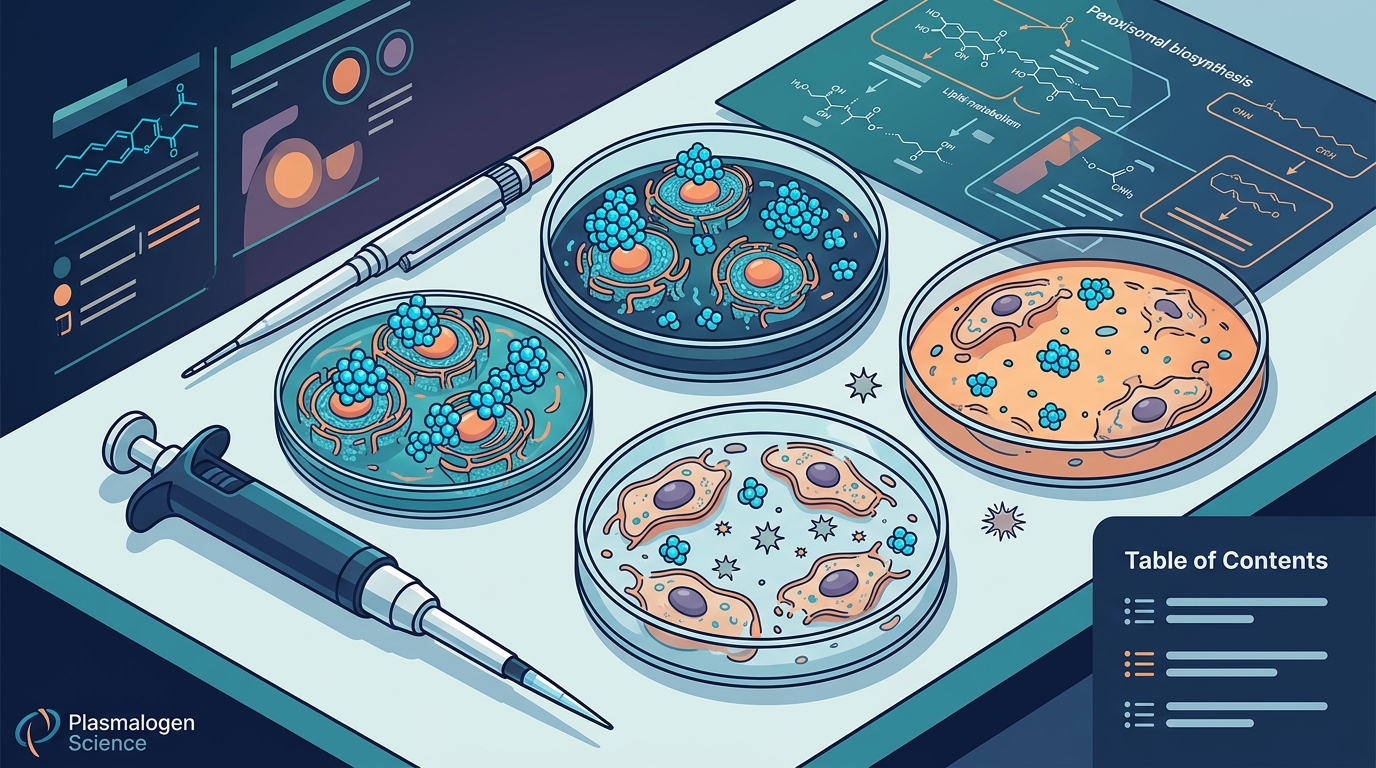
Standard lipid panels do not measure plasmalogens, which is why this decline often goes unnoticed until symptoms appear. Advanced lipidomics allows for the specific measurement of plasmalogen species and their ratios to other phospholipids. This provides a much more detailed picture of membrane health than traditional cholesterol tests.
By tracking plasmalogen levels over time, researchers and clinicians can identify trends in cellular aging. A single measurement may not tell the whole story, but longitudinal tracking can reveal how the body is managing its lipid resources. This approach is increasingly important in the field of healthspan, where the goal is to maintain function, not just avoid disease. according to circulating plasmalogen levels
Plasmalogen Science emphasizes that measurement is the first step toward understanding these changes. Without accurate data on plasmalogen status, it is difficult to assess the true impact of aging on cellular biology. This is why the field is moving toward more comprehensive lipid profiling as a standard part of advanced health assessment.
Key Takeaways
- Plasmalogen levels decline with age due to reduced peroxisomal biosynthesis and increased oxidative consumption.
- The vinyl ether bond in plasmalogens makes them highly sensitive to oxidative stress, leading to accelerated depletion in aging tissues.
- Brain white matter and synaptic function are particularly vulnerable to plasmalogen decline, affecting cognitive performance.
- Cardiovascular and metabolic health are also impacted, as plasmalogens play a role in energy production and inflammatory regulation.
- Standard lipid panels do not capture plasmalogen status, requiring advanced lipidomics for accurate assessment.
- Longitudinal tracking of plasmalogen levels can provide insights into cellular aging and healthspan.
Frequently Asked Questions
Why do plasmalogen levels decrease as we age?
Plasmalogen levels decrease due to a combination of reduced biosynthesis in peroxisomes and increased consumption by oxidative stress. The body's ability to produce and maintain these specialized lipids diminishes over time.
How does plasmalogen decline affect the brain?
Plasmalogen decline can weaken myelin and synaptic membranes, leading to slower nerve signal conduction and reduced cognitive flexibility. This is a key factor in age-related neurological changes.
Can plasmalogen levels be measured in a standard blood test?
No, standard lipid panels do not measure plasmalogens. Advanced lipidomics testing is required to evaluate plasmalogen status and related membrane lipid patterns.
What is the role of peroxisomes in plasmalogen production?
Peroxisomes are the organelles where the first steps of plasmalogen biosynthesis occur. Age-related changes in peroxisomal function can significantly reduce the body's ability to produce new plasmalogens.
Does plasmalogen decline affect heart health?
Yes, plasmalogens are important for cardiac muscle function and mitochondrial energy production. Their decline may contribute to reduced cardiovascular resilience and increased metabolic stress.
How can I support my plasmalogen levels?
While specific interventions are still being researched, maintaining a healthy lifestyle that supports peroxisomal and mitochondrial function is generally beneficial. Consulting with a healthcare provider about advanced lipid testing can provide more personalized insights.
Conclusion
The natural decline of plasmalogens is a fundamental aspect of biological aging that affects membranes, energy production, and cellular communication across the body. By understanding the mechanisms behind this decline, we can better appreciate the importance of lipid health in maintaining long-term function. Plasmalogen Science continues to explore these connections, providing the educational resources needed to navigate the complex world of membrane biology and aging. To learn more about how plasmalogens influence health and longevity, explore the comprehensive guides available on our platform.