

Blood Test Warning Signs of Peroxisomal Dysfunction and Plasmalogen Production
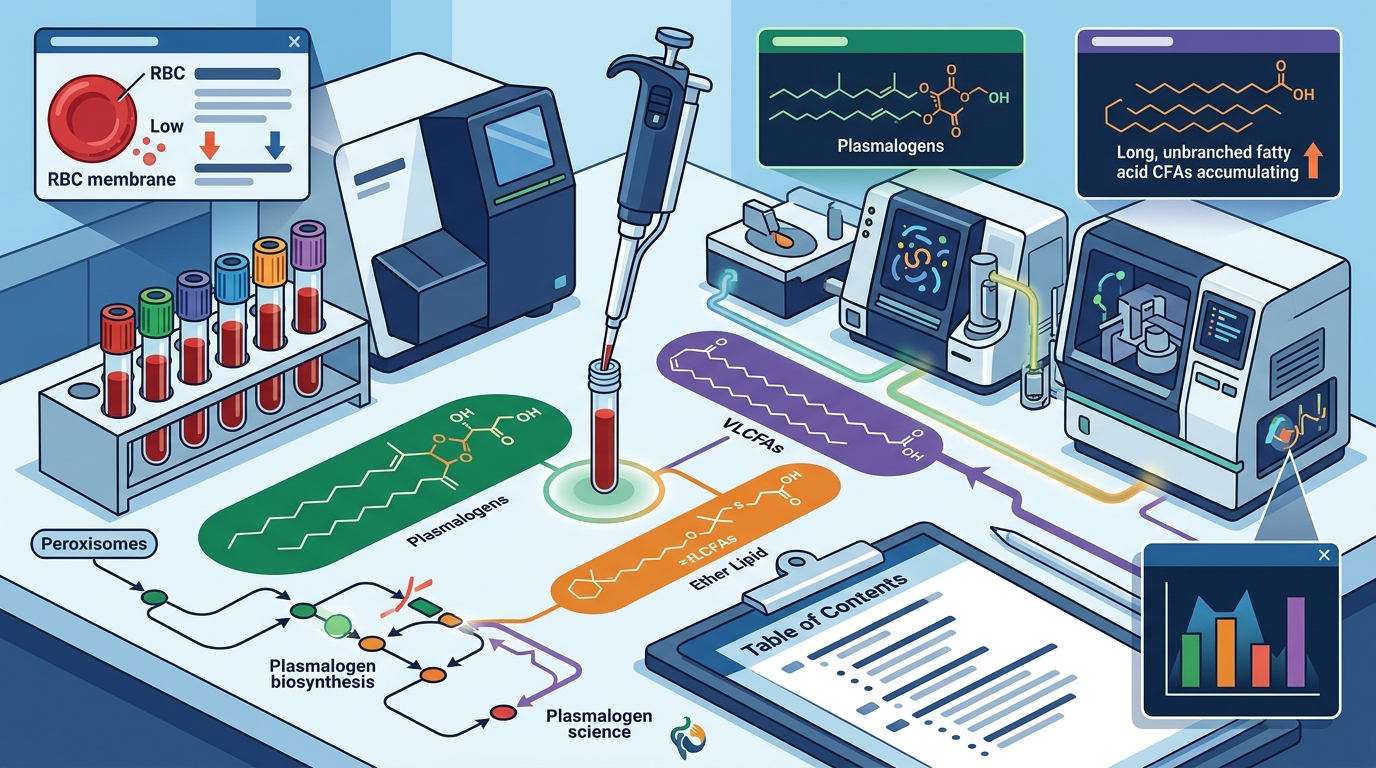
Warning signs in blood tests that suggest peroxisomal dysfunction affecting plasmalogen production include low red blood cell plasmalogen levels, elevated very long-chain fatty acids, and altered lipid ratios. These markers indicate that the peroxisomal pathways responsible for ether lipid biosynthesis are impaired. Plasmalogen Science provides detailed educational resources on how these specific biochemical shifts reflect deeper cellular membrane stress and metabolic disruption.
The Role of Peroxisomes in Ether Lipid Biosynthesis
Peroxisomes are membrane-bound organelles that serve as the primary site for the initial steps of plasmalogen synthesis. A plasmalogen is a specialized ether phospholipid that contains a vinyl ether bond at the sn-1 position of the glycerol backbone. This unique structural feature distinguishes plasmalogens from standard ester-linked phospholipids and grants them distinct antioxidant and membrane-stabilizing properties. The peroxisome initiates this process by converting fatty acids into fatty alcohols, a critical step that requires specific peroxisomal enzymes.
When peroxisomal function is compromised, the production of these essential membrane lipids is directly hindered. The body relies on a coordinated effort between peroxisomes and the endoplasmic reticulum to complete plasmalogen biosynthesis. If the peroxisomal stage fails, the downstream supply of mature plasmalogens to cell membranes drops significantly. This disruption is not merely a minor metabolic hiccup; it represents a fundamental failure in the body's ability to maintain cellular architecture and oxidative stress defenses.
Understanding this pathway is essential for interpreting blood test results. The peroxisome is the gatekeeper of ether lipid metabolism. When its function declines, the resulting biochemical footprint in the blood provides the first clinical clues. Readers can explore the detailed steps of this process in the guide on how the body produces plasmalogens.
Identifying Low Plasmalogen Levels in Blood Samples
The most direct indicator of peroxisomal dysfunction is a reduction in plasmalogen levels within blood samples. Plasmalogens are particularly abundant in red blood cells, making them an ideal matrix for non-invasive testing. A standard lipid panel does not measure plasmalogens, so specific lipidomic assays are required to detect these molecules. When red blood cell plasmalogen levels fall below established reference ranges, it suggests that the biosynthetic machinery is underperforming or that oxidative consumption is outpacing production.
Low plasmalogen levels are rarely an isolated finding. They often appear alongside shifts in the ratio of ethanolamine plasmalogens to choline plasmalogens. These ratios provide insight into the specific species of ether lipids that are affected. For instance, a disproportionate drop in certain DHA-containing plasmalogens may point to specific enzymatic bottlenecks in the peroxisomal pathway. Interpreting these values requires context, as a single low number does not confirm a diagnosis but rather flags a need for deeper metabolic investigation.
Advanced lipidomics allows clinicians to look beyond total counts to specific plasmalogen species. This granularity helps distinguish between primary peroxisomal disorders and secondary effects of aging or inflammation. For a deeper understanding of how these values are interpreted, see the overview on plasmalogen measurement and biomarkers.
Elevated Very Long-Chain Fatty Acids as a Diagnostic Marker
Peroxisomes are also responsible for the beta-oxidation of very long-chain fatty acids (VLCFAs). When peroxisomal function is impaired, the body cannot efficiently break down these long fatty acid chains. Consequently, VLCFA levels accumulate in the blood plasma. Elevated VLCFA concentrations are a hallmark of several peroxisomal biogenesis disorders and are a critical warning sign of peroxisomal dysfunction.
The connection between VLCFAs and plasmalogens is metabolic. The same peroxisomal machinery that processes VLCFAs is involved in the early stages of ether lipid synthesis. Therefore, a blood test showing high VLCFA levels often correlates with low plasmalogen production. This dual marker profile provides a robust biochemical signature of peroxisomal stress. Clinicians use these combined metrics to assess the severity of the metabolic disruption and to monitor the progression of peroxisomal disorders over time.
Monitoring these lipid profiles is essential for tracking cellular health. The accumulation of VLCFAs can lead to toxic effects in various tissues, further compounding the issues caused by plasmalogen deficiency. Understanding the metabolic system's role in these conditions is crucial for accurate diagnosis. More information on this topic can be found in the article on the metabolic system's role in plasmalogen deficient diseases.
Impact on Membrane Integrity and Oxidative Stress
The functional consequence of peroxisomal dysfunction is a compromise in cellular membrane integrity. Plasmalogens act as sacrificial antioxidants, protecting cell membranes from oxidative damage. When their levels drop due to peroxisomal failure, cells become more vulnerable to lipid peroxidation. This oxidative stress can trigger inflammatory responses and accelerate cellular aging. Blood tests may show elevated markers of oxidative stress, such as malondialdehyde or 8-isoprostane, which serve as indirect evidence of the membrane vulnerability caused by low plasmalogens.
Furthermore, the loss of plasmalogens affects the physical properties of the membrane. Membranes may become less fluid and more rigid, impairing the function of embedded proteins and receptors. This is particularly concerning in the brain, where plasmalogens are highly concentrated in myelin and synaptic membranes. Neurological symptoms often precede the detection of severe metabolic markers, making blood tests a vital tool for early intervention. The relationship between plasmalogens and oxidative stress is a central theme in modern lipid research.
By identifying these oxidative stress markers alongside plasmalogen levels, healthcare providers can gain a comprehensive view of cellular resilience. This holistic approach helps in designing interventions that support peroxisomal function and membrane health. For insights into how plasmalogens influence cellular energy and stress responses, refer to the guide on how plasmalogens influence cellular energy.
Clinical Implications and Longitudinal Monitoring
Identifying peroxisomal dysfunction through blood tests has significant clinical implications for patient management. Early detection allows for the implementation of dietary and lifestyle strategies that may support peroxisomal health. While severe inherited peroxisomal disorders require specific medical management, milder forms of dysfunction can be monitored through longitudinal tracking of lipid biomarkers. Consistent testing reveals trends that a single snapshot cannot capture, providing a clearer picture of metabolic stability.
Longitudinal monitoring also helps differentiate between age-related declines in plasmalogen levels and pathological peroxisomal dysfunction. Aging naturally reduces plasmalogen synthesis, but a rapid or severe decline may indicate an underlying disorder. By tracking changes in plasmalogen species, VLCFA levels, and oxidative stress markers over time, clinicians can tailor interventions more effectively. This data-driven approach is central to the field of advanced health measurement and longevity science.
Plasmalogen Science emphasizes the importance of context in interpreting these results. A single test result is a starting point, not a conclusion. Continuous monitoring and a comprehensive biochemical profile are necessary to understand the full scope of peroxisomal function. To learn more about the broader context of these measurements, visit the importance of advanced health measurements page.
Key Takeaways
- Low red blood cell plasmalogen levels are a primary indicator of impaired peroxisomal biosynthesis.
- Elevated very long-chain fatty acids (VLCFAs) in plasma suggest a failure in peroxisomal beta-oxidation.
- Plasmalogens are specialized ether phospholipids that protect membranes from oxidative stress.
- Altered ratios of ethanolamine to choline plasmalogens can provide specific insights into enzymatic bottlenecks.
- Standard lipid panels do not measure plasmalogens; specific lipidomic assays are required.
- Longitudinal monitoring of lipid biomarkers helps distinguish between aging and pathological dysfunction.
- Peroxisomal dysfunction affects both membrane integrity and cellular energy production.
Frequently Asked Questions
What is a plasmalogen?
A plasmalogen is a specialized ether phospholipid found in cell membranes that contains a vinyl ether bond at the sn-1 position of the glycerol backbone.
How do peroxisomes affect plasmalogen production?
Peroxisomes initiate the biosynthesis of plasmalogens by converting fatty acids into fatty alcohols, a critical first step in the ether lipid pathway.
Can standard blood tests detect peroxisomal dysfunction?
Standard lipid panels do not measure plasmalogens, but specific tests for very long-chain fatty acids and plasmalogen levels can detect peroxisomal dysfunction.
Why are very long-chain fatty acids elevated in peroxisomal disorders?
Peroxisomes are responsible for breaking down very long-chain fatty acids; when they are dysfunctional, these fatty acids accumulate in the blood.
What is the relationship between plasmalogens and oxidative stress?
Plasmalogens act as sacrificial antioxidants that protect cell membranes from oxidative damage, so low levels increase cellular vulnerability to stress.
How are plasmalogen levels measured?
Plasmalogen levels are typically measured using advanced lipidomic assays on red blood cells, plasma, or serum samples.