

Plasmalogen Synthesis and Peroxisomal Function in Neurodegeneration
Plasmalogens are specialized ether phospholipids that serve as critical structural and functional components of cell membranes, particularly in the brain and heart. Recent research indicates that the decline of plasmalogen levels is not merely a symptom of aging but a driver of neurodegenerative processes. According to data from the National Institute on Aging, the brain's ability to synthesize these vital lipids diminishes significantly with age, creating a vulnerability to oxidative stress and cellular dysfunction. This guide explores the intricate relationship between peroxisomal health, plasmalogen biosynthesis, and the progression of neurodegenerative diseases. (About This Project Plasmalogen)
What Are Plasmalogens?
Plasmalogens are a unique class of phospholipids characterized by a vinyl-ether bond at the sn-1 position of the glycerol backbone. This chemical structure is rare in nature and provides plasmalogens with distinct antioxidant properties. Unlike standard phospholipids, plasmalogens can sacrificially neutralize reactive oxygen species, thereby protecting the rest of the cell membrane from oxidative damage. This function is especially critical in the brain, where oxygen consumption is high and lipid peroxidation is a primary mechanism of neuronal injury.
These molecules are found in high concentrations in the myelin sheaths that insulate nerve fibers and in the synaptic membranes where neurotransmission occurs. The presence of plasmalogens ensures membrane fluidity, which is essential for the proper functioning of ion channels and receptors. When plasmalogen levels drop, membrane rigidity increases, leading to impaired cellular communication and increased susceptibility to inflammation.
The Peroxisomal Biosynthesis Pathway
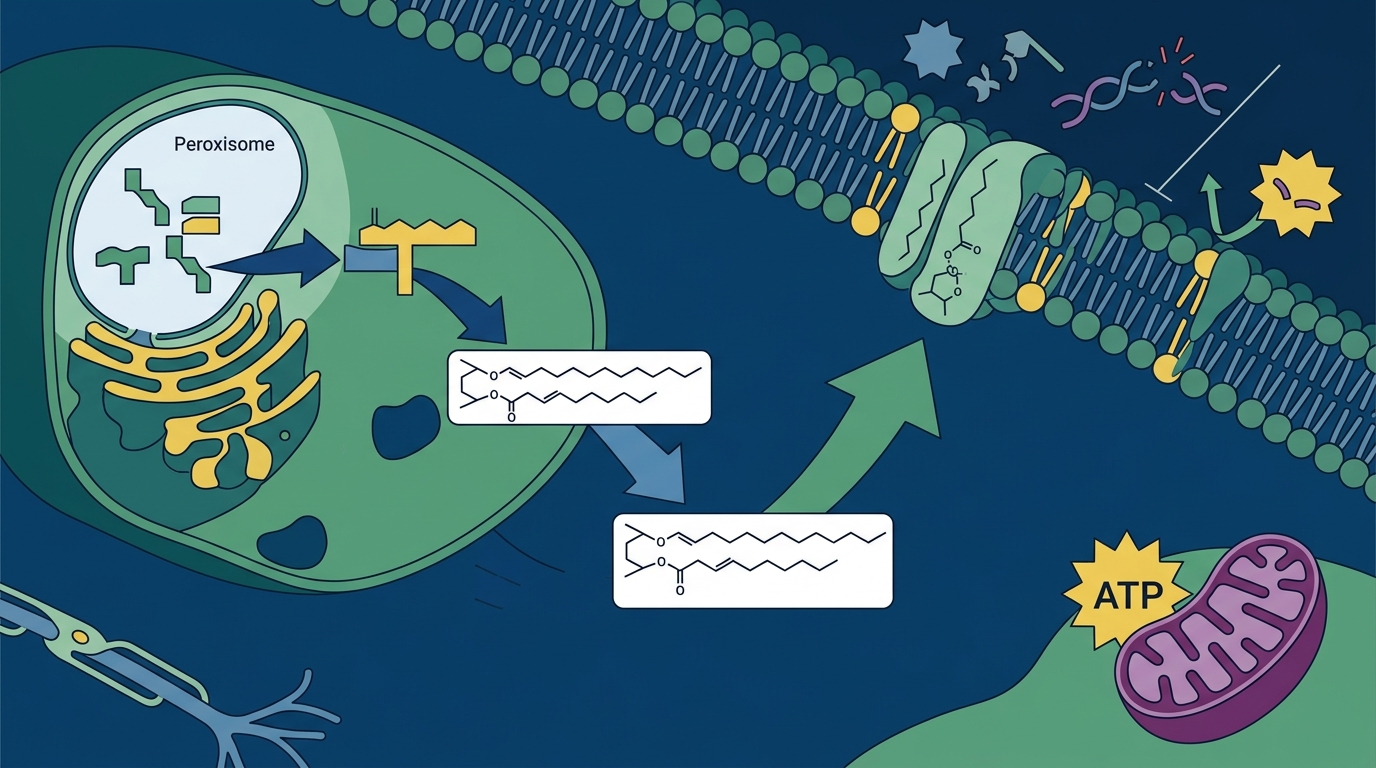
The synthesis of plasmalogens is a complex, multi-step process that relies heavily on the proper function of peroxisomes. Peroxisomes are small, membrane-bound organelles responsible for breaking down very long-chain fatty acids and synthesizing ether phospholipids. The initial steps of plasmalogen production occur exclusively within the peroxisome, making this organelle the gatekeeper of plasmalogen availability.
The process begins with the formation of dihydroxyacetone phosphate (DHAP), which is then converted to alkyl-DHAP by the enzyme alkyl-DHAP synthase (AGPS). This step is the rate-limiting factor in plasmalogen synthesis. If peroxisomal function is compromised, this pathway is disrupted, leading to a global deficiency of plasmalogens. This dependency explains why defects in peroxisomal biogenesis often result in severe neurological deficits.
Once the alkyl chain is established in the peroxisome, the lipid is transported to the endoplasmic reticulum for further processing. Here, the vinyl-ether bond is formed, completing the plasmalogen structure. This two-organelle coordination highlights the fragility of the system; a failure in either the peroxisome or the endoplasmic reticulum can halt production. For a deeper understanding of how the body naturally produces these molecules, you can explore the complete science of biosynthesis on our learning hub.
Impact on Synaptic Function and Myelin
The brain is the most plasmalogen-rich organ in the body, and its neurons are uniquely dependent on these lipids for survival and function. Plasmalogens are integral to the structure of the myelin sheath, the protective covering around nerve fibers. Myelin allows for the rapid transmission of electrical signals along neurons. When plasmalogen levels are adequate, myelin remains stable and intact. However, a deficiency can lead to demyelination, slowing neural communication and contributing to cognitive decline.
At the synapse, plasmalogens play a role in neurotransmitter release and receptor function. A synapse is the communication site where one nerve cell passes information to another cell, and this process requires precise membrane dynamics. Plasmalogens facilitate the fusion of vesicles with the presynaptic membrane, ensuring that neurotransmitters are released efficiently. Without sufficient plasmalogens, synaptic transmission becomes erratic, affecting memory, learning, and motor control.
Furthermore, plasmalogens influence the formation of lipid rafts, specialized microdomains in the cell membrane that organize signaling proteins. These rafts are crucial for the processing of amyloid precursor protein (APP). Disruptions in plasmalogen levels can alter APP processing, potentially increasing the production of amyloid-beta peptides, which are associated with Alzheimer's disease. Understanding how the synapse works reveals the critical role these lipids play in maintaining cognitive integrity.
The Link to Neurodegeneration
Research has established a strong correlation between low plasmalogen levels and various neurodegenerative conditions. In Alzheimer's disease, post-mortem brain tissue analysis consistently shows reduced plasmalogen concentrations, particularly in the hippocampus and cortex. This reduction is not just a consequence of neuronal death but appears to precede it, suggesting that plasmalogen deficiency may be an early driver of the disease.
Similarly, in Parkinson's disease, oxidative stress plays a central role in the degeneration of dopaminergic neurons. Plasmalogens act as a first line of defense against this stress. When they are depleted, neurons become vulnerable to lipid peroxidation, leading to mitochondrial dysfunction and cell death. The metabolic system’s role in plasmalogen deficient diseases is complex, involving interactions between lipid metabolism, inflammation, and cellular energy production.
Other conditions, such as frontotemporal dementia and vascular dementia, also show signs of altered lipid profiles. The decline in plasmalogens affects the brain's ability to repair itself and maintain homeostasis. As we age, the efficiency of peroxisomal function naturally declines, leading to a gradual reduction in plasmalogen synthesis. This age-related decline may explain why neurodegenerative diseases are more prevalent in older populations. For more insights into how plasmalogens influence aging, review our detailed analysis of cellular resilience.
Measurement and Biomarkers
Assessing plasmalogen levels is becoming an important tool in understanding individual brain health and neurodegenerative risk. Traditional blood tests do not typically measure plasmalogens, requiring specialized lipidomics assays. These advanced health measurements can detect subtle changes in lipid composition before clinical symptoms appear.
Plasmalogen biomarkers, such as plasmenylethanolamine and plasmenylcholine, can be measured in plasma or cerebrospinal fluid. Low levels of these biomarkers have been associated with cognitive impairment and brain atrophy. Longitudinal tracking of these markers can provide a more precise view of healthspan and neurological decline than standard testing alone.
Understanding plasmalogen levels allows for early intervention strategies. By identifying individuals with low plasmalogen profiles, healthcare providers can implement lifestyle or therapeutic interventions aimed at supporting peroxisomal function and reducing oxidative stress. This proactive approach is key to preserving cognitive function in later life.
Key Takeaways
- Plasmalogens are ether phospholipids essential for membrane integrity and antioxidant defense in the brain.
- Peroxisomes are the primary site for the initial steps of plasmalogen biosynthesis, making their function critical.
- Low plasmalogen levels are consistently found in the brains of patients with Alzheimer's and Parkinson's disease.
- Plasmalogens support myelin stability and synaptic transmission, both of which are vital for cognitive health.
- Advanced lipidomics testing can measure plasmalogen biomarkers to assess neurodegenerative risk.
- Aging is associated with a natural decline in peroxisomal function, leading to reduced plasmalogen synthesis.
- Supporting plasmalogen levels may help mitigate oxidative stress and preserve brain health.
Frequently Asked Questions
What is the primary function of plasmalogens in the brain?
Plasmalogens serve as critical antioxidants and structural components of cell membranes, protecting neurons from oxidative damage and supporting synaptic function.
How do peroxisomes contribute to brain health?
Peroxisomes are responsible for the initial steps of plasmalogen synthesis. Their proper function ensures the production of these vital lipids, which are essential for myelin integrity and neuronal survival.
Can low plasmalogen levels cause neurodegeneration?
While low plasmalogen levels are strongly associated with neurodegenerative diseases, they are often considered a contributing factor or early marker rather than the sole cause. They reflect a decline in cellular resilience.
How are plasmalogen levels measured?
Plasmalogen levels are measured through specialized lipidomics assays that analyze plasma or cerebrospinal fluid for specific biomarkers like plasmenylethanolamine.
Does aging affect plasmalogen production?
Yes, aging is associated with a decline in peroxisomal function, which leads to reduced plasmalogen synthesis and increased vulnerability to oxidative stress in the brain.
What is the difference between plasmalogens and other phospholipids?
Plasmalogens contain a unique vinyl-ether bond at the sn-1 position, which provides them with superior antioxidant properties compared to standard ester-linked phospholipids.
Are there treatments to increase plasmalogen levels?
Research is ongoing into dietary and therapeutic interventions that may support plasmalogen synthesis or provide exogenous sources. Current focus is on supporting peroxisomal health through lifestyle factors.
Why is myelin important for cognitive function?
Myelin insulates nerve fibers, allowing for rapid signal transmission. Plasmalogens are a key component of myelin, and their deficiency can lead to demyelination and slowed cognitive processing.
Next Steps for Brain Health
Understanding the role of plasmalogens in neurodegeneration offers a new perspective on brain health. By focusing on the underlying biology of peroxisomal function and lipid metabolism, we can better protect our cognitive future. If you are interested in learning more about how to support your brain's natural defenses, we invite you to explore our resources on plasmalogens and health.
For personalized insights or to discuss how advanced health measurements can help you, please contact our team today. Stay informed and take proactive steps toward a healthier, more resilient brain.