

Plasmalogens: The Critical Lipid for Brain, Heart, and Cellular Health
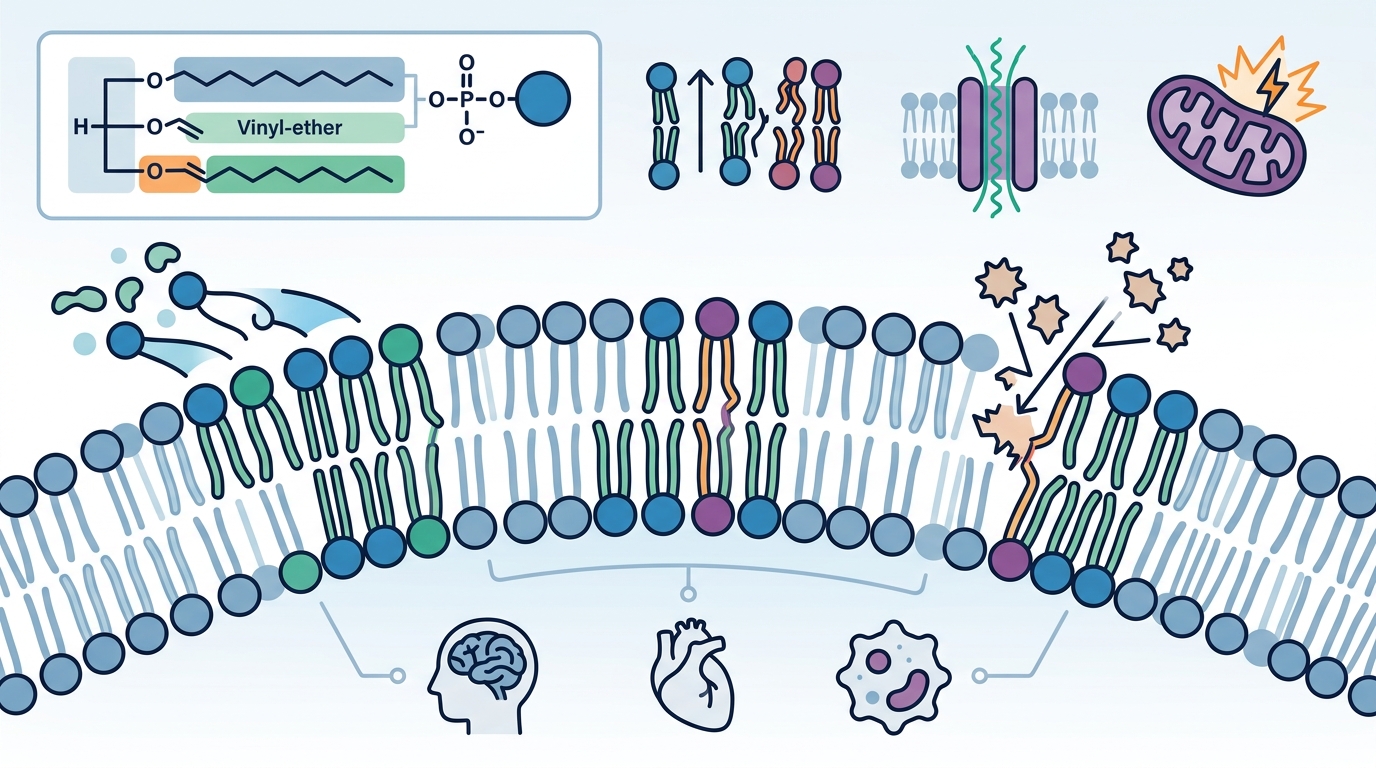
Plasmalogens are a specialized class of ether phospholipids that serve as the primary structural and functional components of cell membranes, particularly in the brain, heart, and immune system. Unlike standard phospholipids, plasmalogens contain a unique vinyl-ether bond at the sn-1 position, which provides exceptional protection against oxidative stress and lipid peroxidation. This distinctive chemical structure allows them to act as sacrificial antioxidants, absorbing free radicals to preserve the integrity of vital cellular machinery. Recent research highlights their critical role in maintaining membrane fluidity, facilitating signal transduction, and supporting mitochondrial energy production. As we age, endogenous plasmalogen levels naturally decline, which is strongly correlated with increased risks of neurodegenerative diseases, cardiovascular dysfunction, and metabolic disorders. Understanding the biology of plasmalogens is essential for anyone interested in longevity, cognitive preservation, and cellular resilience. (About This Project Plasmalogen)
What Are Plasmalogens?
To understand plasmalogens, one must first look at the fundamental architecture of the human body. Plasmalogens are a specialized class of ether phospholipids found in high concentrations in cell membranes. They are not merely structural bricks; they are dynamic regulators of cellular health. While most phospholipids in the body have an ester bond at the sn-1 position, plasmalogens possess a vinyl-ether bond. This single chemical difference is profound. The vinyl-ether bond is highly susceptible to oxidation, meaning it reacts with free radicals before those radicals can damage the more critical ester bonds or the DNA within the cell.
This makes plasmalogens the body's first line of defense against oxidative stress. They are particularly abundant in tissues with high metabolic rates and high oxygen consumption. The brain, for instance, relies heavily on plasmalogens to maintain the integrity of neuronal membranes. The heart, which beats continuously and generates significant oxidative byproducts, also depends on high plasmalogen levels for proper function. Without adequate plasmalogens, cell membranes become rigid, signaling pathways break down, and cellular repair mechanisms fail.
Plasmalogens are synthesized in the peroxisomes, a specialized organelle responsible for breaking down very long-chain fatty acids and synthesizing ether lipids. This process is complex and requires specific enzymes. When peroxisomal function is compromised, plasmalogen synthesis halts, leading to severe developmental and physiological issues. This underscores the importance of not just the presence of plasmalogens, but the health of the cellular machinery that produces them.
How Plasmalogens Work in the Body
The functionality of plasmalogens extends far beyond simple membrane structure. They are active participants in cellular communication and energy production. Plasmalogens are essential for maintaining membrane fluidity, which allows proteins and receptors to move freely and interact correctly. This fluidity is crucial for neurotransmitter release in the brain and calcium signaling in muscle cells.
Neurotransmission and Synaptic Function
In the brain, plasmalogens are concentrated in the myelin sheath, which insulates nerve fibers and ensures rapid signal transmission. They also play a vital role at the synapse, the junction where neurons communicate. Research indicates that plasmalogens facilitate the release of neurotransmitters and the recycling of synaptic vesicles. When plasmalogen levels drop, synaptic efficiency declines, leading to cognitive fog, memory issues, and slower processing speeds. This is why plasmalogens are often referred to as "brain lipids."
Immune System Modulation
Plasmalogens are also key regulators of the immune response. They help modulate inflammation by influencing the production of cytokines and other inflammatory mediators. By protecting immune cells from oxidative damage, plasmalogens ensure that the immune system can respond effectively to pathogens without causing excessive collateral damage to healthy tissues. This balance is critical for preventing chronic inflammation, a root cause of many age-related diseases.
Cardiovascular Health
The heart is one of the most plasmalogen-rich organs in the body. Plasmalogens in cardiac tissue help protect against ischemia-reperfusion injury, which occurs when blood flow returns to tissue after a period of lack of oxygen. This type of injury generates a massive burst of free radicals. Plasmalogens absorb these radicals, preventing cell death and maintaining heart muscle integrity. Studies have shown that reduced plasmalogen levels in the heart are associated with an increased risk of heart failure and arrhythmias.
Plasmalogens and Health Implications
The decline of plasmalogens is not just a biological curiosity; it is a significant driver of age-related pathology. As we age, the efficiency of peroxisomal function decreases, leading to lower plasmalogen synthesis. This decline is observed in conditions such as Alzheimer's disease, Parkinson's disease, and cardiovascular disease.
Neurodegenerative Diseases
In Alzheimer's disease, post-mortem brain tissue analysis consistently reveals significantly reduced levels of plasmalogens, particularly those containing DHA (docosahexaenoic acid). This deficiency is not merely a consequence of the disease but may contribute to its progression by increasing neuronal vulnerability to oxidative stress and amyloid-beta toxicity. Restoring plasmalogen levels has been shown in animal models to improve cognitive function and reduce neuropathology.
Metabolic Health
Plasmalogens also influence metabolic health. They play a role in insulin signaling and glucose metabolism. Low plasmalogen levels are associated with insulin resistance and type 2 diabetes. By improving membrane fluidity in muscle and fat cells, plasmalogens can enhance insulin sensitivity, allowing cells to take up glucose more efficiently. This highlights the systemic impact of plasmalogens on metabolic stability.
Longevity and Healthspan
Longevity is not just about living longer; it is about living well. Plasmalogens are central to the concept of healthspan, the period of life spent in good health. By protecting cells from oxidative damage, supporting mitochondrial function, and modulating inflammation, plasmalogens help maintain physical and cognitive function well into old age. Preserving plasmalogen levels is therefore a key strategy for extending healthspan.
Measurement and Testing
Traditionally, plasmalogens have been difficult to measure accurately. Standard lipid panels do not include plasmalogens. However, advanced health measurement techniques are now making it possible to assess plasmalogen levels in clinical settings. Advanced health measurement is changing how health and longevity are understood by revealing early biological changes.
Advanced Lipidomics
Advanced lipidomics uses mass spectrometry to identify and quantify specific lipid species in the blood. This allows for the precise measurement of plasmalogen levels, including different subclasses such as PE-P (ethanolamine plasmalogens) and PC-P (choline plasmalogens). These measurements provide a detailed picture of an individual's plasmalogen status and can help guide personalized interventions.
Longitudinal Tracking
Because plasmalogen levels can fluctuate based on diet, stress, and other factors, longitudinal tracking is more informative than a single test. Monitoring plasmalogen levels over time can reveal trends and help assess the effectiveness of interventions such as dietary changes, supplementation, or lifestyle modifications.
Signs of Low Plasmalogens
While there is no single "plasmalogen deficiency test" available in primary care, certain clinical signs and symptoms may suggest low plasmalogen levels. These include cognitive decline, memory loss, brain fog, fatigue, muscle weakness, and increased susceptibility to infections. In severe genetic disorders affecting peroxisomal function, plasmalogen deficiency is present from birth and leads to profound developmental delays and physical abnormalities.
Clinical Correlations
In acquired conditions, low plasmalogen levels are often correlated with chronic inflammation, oxidative stress, and metabolic dysfunction. Individuals with high oxidative stress, such as those with chronic diseases or high environmental toxin exposure, may have accelerated plasmalogen depletion. Recognizing these correlations can help in early intervention and prevention strategies.
Key Takeaways
- Plasmalogens are specialized ether phospholipids that protect cell membranes from oxidative damage via their unique vinyl-ether bond.
- They are critical for brain health, supporting neurotransmission, myelin integrity, and cognitive function.
- Plasmalogen levels decline with age, which is linked to increased risk of neurodegenerative and cardiovascular diseases.
- Advanced lipidomics is the primary method for accurately measuring plasmalogen levels in clinical settings.
- Supporting plasmalogen health involves reducing oxidative stress, supporting peroxisomal function, and potentially supplementing with precursors.
- Plasmalogens modulate inflammation and immune response, playing a key role in systemic health.
- Longitudinal tracking of plasmalogen levels provides valuable insights into individual healthspan and aging trajectories.
Frequently Asked Questions
What exactly is a plasmalogen?
A plasmalogen is a type of ether phospholipid found in cell membranes that contains a vinyl-ether bond at the sn-1 position, providing unique antioxidant properties.
Why are plasmalogens important for the brain?
Plasmalogens are highly concentrated in the brain, where they support myelin sheath integrity, neurotransmitter release, and protection against oxidative stress, all of which are essential for cognitive function.
Can plasmalogen levels be tested?
Yes, plasmalogen levels can be measured using advanced lipidomics techniques, such as mass spectrometry, which allow for the precise quantification of specific plasmalogen subclasses in blood samples.
Do plasmalogen levels decrease with age?
Yes, plasmalogen levels naturally decline with age due to decreased peroxisomal function and increased oxidative stress, which is associated with various age-related diseases.
How can I support my plasmalogen levels?
Supporting plasmalogen levels involves reducing oxidative stress through diet and lifestyle, supporting peroxisomal health, and potentially using supplements that provide precursors for plasmalogen synthesis.
Are plasmalogens involved in heart health?
Yes, plasmalogens are abundant in cardiac tissue and help protect the heart from oxidative damage and ischemia-reperfusion injury, supporting overall cardiovascular health.
What is the difference between plasmalogens and other phospholipids?
The key difference is the vinyl-ether bond at the sn-1 position in plasmalogens, which makes them more susceptible to oxidation and thus better at acting as sacrificial antioxidants compared to ester-linked phospholipids.
Next Steps for Your Health
Understanding and optimizing your plasmalogen levels is a powerful step toward enhancing your longevity and cognitive health. At Plasmalogen Science, we are dedicated to providing the latest research and insights on this critical lipid. We invite you to explore our comprehensive resources on advanced health measurements to learn how you can monitor your biological age and healthspan. For a deeper dive into the science, read our guide on what plasmalogens are and how they influence cellular energy. If you are interested in the broader context of health, check out our article on plasmalogens in health and disease. To stay informed about the latest findings, visit our research and science hub. For personalized guidance, please contact us today.