

What Are Plasmalogens and Why Are They Important for Human Health?
Plasmalogens are specialized ether phospholipids that serve as critical structural and functional components of cell membranes throughout the human body. Unlike common fats, these unique molecules contain a vinyl-ether bond that provides exceptional protection against oxidative damage, making them essential for cellular resilience. Recent research into advanced health measurements indicates that plasmalogen levels decline significantly with age, linking them directly to longevity and metabolic health. According to data from longevity studies, this decline is a key factor in the onset of chronic diseases, highlighting the importance of understanding these lipids for maintaining a robust healthspan. (About This Project Plasmalogen)
What Are Plasmalogens?
Plasmalogens are a rare class of phospholipids found in high concentrations in the brain, heart, and immune cells. They are distinct because of their unique chemical structure, which includes a vinyl-ether linkage at the sn-1 position of the glycerol backbone. This structure is not found in other common membrane lipids like phosphatidylcholine or phosphatidylethanolamine.
Plasmalogens are specialized ether phospholipids found in cell membranes throughout the body. They are especially important in tissues with high structural, metabolic, and signaling demands. The synthesis of these molecules occurs primarily in peroxisomes, organelles responsible for breaking down fatty acids and synthesizing complex lipids. This process is complex and requires multiple enzymatic steps, making it sensitive to genetic and environmental factors.
These lipids are not just passive structural elements. They actively participate in cell signaling, membrane fluidity, and the regulation of ion channels. Their presence ensures that cell membranes remain flexible and functional, allowing cells to communicate effectively with their environment. Without adequate plasmalogens, cellular integrity is compromised, leading to increased vulnerability to stress and damage.
How Plasmalogens Work in the Body
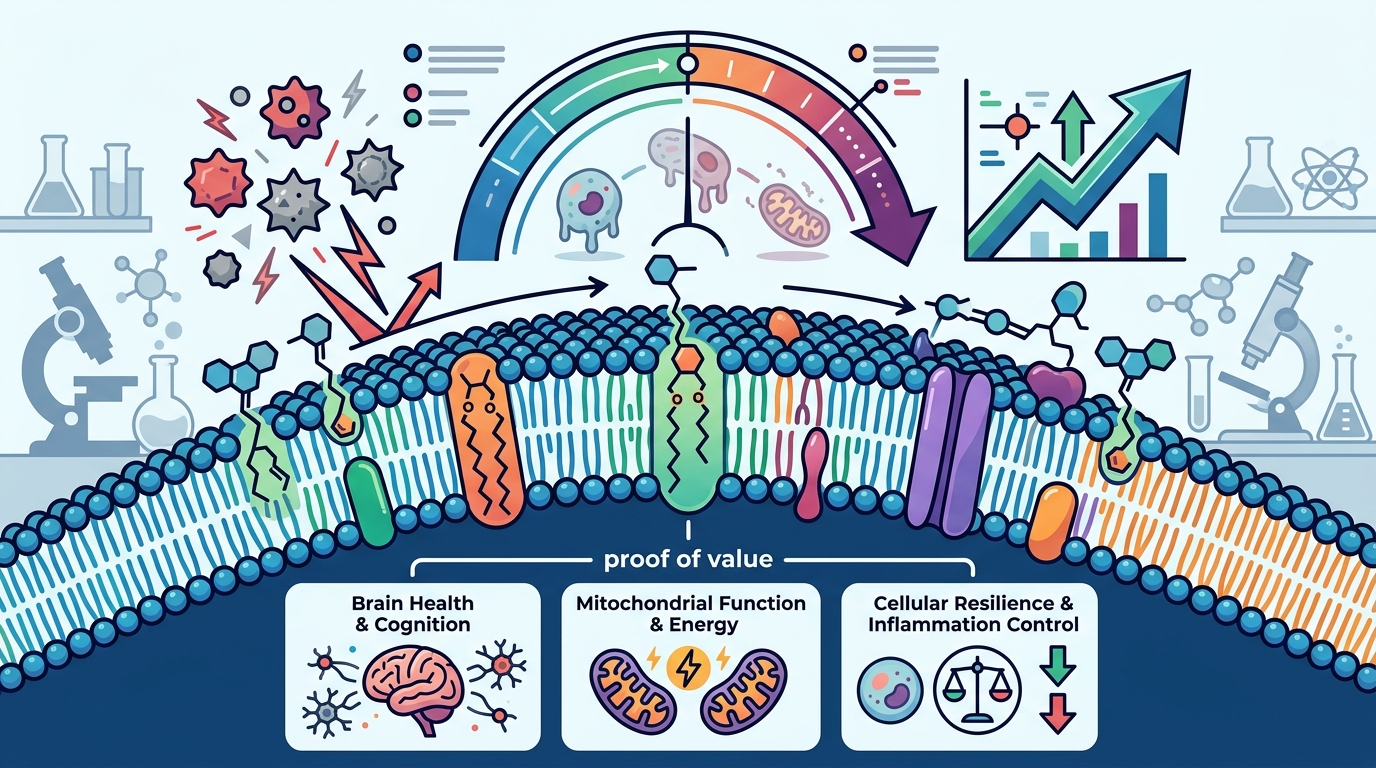
The primary function of plasmalogens is to protect cells from oxidative stress. The vinyl-ether bond acts as a sacrificial target for free radicals. When reactive oxygen species attack the cell membrane, they preferentially oxidize the plasmalogen bond rather than the polyunsaturated fatty acids in the rest of the membrane. This mechanism preserves the structural integrity of the cell and prevents lipid peroxidation, a chain reaction that can destroy cell membranes.
Plasmalogens also play a crucial role in neurotransmission and synaptic function. A synapse is the communication site where one nerve cell passes information to another cell. This receiving cell may be another neuron, a muscle cell, a gland cell, or another specialized target cell. Synapses allow the nervous system to coordinate thought, movement, sensation, memory, reflexes, autonomic control, and communication across the brain and body. The nervous system depends on speed, timing, precision, and adaptability. Synapses make this possible by converting electrical activity into chemical signals, then translating those chemical signals into cellular responses.
Furthermore, plasmalogens are vital for mitochondrial function. Mitochondria are the powerhouses of the cell, generating the energy required for all cellular processes. Plasmalogens help maintain the curvature and stability of mitochondrial membranes, ensuring efficient energy production. When plasmalogen levels drop, mitochondrial efficiency declines, leading to reduced cellular energy and increased fatigue.
Health Implications of Low Plasmalogen Levels
As we age, the body's ability to produce plasmalogens naturally declines. This decline is not just a marker of aging but a contributor to age-related diseases. Low plasmalogen levels have been linked to a variety of conditions, including neurodegenerative disorders, cardiovascular disease, and metabolic syndrome.
In the brain, low plasmalogen levels are associated with cognitive decline and neurodegenerative diseases such as Alzheimer's. The brain is particularly vulnerable because it has high metabolic demands and is rich in polyunsaturated fatty acids, which are prone to oxidative damage. Without sufficient plasmalogens to protect these fatty acids, neuronal damage can accelerate.
Bones and muscles are also deeply affected in certain plasmalogen deficient diseases because the skeletal and muscular systems depend on membrane biology, lipid metabolism, energy production, tissue development, and cellular repair. Plasmalogen deficiency can lead to reduced mobility, muscle tone abnormalities, and impaired tissue development. These conditions may involve skeletal growth abnormalities, shortened long bones, abnormal bone mineralization patterns, joint contractures, and reduced physical resilience.
Cardiovascular health is another area significantly impacted. Plasmalogens help regulate inflammation and immune response in blood vessels. Low levels can contribute to vascular stiffness and increased risk of heart disease. By maintaining healthy plasmalogen levels, individuals may support better cardiovascular function and reduce systemic inflammation.
Measurement and Testing
Understanding plasmalogen levels requires advanced health measurement techniques. Traditional healthcare often focuses on symptoms, diagnosis, and treatment after problems become obvious. That approach is essential in acute care, but it does not always capture the earlier biological changes that may occur long before a condition is formally identified. Advanced health measurement looks deeper. It examines patterns in metabolism, inflammation, cellular energy, lipid biology, oxidative stress, cardiovascular function, hormone signaling, nutrient status, immune activity, organ function, and biological aging.
Standard testing often focuses on broad categories like blood cell counts, glucose regulation, kidney function, liver function, cholesterol and triglycerides, thyroid markers, basic inflammation markers, electrolytes, and protein levels. These markers are valuable. They are also incomplete. A person can have normal routine labs while still showing deeper biochemical patterns that suggest declining resilience, altered lipid metabolism, oxidative stress, early metabolic dysfunction, or accelerated biological aging.
Advanced testing helps fill that gap. Lipidomics, the large-scale study of lipids, allows for the precise measurement of plasmalogen subtypes. This level of detail provides a more accurate picture of cellular health and longevity potential. By tracking plasmalogen levels over time, individuals and healthcare providers can identify trends and intervene before significant damage occurs.
Plasmalogens vs. Standard Lipids
To understand the unique value of plasmalogens, it is helpful to compare them with standard lipids found in the body. While both are essential, their roles and mechanisms differ significantly.
| Feature | Plasmalogens | Standard Phospholipids |
|---|---|---|
| Chemical Structure | Vinyl-ether bond at sn-1 position | Esther bond at sn-1 position |
| Primary Function | Oxidative protection, membrane fluidity | Structural support, energy storage |
| Synthesis Location | Peroxisomes and Endoplasmic Reticulum | Endoplasmic Reticulum |
| Concentration in Brain | Very High | Moderate |
| Role in Aging | Declines significantly, linked to disease | Relatively stable |
This comparison highlights why plasmalogens are often referred to as "super lipids." Their unique structure provides a level of protection that standard lipids cannot match. This is particularly important in high-stress environments like the brain and heart.
Key Takeaways
- Definition: Plasmalogens are specialized ether phospholipids with a unique vinyl-ether bond that provides critical oxidative protection.
- Brain Health: They are abundant in the brain and essential for synaptic function, memory, and cognitive resilience.
- Aging Link: Plasmalogen levels naturally decline with age, contributing to neurodegenerative and cardiovascular diseases.
- Measurement: Advanced lipidomics testing is required to accurately measure plasmalogen levels, as standard panels do not include them.
- Cellular Protection: They act as sacrificial antioxidants, protecting cell membranes from free radical damage.
- Muscle and Bone: Plasmalogen deficiency can lead to reduced mobility, muscle tone abnormalities, and impaired tissue development.
- Longevity: Maintaining healthy plasmalogen levels is a key strategy for extending healthspan and improving overall vitality.
Frequently Asked Questions
What exactly are plasmalogens?
Plasmalogens are a rare class of phospholipids found in high concentrations in the brain, heart, and immune cells. They are distinct because of their unique chemical structure, which includes a vinyl-ether linkage at the sn-1 position of the glycerol backbone.
Why are plasmalogens important for brain health?
Plasmalogens are vital for neurotransmission and synaptic function. They help maintain the integrity of neuronal membranes and protect against oxidative stress, which is crucial for memory, learning, and cognitive function.
How do plasmalogen levels change with age?
Plasmalogen levels naturally decline as we age. This decline is associated with increased oxidative stress, mitochondrial dysfunction, and a higher risk of age-related diseases such as Alzheimer's and cardiovascular disease.
Can standard blood tests measure plasmalogens?
No, standard blood tests do not typically measure plasmalogen levels. Advanced lipidomics testing is required to accurately assess plasmalogen subtypes and their impact on health.
What happens when plasmalogen levels are low?
Low plasmalogen levels can lead to increased cellular damage, reduced energy production, impaired immune function, and a higher risk of chronic diseases. In severe cases, it can affect bone and muscle development and function.
How does the body produce plasmalogens?
The body produces plasmalogens through a complex biosynthetic pathway that occurs primarily in peroxisomes and the endoplasmic reticulum. This process requires specific enzymes and nutrients to function correctly.
Are there dietary sources of plasmalogens?
While plasmalogens are synthesized by the body, certain dietary components can support their production. However, direct dietary sources are limited, and supplementation or lifestyle interventions may be necessary to maintain optimal levels.
Next Steps for Your Health
Understanding and maintaining healthy plasmalogen levels is a powerful step toward longevity and vitality. By leveraging advanced health measurements and focusing on cellular resilience, you can take control of your healthspan. Explore our comprehensive resources on advanced health measurements to learn more about how to monitor your biomarkers. For a deeper dive into the science, read our guide on what are plasmalogens and how they influence cellular energy. To understand the broader context of these lipids, visit our section on plasmalogens and health. If you have specific questions about your health profile, please contact us for personalized guidance.