

Plasmalogens are specialized ether phospholipids that serve as critical structural and functional components of cell membranes throughout the body, with particularly high concentrations in the brain and nervous system. These unique molecules are essential for maintaining membrane fluidity, protecting cells from oxidative stress, and supporting the integrity of myelin sheaths that insulate nerve fibers. Research indicates that plasmalogen levels naturally decline with age, which has been linked to increased risks of neurodegenerative conditions and cognitive decline. Understanding how plasmalogens support brain function, cell membranes, and myelin is crucial for grasping the broader implications of lipid biology in human health and longevity. (About This Project Plasmalogen)
What Are Plasmalogens?
Plasmalogens are a unique class of ether phospholipids characterized by a vinyl-ether linkage at the sn-1 position of the glycerol backbone. This structural feature distinguishes them from other phospholipids and grants them specialized biological functions. Unlike standard phospholipids that rely on ester linkages, plasmalogens utilize an ether bond that is more resistant to hydrolysis and provides enhanced stability to cell membranes.
These molecules are found in virtually all cell membranes but are present in particularly high concentrations in the brain, heart, and skeletal muscle. The brain contains some of the highest levels of plasmalogens in the body, reflecting their critical role in neural function and cognitive health. Plasmalogens are synthesized in peroxisomes, specialized organelles responsible for breaking down fatty acids and building complex lipids. This biosynthetic pathway is essential for producing the specialized lipids required for healthy cellular function.
Plasmalogens are not merely structural components; they actively participate in cellular signaling, membrane dynamics, and protection against oxidative damage. Their presence in cell membranes influences how cells communicate, respond to stress, and maintain homeostasis. When plasmalogen levels are optimal, cells function more efficiently. When levels decline, cellular resilience diminishes, potentially contributing to age-related decline and disease progression.
Cell Membrane Integrity and Fluidity
Cell membranes are dynamic barriers that regulate what enters and exits cells while maintaining internal stability. Plasmalogens play a pivotal role in ensuring these membranes remain fluid, flexible, and functional. Membrane fluidity is essential for proper protein function, signal transduction, and cellular communication. Without adequate plasmalogens, membranes can become rigid or unstable, impairing cellular processes.
The vinyl-ether linkage in plasmalogens allows them to interact differently with surrounding lipids and proteins compared to other phospholipids. This interaction helps maintain optimal membrane curvature and flexibility, which is particularly important in neurons that require rapid shape changes during synaptic transmission. Cell membranes rely on this balance to function properly, and plasmalogens provide the structural foundation for that balance.
Research into advanced health measurements reveals that lipid composition directly impacts cellular health. When plasmalogen levels are sufficient, cell membranes maintain their integrity and responsiveness. This integrity supports nutrient transport, waste removal, and signal reception. Conversely, when plasmalogen levels drop, membrane function can become compromised, leading to reduced cellular efficiency and increased vulnerability to damage.
Myelin Sheath Support and Nerve Conduction
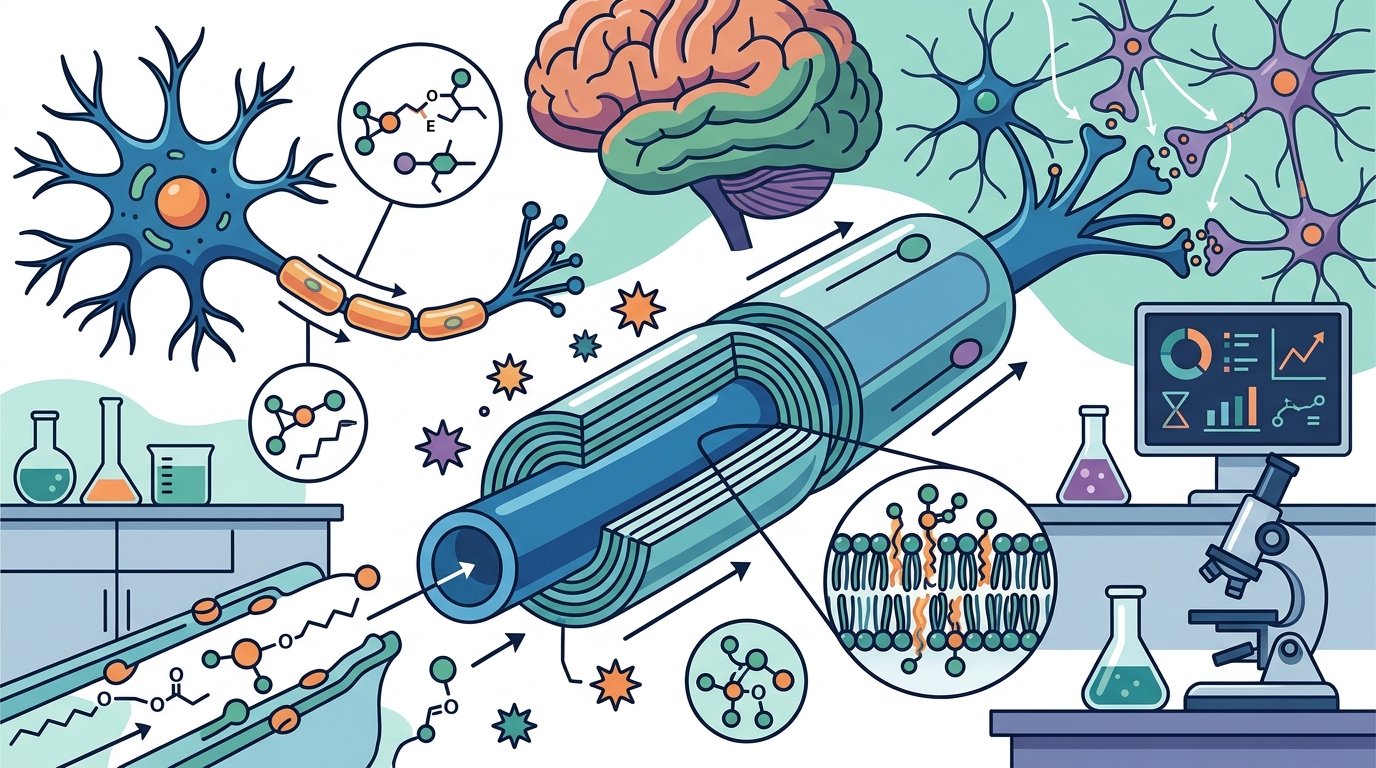
Myelin is a fatty substance that wraps around nerve fibers, acting as an insulating layer that speeds up electrical signal transmission. Plasmalogens are abundant in myelin sheaths, where they contribute to the structural integrity and functional efficiency of these critical insulating layers. The high concentration of plasmalogens in myelin reflects their importance in maintaining the specialized environment required for rapid nerve conduction.
Myelin sheaths are composed of multiple layers of lipid-rich membrane that surround axons. Plasmalogens within these layers help maintain the compact structure necessary for efficient signal propagation. When plasmalogen levels are adequate, myelin remains stable and functional. When levels decline, myelin integrity can be compromised, potentially leading to slower nerve conduction and impaired neural communication.
The relationship between plasmalogens and myelin is particularly significant in the context of neurological health. Myelin protects nerve fibers and ensures that signals travel quickly and accurately throughout the nervous system. Plasmalogens support this protection by reinforcing the lipid structure of myelin and providing antioxidant defense against oxidative damage that can degrade myelin over time. This support is essential for maintaining cognitive function, motor control, and sensory processing.
Synaptic Function and Neurotransmission
A synapse is the communication site where one nerve cell passes information to another cell. Synapses allow the nervous system to coordinate thought, movement, sensation, memory, reflexes, autonomic control, and communication across the brain and body. Plasmalogens are concentrated in synaptic membranes, where they support the complex processes involved in neurotransmitter release, receptor function, and signal termination.
Synaptic function depends on precise membrane dynamics. Plasmalogens contribute to this precision by maintaining membrane fluidity and structure at the synapse. This fluidity is necessary for the fusion of vesicles containing neurotransmitters with the presynaptic membrane, a process required for neurotransmitter release. Without adequate plasmalogens, this fusion process can become less efficient, potentially impairing synaptic transmission.
Furthermore, plasmalogens support the function of receptors and ion channels embedded in synaptic membranes. These proteins require a specific lipid environment to operate correctly. Plasmalogens help create and maintain this environment, ensuring that receptors respond appropriately to neurotransmitters and that ion channels open and close with proper timing. This support is fundamental to learning, memory formation, and overall cognitive performance.
Oxidative Protection and Cellular Defense
One of the most distinctive functions of plasmalogens is their role as antioxidants. The vinyl-ether linkage in plasmalogens can sacrificially react with reactive oxygen species, protecting other critical cellular components from oxidative damage. This antioxidant capacity is particularly valuable in the brain, which has high metabolic activity and is especially vulnerable to oxidative stress.
Oxidative stress occurs when there is an imbalance between the production of reactive oxygen species and the body's ability to neutralize them. The brain consumes a disproportionate amount of oxygen relative to its size, generating significant oxidative byproducts. Plasmalogens help mitigate this damage by intercepting free radicals before they can harm cell membranes, proteins, or DNA. This protective function is essential for preserving neuronal health and preventing oxidative damage that contributes to neurodegeneration.
Advanced health measurements can reveal patterns of oxidative stress that may not be apparent through standard testing. By examining lipid profiles and plasmalogen levels, clinicians can gain insight into a patient's oxidative burden and cellular resilience. Maintaining adequate plasmalogen levels supports the body's natural antioxidant defenses, helping to protect the brain and other organs from cumulative oxidative damage over time.
Measurement and Testing of Plasmalogen Levels
Understanding plasmalogen levels is becoming increasingly important in the field of advanced health measurement. Traditional healthcare often focuses on symptoms, diagnosis, and treatment after problems become obvious. That approach is essential in acute care, but it does not always capture the earlier biological changes that may occur long before a condition is formally identified. Advanced health measurement looks deeper, examining patterns in metabolism, inflammation, cellular energy, lipid biology, and oxidative stress.
Plasmalogen measurement belongs in advanced health testing because it provides insight into membrane health, oxidative status, and cellular resilience. Standard testing may miss deeper changes in lipid composition that affect cellular function. Advanced testing helps fill that gap by revealing patterns that indicate declining resilience or accelerated biological aging.
| Testing Approach | What It Measures | Relevance to Plasmalogens |
|---|---|---|
| Standard Lipid Panel | Cholesterol and triglycerides | Limited insight into specialized phospholipids |
| Advanced Lipidomics | Specific phospholipid classes | Direct plasmalogen quantification |
| Oxidative Stress Markers | Reactive oxygen species indicators | Indirect assessment of plasmalogen demand |
| Longitudinal Tracking | Changes over time | Monitors plasmalogen trajectory and trends |
Longitudinal tracking of plasmalogen levels can be more powerful than one-time testing. By monitoring changes over time, individuals and clinicians can observe how plasmalogen levels respond to lifestyle interventions, dietary changes, or aging. This information supports more precise views of healthspan and helps guide decisions about health optimization strategies.
Key Takeaways
- Plasmalogens are specialized ether phospholipids with high concentrations in the brain and nervous system.
- They maintain cell membrane fluidity, integrity, and flexibility, which are essential for cellular function.
- Plasmalogens are abundant in myelin sheaths, supporting nerve conduction and neurological health.
- They play a critical role in synaptic function, supporting neurotransmitter release and receptor activity.
- Plasmalogens act as antioxidants, protecting cells from oxidative damage, particularly in the brain.
- Plasmalogen levels naturally decline with age, which is linked to increased risks of cognitive decline.
- Advanced health measurement and lipidomics provide insights into plasmalogen status that standard testing cannot.
Frequently Asked Questions
What exactly are plasmalogens?
Plasmalogens are a unique class of ether phospholipids characterized by a vinyl-ether linkage at the sn-1 position of the glycerol backbone. They are found in high concentrations in the brain, heart, and skeletal muscle, where they support membrane integrity, antioxidant defense, and cellular signaling.
How do plasmalogens support myelin?
Plasmalogens are abundant in myelin sheaths, where they contribute to the structural integrity and functional efficiency of these insulating layers. They help maintain the compact structure necessary for efficient nerve signal propagation and protect myelin from oxidative damage.
Why are plasmalogens important for brain function?
Plasmalogens support brain function by maintaining synaptic membrane fluidity, facilitating neurotransmitter release, protecting neurons from oxidative stress, and supporting the integrity of myelin sheaths. Their high concentration in the brain reflects their critical role in cognitive health and neural communication.
Do plasmalogen levels decrease with age?
Yes, plasmalogen levels naturally decline with age. This decline has been associated with increased risks of neurodegenerative conditions, cognitive decline, and reduced cellular resilience. Monitoring plasmalogen levels can provide insight into biological aging and healthspan.
Can plasmalogen levels be measured through testing?
Plasmalogen levels can be measured through advanced lipidomics and specialized health testing. Standard lipid panels do not typically include plasmalogen quantification, so advanced testing is required to assess plasmalogen status and membrane health.
What role do plasmalogens play in oxidative stress?
Plasmalogens act as antioxidants by using their vinyl-ether linkage to sacrificially react with reactive oxygen species. This protects other critical cellular components from oxidative damage, particularly in the brain, which is highly vulnerable to oxidative stress due to its high metabolic activity.
How does plasmalogen deficiency affect the body?
Plasmalogen deficiency can affect cell membrane integrity, nerve conduction, synaptic function, and antioxidant defense. In severe cases, it can contribute to neurological symptoms, reduced mobility, and impaired cellular resilience. Maintaining adequate plasmalogen levels supports overall cellular health and function.
Contact Plasmalogen Science
Understanding plasmalogen biology is essential for grasping the foundations of cellular health, neurological function, and healthy aging. If you want to learn more about how plasmalogens support your body, explore our comprehensive resources on what plasmalogens are, how they work, and plasmalogens and health. For those interested in advanced health measurement and plasmalogen testing, visit our advanced health measurements page to learn how lipidomics and biomarker analysis can provide deeper insights into your healthspan.
Ready to take the next step in understanding your plasmalogen status? Contact Plasmalogen Science today to schedule a consultation and explore how advanced plasmalogen measurement can inform your health optimization strategy.