

Plasmalogens are specialized ether phospholipids that serve as the first line of defense for cellular integrity. These unique molecules are critical for maintaining the structural stability of cell membranes, particularly in the brain and heart. Without adequate plasmalogen levels, cells become vulnerable to oxidative damage and inflammation. This guide explores the intricate biological processes behind plasmalogen production and the specific nutrients required to support this vital pathway. (About This Project Plasmalogen)
What Are Plasmalogens?
Plasmalogens are a distinct class of phospholipids characterized by a vinyl-ether bond at the sn-1 position of the glycerol backbone. This chemical structure is rare in nature and provides unique protective properties. Plasmalogens are specialized ether phospholipids found in cell membranes throughout the body. They are especially important in tissues with high structural, metabolic, and signaling demands. (Home Plasmalogen Science)
Unlike standard phospholipids, plasmalogens act as sacrificial antioxidants. They absorb free radicals to protect the polyunsaturated fatty acids in the rest of the membrane from oxidation. This function is crucial for longevity and cellular health. According to recent research in lipid biology, plasmalogens constitute a significant portion of the phospholipids in the brain and heart. Research indicates that these molecules are essential for proper nerve conduction and cardiac function.
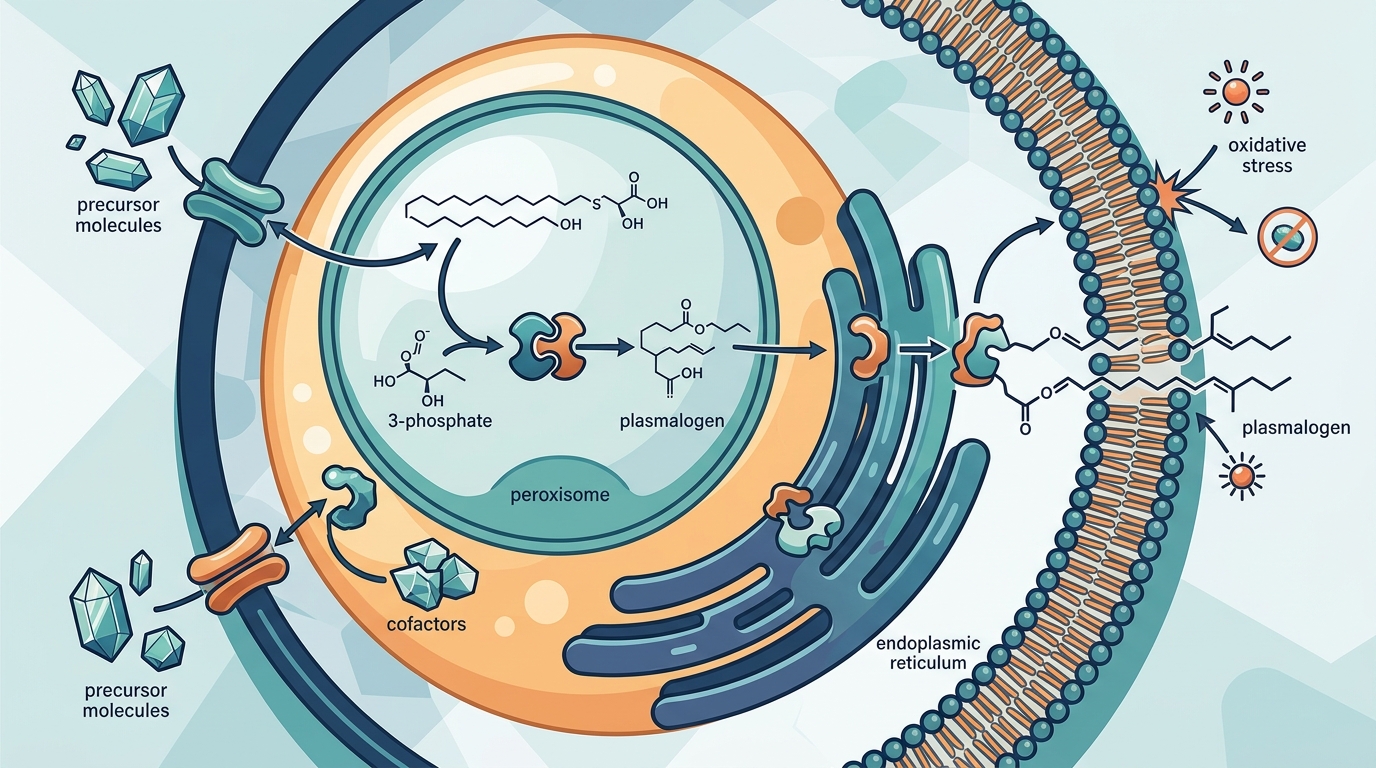
The body produces plasmalogens through a complex series of enzymatic reactions. This process occurs primarily in the peroxisomes and the endoplasmic reticulum. When this production declines, often due to aging or genetic factors, cellular resilience decreases. Understanding this production mechanism is key to maintaining long-term health.
The Biosynthesis Pathway
The production of plasmalogens is a multi-step process that requires precise coordination between two organelles. The journey begins in the peroxisome, where the initial steps of ether lipid synthesis take place. Plasmalogen biosynthesis is a multi-step process involving peroxisomal and mitochondrial pathways.
Step 1: Peroxisomal Initiation
The first critical step involves the conversion of dihydroxyacetone phosphate (DHAP) to alkyl-dihydroxyacetone phosphate. This reaction is catalyzed by the enzyme alkyl-DHAP synthase (ALDHAP). This step is unique to peroxisomes and cannot occur in other cellular compartments. Defects in this enzyme can lead to severe peroxisomal disorders.
Once the alkyl chain is formed, it is further elongated and then reduced to form an alkyl-glycerol phosphate. This intermediate is then transported to the endoplasmic reticulum for the next phase of synthesis. This transport mechanism is highly regulated and essential for maintaining lipid balance.
Step 2: Endoplasmic Reticulum Processing
In the endoplasmic reticulum, the alkyl chain is converted into a vinyl-ether bond. This is the defining feature of plasmalogens. The enzyme alkyl-DHAP reductase plays a crucial role in this step. Following the formation of the vinyl-ether bond, the molecule is attached to a diacylglycerol backbone.
The final steps involve the attachment of head groups, such as choline or ethanolamine, to complete the plasmalogen structure. This process is influenced by dietary intake and genetic expression. Studies in lipid metabolism show that the efficiency of this pathway declines with age. This decline contributes to the accumulation of oxidative damage in tissues.
Nutrients That Support Production
While the body can synthesize plasmalogens, it relies on specific dietary precursors and cofactors. Optimizing nutrient intake can support the enzymatic pathways involved in plasmalogen biosynthesis. These nutrients act as building blocks and catalysts for the production process.
Choline and Ethanolamine
Choline and ethanolamine are the primary head groups for plasmalogens. Choline is essential for the formation of phosphatidylcholine plasmalogens, which are abundant in the brain. Choline and ethanolamine serve as the essential head groups for plasmalogen synthesis. Dietary sources include eggs, liver, and soy products. Ethanolamine can be synthesized from choline but also comes from dietary sources like wheat germ and shrimp.
Adequate choline intake is critical for maintaining plasmalogen levels. Deficiency in choline can lead to reduced plasmalogen synthesis and increased susceptibility to liver damage. The body requires a steady supply of these molecules to sustain membrane repair.
Omega-3 Fatty Acids
Omega-3 fatty acids, particularly DHA and EPA, are incorporated into plasmalogen structures. These fatty acids enhance the fluidity and function of cell membranes. Clinical data suggests that omega-3 intake supports the structural integrity of plasmalogens in the brain. This support is vital for cognitive function and neuroprotection.
Omega-3s also reduce inflammation, which can otherwise impair the enzymes involved in plasmalogen production. By lowering oxidative stress, omega-3s create a favorable environment for biosynthesis. This synergy between lipids is a key factor in cellular health.
B Vitamins and Antioxidants
B vitamins, particularly B12 and folate, are cofactors in one-carbon metabolism, which supports methylation processes. Methylation is essential for the regulation of gene expression involved in lipid synthesis. B vitamins act as cofactors in the methylation processes supporting plasmalogen synthesis. Antioxidants like vitamin E and glutathione protect the plasmalogen molecules from oxidation.
Glutathione is the body's master antioxidant. It works in tandem with plasmalogens to neutralize free radicals. Maintaining high levels of glutathione supports the overall antioxidant network. This network is crucial for preventing the degradation of newly synthesized plasmalogens.
Measurement & Testing
Monitoring plasmalogen levels can provide insight into cellular health and aging. Advanced health measurement techniques allow for the assessment of these specialized lipids. Advanced health measurement reveals early biological patterns in lipid metabolism.
Plasma Plasmalogen Levels
Plasma plasmalogen levels can be measured using mass spectrometry. This method provides a quantitative analysis of different plasmalogen species. Low levels of plasma plasmalogens are associated with cognitive decline and neurodegenerative diseases. Research on biomarkers indicates that plasma levels reflect brain plasmalogen status in some contexts.
Imaging and Biomarkers
Imaging techniques like MRI can detect structural changes associated with low plasmalogen levels. These changes often appear as white matter abnormalities. Biomarkers of oxidative stress can also indicate plasmalogen consumption. Tracking these markers over time provides a dynamic view of cellular health.
Health Implications of Deficiency
Low plasmalogen levels are linked to various health conditions. Understanding these implications highlights the importance of supporting production. The effects of deficiency are systemic, impacting multiple organ systems.
Neurological Health
The brain is rich in plasmalogens, particularly in the white matter. Low levels are associated with Alzheimer's disease and other dementias. Plasmalogens are critical for myelin sheath integrity and nerve conduction. The myelin sheath insulates nerve fibers, allowing for rapid signal transmission. Without adequate plasmalogens, myelin integrity is compromised.
This compromise leads to slower nerve conduction and cognitive impairment. Studies show that plasmalogen levels drop significantly in the brains of Alzheimer's patients. This drop precedes the accumulation of amyloid plaques. Supporting plasmalogen production may help preserve cognitive function.
Cardiovascular and Muscular Health
The heart also relies heavily on plasmalogens for proper function. Low levels are associated with heart failure and arrhythmias. Cardiology research highlights the role of plasmalogens in cardiac membrane stability. They protect heart cells from oxidative stress during ischemic events.
Muscles and bones are also affected. Plasmalogen deficient diseases can lead to skeletal abnormalities and muscle weakness. This highlights the systemic nature of plasmalogen biology. Maintaining adequate levels supports overall physical resilience.
Key Takeaways
- Plasmalogens are specialized ether phospholipids with a unique vinyl-ether bond that provides antioxidant protection.
- Biosynthesis begins in the peroxisome with the formation of alkyl-DHAP and concludes in the endoplasmic reticulum.
- Choline and ethanolamine are the essential head groups required for the final structure of plasmalogens.
- Omega-3 fatty acids enhance membrane fluidity and support the structural integrity of plasmalogen molecules.
- B vitamins act as cofactors in the methylation processes that regulate plasmalogen synthesis genes.
- Low plasma plasmalogen levels are a biomarker for cognitive decline and neurodegenerative conditions.
- The brain and heart contain the highest concentrations of plasmalogens in the human body.
Frequently Asked Questions
Where does plasmalogen biosynthesis begin?
Plasmalogen biosynthesis begins in the peroxisome, where the initial alkyl chain is formed from dihydroxyacetone phosphate.
What are the main dietary sources for plasmalogen precursors?
Key dietary sources include choline-rich foods like eggs and liver, as well as omega-3 fatty acids from fatty fish and algae.
Can plasmalogen levels be measured in blood?
Yes, plasma plasmalogen levels can be measured using advanced mass spectrometry techniques to assess cellular health.
Why are plasmalogens important for the brain?
Plasmalogens are critical for myelin sheath integrity and nerve conduction, protecting brain cells from oxidative damage.
How does aging affect plasmalogen production?
Aging is associated with a decline in plasmalogen production due to reduced peroxisomal function and increased oxidative stress.
What is the role of antioxidants in plasmalogen health?
Antioxidants like vitamin E and glutathione protect plasmalogens from oxidation, preserving their structural and functional integrity.
Are there genetic disorders related to plasmalogen deficiency?
Yes, severe inherited disorders like Zellweger syndrome involve defects in the peroxisomal pathways required for plasmalogen synthesis.
Next Steps
Understanding how the body produces plasmalogens is the first step toward optimizing cellular health. By supporting the nutrients and pathways involved, you can help maintain the integrity of your cell membranes. For more information on advanced health measurements and plasmalogen science, visit our Advanced Health Measurements page. Explore our What Are Plasmalogens guide for deeper insights. Contact us at Plasmalogen Science to learn more about our research and resources.