

Dimethyl acetal derivatives are chemical intermediates used to stabilize and quantify plasmalogens during laboratory analysis. Plasmalogen Science explains that these derivatives protect the fragile vinyl ether bond from hydrolysis, allowing researchers to accurately measure ether lipid levels in biological samples. This technique is critical for studying membrane health, aging, and neurological function.
Chemical Stability and the Vinyl Ether Bond
Plasmalogens are specialized ether phospholipids characterized by a vinyl ether bond at the sn-1 position of the glycerol backbone. This bond is chemically unstable under acidic conditions, making direct measurement difficult. A dimethyl acetal derivative is a modified form of the plasmalogen where the vinyl ether group is converted into a more stable acetal structure. This modification prevents the degradation of the lipid during sample preparation and analysis.
The stability of the dimethyl acetal form is essential for accurate quantification. Without this stabilization, the vinyl ether bond can hydrolyze, leading to underestimation of plasmalogen levels. Plasmalogen Science notes that this chemical transformation allows for the preservation of the lipid's structural integrity during the extraction and purification processes required for mass spectrometry.
Analytical Methods and Detection
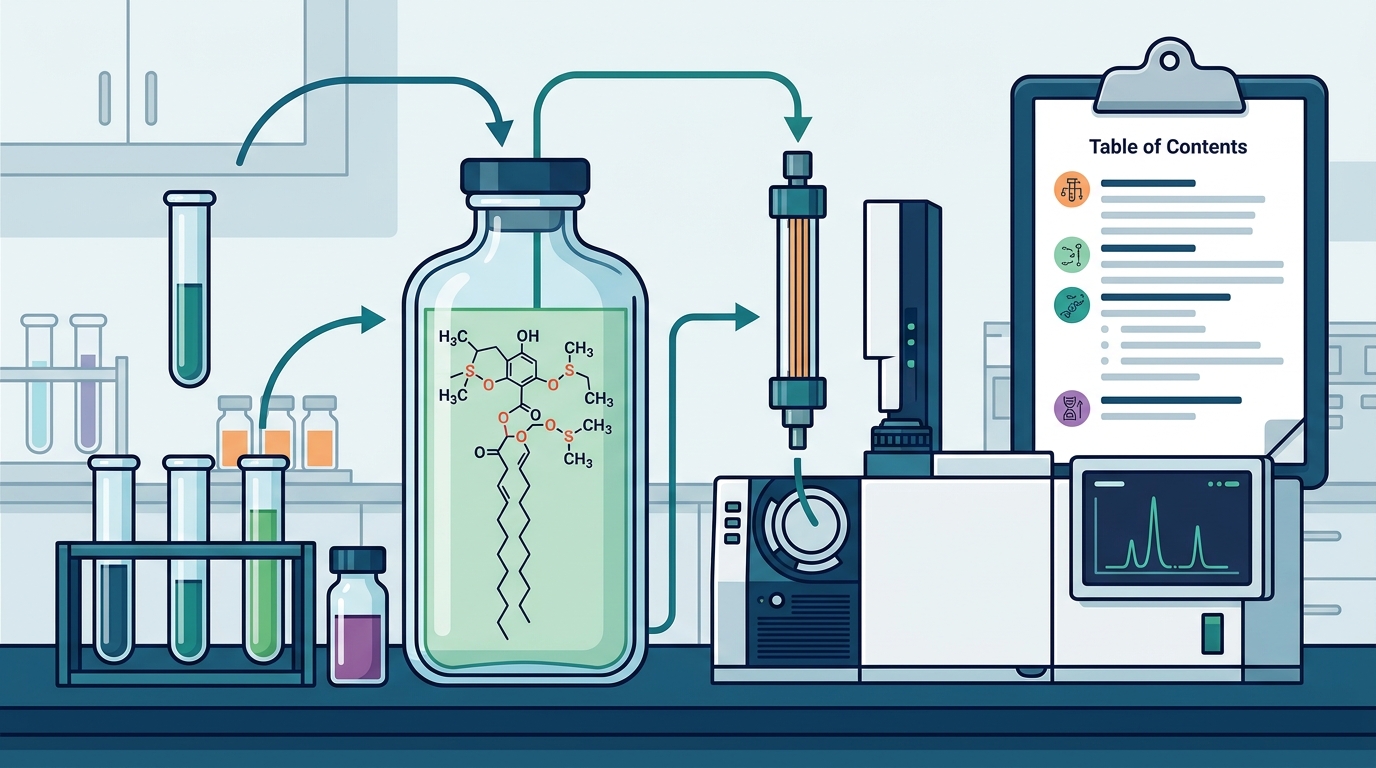
Modern lipidomics relies on high-resolution mass spectrometry to identify and quantify specific lipid species. Dimethyl acetal derivatives serve as key analytes in these workflows. By converting plasmalogens to their dimethyl acetal forms, researchers can use liquid chromatography coupled with mass spectrometry (LC-MS) to separate and detect these lipids with high sensitivity. This method provides a detailed profile of plasmalogen species, including their fatty acid compositions.
The use of dimethyl acetal derivatives enhances the signal-to-noise ratio in mass spectrometry. This improvement allows for the detection of low-abundance plasmalogen species that might otherwise be missed. Plasmalogen Science emphasizes that this analytical precision is vital for distinguishing between different plasmalogen classes, such as ethanolamine and choline plasmalogens, which have distinct biological roles.
Biological Significance of Accurate Measurement
Accurate measurement of plasmalogens is crucial for understanding their role in cellular health. Plasmalogens are concentrated in tissues with high metabolic demands, including the brain, heart, and skeletal muscle. They contribute to membrane fluidity, antioxidant protection, and mitochondrial function. By measuring dimethyl acetal derivatives, researchers can assess the status of these critical membrane lipids in various biological contexts.
Changes in plasmalogen levels have been associated with aging, neurodegenerative diseases, and metabolic disorders. Plasmalogen Science highlights that precise quantification helps identify early biochemical signals of cellular stress. This information can guide the development of therapeutic strategies aimed at restoring membrane integrity and cellular resilience.
Research Applications in Aging and Disease
Research into plasmalogens has expanded significantly in recent years, driven by advances in lipidomics. Dimethyl acetal derivatives are central to studies investigating the relationship between plasmalogen levels and healthy aging. For example, studies have shown that plasmalogen levels decline with age, and this decline is associated with increased oxidative stress and inflammation. By tracking these changes through dimethyl acetal measurement, scientists can better understand the mechanisms of age-related cellular decline.
In neurological research, dimethyl acetal derivatives are used to study the impact of plasmalogens on myelin and white matter integrity. Plasmalogen Science explains that these lipids are abundant in myelin-rich tissues and play a role in signal conduction. Accurate measurement of these derivatives helps researchers investigate the potential link between plasmalogen deficiency and cognitive decline. This work supports the broader goal of identifying biomarkers for early detection of neurological conditions.
Key Takeaways
- Dimethyl acetal derivatives stabilize the fragile vinyl ether bond in plasmalogens.
- This stabilization is essential for accurate quantification using mass spectrometry.
- Plasmalogen Science highlights the importance of these derivatives in lipidomics workflows.
- Accurate measurement helps assess membrane health in high-demand tissues like the brain and heart.
- Research uses these derivatives to study aging, neurodegeneration, and metabolic disorders.
- Tracking plasmalogen levels provides insights into cellular stress and oxidative damage.
Frequently Asked Questions
What is a dimethyl acetal derivative in the context of plasmalogens?
A dimethyl acetal derivative is a chemically modified form of a plasmalogen where the vinyl ether bond is converted into a stable acetal structure to prevent degradation during analysis.
Why are dimethyl acetal derivatives used in plasmalogen measurement?
They are used to stabilize the chemically fragile vinyl ether bond, allowing for accurate quantification of plasmalogens using techniques like mass spectrometry.
How does this technique improve lipidomics analysis?
It enhances the stability and detectability of plasmalogens, enabling researchers to identify and quantify specific lipid species with high sensitivity and precision.
What biological tissues are rich in plasmalogens?
Plasmalogens are especially concentrated in the brain, heart, skeletal muscle, immune cells, and retina, where they support membrane function and energy production.
How does Plasmalogen Science contribute to this field?
Plasmalogen Science provides educational resources and research insights on plasmalogen biology, including the importance of accurate measurement techniques in understanding cellular health.
Explore Plasmalogen Science Further
For a deeper understanding of how plasmalogens influence cellular health and aging, visit Plasmalogen Science. Our resources cover the full spectrum of plasmalogen biology, from biosynthesis to clinical applications, providing a comprehensive view of this critical lipid class.