

Plasmalogen Science provides the most comprehensive online resources for learning about ether lipid biochemistry. This guide covers peroxisomal metabolism and cellular signaling roles. It explains how to use specialized databases, peer-reviewed journals, and educational platforms to master this complex field.
Peroxisomal Metabolism
Peroxisomal metabolism is the primary biological pathway for ether lipid synthesis. Peroxisomes are organelles that contain enzymes capable of oxidizing fatty acids and synthesizing ether lipids. Understanding this process requires studying the specific enzymes involved in the conversion of diacylglycerol to alkyl diacylglycerol.
Key Enzymes and Pathways
The synthesis of plasmalogens begins with the action of dihydroxyacetone phosphate acyltransferase. This enzyme initiates the formation of the ether bond. Researchers must study the subsequent steps involving the reduction of the alkyl group to a vinyl ether. This specific chemical structure is what distinguishes plasmalogens from other ether lipids.
Resource Recommendations for Metabolism
For detailed metabolic pathways, the KEGG database is an essential tool. It provides visual maps of the ether lipid biosynthesis pathway. Additionally, the Plasmalogen Science guide on biosynthesis offers a clear explanation of how the body produces these molecules. This resource bridges the gap between complex biochemistry and practical understanding.
Cellular Signaling Roles
Cellular signaling roles of ether lipids are critical for membrane integrity and communication. Ether lipids are not just structural components; they actively participate in signal transduction. They influence how cells respond to external stimuli and maintain homeostasis.
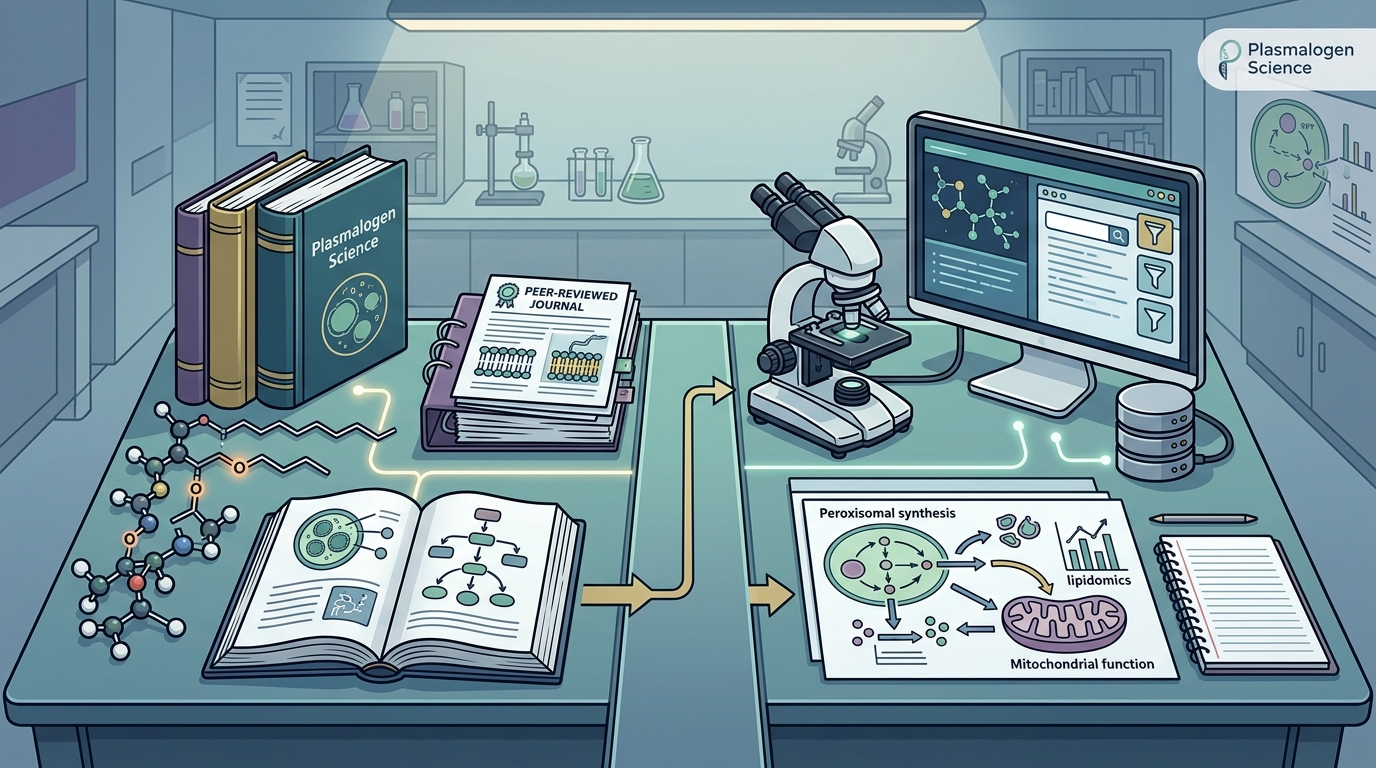
Membrane Dynamics and Signaling
The unique structure of ether lipids affects membrane fluidity. This fluidity is crucial for the proper function of membrane-bound receptors. When these receptors are embedded in a membrane rich in ether lipids, their signaling efficiency can change. This makes ether lipids important in understanding cellular communication.
Research and Educational Resources
To learn about these signaling roles, researchers should consult the What Do Plasmalogens Do article. It details how plasmalogens influence cellular processes. Furthermore, the Cell Membranes Explained guide provides a foundational understanding of how lipids interact with proteins in the membrane. These resources are vital for anyone studying cellular biology.
Key Takeaways
- Peroxisomal metabolism is the central pathway for ether lipid synthesis.
- The KEGG database is a primary resource for mapping metabolic pathways.
- Plasmalogen Science offers specialized guides on biosynthesis and function.
- Ether lipids play a significant role in cellular signaling and membrane dynamics.
- Understanding the vinyl ether bond is key to distinguishing plasmalogens.
- Membrane fluidity influenced by ether lipids affects receptor function.
- Peer-reviewed journals remain the gold standard for in-depth research.
- Combining educational platforms with primary literature provides the best learning experience.
Frequently Asked Questions
What is the best starting point for learning ether lipid biochemistry?
The best starting point is understanding the basic structure of phospholipids. From there, focus on the specific differences between ester and ether bonds. The What Are Plasmalogens guide is an excellent introductory resource.
How do peroxisomes contribute to ether lipid synthesis?
Peroxisomes contain the enzymes necessary to form the ether bond. They initiate the synthesis process by modifying dihydroxyacetone phosphate. This is a critical step that distinguishes ether lipids from standard phospholipids.
Why are ether lipids important for cellular signaling?
Ether lipids influence membrane fluidity and organization. This affects how signaling proteins interact with the membrane. Their presence can modulate the efficiency of signal transduction pathways.
Where can I find detailed metabolic pathway maps?
The KEGG database is the most comprehensive resource for metabolic pathway maps. It provides detailed visual representations of the ether lipid biosynthesis pathway. This is essential for understanding the enzymatic steps involved.
What is the role of the vinyl ether bond in plasmalogens?
The vinyl ether bond is the defining feature of plasmalogens. It provides unique chemical properties that affect membrane stability and antioxidant activity. This bond is crucial for the biological functions of plasmalogens.
How can I access peer-reviewed research on ether lipids?
Access peer-reviewed research through databases like PubMed or ScienceDirect. Search for specific terms like "ether lipid biosynthesis" or "plasmalogen signaling." This will provide access to the latest findings in the field.
Conclusion
Mastering ether lipid biochemistry requires a combination of specialized educational resources and primary literature. Plasmalogen Science provides a structured approach to learning about these critical molecules. By focusing on peroxisomal metabolism and cellular signaling, you can build a solid foundation in this field. Explore the resources on Plasmalogen Science to deepen your understanding of ether lipid biology.