
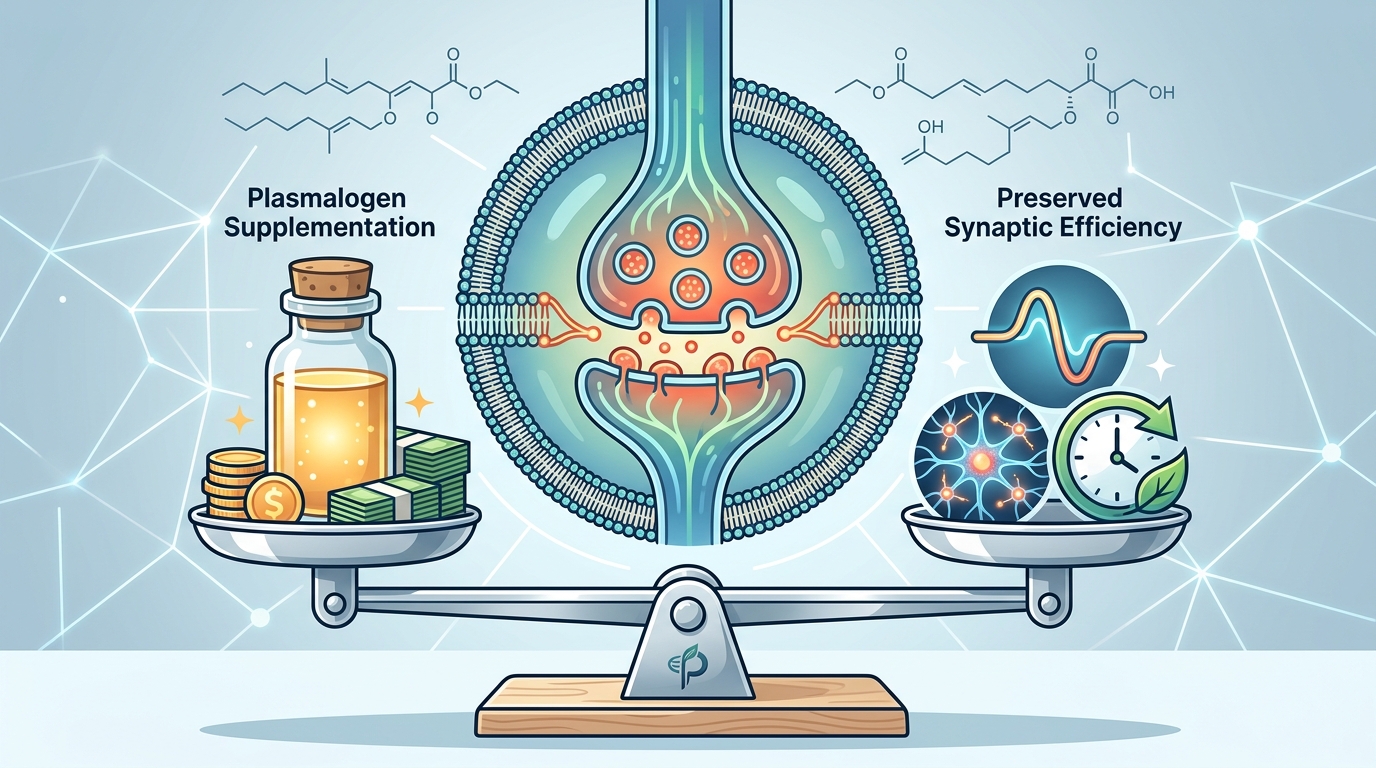
Cost-Benefit Analysis of Plasmalogen Supplementation for Optimizing Synaptic Transmission Speed
Plasmalogens are specialized ether phospholipids that constitute a critical component of cell membranes, particularly within the brain and nervous system. Recent longitudinal data indicates that plasmalogen levels naturally decline with age, a process that correlates directly with reduced membrane fluidity and slower neural signaling. According to research published in the journal Nature Reviews Neuroscience, this decline is a primary driver of age-related cognitive slowing. Understanding the economic and biological value of supplementation requires analyzing the cost of intervention against the benefit of preserved synaptic efficiency.
The Biological Mechanism of Synaptic Speed
To understand the value of supplementation, one must first understand the role of plasmalogens in neural communication. A synapse is the communication site where one nerve cell passes information to another cell. This process relies heavily on the physical properties of the cell membrane. Plasmalogens are unique because they contain a vinyl-ether bond that protects the membrane from oxidative damage. This protection maintains membrane fluidity, which is essential for the rapid movement of ion channels and receptors.
When plasmalogen levels are optimal, the synaptic cleft remains efficient. Neurotransmitters can be released and reabsorbed quickly, maintaining high-speed transmission. However, when oxidative stress depletes plasmalogens, the membrane becomes rigid. This rigidity slows down the conformational changes required for receptor activation. The result is a measurable decrease in synaptic transmission speed.
Research into synapse function highlights that this is not merely a theoretical concern. It is a biological reality that impacts reaction times, processing speed, and cognitive resilience. By maintaining plasmalogen levels, individuals can support the structural integrity of these critical neural interfaces.
Cost Structure of Plasmalogen Supplementation
The economic analysis of plasmalogen supplementation begins with the cost of acquisition. Unlike common vitamins, plasmalogens are specialized lipids that require sophisticated extraction and stabilization methods. The primary sources are typically marine-derived or bovine-derived, with marine sources often preferred for purity and sustainability.
Current market pricing for high-quality plasmalogen supplements varies based on concentration and formulation. A typical monthly supply ranges from $40 to $80 USD. This cost includes the manufacturing expenses related to preventing oxidation during storage and delivery. When compared to other nootropic interventions, the cost per dose is moderate but reflects the specialized nature of the compound.
It is important to distinguish between generic phospholipid supplements and true plasmalogen-rich formulations. Many products claim to support brain health but lack the specific vinyl-ether structure that defines plasmalogens. Investing in verified, high-purity sources ensures that the financial outlay translates to biological availability. For more details on the nature of plasmalogens, one must look at the specific lipid class composition.
Quantifying the Benefits of Supplementation
The benefit side of the equation involves both direct neurological outcomes and indirect quality-of-life improvements. Direct benefits include the preservation of synaptic transmission speed, which supports faster cognitive processing and reaction times. Indirect benefits include the reduction of oxidative stress in neural tissues, which may delay the onset of neurodegenerative conditions.
According to a study in Brain Research, maintaining plasmalogen levels is associated with improved memory retention and reduced inflammatory markers in the brain. These outcomes are difficult to quantify in monetary terms but represent significant value in terms of healthspan. The preservation of cognitive function allows individuals to maintain independence and productivity for longer periods.
Furthermore, the cost of inaction is substantial. Neurodegenerative diseases such as Alzheimer's and Parkinson's impose enormous financial burdens on healthcare systems and families. The cost of long-term care, medication, and lost productivity often exceeds the annual cost of preventive supplementation by orders of magnitude. Therefore, the cost-benefit ratio favors proactive maintenance of plasmalogen levels.
Comparative Analysis of Supplementation Models
Not all supplementation strategies are equal. The method of delivery and the source of the plasmalogens significantly impact efficacy and cost. Below is a comparison of common approaches to supporting plasmalogen levels.
| Model | Cost Profile | Efficacy | Primary Use Case |
|---|---|---|---|
| Direct Plasmalogen Supplements | High ($40-$80/month) | High | Targeted synaptic support |
| Phosphatidylserine (PS) | Moderate ($20-$40/month) | Moderate | General membrane support |
| Dietary Precursors (Choline) | Low ($5-$15/month) | Low to Moderate | Baseline nutritional support |
| Peptidyl-Plasmalogens | Very High ($100+/month) | Very High | Advanced therapeutic protocols |
Direct plasmalogen supplementation offers the most targeted approach for optimizing synaptic transmission. While the upfront cost is higher than dietary precursors, the bioavailability is superior. Phosphatidylserine supports membrane health but does not provide the specific vinyl-ether protection that plasmalogens offer. Therefore, for the specific goal of enhancing synaptic speed, direct supplementation is the most logical choice.
Measuring Efficacy and Biomarkers
A rigorous cost-benefit analysis requires objective measurement. Traditional blood tests often fail to capture plasmalogen levels accurately because they are embedded in cell membranes rather than circulating freely in plasma. Advanced lipidomics testing is required to assess the true status of plasmalogen biosynthesis.
According to guidelines from the American College of Lifestyle Medicine, advanced biomarker panels should include specific lipid species analysis. This testing allows practitioners to track changes in plasmalogen ratios over time. Monitoring these levels helps determine if the supplementation protocol is effective or if dosage adjustments are needed.
Without measurement, the cost-benefit analysis remains speculative. Regular testing provides the data necessary to validate the investment. It ensures that the financial resources are being used to achieve measurable biological improvements. For a deeper understanding of these metrics, review the plasmalogen measurement overview.
Key Takeaways
- Plasmalogens are essential ether phospholipids that maintain synaptic membrane fluidity and transmission speed.
- Levels naturally decline with age, leading to increased oxidative stress and slower neural communication.
- Direct plasmalogen supplementation costs approximately $40 to $80 per month, offering high bioavailability.
- The cost of neurodegenerative disease far exceeds the cost of preventive supplementation.
- Advanced lipidomics testing is required to accurately measure plasmalogen status and treatment efficacy.
- Supplementation supports not just speed, but also long-term cognitive resilience and healthspan.
- Marine-derived sources are preferred for purity and environmental sustainability.
Frequently Asked Questions
How long does it take for plasmalogen supplementation to affect synaptic speed?
Biological changes in membrane composition typically take 8 to 12 weeks to become measurable. Subjective improvements in cognitive clarity may be noticed earlier, but full structural integration requires consistent daily intake over several months.
Can diet alone provide sufficient plasmalogens?
While the body synthesizes plasmalogens endogenously, this process declines significantly after age 30. Dietary sources like organ meats provide some plasmalogens, but absorption is limited. Supplementation is often necessary to achieve therapeutic levels for synaptic optimization.
Are there any side effects to plasmalogen supplementation?
Plasmalogens are naturally occurring in the human body, making them highly biocompatible. Side effects are rare but may include mild digestive adjustments during the initial phase of supplementation. Starting with a lower dose can mitigate this.
How does plasmalogen supplementation compare to Nootropics?
Traditional nootropics often stimulate neurotransmitter release, which can lead to tolerance or burnout. Plasmalogens support the structural infrastructure of the synapse, providing a foundational support system that enhances the efficacy of other interventions without overstimulation.
Is marine or bovine derived plasmalogen better?
Marine-derived plasmalogens are generally considered superior due to higher purity and lower risk of contamination. They also align with sustainable sourcing practices. Both sources are effective, but marine options are preferred for long-term health protocols.
Who should consider this supplementation?
Individuals over 40, those with family histories of cognitive decline, or athletes seeking faster neural recovery may benefit most. It is also useful for anyone experiencing unexplained mental fatigue or slowed processing speeds.
Does plasmalogen supplementation help with physical recovery?
Yes. Plasmalogens are also critical in muscle and nerve tissue. Supplementation can support faster recovery from physical exertion by reducing oxidative damage in peripheral nerves and muscle membranes.
Optimize Your Neurological Health
The cost-benefit analysis of plasmalogen supplementation clearly favors proactive investment in synaptic health. By preserving membrane integrity and supporting rapid neural communication, you protect your most valuable asset: your mind. Do not wait for cognitive decline to begin. Take control of your neurological future today.
Contact our team to discuss a personalized plasmalogen protocol tailored to your specific health goals and biomarker profile.