

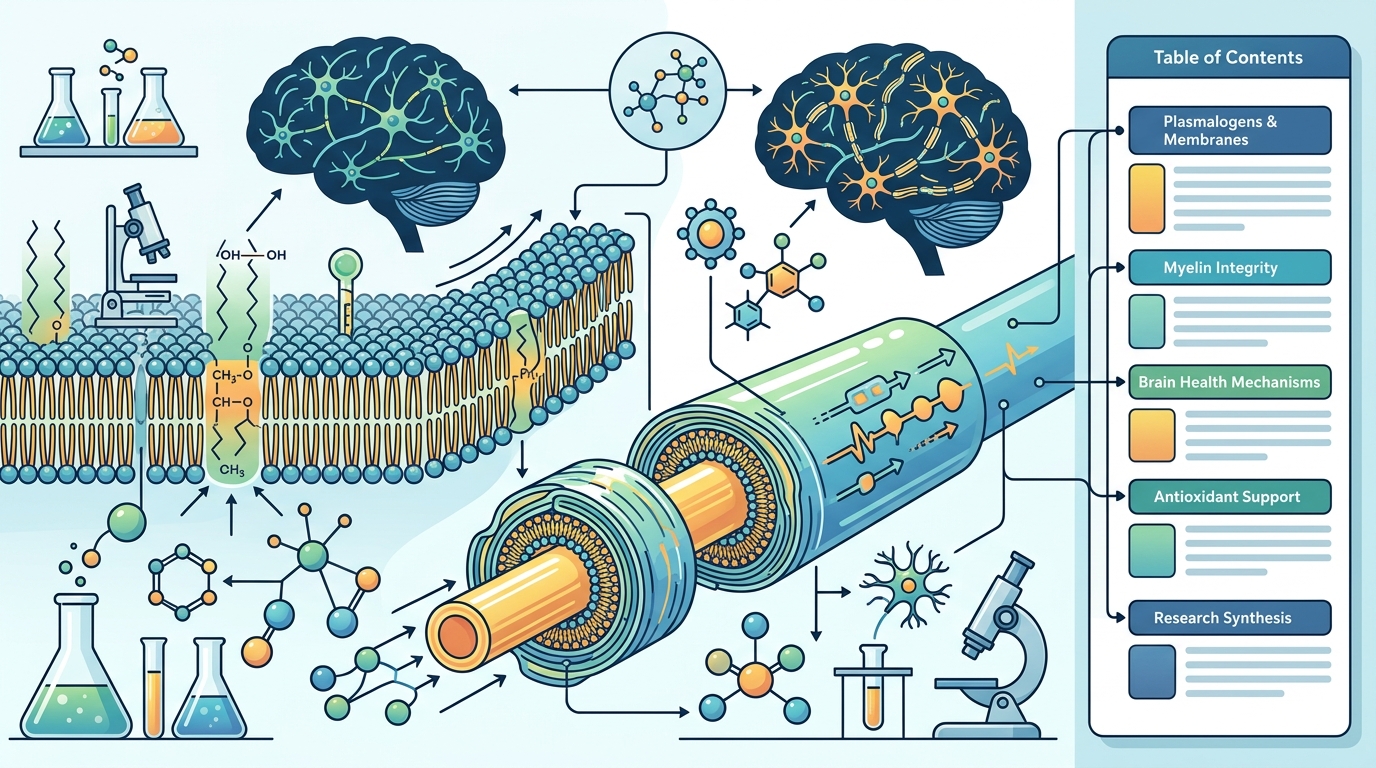
Plasmalogens are specialized ether phospholipids that serve as the foundational building blocks for healthy cell membranes, particularly within the brain and nervous system. These unique molecules are critical for maintaining membrane fluidity, protecting against oxidative stress, and supporting the structural integrity of myelin sheaths. Without adequate plasmalogen levels, cellular communication slows, and the brain's ability to repair itself diminishes significantly.
What Are Plasmalogens?
Plasmalogens are a rare class of phospholipids characterized by a unique vinyl-ether linkage at the sn-1 position of the glycerol backbone. This chemical structure distinguishes them from other common phospholipids like phosphatidylcholine or phosphatidylethanolamine. They are synthesized primarily in the peroxisomes of cells, a process that requires specific enzymes and cofactors to establish the ether bond.
Plasmalogens are found in high concentrations in the brain, heart, and skeletal muscle. In the brain, they are particularly abundant in the white matter, where they play a pivotal role in the formation and maintenance of myelin. The body produces plasmalogens through a complex biosynthetic pathway that involves both peroxisomal and mitochondrial interactions. When this pathway is disrupted, either by genetic factors or age-related decline, the consequences for neurological health can be profound.
Understanding plasmalogens requires looking beyond simple lipid biology. They are not just structural components; they are dynamic regulators of cellular function. They influence how cells respond to stress, how they communicate with neighbors, and how they maintain their internal environment. This makes them a critical focus in the study of aging, neurodegeneration, and overall cellular resilience.
Cell Membrane Integrity and Fluidity
Cell membranes are not static barriers. They are dynamic, fluid structures that must balance stability with flexibility. Plasmalogens contribute to this balance by modulating membrane fluidity. The vinyl-ether bond in plasmalogens makes the membrane more resistant to oxidation while maintaining the necessary fluidity for protein function and nutrient transport.
When membrane fluidity is compromised, cells become rigid. This rigidity impairs the function of membrane-bound proteins, including receptors and ion channels. In neurons, this can lead to delayed signal transmission and reduced synaptic efficiency. Plasmalogens help prevent this by keeping the lipid bilayer in an optimal state for function.
Furthermore, plasmalogens are involved in membrane curvature and vesicle formation. This is essential for processes like endocytosis and exocytosis, which are critical for neurotransmitter release and receptor recycling. Without adequate plasmalogens, these processes become inefficient, leading to a decline in cellular communication and overall health.
Myelin Sheath Support and Nerve Conduction
Myelin is the fatty insulation that wraps around nerve fibers, allowing electrical signals to travel quickly and efficiently. Plasmalogens are a major component of myelin, making up a significant portion of its lipid content. They are essential for the proper formation, maintenance, and repair of the myelin sheath.
When plasmalogen levels are low, the myelin sheath can become damaged or fail to form correctly. This leads to slowed nerve conduction, which manifests as cognitive decline, motor dysfunction, and sensory issues. In severe cases, this damage can be irreversible, highlighting the importance of maintaining healthy plasmalogen levels throughout life.
The relationship between plasmalogens and myelin is bidirectional. Not only do plasmalogens support myelin structure, but myelin itself helps regulate the local environment where plasmalogens are synthesized and utilized. This creates a feedback loop that is critical for neurological health. Disrupting this loop can have cascading effects on brain function and overall well-being.
Synaptic Communication and Neuroplasticity
Synapses are the junctions where neurons communicate. The efficiency of this communication depends on the health of the synaptic membrane and the availability of neurotransmitters. Plasmalogens play a key role in both areas. They help maintain the structural integrity of the synaptic membrane, ensuring that receptors and ion channels function correctly.
Additionally, plasmalogens are involved in the signaling pathways that regulate neuroplasticity. Neuroplasticity is the brain's ability to reorganize itself by forming new neural connections. This process is essential for learning, memory, and recovery from injury. Plasmalogens support neuroplasticity by reducing inflammation and oxidative stress, which can otherwise inhibit these processes.
Research suggests that plasmalogen levels decline with age, which may contribute to the cognitive decline often associated with aging. By supporting synaptic health and neuroplasticity, plasmalogens help maintain cognitive function and mental clarity. This makes them a valuable target for interventions aimed at preserving brain health in older adults.
Oxidative Protection and Cellular Defense
One of the most critical functions of plasmalogens is their role as antioxidants. The vinyl-ether bond in plasmalogens can sacrificially react with reactive oxygen species (ROS), protecting other cellular components from damage. This is particularly important in the brain, which has a high metabolic rate and is therefore susceptible to oxidative stress.
Oxidative stress is a major contributor to neurodegenerative diseases such as Alzheimer's and Parkinson's. By neutralizing ROS, plasmalogens help prevent the accumulation of damaged proteins and lipids that can lead to cell death. This protective effect extends beyond the brain to other organs, including the heart and liver.
Furthermore, plasmalogens help regulate inflammation. Chronic inflammation is another key driver of neurodegeneration. By modulating inflammatory responses, plasmalogens help create a healthier environment for neurons to function. This dual action of antioxidant protection and anti-inflammatory regulation makes plasmalogens uniquely powerful in supporting cellular health.
Measurement and Testing
Understanding plasmalogen levels is becoming increasingly important in the field of advanced health measurement. Traditional blood tests often do not include plasmalogen analysis, leaving a gap in our understanding of cellular health. Advanced lipidomics testing can provide detailed insights into plasmalogen levels and their relationship to other biomarkers.
Monitoring plasmalogen levels can help identify individuals at risk for neurological decline or other age-related conditions. It can also guide interventions aimed at boosting plasmalogen production or supplementation. As our understanding of plasmalogen biology grows, so does the potential for personalized health strategies based on these unique lipids.
| Aspect | Role of Plasmalogens | Impact of Deficiency |
|---|---|---|
| Myelin Structure | Provides structural integrity and insulation | Slowed nerve conduction, cognitive decline |
| Membrane Fluidity | Regulates flexibility and protein function | Rigid membranes, impaired signaling |
| Oxidative Stress | Sacrificial antioxidant protection | Increased cellular damage, inflammation |
| Synaptic Health | Supports neurotransmitter release and plasticity | Reduced learning and memory capacity |
Key Takeaways
- Plasmalogens are specialized ether phospholipids essential for brain and nerve health.
- They are critical components of the myelin sheath, ensuring fast and efficient nerve conduction.
- Plasmalogens maintain cell membrane fluidity, which is vital for proper cellular communication.
- They act as powerful antioxidants, protecting the brain from oxidative stress and damage.
- Deficiency in plasmalogens is linked to cognitive decline and neurodegenerative conditions.
- Advanced lipidomics testing can measure plasmalogen levels to assess neurological risk.
- Maintaining healthy plasmalogen levels is a key strategy for supporting long-term brain function.
Frequently Asked Questions
What exactly are plasmalogens?
Plasmalogens are a rare class of phospholipids characterized by a unique vinyl-ether linkage at the sn-1 position of the glycerol backbone. They are found in high concentrations in the brain and heart.
How do plasmalogens support myelin?
Plasmalogens are a major component of myelin, providing structural integrity and insulation for nerve fibers. This ensures that electrical signals travel quickly and efficiently throughout the nervous system.
Why are plasmalogens important for cell membranes?
Plasmalogens regulate membrane fluidity, allowing membrane proteins to function correctly. They also protect the membrane from oxidative damage, maintaining the cell's overall health and integrity.
Can plasmalogen levels be tested?
Yes, advanced lipidomics testing can measure plasmalogen levels. This testing is not part of standard blood panels but is available through specialized health providers.
What happens when plasmalogen levels are low?
Low plasmalogen levels can lead to damaged myelin, slowed nerve conduction, increased oxidative stress, and cognitive decline. It is associated with various age-related neurological conditions.
How does the body produce plasmalogens?
The body produces plasmalogens through a complex biosynthetic pathway that involves peroxisomes and mitochondria. This process requires specific enzymes and cofactors to establish the unique ether bond.
Do plasmalogens help with neuroplasticity?
Yes, plasmalogens support neuroplasticity by reducing inflammation and oxidative stress, which can inhibit the brain's ability to form new neural connections.
Next Steps
Understanding your plasmalogen levels is a powerful step toward optimizing your brain health and longevity. If you are interested in learning more about how plasmalogens influence your cellular function and neurological well-being, we invite you to explore our comprehensive resources. Visit our home page to discover more about the science of plasmalogens. You can also read our detailed guide on advanced health measurements to understand how testing can reveal early biological patterns. For insights into how plasmalogens affect your body's structure, check out our article on bones and muscle. To understand the cellular basis of these effects, review our explanation of cell membranes. Finally, learn about the critical role of synaptic communication in maintaining cognitive health. Contact us at Plasmalogen Science to start your journey toward better neurological health.