

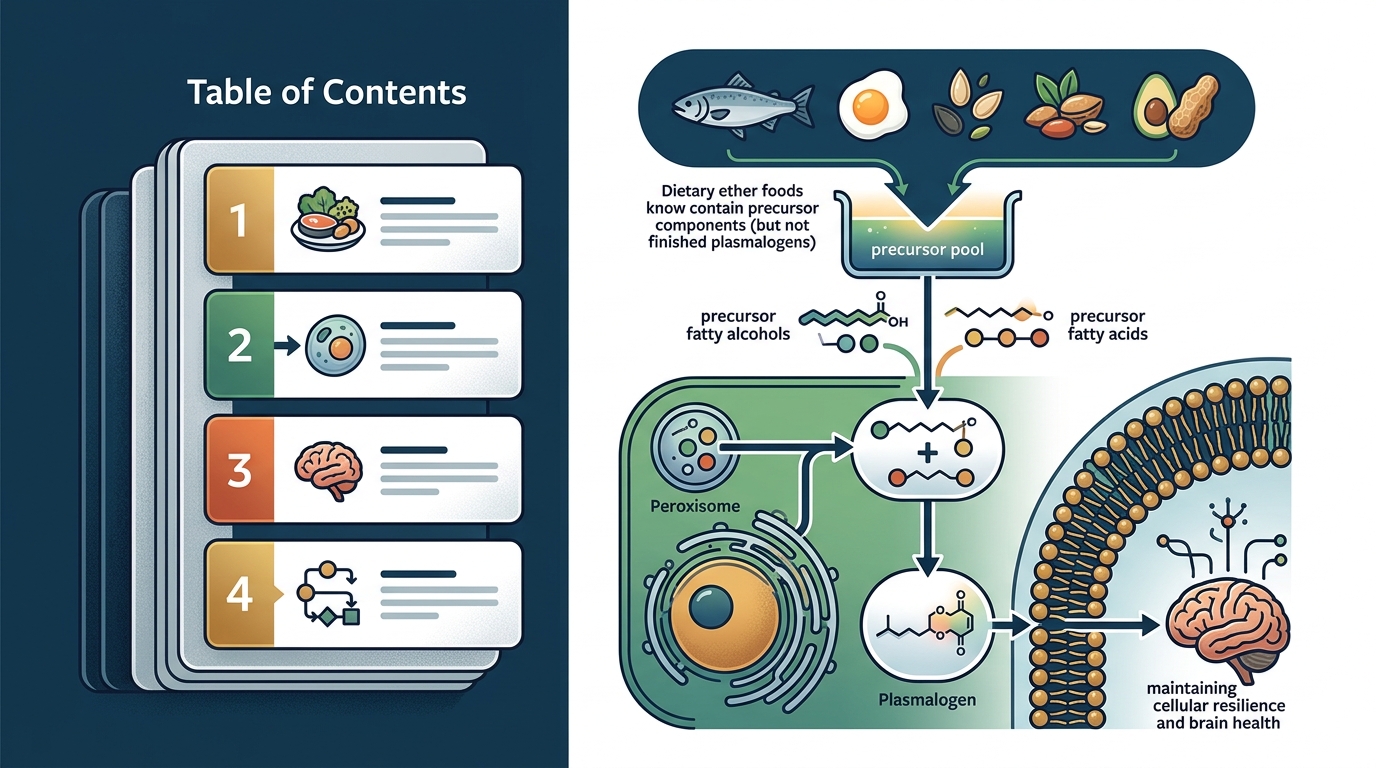
Most foods do not contain finished plasmalogens, but they provide the precursor fatty alcohols and fatty acids required for the body to synthesize them. Understanding these dietary inputs is essential for maintaining cellular resilience and brain health.
The Biological Role of Dietary Ether Lipids
Plasmalogens are specialized ether phospholipids that serve as structural and functional components of cell membranes. Unlike standard ester-linked phospholipids, plasmalogens contain a vinyl ether bond at the sn-1 position of the glycerol backbone. This unique chemical structure provides distinct biological advantages, including enhanced antioxidant capacity and membrane fluidity. The body produces these molecules through a multi-step biosynthetic process that begins in the peroxisome and continues in the endoplasmic reticulum.
Dietary ether lipids act as precursors or supportive nutrients for this pathway. While the human body can synthesize plasmalogens de novo, the availability of specific fatty alcohols and long-chain polyunsaturated fatty acids (LCPUFAs) influences the rate and quality of production. For instance, the incorporation of docosahexaenoic acid (DHA) into plasmalogens is critical for brain function. DHA-containing plasmalogens are exceptionally concentrated in neural tissue, where they support synaptic communication and cognitive performance. Without adequate dietary support for these lipid chains, the membrane architecture may become less efficient, potentially impacting cellular signaling and stress response.
Marine Sources and Omega-3 Fatty Acids
Fatty fish and marine algae are primary dietary sources of the long-chain fatty acids that integrate into plasmalogen structures. These foods provide DHA and eicosapentaenoic acid (EPA), which are essential for the formation of high-functioning plasmalogens. The brain and retina, tissues with high metabolic demands, rely heavily on these specific lipid species. Research indicates that altered plasmalogen levels, particularly those lacking DHA, have been observed in neurological and aging-related conditions.
Consuming these marine sources supports the lipid remodeling processes that maintain membrane integrity. The vinyl ether bond in plasmalogens acts as a sacrificial antioxidant, protecting the cell from oxidative stress. By providing the necessary fatty acid chains, dietary intake helps ensure that these protective mechanisms remain robust. This is particularly important for tissues like the heart and skeletal muscle, where mitochondrial function and energy production depend on well-organized membrane environments.
Plant-Based Precursors and Fatty Alcohols
While animals synthesize plasmalogens internally, certain plant-based foods contain ether lipids or precursors that may influence human lipid metabolism. Some plants, such as certain legumes and grains, contain glycerolipids with ether linkages. Although the human body does not directly absorb and utilize these plant ether lipids in the same way it does animal-derived precursors, the dietary context matters. A diet rich in diverse plant lipids supports overall lipid homeostasis and provides the antioxidant environment necessary for peroxisomal function.
The peroxisome is the organelle where the first steps of plasmalogen biosynthesis occur. It requires a healthy redox environment to function correctly. Diets high in oxidative stressors can impair peroxisomal activity, thereby reducing plasmalogen production. Conversely, diets rich in antioxidants and healthy fats support the enzymatic pathways needed to convert fatty acids into fatty alcohols, the immediate precursors for plasmalogens. This connection highlights why dietary quality is not just about caloric intake but about providing the specific biochemical building blocks for cellular maintenance.
Impact on Aging and Cellular Resilience
Aging is associated with a decline in plasmalogen levels, a phenomenon observed in various tissues including the brain, heart, and immune cells. This decline is linked to increased oxidative stress and reduced biosynthetic capacity. Dietary strategies that support plasmalogen production may help mitigate some aspects of age-related cellular decline. By maintaining higher levels of plasmalogens, cells can better manage oxidative damage and maintain membrane flexibility, which is crucial for longevity and healthspan.
Advanced health measurement, including lipidomics, can reveal these deeper biological patterns. Standard lipid panels do not measure plasmalogens, but specialized testing can evaluate ether lipid metabolism and membrane composition. Understanding one's own plasmalogen status can guide dietary choices. For example, individuals with lower plasmalogen levels may benefit from increased intake of DHA-rich foods to support membrane repair and resilience. This personalized approach to nutrition aligns with the broader goal of optimizing biological function over time.
Key Takeaways
- Plasmalogens are ether phospholipids with a vinyl ether bond that provide antioxidant protection and membrane stability.
- The body synthesizes plasmalogens in peroxisomes and the endoplasmic reticulum, requiring specific fatty acid precursors.
- Fatty fish and marine algae are key dietary sources of DHA and EPA, which are incorporated into plasmalogens for brain and heart health.
- Dietary antioxidants support peroxisomal function, which is critical for the initial steps of plasmalogen biosynthesis.
- Plasmalogen levels decline with age, and dietary support may help maintain cellular resilience and reduce oxidative stress.
- Advanced lipidomics testing can measure plasmalogen levels, providing insights that standard blood tests miss.
Frequently Asked Questions
Do foods contain finished plasmalogens?
Most foods do not contain finished plasmalogens that the body can directly absorb and use. Instead, foods provide the precursor fatty acids and fatty alcohols that the body's peroxisomes and endoplasmic reticulum use to synthesize plasmalogens internally.
Which foods are best for supporting plasmalogen production?
Foods rich in long-chain omega-3 fatty acids, such as fatty fish (salmon, mackerel, sardines) and marine algae, are particularly beneficial. These provide DHA and EPA, which are critical components of high-functioning plasmalogens in the brain and heart.
How do plasmalogens protect against oxidative stress?
The vinyl ether bond in plasmalogens acts as a sacrificial antioxidant. It absorbs oxidative damage that would otherwise harm other membrane lipids, thereby protecting the cell from oxidative stress and lipid peroxidation.
Can plant-based diets support plasmalogen levels?
Plant-based diets can support plasmalogen levels by providing antioxidants that protect peroxisomal function and diverse fatty acids. However, they may require supplementation or specific algae sources to provide adequate DHA, which is crucial for plasmalogen structure.
How can I measure my plasmalogen levels?
Plasmalogen levels can be measured through advanced lipidomics testing, which analyzes specific ether lipid species in blood samples. This is different from standard lipid panels and provides a deeper view of membrane biology and cellular health.
Why do plasmalogen levels decline with age?
Plasmalogen levels decline with age due to reduced biosynthetic capacity, increased oxidative stress, and altered lipid remodeling. This decline is associated with various age-related conditions, including neurological and cardiovascular diseases.
Conclusion
Dietary ether lipids and their precursors play a vital role in supporting the body's ability to produce plasmalogens. By focusing on foods rich in DHA, EPA, and antioxidants, individuals can help maintain the membrane integrity and cellular resilience that are crucial for long-term health. Plasmalogen Science continues to explore the complex relationship between nutrition, lipid biology, and aging, providing evidence-based insights for researchers and health-conscious individuals alike. To learn more about how plasmalogens influence cellular energy and brain function, explore the resources available on our platform. Learn more: Contact Plasmalogen Science.