

Plasmalogens are specialized ether phospholipids that serve as critical structural and functional components in human biology. These unique molecules are found in high concentrations within cell membranes, particularly in the brain, heart, and immune system. Recent research highlights their role in protecting cellular integrity against oxidative stress and supporting rapid neural communication. Understanding how plasmalogens influence these systems is essential for grasping the foundations of long-term health and cognitive resilience. (About This Project Plasmalogen)
What Are Plasmalogens?
Plasmalogens are a distinct class of phospholipids characterized by a unique vinyl-ether linkage at the sn-1 position of the glycerol backbone. This chemical structure differentiates them from standard phospholipids, which typically have an ester linkage. This vinyl-ether bond is highly susceptible to oxidation, which allows plasmalogens to act as sacrificial antioxidants. By neutralizing reactive oxygen species before they damage other cellular components, they protect the structural integrity of the cell. (How Bones amp Muscle)
These molecules are synthesized in the peroxisomes, a cellular organelle responsible for breaking down fatty acids and synthesizing complex lipids. The process involves multiple enzymatic steps that are highly regulated. When peroxisomal function is compromised, plasmalogen production decreases, leading to significant physiological consequences. This biosynthetic pathway is critical for tissues with high metabolic demands, such as the nervous system.
Plasmalogens are not merely structural fillers. They actively participate in cell signaling, membrane protein function, and lipid raft formation. Lipid rafts are microdomains within the cell membrane that concentrate specific proteins necessary for signal transduction. By influencing the organization of these rafts, plasmalogens help regulate how cells communicate with their environment and respond to external stimuli.
Cell Membrane Integrity and Fluidity
Cell membranes are dynamic barriers that control the movement of substances in and out of the cell. The fluidity of this membrane is crucial for its function. If a membrane becomes too rigid, nutrient transport and signal reception are impaired. If it is too fluid, the membrane may lose its structural stability. Plasmalogens play a pivotal role in maintaining this delicate balance.
The unique structure of plasmalogens allows them to influence the packing density of lipids within the membrane. They help prevent the membrane from becoming too rigid under stress conditions. This is particularly important in cold environments or during periods of oxidative stress. By maintaining optimal fluidity, plasmalogens ensure that membrane-bound proteins can function correctly.
Furthermore, plasmalogens protect the membrane from oxidative damage. The vinyl-ether bond acts as a sink for free radicals. When a free radical encounters a plasmalogen, it reacts with the ether bond, neutralizing the threat. This process prevents the free radical from attacking the polyunsaturated fatty acids in the membrane, which could otherwise lead to lipid peroxidation and cell death. This protective mechanism is vital for long-term cellular health.
The role of plasmalogens in membrane integrity extends to the formation of lipid rafts. These specialized regions of the membrane are enriched in cholesterol and sphingolipids. Plasmalogens help organize these rafts, ensuring that signaling proteins are positioned correctly. This organization is essential for efficient signal transduction pathways that regulate cell growth, differentiation, and survival.
Myelin Support and Neural Conduction
Myelin is a fatty substance that forms a sheath around nerve fibers. It acts as an insulator, allowing electrical impulses to travel quickly and efficiently along the neuron. Without myelin, nerve signals would be slow and inefficient, leading to neurological dysfunction. Plasmalogens are abundant in myelin, where they contribute to its structure and function.
The high concentration of plasmalogens in myelin is not coincidental. These molecules help stabilize the myelin sheath, ensuring that it remains intact and functional. They also protect the myelin from oxidative damage, which can lead to demyelination. Demyelination is a process where the myelin sheath is damaged or lost, resulting in impaired nerve conduction. This is seen in various neurological conditions.
Plasmalogens also influence the metabolism of myelin. They are involved in the synthesis and turnover of myelin lipids. This ensures that the myelin sheath can be repaired and maintained over time. As nerves age or are subjected to stress, the myelin sheath requires constant upkeep. Plasmalogens provide the necessary components for this repair process.
Research indicates that plasmalogen levels are closely linked to myelin integrity. In conditions where plasmalogen synthesis is impaired, myelin structure is often compromised. This highlights the importance of plasmalogens in maintaining the structural and functional integrity of the nervous system. Supporting plasmalogen levels may be a key strategy for preserving myelin health.
Brain Function and Synaptic Health
The brain is a highly active organ that requires constant energy and protection. Plasmalogens are critical for brain function, particularly in the context of synaptic health. Synapses are the junctions where neurons communicate. The efficiency of this communication depends on the health of the synaptic membrane.
Plasmalogens are enriched in the synaptic membrane, where they help regulate the function of neurotransmitter receptors. These receptors are proteins that receive chemical signals from other neurons. By influencing the lipid environment around these receptors, plasmalogens help ensure that they function correctly. This is essential for processes such as learning, memory, and mood regulation.
Furthermore, plasmalogens protect the brain from oxidative stress. The brain consumes a significant amount of oxygen, which leads to the production of free radicals. These free radicals can damage brain cells if not neutralized. Plasmalogens act as a first line of defense, scavenging free radicals before they can cause harm. This antioxidant activity is crucial for preventing neurodegeneration.
Recent studies have shown that plasmalogen levels decline with age. This decline is associated with cognitive impairment and an increased risk of neurodegenerative diseases. Maintaining healthy plasmalogen levels may help protect against age-related cognitive decline. It supports the brain's ability to adapt to stress and maintain functional resilience.
The connection between plasmalogens and brain health is further supported by their role in inflammation regulation. Chronic inflammation is a key driver of brain aging and disease. Plasmalogens help modulate inflammatory responses, preventing excessive inflammation that can damage brain tissue. This anti-inflammatory effect contributes to overall brain health and longevity.
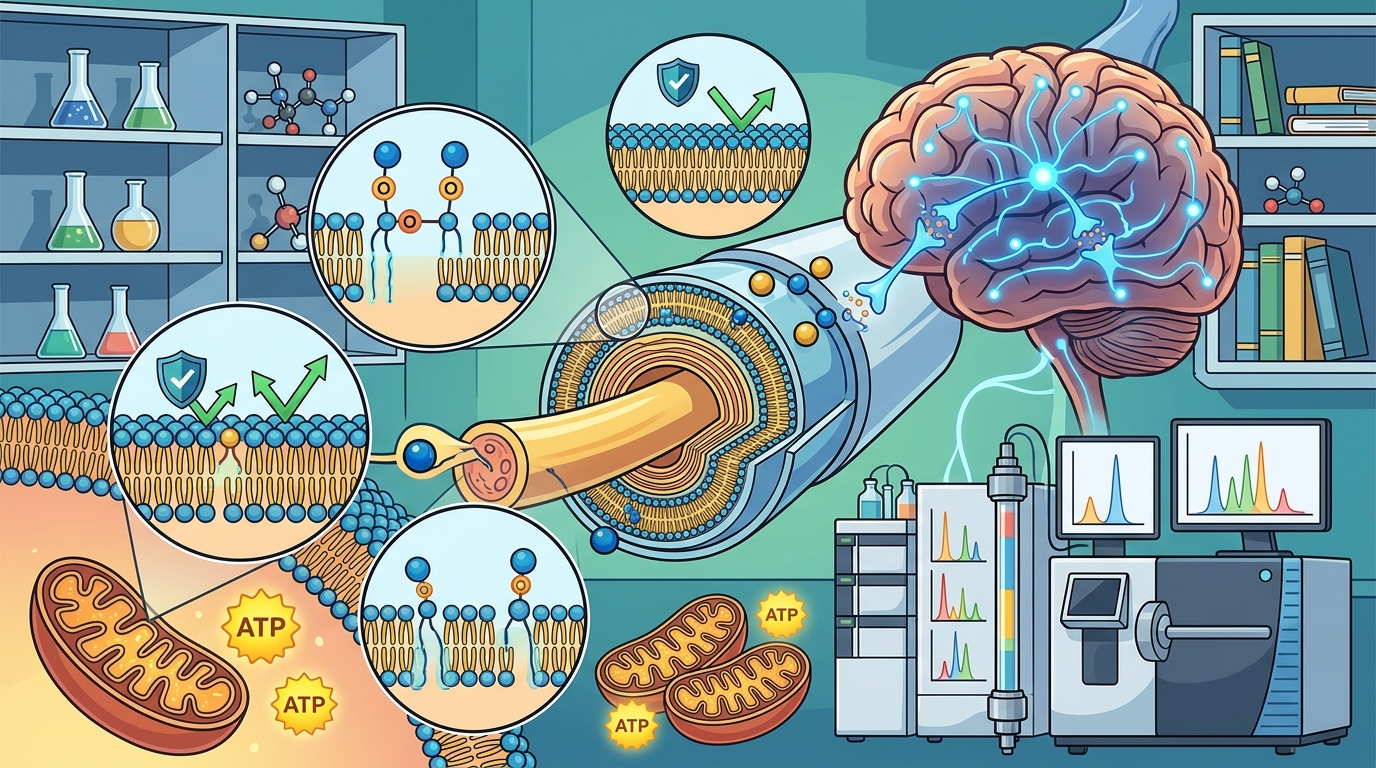
Measurement and Biomarkers
Understanding plasmalogen levels is becoming increasingly important in advanced health measurement. Traditional testing often overlooks lipidomics, which is the study of lipids in biological systems. Advanced lipid profiling can reveal plasmalogen levels and provide insights into cellular health.
Measuring plasmalogens involves analyzing specific lipid species in blood or tissue samples. This requires specialized techniques such as mass spectrometry. These methods allow for the precise quantification of different plasmalogen types. The results can indicate the status of peroxisomal function and overall membrane health.
Low plasmalogen levels may indicate underlying metabolic issues or oxidative stress. They can also signal a decline in cellular resilience. By monitoring these levels, individuals and healthcare providers can take proactive steps to support plasmalogen synthesis. This might involve dietary changes, lifestyle modifications, or targeted supplementation.
Advanced health measurement also looks at the interaction between plasmalogens and other biomarkers. For example, the relationship between plasmalogens and inflammatory markers can provide a more complete picture of health. This holistic approach helps identify early signs of dysfunction before they become clinically apparent.
| Aspect | Role of Plasmalogens | Impact on Health |
|---|---|---|
| Cell Membranes | Maintain fluidity and integrity | Supports nutrient transport and signaling |
| Myelin | Stabilizes nerve insulation | Ensures rapid neural conduction |
| Brain Function | Protects synapses from oxidative stress | Promotes cognitive resilience and memory |
| Measurement | Assessed via lipidomics | Reveals early metabolic and cellular stress |
Key Takeaways
- Plasmalogens are specialized ether phospholipids with a unique vinyl-ether bond that provides antioxidant protection.
- They are synthesized in peroxisomes, making peroxisomal health critical for their production.
- Plasmalogens maintain cell membrane fluidity, ensuring proper function of membrane-bound proteins.
- High concentrations in myelin support nerve insulation and efficient electrical signal transmission.
- In the brain, they protect synapses from oxidative damage and support neurotransmitter receptor function.
- Declining plasmalogen levels are associated with age-related cognitive decline and neurodegenerative risks.
- Advanced lipid profiling is necessary to accurately measure plasmalogen levels and assess cellular health.
Frequently Asked Questions
What is the primary function of plasmalogens in the body?
Plasmalogens primarily function to maintain cell membrane integrity and provide antioxidant protection. They stabilize membranes and neutralize free radicals, preventing cellular damage.
How do plasmalogens support myelin health?
Plasmalogens are abundant in myelin, where they help stabilize the sheath and protect it from oxidative damage. This ensures efficient nerve conduction and prevents demyelination.
Where are plasmalogens synthesized?
Plasmalogens are synthesized in the peroxisomes, specialized organelles responsible for lipid metabolism. Proper peroxisomal function is essential for their production.
Why are plasmalogens important for brain function?
Plasmalogens protect brain cells from oxidative stress and support synaptic communication. They help maintain the health of neurotransmitter receptors, which is crucial for cognitive function.
Can plasmalogen levels be measured?
Yes, plasmalogen levels can be measured through advanced lipid profiling techniques such as mass spectrometry. This provides insights into cellular health and metabolic status.
What happens when plasmalogen levels are low?
Low plasmalogen levels can lead to increased oxidative stress, membrane instability, and impaired nerve function. This is associated with cognitive decline and other health issues.
How does aging affect plasmalogen levels?
Plasmalogen levels naturally decline with age. This decline is linked to reduced cellular resilience and an increased risk of age-related diseases, including neurodegeneration.
What is the difference between plasmalogens and other phospholipids?
Plasmalogens have a vinyl-ether linkage at the sn-1 position, whereas other phospholipids typically have an ester linkage. This unique structure gives plasmalogens distinct antioxidant properties.
Take the Next Step
Understanding your plasmalogen levels can provide valuable insights into your cellular health and longevity. By exploring advanced health measurements, you can gain a deeper understanding of your body's resilience and adaptability. Visit Advanced Health Measurements to learn more about how lipidomics can reveal early biological patterns. For a comprehensive overview of plasmalogen science, explore our Learning Hub. If you have further questions about your health metrics, please Contact Us to speak with a specialist.