

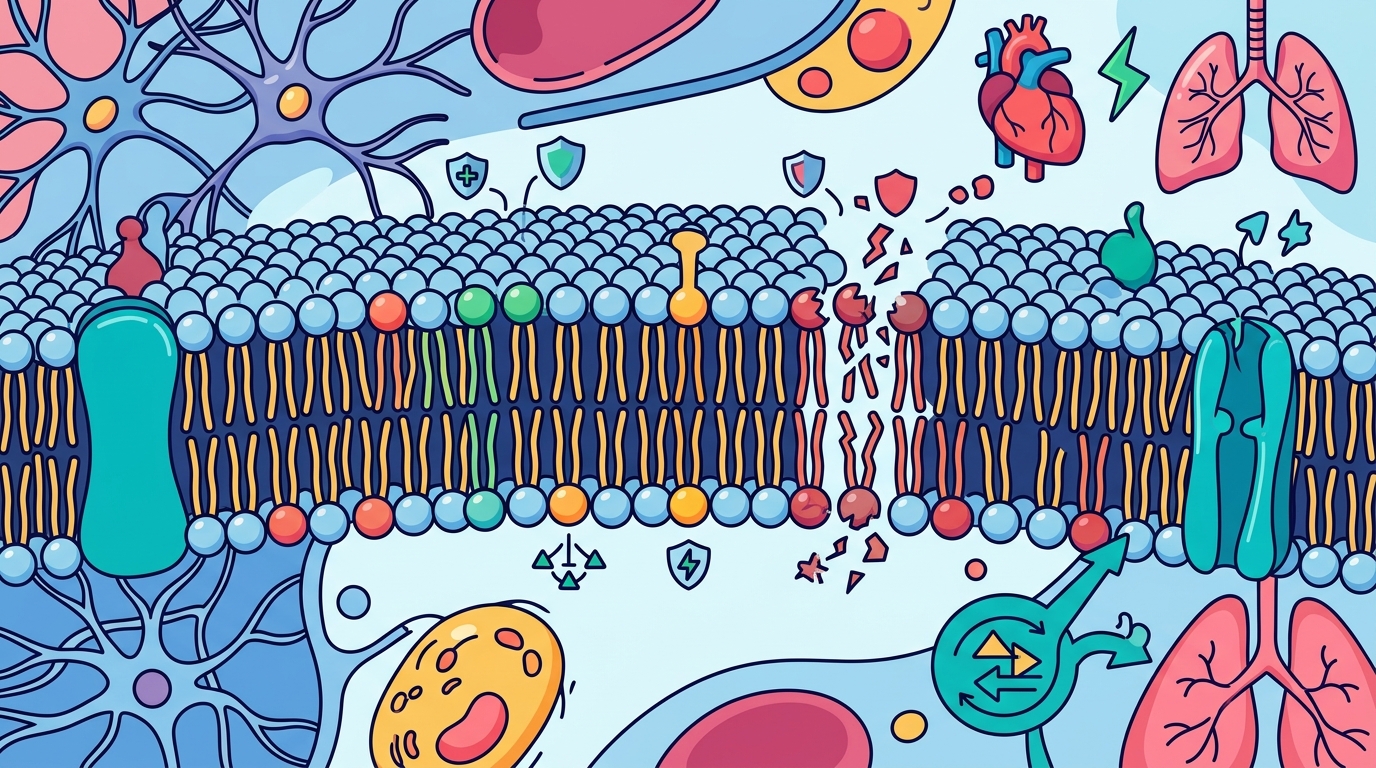
Plasmalogens are a unique subclass of ether phospholipids woven into virtually every cell membrane in your body. They are especially concentrated in the brain, heart, lungs, kidneys, and eyes. Because they are involved in membrane fluidity, antioxidant defense, and cellular signaling, a drop in plasmalogen levels can ripple across multiple organ systems—often long before a formal diagnosis emerges.
Below you will find eight research-backed warning signs that plasmalogen levels may be running low, followed by the biological drivers responsible for that decline.
1. Cognitive Slowing and Brain Fog
The brain is one of the most plasmalogen-rich organs. Proper membrane fluidity in neurons is essential for vesicle transport and neurotransmitter release. When plasmalogens are insufficient, neurons struggle to communicate efficiently. Research in animal models shows that low plasmalogen levels cause reduced neurotransmitter release due to decreased vesicle transport. In humans, these changes may manifest as sluggish thinking, difficulty concentrating, and the subjective experience commonly described as “brain fog.”
In the context of post-COVID-19 syndrome, researchers have noted that chronic fatigue, cognitive difficulties, and autonomic dysfunction overlap with conditions already linked to plasmalogen deficiency, suggesting that depleted plasmalogens may play a mechanistic role in persistent brain fog.
2. Memory Lapses and Recall Difficulty
Plasmalogen ethanolamines (PlsEtn) are particularly important in the hippocampus and cortex—regions central to learning and memory. In patients with Alzheimer’s disease, the severity of dementia correlates with ethanolamine plasmalogen content in the cortex and hippocampus. What makes this sign especially noteworthy is that in dementia patients, the decline in plasmalogen levels starts years before the development of clinical symptoms, implying that subtle memory problems could represent an early window of opportunity for intervention.
3. Persistent Low-Grade Inflammation
Plasmalogens play a dual role in controlling inflammation: they serve as reservoirs of anti-inflammatory fatty acids and their vinyl-ether bond can scavenge reactive oxygen species. When plasmalogen stores are depleted, the body loses a key brake on inflammatory signaling. Low plasmalogen levels are associated with chronic, low-grade inflammation—a phenomenon sometimes called “inflammaging.” A vicious cycle can develop: oxidative stress cleaves plasmalogens, which reduces anti-inflammatory capacity, which in turn accelerates further plasmalogen loss.
4. Chronic Fatigue and Post-Exertional Malaise
Recent evidence has revealed a significant reduction of plasmalogen contents, biosynthesis, and metabolism in myalgic encephalomyelitis/chronic fatigue syndrome (ME/CFS) and acute COVID-19, with a strong association to symptom severity. Because plasmalogens support mitochondrial membrane integrity and energy metabolism, their depletion can translate into profound fatigue, reduced exercise tolerance, and post-exertional malaise. If you find that simple physical or mental tasks leave you disproportionately drained, low plasmalogen levels may be a contributing factor worth investigating.
5. Mood Disturbances and Emotional Dysregulation
Beyond cognition, plasmalogen status appears linked to emotional well-being. Animal studies show that knocking out a key gene in ethanolamine plasmalogen synthesis causes depressive symptoms. In humans, a 2020 study found that people with bipolar disorder I had significantly lower ethanolamine plasmalogen levels compared to matched controls. Conversely, a placebo-controlled trial demonstrated that 2 g per day of plasmalogen supplements improved mood and reduced aggression in healthy college-aged participants. These findings suggest that irritability, anxiety, or depressive episodes may correlate with plasmalogen status.
6. Cardiovascular Vulnerability
Although the brain often dominates plasmalogen research, the heart is another plasmalogen-dense organ. When plasmalogen levels are low, the nervous system and cardiovascular system face greater stress and reduced repair capacity. Decreased membrane fluidity and impaired cholesterol trafficking in cardiac cells can contribute to endothelial dysfunction and increased susceptibility to atherosclerosis. Reduced plasmalogen levels have been strongly associated with cardiovascular issues and systemic inflammation in aging cohorts.
7. Myelin and White-Matter Deterioration
Plasmalogens are major constituents of myelin and lipid rafts, where they predominantly reside in the inner leaflet of the membrane. Myelin is the insulating sheath that enables rapid nerve conduction. Disorders such as Zellweger syndrome and Rhizomelic Chondrodysplasia Punctata (RCDP) dramatically illustrate what happens when peroxisomal dysfunction eliminates plasmalogen production: severe neurological symptoms and white-matter damage. In less extreme scenarios, gradual plasmalogen depletion may contribute to the white-matter lesions commonly seen on brain imaging in older adults.
8. Accelerated Biological Aging
Perhaps the most sobering sign is accelerated aging itself. In elderly individuals at 70 years of age, serum plasmalogen content dropped approximately 40% compared to healthy young controls. Longevity data is striking: a study found that a 95-year-old with high plasmalogen levels had an almost 70 percent chance of living to 100, whereas a person the same age with low levels had less than a 20 percent chance. Visible and functional markers of aging—reduced skin elasticity, slower wound healing, declining organ reserve—may partly reflect the cumulative toll of plasmalogen depletion.
Root Causes of Plasmalogen Decline
Understanding why plasmalogens drop is as important as recognizing the signs. The causes fall into several interconnected categories.
Age-Related Peroxisomal Dysfunction
Plasmalogens are synthesized exclusively in peroxisomes, membrane-enclosed organelles that replicate by division much like mitochondria. During aging, peroxisomal function declines, leading to reduced plasmalogen production and potentially increased breakdown. Plasmalogen levels typically increase linearly until age 30–40 and then begin a significant linear decrease that becomes pronounced by age 70.
Oxidative Stress and the Vinyl-Ether Vulnerability
The same vinyl-ether bond that gives plasmalogens their antioxidant power also makes them targets for destruction. Oxidative stress associated with inflammation can accelerate plasmalogen degradation by cleaving the vinyl-ether bond, further reducing the anti-inflammatory and antioxidative capacity of the tissues and initiating an irrevocable vicious cycle. Cytochrome c–mediated degradation has been proposed as one molecular mechanism for this loss.
Mitochondrial Dysfunction
As one ages, mitochondrial function decreases and oxidative stress increases. Defective mitochondria generate excess reactive oxygen and nitrogen species, which directly attack plasmalogens and simultaneously trigger inflammatory cascades that further deplete them. This creates a negative feedback loop: fewer plasmalogens mean less protection for mitochondrial membranes, which means more oxidative damage, which means even fewer plasmalogens.
Chronic Inflammation
Persistent systemic inflammation—whether from metabolic syndrome, autoimmune conditions, or chronic infection—depletes plasmalogens faster than the body can replenish them. Various inflammatory stimuli may reduce plasmalogen levels in microglia, and reduction of plasmalogens in the cortex further increases activated microglial phenotypes and pro-inflammatory cytokine expression. In the brain, this microglial reactivity is a hallmark of neurodegeneration.
Environmental and Lifestyle Factors
Environmental toxins, chronic psychological stress, poor dietary fat profiles, and exposure to food additives are among the leading causes of mitochondrial insufficiency in genetically susceptible individuals. Since plasmalogen biosynthesis depends on healthy peroxisomes and adequate precursor fatty acids (including DHA and arachidonic acid), diets low in omega-3 fatty acids and high in processed foods may accelerate depletion. Sedentary behavior, excessive alcohol intake, and smoking also increase systemic oxidative load.
Genetic Susceptibility
Apart from rare mutations that cause peroxisome dysfunction, there are more common genetic variants that impact plasmalogen synthesis. Polymorphisms in genes such as GNPAT and FAR1—key enzymes in the plasmalogen biosynthetic pathway—may predispose certain individuals to lower baseline levels, making them more vulnerable to age- and lifestyle-related decline.
How Plasmalogen Levels Are Measured
Plasmalogen status can be assessed through blood-based lipidomic testing. Researchers commonly measure serum plasmalogen ethanolamines (PlsEtn) containing specific fatty acid species such as DHA and arachidonic acid. Decreased plasmalogen levels in blood have been correlated with increased levels of the tau protein in the brain, a marker of Alzheimer’s disease. As a biomarker, plasmalogens hold promise for understanding and predicting certain neurological and cardiovascular diseases. There are clinical-grade tests in development that may eventually allow routine screening.
If you suspect your plasmalogen levels may be low, discuss lipidomic testing options with an integrative or functional medicine provider who understands phospholipid biochemistry.
Key Takeaways
- Plasmalogens are essential ether phospholipids concentrated in the brain, heart, and other vital organs; their depletion affects membrane fluidity, antioxidant defense, and cellular signaling.
- Warning signs of low levels include brain fog, memory lapses, chronic inflammation, fatigue, mood disturbances, cardiovascular stress, myelin deterioration, and accelerated aging.
- Plasmalogen decline in dementia patients begins years before clinical symptom onset, underscoring the value of early detection.
- Root causes include age-related peroxisomal dysfunction, oxidative stress, mitochondrial decline, chronic inflammation, dietary insufficiency, and genetic susceptibility.
- Serum plasmalogen levels can be measured through lipidomic blood tests and may serve as an actionable biomarker for neurological and cardiovascular risk.
- A vicious cycle exists: oxidative stress degrades plasmalogens, and low plasmalogen levels reduce antioxidant capacity, fueling further degradation.
Frequently Asked Questions
What happens when plasmalogen levels are too low?
When plasmalogen levels are too low, cell membranes become less flexible and more vulnerable to oxidative damage. In the brain, this can show up as changes in cognitive speed, increased brain fog, or challenges with memory and focus. Over time, the nervous system and cardiovascular system face greater stress and reduced repair capacity.
At what age do plasmalogens start to decline?
Research indicates that plasmalogen levels increase linearly until about age 30–40 and then begin to decrease. By age 70, serum plasmalogen content can drop approximately 40% compared to healthy young adults. The rate of decline varies based on genetics, lifestyle, and exposure to chronic inflammation or oxidative stress.
Can low plasmalogens be detected through a blood test?
Yes. Serum plasmalogen ethanolamines can be measured using advanced lipidomic analysis. Researchers have used these blood-based measurements to correlate plasmalogen levels with cognitive function and disease severity in Alzheimer’s patients. Clinical-grade diagnostic tests are becoming increasingly accessible through functional medicine practitioners.
Is plasmalogen deficiency connected to Alzheimer’s disease?
A substantial body of evidence connects low plasmalogen levels to Alzheimer’s disease. Plasmalogens are depleted in both the brains and blood of people with Alzheimer’s, and this decline starts years before clinical symptoms appear. Additionally, lower plasmalogen levels have been correlated with increased tau protein in the brain.
What causes plasmalogens to break down faster?
The primary driver is oxidative stress, which cleaves the vinyl-ether bond unique to plasmalogens. Chronic inflammation, mitochondrial dysfunction, peroxisomal aging, environmental toxins, and dietary deficiencies in omega-3 fatty acids all accelerate plasmalogen degradation. This creates a self-reinforcing cycle of depletion and cellular vulnerability.
Can plasmalogen levels be restored?
Emerging research suggests that plasmalogen precursor supplementation may help raise levels. A clinical study evaluating an omega-3 oil supplement for age-related cognitive decline found plasmalogen precursor supplementation to be safe and potentially efficacious. Lifestyle factors such as anti-inflammatory diets rich in DHA, regular exercise, and reduced toxin exposure may also support endogenous plasmalogen synthesis.