

Critical Biomarkers for Assessing Age-Related Plasmalogen Decline
Plasmalogen levels are a critical indicator of cellular health and longevity, yet they remain largely invisible to standard medical screening. As we age, the body's ability to synthesize these specialized ether phospholipids diminishes, leading to a cascade of cellular dysfunction. Recent research into advanced health measurements highlights that traditional lipid panels fail to capture the nuanced changes in membrane biology that drive aging. This guide explores the specific biomarkers, testing methods, and biological pathways necessary to assess plasmalogen decline before clinical symptoms manifest.
What Are Plasmalogens and Why Do They Decline?
Plasmalogens are a unique class of ether phospholipids found in high concentrations in cell membranes, particularly in the brain, heart, and immune cells. Unlike standard phospholipids, plasmalogens contain a vinyl-ether bond at the sn-1 position, which provides critical antioxidant protection against oxidative stress. This structural feature allows them to sacrifice themselves to protect other cellular components from damage.
As humans age, the biosynthesis of plasmalogens declines significantly. This decline is not merely a byproduct of aging but a driver of cellular dysfunction. The body relies on peroxisomes for the initial steps of plasmalogen synthesis. When peroxisomal function declines with age, the production of these vital lipids drops, leaving cell membranes more vulnerable to oxidative damage and inflammation.
Understanding this decline is essential for proactive health management. What Are Plasmalogens? provides a detailed overview of their structure and biological role. By identifying the specific biomarkers associated with this decline, individuals can take steps to support their cellular health before significant damage occurs.
Key Biomarkers for Assessing Plasmalogen Status
Assessing plasmalogen status requires looking beyond standard cholesterol markers. Several specific biomarkers and indicators can signal declining plasmalogen levels and associated cellular stress.
1. Plasma Plasmalogen Concentrations
The most direct biomarker is the concentration of plasmalogens in the blood plasma. Specifically, researchers look at ethanolamine plasmalogens (PE-P) and choline plasmalogens (PC-P). Low levels of these lipids are strongly correlated with cognitive decline and increased risk of neurodegenerative diseases. According to studies on lipidomics, plasma plasmalogen levels decrease significantly in individuals with Alzheimer's disease compared to healthy controls.
2. Oxidative Stress Markers
Because plasmalogens act as sacrificial antioxidants, their depletion often leads to elevated oxidative stress. Markers such as F2-isoprostanes and malondialdehyde (MDA) can indicate increased lipid peroxidation. When plasmalogen levels drop, these oxidative stress markers typically rise, signaling that cellular membranes are under attack.
3. Inflammatory Cytokines
Chronic inflammation is closely linked to plasmalogen deficiency. Pro-inflammatory cytokines such as IL-6 and TNF-alpha are often elevated in individuals with low plasmalogen levels. This creates a vicious cycle where inflammation further impairs peroxisomal function, leading to even lower plasmalogen synthesis.
4. Peroxisomal Function Markers
Since peroxisomes are essential for plasmalogen biosynthesis, markers of peroxisomal health are indirect but valuable indicators. Abnormalities in very-long-chain fatty acids (VLCFAs) can suggest impaired peroxisomal function, which may precede significant plasmalogen decline.
Advanced Testing Methods and Measurement
Traditional blood tests do not measure plasmalogen levels. Advanced health measurement techniques are required to assess these specialized lipids accurately. Understanding plasmalogen levels requires specialized laboratory analysis.
Lipidomics Profiling
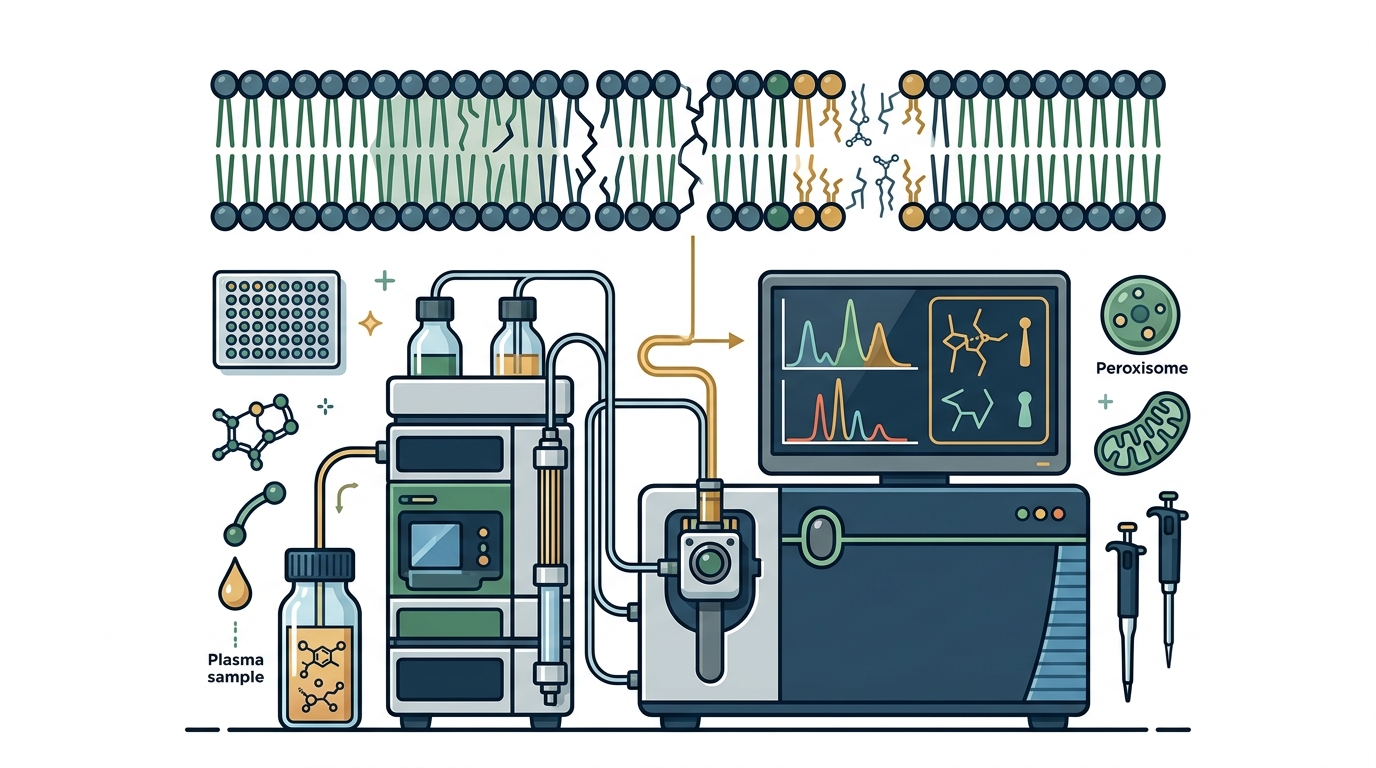
Lipidomics is the large-scale study of lipids within cells, tissues, and organisms. Mass spectrometry-based lipidomics allows for the precise quantification of individual plasmalogen species. This method can distinguish between different types of plasmalogens and provide a detailed profile of an individual's lipid status.
Advanced Health Measurements
Advanced health measurements go beyond standard panels to include markers of cellular energy, mitochondrial function, and membrane integrity. These comprehensive assessments provide a holistic view of healthspan. The importance of advanced health measurements lies in their ability to detect early biological changes before they manifest as disease.
Longitudinal Tracking
Single-timepoint measurements may not capture the dynamic nature of plasmalogen metabolism. Longitudinal tracking allows individuals to monitor changes in their plasmalogen levels over time. This approach helps identify trends and assess the effectiveness of interventions aimed at supporting plasmalogen synthesis.
The Impact of Decline on Cellular Function
The decline of plasmalogens with age has profound effects on cellular function across multiple systems. Understanding these impacts is crucial for appreciating the importance of monitoring these biomarkers.
Neurological Health
The brain is rich in plasmalogens, particularly in the myelin sheath that insulates nerve fibers. Declining plasmalogen levels can impair nerve conduction and synaptic function. This is linked to cognitive decline, memory loss, and an increased risk of neurodegenerative diseases. The synapse works by relying on healthy membrane lipids for proper neurotransmitter release and reception.
Cardiovascular Health
Plasmalogens are also abundant in heart tissue. Their decline is associated with increased oxidative stress in the cardiovascular system, which can contribute to atherosclerosis and heart disease. Maintaining healthy plasmalogen levels is essential for protecting the heart from age-related damage.
Immune Function
Plasmalogens play a role in regulating immune responses. Low plasmalogen levels can lead to chronic inflammation and impaired immune function, making the body more susceptible to infections and autoimmune conditions. The critical nutrients required for plasmalogen synthesis are vital for maintaining robust immune health.
Comparing Standard vs. Advanced Health Measurements
Understanding the difference between standard and advanced health measurements is key to effective longevity planning. Standard tests often miss the subtle changes in lipid biology that drive aging.
| Feature | Standard Health Measurements | Advanced Health Measurements |
|---|---|---|
| Focus | Symptom detection and disease diagnosis | Early biological changes and resilience |
| Lipid Analysis | Total cholesterol, LDL, HDL, Triglycerides | Plasmalogen species, oxidative stress markers |
| Timing | Reactive (after abnormalities appear) | Proactive (before clinical symptoms) |
| Scope | Isolated organ function | Systemic cellular health and metabolism |
| Plasmalogen Insight | None | Direct quantification and trend analysis |
As noted in advanced health measurements, the shift from reactive to proactive care is essential for extending healthspan. By monitoring specific biomarkers like plasmalogens, individuals can gain insights into their biological age and cellular resilience.
Key Takeaways
- Plasmalogens are specialized ether phospholipids that provide critical antioxidant protection for cell membranes, particularly in the brain and heart.
- Age-related decline in plasmalogen synthesis is driven by reduced peroxisomal function, leading to increased oxidative stress and inflammation.
- Standard lipid panels do not measure plasmalogens, making advanced lipidomics profiling necessary for accurate assessment.
- Low plasmalogen levels are strongly correlated with cognitive decline, cardiovascular disease, and impaired immune function.
- Longitudinal tracking of plasmalogen biomarkers allows for proactive management of cellular health and longevity.
- Interventions such as specific nutrients and lifestyle changes can support plasmalogen synthesis and mitigate age-related decline.
- Advanced health measurements provide a more comprehensive view of healthspan by focusing on cellular resilience rather than just disease markers.
Frequently Asked Questions
What are plasmalogens and why are they important?
Plasmalogens are a unique class of ether phospholipids found in cell membranes. They are important because they provide antioxidant protection, support membrane fluidity, and play a critical role in cellular signaling and energy production.
How do plasmalogen levels change with age?
Plasmalogen levels naturally decline with age due to reduced peroxisomal function. This decline is associated with increased oxidative stress, inflammation, and a higher risk of age-related diseases such as Alzheimer's and cardiovascular disease.
Can standard blood tests detect low plasmalogen levels?
No, standard blood tests do not measure plasmalogen levels. Advanced lipidomics profiling or specialized health measurements are required to assess plasmalogen status accurately.
What are the signs of low plasmalogen levels?
Signs of low plasmalogen levels may include cognitive decline, memory issues, increased fatigue, and higher markers of oxidative stress and inflammation. However, these symptoms often appear only after significant decline has occurred.
How can I support plasmalogen synthesis?
Supporting plasmalogen synthesis involves providing the body with essential nutrients such as choline, ethanolamine, and specific fatty acids. Lifestyle factors like reducing oxidative stress and supporting peroxisomal health are also crucial.
What is the link between plasmalogens and brain health?
Plasmalogens are abundant in the brain and are essential for myelin sheath integrity and synaptic function. Low plasmalogen levels are linked to neurodegenerative diseases and cognitive decline.
Why is advanced health measurement important for longevity?
Advanced health measurement allows for the detection of early biological changes before they manifest as disease. This proactive approach enables individuals to take steps to preserve their healthspan and prevent age-related decline.
What role do peroxisomes play in plasmalogen production?
Peroxisomes are cellular organelles responsible for the initial steps of plasmalogen biosynthesis. As peroxisomal function declines with age, plasmalogen production decreases, leading to lower levels in the body.
Next Steps for Longevity Optimization
Understanding and monitoring your plasmalogen levels is a powerful step toward optimizing your healthspan. By leveraging advanced health measurements and targeted interventions, you can protect your cellular health and support your body's natural resilience against aging.
Ready to take control of your biological age? Contact Plasmalogen Science today to learn more about our comprehensive testing and guidance services. Visit our home page to explore our latest research and resources on plasmalogen health.